Welcome to the next edition of On The Record, thoughtful analysis on culture, entertainment, tech, fashion, music, sport, and brands. Here's a round-up of key conversations and campaigns that caught my attention this week.
The decision that shaped this edition is billing: who gets the headline slot, and who gets booked as support. Live music's money is pooling at the top. Live Nation posted a record $10.1bn quarter on 61 million fans, with more than half of its fan growth coming from third-party stadiums, and The Weeknd's tour reached $1.3bn. The rooms that produce the next generation of headliners are being kept open by other means: Lost selling £1,000 memberships, MOTH Club fighting off a second flats plan next door, and the Mayor of London's new licensing powers are each a different attempt to protect the bottom of the bill. Women's sport shows the same split from the other side. The WNBA drew 3.3 million viewers for a Game 7 that was scheduled and produced as the main event. The Ballon d'Or handed Alexia Putellas, a WSL player, her record-equalling third award earlier in the evening at the London Palladium, before the night's main announcement. And Pinterest's grassroots scheme can fund one women's team's pitch for a season, while the booking queue that pushes the rest to the back stays as it was. Across both industries, the people setting the running order decided more about what grew than the audiences did.

⚽ SPORT, POWER & GOVERNANCE
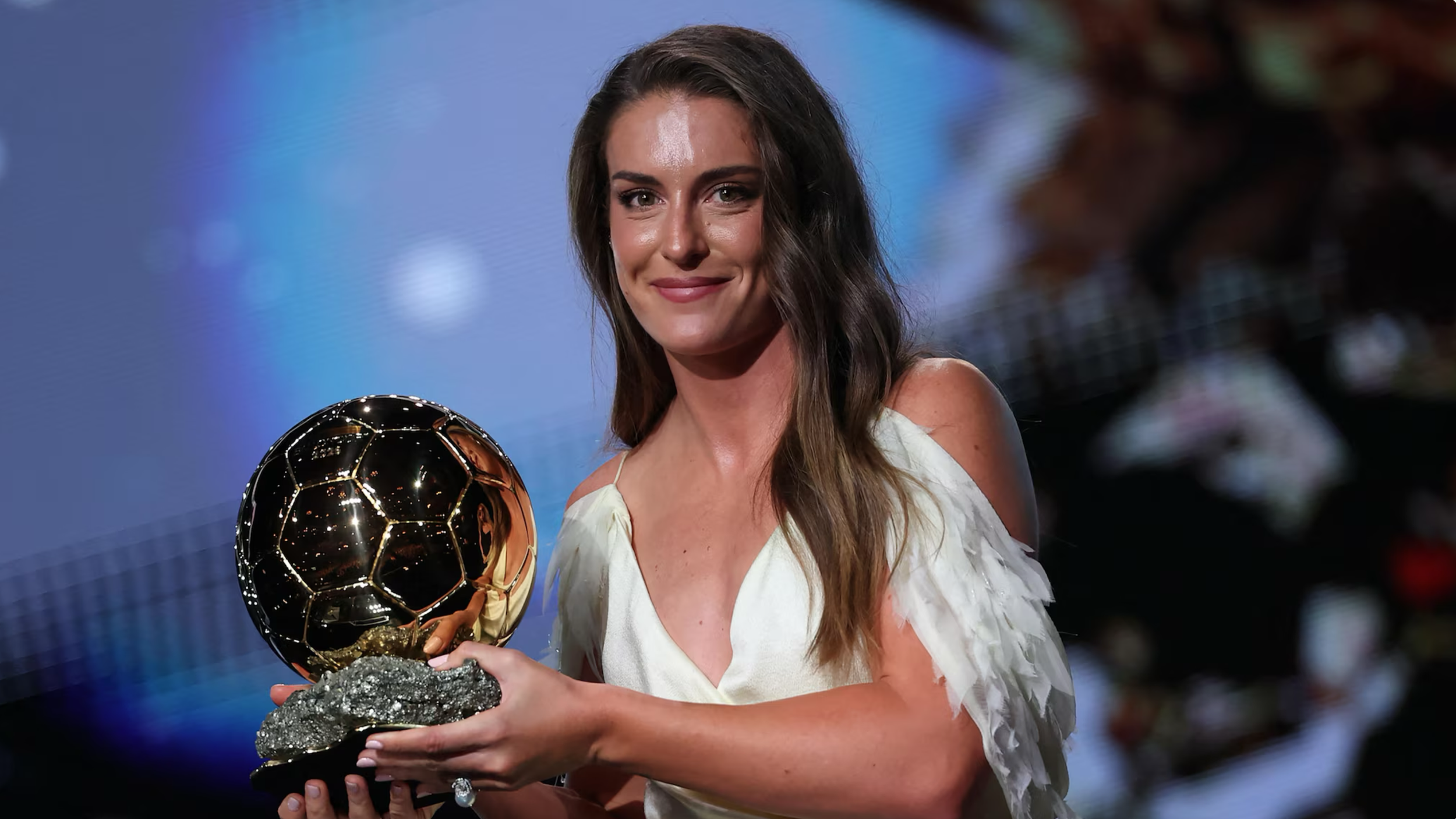
Putellas takes a third Ballon d'Or in London, and the ceremony still staged it as the undercard ⚽
📌 Football's biggest individual awards night left Paris for the first time on 26 October, and the London Palladium crowned two winners with strong London stories. Harry Kane became the first Englishman to win since Michael Owen in 2001. Alexia Putellas, who now plays her club football in Bromley with London City Lionesses, won a record-equalling third Women's Ballon d'Or. Her award was handed out earlier in the evening, and the coverage around it, including Sports Illustrated's own winners' write-up calling her "Alexis", reopened the yearly complaint about how the women's game is handled on the night.
Putellas' third Women's Ballon d'Or, after 2021 and 2022, puts her level with Aitana Bonmati's record of three
The 2026 ceremony was the first held outside Paris in the award's 70-year history
The women's award was first given in 2018, 62 years after the men's prize launched in 1956
💡 The ceremony moved to London to sell a homecoming, and it had two homecomings in the building but only produced one. A WSL player winning the sport's top individual prize in the WSL's home city was the obvious second headline (see the WSL attendances entry below), and nobody built the night around it. Running order and presenter briefing are production decisions. They are the same kind of decision that, in 2024, saw Didier Drogba steer Barcelona's women's Club of the Year moment towards the men's team. Together they show the women's prize is still produced as an add-on to someone else's show. Compare the WNBA Finals entry in this edition: 3.3 million people watched a Game 7 that was scheduled and produced as the main event, and an awards brand that wants to be the sport's definitive verdict has to stage both halves of it that way. 🏆
WSL Average Crowds Fall to Around 5,600 as Expansion and Fewer Big Games Pull the Number Down 📉
📌 Early-season figures have sparked talk of an attendance crisis in European women's club football. After eight matchweeks, the WSL average is around 5,600, against roughly 7,500 at the same point last season. Most of that fall comes from how the league is now set up. The WSL expanded to 14 clubs this season, adding three promoted sides that draw around 1,500 to 2,000 fans. Among the returning clubs, four with weaker early fixtures, venue changes or both account for the rest of the fall. The Cutback's three-season comparison makes the same point across Europe: averages swing on a handful of big-match crowds, while median attendances have held broadly steady.
WSL average after eight matchweeks: 5,677 in 2026-27, against 7,472 at the same stage of 2025-26 and 8,173 in 2024-25; the Women's Football Data Centre puts the season-to-date average at 5,613, down 18%
Excluding the three promoted clubs, the 11 returning WSL clubs are down 5.5%, and seven of them have grown crowds by 5%
Liga F and the Women's Champions League have both risen at the same stage in each of the past two seasons, to 1,434 and 3,652
💡 An 18% fall that is mostly maths still matters, because the league chose the maths. The WSL built its growth story on Arsenal filling the Emirates and a few marquee derbies. That turned the national average into a measure of how many big games a season schedules, so the first softer fixture list made the whole league look like it was shrinking. The median tracks the regular crowd, the people who come back for a wet Sunday against a promoted side, and that base has held. Clubs chasing the one-off sell-out will keep producing averages that swing, and the clubs worth watching are the ones building a reason to turn up every other week. 📊
WNBA Finals Game 7 Draws 3.3 Million Viewers, the League's Most-Watched Playoff Game 🏆
📌 A team in only its second season won the WNBA's first-ever Finals Game 7, and viewers turned up for it. The Golden State Valkyries' 68-63 win over the Atlanta Dream at Chase Center on 31 October averaged 3.3 million viewers across USA Network, CNBC and Peacock. That makes it the most-watched postseason game in league history and the most-watched cable programme of the day. The seven-game series averaged 1.88 million, the best Finals audience since 1999, and every game sold out. None of it involved the Indiana Fever or Caitlin Clark, whose games produced most of the league's million-viewer audiences in 2024.
Game 7 drew 3.3 million viewers, up 128% on 2025's deciding game, and the series averaged 1.88 million, up 30%
Finals attendance records: 123,553 in total and 17,650 per game across seven sellouts
In 2024, 24 of the 31 WNBA games to reach 1 million viewers involved Clark's Fever
💡 The most important name missing from these numbers is Caitlin Clark. Two years ago, nearly every million-viewer WNBA game involved her Fever. This year a Finals between a two-season-old Bay Area team and Atlanta set the playoff record without her, which shows the audience is now following the league and its storylines as well as one star. The WSL faces the same test, covered earlier in this section, where the national average leans on a handful of big games, and the WNBA has just passed it on its biggest night. One caveat: Nielsen's newer measurement and Adobe's streaming data capture more viewing than the old system did. But the seven sold-out arenas were counted at the door. 🏆
Socceroos and Matildas Players Take Football Australia to Court Over Revenue Share ⚖️
📌 Australia's revenue-sharing deal for its men's and women's national teams, hailed as a world first in 2019, is now the subject of a legal fight. The players' union, Professional Footballers Australia (PFA), is pursuing a seven-figure claim against Football Australia (FA) on behalf of Socceroos and Matildas players. It argues the revenue share in their 2023 collective bargaining agreement is not being paid properly. FA says the NSW Supreme Court's role is limited to issuing subpoenas, and that the dispute itself sits in the sport's confidential National Dispute Resolution Chamber. Days later it emerged that Socceroos match fees from the 2026 World Cup are still unpaid.
The national teams generate up to half of FA's revenue, and under the 2023 agreement players take an 18 to 20% cut of the relevant commercial deals
Revenue from programmes that fund grassroots football, including registration fees and those programmes' sponsors, is excluded from the players' share
Socceroos World Cup match fees were still unpaid three months after the team's round-of-32 exit
💡 A revenue share is only as good as the definition of revenue, and that is where this case lives. Players take a cut of ticketing, broadcast and sponsorship tied to the national teams, while money attached to grassroots programmes sits outside the pool. So every bundled deal FA signs involves deciding how much of its value counts as Socceroos and Matildas money and how much counts as community football. The 2019 deal made Australia the model for linking men's and women's pay to shared commercial growth. Its weak point is that the governing body both earns the money and decides how it is classified. The agreement expires next year and the World Cup fees are still outstanding. The subpoenas suggest the players want to see FA's commercial paperwork before they negotiate the next deal. ⚖️
Kimi Antonelli Becomes Formula 1's Youngest-Ever World Champion at 20 🏎️
📌 Two seasons after Mercedes handed Lewis Hamilton's seat to an 18-year-old from Bologna, that driver is world champion. Kimi Antonelli sealed the 2026 title with third place at the Mexico City Grand Prix on 1 November, behind Red Bull's Max Verstappen and Hamilton in a Ferrari, with four races still to run. At 20, he breaks Sebastian Vettel's 2010 record as the sport's youngest champion and becomes Italy's first champion since Alberto Ascari in 1953. The constructors' title, which sets each team's share of prize money, is still open.
Nine Grand Prix wins in 2026, his second season in Formula 1
Youngest champion in the sport's history at 20, beating Vettel, who was 23 in 2010
Italy's first world champion since Ascari in 1953, and the 36th different driver to win the title
💡 The decisive call behind this title was made in 2024, when Mercedes chose its own 18-year-old academy driver to replace a seven-time champion instead of signing an established name. The 2026 rule changes then gave Mercedes the strongest car on the grid, and the bet paid off inside two seasons. Italy finally has a champion, and he drives for a German team while Ferrari's own wait goes on. That gives Mercedes a story in Ferrari's home market that money could not easily have bought. For every team planning for the next set of rules, Mercedes has shown what a well-run young driver programme is worth. 🏎️
🎶 MUSIC, LIVE & CULTURE
Live Nation Posts Record $10.1bn Quarter as Third-Party Stadiums Drive Over Half of Its Fan Growth 🏟️
📌 Seven months after a New York jury found it had illegally maintained monopoly power in concert ticketing, the world's biggest promoter has posted the largest quarter in its history. Revenue rose 19% to $10.1bn and attendance reached 61 million, with fan numbers at third-party stadiums up more than 40%. The remedies phase, where the states are pushing for Ticketmaster to be sold off, is still unresolved.
Revenue $10.1bn, up 19%; adjusted operating income $1.18bn, up 14% (Live Nation Q3 2026 results, IQ)
Attendance 61 million, up 19%, with international up 29% and North America up 13% (Live Nation, IQ)
Third-party stadium attendance up more than 40%, accounting for over half of global fan growth (Live Nation, IQ)
💡 Lay the growth map over the court case and the picture shifts. The New York case is about Ticketmaster at major US venues and Live Nation's grip on amphitheatres, where its DOJ settlement already gives up exclusive booking deals at 13 sheds. This quarter, 60% of the extra fans came from international markets. The biggest single driver was stadiums Live Nation hires rather than owns. And the venues it is building are mostly abroad: arenas outside the US are expected to deliver 75% of its owned-venue fan growth this year. The $450m legal accrual booked in Q1 is under 5% of one quarter's revenue. Whatever structural remedy eventually lands will hit the US business, which supplied 40% of this quarter's fan growth. 🏟️
The Weeknd Closes After Hours Til Dawn at $1.3bn, the Highest-Grossing Tour by a Male Artist 🌙
📌 A tour that began in Philadelphia in July 2022 ended four years and three albums later in Kuala Lumpur on 5 November. The Weeknd's After Hours Til Dawn played 176 stadium shows in 67 cities and 30 countries, sold more than 9 million tickets and grossed more than $1.3bn, according to promoter Live Nation. That beats the previous male-artist record of more than $939m, set by Elton John's Farewell Yellow Brick Road, and puts the tour third overall behind Taylor Swift's Eras Tour and Coldplay's Music of the Spheres.
More than 3 million tickets sold and over $500m grossed in 2026 alone, the tour's final year
The final Asian leg, the tour's first visit to the region, grew from 11 to 17 sold-out stadium dates, including four nights at Hong Kong's Kai Tak Stadium
Roughly $144 average per ticket across the run
💡 Four years is the number that matters. The tour opened on After Hours and Dawn FM, added Hurry Up Tomorrow in 2025, and went back for second runs in nearly every territory. The show outlived the album cycle that launched it and became something fans came back to. It still sold more than 3 million tickets and grossed over $500m in its final year, long after a normal album tour would have wound down. Its first-ever Asian leg, extended by six dates because of demand, fits the pattern in the Live Nation entry earlier in this section, where international markets supplied 60% of the quarter's growth in fans. For promoters and artists, a stadium show that runs for years builds value with every return visit, while a tour tied to one album starts from scratch each cycle. 🌙
Ye Draws a Reported 80,210 in Houston, Then Stages YEEZY's First Full-Scale Runway Show in Four Years 🏟️
📌 Within five days, Ye played what his promoter and the venue call the best-attended rap concert in US history, then staged his first full-scale runway show since 2022. The Halloween show at Houston's Reliant Stadium drew a reported 80,210, although other published figures put it at 74,412. On 4 November, YEEZY Season 01 opened the label's first flagship store, Droam 1 on Beverly Boulevard in Los Angeles, with the same boxy, washed-out, logo-free uniform Ye has been refining for a decade. Both come in a year that began with Ye's full-page Wall Street Journal apology for his antisemitic remarks, and that included the cancellation of his Wireless headline slot after the UK refused him entry.
80,210 reported attendance at Reliant Stadium on 31 October, confirmed by promoter IKON and the venue; other reporting citing IKON gives 74,412
$29.8m grossed from 129,562 tickets across two sold-out Soldier Field shows on 3-4 September, promoted by the Chicago independent SPKRBX Presents; the second night set Pollstar's highest single-day gross on record at the stadium
YEEZY footwear back in US physical retail from 13 August 2026 through JD Sports, its first brick-and-mortar stockist since adidas ended the partnership in 2022
💡 Look at who is on the paperwork. The Houston show was promoted by IKON Presents, a Las Vegas independent founded in 2018, and the Soldier Field nights by SPKRBX, a Chicago independent. The shoes are back in stores through JD Sports, and the clothes now sell from a store Ye owns. The audience stayed and the partners changed: adidas and the festival circuit have been swapped for operators willing to take on a risk that sponsors and bookers spent this spring backing away from. Set against Live Nation's record quarter earlier in this section, Ye's record-setting US dates have gone through independent promoters. The model holds while the crowds keep coming, but it leaves Ye with fewer big partners to cushion the next controversy. 🧱
Lost Sells £1,000 VIP Memberships Ahead of Its Oxford Street Return 🎟️
📌 London's phone-free, no-lineup club night is asking its audience to pay before the doors open. Lost is run by the team behind Secret Cinema. It spent eight months in the former Odeon on Shaftesbury Avenue before its lease ended in May. It is now taking over the former London College of Fashion block on Oxford Street as a planned "24-hour district", with a launch weekend on 27-28 November. Ahead of that, a 24-hour membership window opened on 5 November, with tiers from £25 to £1,000. The top "circus" tier buys fast-track entry, VIP areas and, for the first 50 successful applicants, an invitation to the opening weekend. Lost has told followers that members' support is helping it secure a premises licence and stay independent.
Membership runs from £50 a year (£25 for under-25s) to £1,000 for the top tier
New site confirmed as the former London College of Fashion on Oxford Street, launch weekend 27-28 November
A previous Lost project, announced in July 2022 for Croydon's former Allders department store, stalled before opening and was later reported abandoned
💡 The first run's appeal rested on a level room: no phones, no lineup, and nobody showing off who got in. The £1,000 tier sells a faster queue and areas the rest of the crowd can't reach, which brings back the status signals the no-phones rule was there to remove. Selling memberships while the licence is still being secured also shifts the funding risk onto the audience, a risk normally carried by investors, landlords or a promoter. The last time a Lost district was announced, in Croydon in 2022, it stalled before opening. A paying founding community can give an independent venue time and money the industry rarely offers, and the test for Lost is whether people paying £25 get the night that made people paying £1,000 want in. 🗝️
Sadiq Khan Gains Final Say on Major London Licensing Decisions 🌃
📌 From 3 November, City Hall can take over licensing decisions on London's biggest nights out. Under the Devolution and Community Empowerment Act 2026, the Mayor of London can call in applications judged strategically important and make the final ruling after the borough has decided. That covers large venues, live music, later opening hours, and major events and festivals. Boroughs must now consult the mayor when they revise their own licensing policies, and a London-wide Strategic Licensing Policy is due to follow a consultation held earlier this year. Music Venue Trust welcomed the change; London Councils says the definition of "strategic importance" is too broad.
Call-in power live from 3 November 2026, the first time a UK mayor can decide a licensing application directly
Four named categories: large venues, live music, later opening hours, and major events and festivals
First announced as a pilot in April 2025 by the Chancellor and Deputy Prime Minister
💡 The final word on a late licence moves from the borough, whose licensing committees answer to the residents closest to the noise, to City Hall, which answers to the whole city. That shifts weight towards the venue's economic case. But City Hall only steps in after the borough has ruled, so venues still fight the first round and then depend on the mayor choosing to call the case in. The real test is the London-wide policy. A published standard for what counts as strategic gives operators something to plan around, while one-off call-ins leave them guessing. Lost's bid for a 24-hour district on Oxford Street, earlier in this section, is exactly the kind of application this new system was built for. 🔑
MOTH Club Survives as Hackney Council Refuses a Second Flats Plan Next Door 🪩
📌 One of east London's best-loved venues has won its second planning fight in seven months. On 29 October, Hackney Council refused an application for seven flats and a commercial unit at 6 Morning Lane, backing onto MOTH Club, after rejecting a separate six-flat scheme in March. MOTH has been an ex-servicemen's club since 1972 and a music and comedy venue since 2015. It argued that new neighbours would bring noise complaints that could shut it down. More than 35,000 people signed its petition, and the campaign was backed by Hackney Nights, Save Our Scene, the Night Time Industries Association and Music Venue Trust.
Two applications refused: six flats on 25 March 2026, then seven flats plus 55 sq m of commercial space on 29 October 2026
35,000+ petition signatures over a campaign that began in 2024
The developer has until 29 April 2027 to appeal
💡 A venue that has run since 1972 needed two years, two refusals and 35,000 signatures to stop flats going up against its back wall, and that effort is the hidden cost of keeping a grassroots venue open. The threat came through planning, which is decided by the borough. The mayor's new licensing powers, covered earlier in this section, don't reach it, so a venue can be safe on its licence and still lose to the building next door. MOTH says the scheme was split into two applications to avoid social housing obligations, and the split also forced the venue to win the same argument twice. Each refusal like this does case by case what an enforced agent-of-change rule should do by default: make whoever arrives second pay for the soundproofing. 🪩
Liveline Fund Distributes £200,000 to 47 Grassroots Music Projects in Its First Round 🎛️
📌 The UK's attempt to make big-venue music pay back into the grassroots has made its first payout through Liveline. The fund is run by Music Venue Trust with Save Our Scene and the Association of Independent Promoters. Its first round has put £200,000 behind 47 shows, tours and local programmes across all four UK nations, in both live and electronic music. Artist pledges got the fund started, beginning with 10% of the proceeds from Coldplay's Wembley and Hull stadium shows. It also works with the LIVE Trust, the industry charity that collects a voluntary £1 per ticket on arena and stadium shows. More than 500 applications came in, and the organisers say they will refine the process before announcing further rounds.
£200,000 to 47 projects from more than 500 applications, a success rate below one in ten
The voluntary £1 arena and stadium contribution had raised more than £6m by May 2026, with around £1.2m of it due to go in VAT
Liveline launched in late 2024, with Coldplay pledging 10% of the proceeds from its Wembley and Hull stadium shows
💡 Fewer than one in ten applicants got funded, which is the clearest measure yet of how much grassroots activity is stalled, waiting for someone to share the financial risk. Liveline is built to do exactly that by underwriting shows and tours. SeatGeek, in the tech section, is selling big promoters a data product to cut the same risk. The difference is who pays for the safety net. At the top of the market it's a software subscription. At the bottom it depends on artists volunteering a share of their stadium income, and on a £1 contribution that is optional and loses around a fifth to VAT. A voluntary, taxed contribution pays out in occasional rounds, and a talent pipeline needs steady funding. 🎛️
Australian Music Falls to a Record-Low 8.5% of Home Streaming, APRA AMCOS Reports 🇦🇺
📌 Australia's songwriters had their best financial year on record and their smallest share yet of streaming in their own country. APRA AMCOS, the music rights body, published its Year in Review for the 12 months to 30 June 2026. It reports record group revenue of A$857.4m, with APRA's international revenue passing A$100m for the first time. Over the same year, Australian music's share of domestic audio streaming fell from 9.5% to 8.5%, its biggest annual drop in four years. Chief executive Dean Ormston says the share is on track to fall close to 5% within five years without intervention. APRA AMCOS wants every platform to carry minimum amounts of Australian music, modelled on commercial radio quotas.
Local share of Australian audio streaming down 37.5% in five years, from 13.6% in FY21 to 8.5% in FY26, with more than 91% of music streamed in Australia imported
Australian music's share on user-generated content platforms such as TikTok sits at 3.6%
Australia passed local content laws for video streaming services with more than 1 million Australian subscribers in late 2025
💡 Language explains most of this. In Denmark, local music reportedly takes around 80% of streams, partly because Danish-language songs face little direct competition from the global English-language catalogue. Australian artists sing in the same language as the US and UK music they are ranked against, so a recommendation system that ignores geography treats them as more English-language pop. The same report shows Australian music earning record money overseas, which points to discovery at home as the gap. Most listening on a streaming service is chosen by playlists and autoplay, so that's where a quota would actually change anything. Read alongside the Liveline entry, it's the same pipeline problem from the other end: grassroots stages build the artist, and the home algorithm decides whether local listeners ever hear them. 🇦🇺
🎯 BRAND, CULTURE & CAMPAIGNS
Pinterest and VERSUS Launch 'Make It Yours' for Four Grassroots Women's Football Teams ⚽
📌 Three months into its four-year shirt deal with Brighton & Hove Albion Women, Pinterest has taken the partnership into the amateur game. 'Make It Yours' is run with the football culture title VERSUS and the club. It will pick four UK grassroots women's teams and give each one a different kind of help. One team co-designs a kit and visual identity. One gets an immersion day at Brighton's Elite Performance Centre with coaching from staff and players. One gets a home pitch funded for a full season through the BHA Foundation, with a pitchside mural. One gets its team social events funded. Every team that applies has to build a Pinterest board showing who they are and what the support would change. The winners are due to be picked on 18 November.
Pinterest is the first solo sponsor of Brighton & Hove Albion Women, on a four-year deal announced 4 August 2026 (Brighton & Hove Albion, Pinterest Newsroom)
UK Pinterest searches for "football outfits for women" up 425% (Pinterest platform data via FashionUnited, self-reported, no time window given)
Three quarters of female players surveyed say they will stop playing if funding isn't secured soon (Starling Bank/Censuswise, June 2026, commissioned by a bank running its own grassroots sponsorship scheme)
💡 Four teams win, but every team that applies does the same homework first: a Pinterest board about who they are, what they wear and what they're missing. The application is the activation. Every entry turns a grassroots club's identity into Pinterest content and its players into Pinterest users, which is the behaviour the platform's own search data says is already growing. The prizes are designed better than most grassroots schemes. They split the women's game into four separate problems: identity, coaching, pitch time, and the social side that keeps a squad turning up. Each problem goes to a different kind of team. The weak link is the pitch. One funded season fixes one team's calendar, while the booking systems that push women's sides to the back of the queue stay untouched. 🧩
Caitlin Clark Becomes the First Athlete Brand Partner for Dick's and Foot Locker 🏀
📌 The retailer that bought Foot Locker last year has signed its first athlete, and she plays in the WNBA. Caitlin Clark's multiyear deal with Dick's Sporting Goods and Foot Locker is the first time either chain has named an individual athlete as a brand partner. It covers national and global campaigns, exclusive releases from her Nike signature line, retail and digital experiences, and community work. The deal lands a month after the Nike Caitlin 1 went on sale, and the first exclusive, a Cave Stone colourway, goes to Dick's.
Dick's agreed to buy Foot Locker for $2.4bn in May 2025, and this is the first athlete deal signed jointly for both chains since
The Nike Caitlin 1 launched worldwide on 1 October 2026 at $140 and reportedly set sales records for Nike
First exclusive release under the deal: the Caitlin 1 "Cave Stone" at Dick's
💡 Retailers usually reach athletes through the brands on their shelves, so a direct deal changes who holds the relationship with the fan. Dick's now controls both the family trip to buy kit before the season and Foot Locker's sneaker culture. Clark is one of the few athletes whose audience spans both: families buying for the new season on one side, collectors queueing for a signature drop on the other. Exclusive colourways give fans a reason to buy from the retailer rather than straight from Nike, just as Nike has been rebuilding its relationships with stores. The first athlete Dick's has put at the centre of its newly combined business plays in the WNBA, which makes clear where the retailer sees basketball's growth. 🏀
Jude Bellingham Fronts Calvin Klein's Global Underwear Campaign 🖤
📌 Fresh from the World Cup, England's number 10 is now on billboards in his underwear. Calvin Klein launched Jude Bellingham as the face of its Icon Cotton Stretch campaign on 2 November. It had teased him with a faceless billboard in New York's SoHo and an Instagram post on 27 October. The images, shot by Oliver Hadlee Pearch, work in his open-armed goal celebration and place him in an advertising line that runs from Kate Moss to Bad Bunny. It's his second men's underwear deal in two years, after fronting SKIMS in 2024, on top of an adidas signature line and a Louis Vuitton ambassadorship.
Campaign launched globally on 2 November 2026 across Calvin Klein's website, stores, social channels and outdoor advertising, after a 27 October teaser
SKIMS men's underwear ambassador from June 2024, Louis Vuitton ambassador from 2024, adidas signature JB line from July 2024
💡 Two underwear deals with competing brands in two years shows where the value sits. Calvin Klein owns the format, a billboard tradition that turns each new face into a cultural event, but the attention it is buying this season belongs to Bellingham and goes with him from brand to brand. The goal celebration is the smartest choice in the shoot, because it lets football fans recognise their player inside a fashion image. The overlap between football fans and fashion's audience is the part worth paying for. David Beckham opened the route for a footballer to be taken seriously on fashion's own terms, and Bellingham is moving through it faster: sportswear, luxury tailoring and two underwear labels in three years, with none of them defining him. 🖤
Denim Tears and adidas Originals Launch Multiyear Partnership With Plaid Superstar and Stan Smith 👟
📌 A plastic market bag that travelled from 1970s Hong Kong through Africa to New York's Canal Street is now on two of adidas's oldest sneaker designs. Tremaine Emory's Denim Tears opened its multiyear partnership with adidas Originals with a Superstar 82 ($180) and a Stan Smith 80 ($160), both cut in the bag's red, blue, black and cream plaid. Each carries the Sankofa, an Akan symbol meaning "go back and get it", on the heel and tongue. The pair launched with a presentation on Canal Street and went on sale on 7 November only at African Diaspora Goods, Denim Tears' own flagship store in SoHo.
Superstar 82 at $180 and Stan Smith 80 at $160, released 7 November 2026 only at African Diaspora Goods, 176 Spring Street
The plaid bag originated in 1970s Hong Kong and reached New York with African and Chinese immigrant communities, according to adidas and Denim Tears
💡 Where the shoe went on sale matters as much as what it looks like. adidas kept the first drop off its own channels and put it through Denim Tears' flagship on Spring Street, after launching it nearby on Canal Street, so both the story and the scarcity stay with the collaborator. The design speaks to a specific overlap of communities, the African and Chinese traders who carried that bag through Canal Street, and that specificity is what makes a $180 Superstar credible. A multiyear deal gives that credibility time to settle on two designs adidas has leaned on for decades, which makes better use of a heritage model than another colourway drop. 👟
Harry Styles and Olivia Rodrigo Drive More Than 46,000 Voter Registrations With HeadCount Ahead of the Midterms 🗳️
📌 Two of the biggest pop campaigns of the US midterm cycle registered voters in completely different ways. Across Harry Styles' 30-night Madison Square Garden residency, HeadCount, the nonpartisan music-led registration organisation, staffed co-branded tables on the concourses and ran voter messaging on the video boards. It logged 33,284 new registrations. Olivia Rodrigo's campaign did most of its work before anyone arrived. A giveaway for an all-expenses-paid trip to her first Daisy Chain Fields festival, entered by registering or checking registration, produced more than 13,000 registrations by 31 July, a month before the festival opened in Irvine.
33,284 new registrations and 108,061 voter actions across Styles' residency, which drew more than half a million fans
Over 13,000 registrations and over 45,000 civic actions from Rodrigo's Daisy Chain Fields campaign, as of 31 July 2026
1,281 registrations across 36 US dates of Rodrigo's 2024 GUTS World Tour with HeadCount
💡 The in-venue approach that registered 1,281 people across 36 dates of Rodrigo's 2024 tour registered more than 33,000 across Styles' 30 nights at the Garden, so the booth itself was never the problem. What changed is how central the artist made the ask. Styles put it on the video boards of a residency that fans travelled from every US state and 79 countries to attend. Rodrigo attached it to the scarcest ticket of her year. For any cause partnership, the lesson from this cycle is to build the ask into an event the artist runs, like a residency or a festival they founded. 🗳️
Patagonia Closes All US Stores for the Midterms, Ten Years After It First Did It 🗳️
📌 Ten years after it first shut its doors for a national election, the outdoor brand did it again on 3 November. Patagonia closed every US store and took its customer service team offline so staff could vote and help get out the vote. It used the day to point other employers towards Time To Vote, the nonpartisan coalition it co-founded with Levi Strauss & Co. and PayPal in 2018. The first closure, in 2016, covered 29 stores and around 1,800 staff, and the coalition now claims more than 2,000 member companies.
First US-wide Election Day closure in 2016: 29 stores plus headquarters, customer service and distribution, with around 1,800 staff given a paid day off
Time To Vote launched in 2018 with 400+ companies and claimed more than 2,000 members by 2024
Since September 2022, all voting stock has sat with the Patagonia Purpose Trust and the 98% of non-voting stock with the Holdfast Collective
💡 Losing a day of US trading every two years for a decade is what makes this read as conviction, and Patagonia's ownership is why it can keep paying for it. Since 2022 the company has been owned by a trust and a nonprofit, with no outside shareholders, so no investor is going to ask why a November Tuesday was written off. The bigger return is the coalition. Founding Time To Vote turned one retailer's closure into a standard more than 2,000 employers have signed up to, with Patagonia's own closure as the original version. Read it alongside the HeadCount entry: there, artists give fans a reason to register, and here, an employer takes away the scheduling problem that keeps staff from voting. 🏔️
Earnt and Propeller Swap Volunteer Hours and Donations for Concert Tickets as Prices Climb 🤝
📌 With prices for the biggest tours up by half since 2019, another way into the room is gaining ground: earning a ticket through volunteering or social action instead of buying one. UK platform Earnt sent 200 Harry Styles fans to work on Manchester community projects in exchange for tickets to his one-night album show at Co-op Live in March, and offered the same route during his Madison Square Garden residency. US platform Propeller says more than 3.7 million fans now earn points through donations and actions that convert into tickets, with Chappell Roan and Noah Kahan among its artists. Both are open about the commercial side. Artists and promoters donate the tickets and Propeller takes a share of the money raised. According to IQ, Earnt also offers brands data collection and content alongside the volunteering hours.
About 200 volunteers selected from more than 16,000 applicants for the Co-op Live show, against around 670,000 ticket requests for the 23,500-capacity arena's general sale
Average ticket price for the top 100 worldwide tours rose from $91 in 2019 to $136 in 2024
Propeller reports more than 3.7 million fans on its platform and 300,000 engaged through Chappell Roan campaigns
💡 The odds tell the real story. The volunteer route into Styles' Manchester show picked about one applicant in 80, while the general sale served about one request in 30. Earning a ticket through community work makes a better story than buying one, and it gives charities real labour. But it still hands out a scarce seat by lottery, with time replacing money as the entry fee. That makes it the mirror image of the £1,000 tier Lost is selling: both put a price on the same scarcity, in different currencies. It also explains why platforms like Earnt can sell artists and brands the data and content the volunteers generate. The model works well as a layer of goodwill on top of an onsale, and the real fix for affordability still has to come from ticket prices. 🤝
Nothing Awards Its $40,000 Club Nothing Fund to Four Grassroots Music Collectives 📡
📌 A London phone maker is now funding club nights. Nothing has named the four winners of its first Club Nothing Fund, giving $10,000 each to Black Bass Collective, Oroko Radio, the New York queer and trans Latinx collective Whorechata, and Signal by New Delhi Community Radio to stage events of their own. On top of the cash, each collective gets Nothing earbuds, the DJs playing the events get Nothing's Headphone (1) Pro, and each collective makes co-branded merchandise with Nothing. The fund sits under Club Nothing, the global party series the brand launched in New York in July.
$40,000 split equally between four winners from Africa, the US and India, chosen by a panel including DJ Manuka Honey and Dazed music editor Solomon Pace-McCarrick
Charli xcx, The Weeknd and Swedish House Mafia are among Nothing's investors and brand ambassadors
💡 Ten thousand dollars pays for a collective's biggest night of the year, and it gives Nothing a place in four scenes where it had almost no history: queer Latinx club culture in New York, community radio in Delhi, and two African collectives. The choice of winners is the smart part. Each one already has its own audience, codes and credibility, and Nothing is backing four distinct communities on their own terms. The kit and co-branded merch are where the grant turns into a campaign, putting Nothing headphones on the DJs at the centre of the room. Compared with Liveline, the charity spreads its money across nearly twelve times as many projects, while the brand gets far more visibility for each dollar. The scene should take the money, and notice the difference. 📡
Sony Reissues the 1979 Walkman Headphones as the £49 USB-C MDR-3R 🎧
📌 A pair of headphones built in 1979 to be worn outside the house is back in production for the phone era. Sony has reissued the MDR-3, the lightweight on-ear headphones that came with the original TPS-L2 Walkman, as the MDR-3R. It keeps the 38g metal-band design and the blue or orange foam pads, but swaps the 3.5mm jack for USB-C and adds a mic and remote. It costs £49 in the UK, with a Stranger Things edition at £59, and it launched in the same season as Sony's new flagship Walkman players, priced up to £4,299.
£49 / $59.99 for the standard MDR-3R and £59 / $79.99 for the Stranger Things edition
New flagship Walkman players announced in October run from $1,899.99 to $5,899 in the US, and up to £4,299 in the UK
Sony advises against using the MDR-3R with its own Walkman players
💡 The cheapest product in the Walkman range is doing the most brand work. Sony's flagship players cost thousands and serve a small audiophile market. A £49 reissue of a design a generation recognises on sight is how the Walkman name reaches people who will never buy one. That matters more now that wired headphones are back in fashion as something people want to be seen wearing. The design is Sony's, and Wallpaper notes that imitators have traded on the look for years, so reissuing it lets Sony take the design back before cheaper copies define it. The Stranger Things tie-in, and the fact that it doesn't work properly with Sony's own players, point the same way: this is a style product sold on memory and visibility, with the audio a secondary concern. 🎧
📡 MEDIA, STREAMING & PLATFORM
Szilveszter Makó Shoots Five November Covers as Fashion Magazines Converge on One Look 📸
📌 November's newsstand is dominated by one photographer. Szilveszter Makó is a 35-year-old Hungarian whose painterly, box-framed portraits have become the most recognisable look in fashion. This month he shot Emma Corrin for British Harper's Bazaar, Gigi Hadid for WSJ., Hunter Schafer for Elle, Jenna Ortega for American Vogue and Alicia Keys for Vogue Italia, on top of September covers for Interview, Vogue Philippines and Vogue Arabia. Writing in Back Row, Amy Odell framed the pile-up as magazines failing to set themselves apart. Her reporting with Jill Demling, who booked American Vogue covers for nearly 20 years, points to three causes: shrinking budgets, the end of exclusive photographer contracts, and celebrities choosing their own creative teams.
Five November covers across British Harper's Bazaar, WSJ., Elle, American Vogue and Vogue Italia
Photographer Tim Walker told the New York Times in 2020 that shoot budgets had shrunk by roughly eight times since the 1990s
Makó's 2026 commercial work includes campaigns for adidas and Zara, plus a New York exhibition funded by Capital One
💡 On a phone screen nobody reads the masthead first, so a Makó cover registers as a Makó before it registers as Vogue or Elle. That reverses the old balance of power. The photographer owns the recognisable look and builds value with every booking. Each magazine pays to borrow the same signature for a month, and once the issue rolls over it has kept nothing distinctive. A source quoted by Page Six blamed Makó for not warning magazines they were getting the same concept, but that misreads his job: he's there to sell the look, and it's the editor's job to stop it looking like everyone else's. A magazine that can't commission something only it could publish becomes a booking agent for celebrity teams and fashion houses, and the way back is a visual identity only that magazine can run. 📸
Instagram Names 25 Rings Award Winners, Including Erling Haaland, Little Simz and Salehe Bembury 💍
📌 Instagram is handing out its own honours again, and fashion's establishment is helping choose them. The second edition of the platform's Rings Awards named 25 creators, among them Manchester City striker Erling Haaland, rapper Little Simz, footwear designer Salehe Bembury, Subway Takes creator Kareem Rahma and Mexican band Latin Mafia. They were picked by a 14-member panel that included Donatella Versace, A$AP Rocky, Chloé Zhao, FINNEAS and Instagram's head of fashion partnerships, Eva Chen. Days later, Chen received the CFDA's Media Award for her work at Meta. Each winner gets a ring designed by BODE founder Emily Adams Bode Aujla, plus a digital version shown on their Instagram profile.
25 winners chosen by a 14-member panel, with each judge nominating creators and then voting
Winners span sport, music, fashion, comedy, beauty and food, across countries including India, Mexico, Brazil and Korea
Eva Chen received the 2026 CFDA Media Award on 2 November for her work connecting fashion and technology at Meta
💡 The prize that matters is the one that only exists inside the app. A ring on a creator's profile is a status marker Instagram controls, at a time when creators can just as easily take their audiences to TikTok or YouTube, so Rings doubles as a way to keep them. Putting Versace, Rocky and Zhao on the panel gives the award a credibility that awards bodies usually take decades to build. That credibility flows both ways, because the CFDA has just given its own media prize to the Instagram executive on the same panel. Alongside the Makó entry, the pattern is clear: magazines and industry bodies used to decide who mattered in fashion, and the platform where everyone's work now gets seen is taking over that job. 💍
US Midterm Election Night TV Audience Rises 23% to 31.2 Million, Led by NBC News 📺
📌 Election night coverage drew the biggest US midterm TV audience in eight years, even as traditional TV viewing keeps shrinking. Nielsen says 31.2 million people watched primetime coverage across 13 networks on 3 November. That's up 23% on 2022, but still 14% below the 36.1 million who watched in 2018. NBC News led with 6.7 million viewers, more than double its 2022 audience, ahead of ABC News on 5.2 million. Fox News and CNN each drew just over 4 million. Broadcast networks took 57% of the total audience and cable took 43%.
31.2 million primetime viewers across 13 networks, up 23% on 2022 and down 14% on 2018's 36.1 million
Broadcast took 57% of the audience and cable 43%, while NBC News grew its audience 116% on 2022
Nielsen switched to a new measurement system combining large-scale viewing data with its panel in September 2025, and now counts viewing in bars and other places outside the home
💡 Read the footnote before the headline. Nielsen's new measurement now captures viewing in bars and other places outside the home, so part of the 23% rise may simply be more of the same audience being counted, and nobody can yet say how much. The pattern underneath is clear, though. Broadcast took most of the audience, and NBC more than doubled its own on the strength of Steve Kornacki's data desk, which also travels well on social media. Bloomberg notes that the share of people watching broadcast and cable has fallen by more than a third since 2022. A live national event still pulls a big audience while scheduled TV around it shrinks, and the coverage that wins is the kind that works on every screen at once. 📺
🤖 TECH, AI & ACCOUNTABILITY
SeatGeek, Skiddle and Vivenu Launch AI Tools to Help Promoters Route and Price Tours 🤖
📌 Ticketing companies are repackaging the data they collect at every checkout as a product for promoters. In the past few weeks, SeatGeek, Skiddle and Vivenu have each launched predictive tools that analyse historical ticket-buying patterns. Promoters and agents can use them to decide where to route a tour and how to price each show, alongside the in-house analysis many already run. SeatGeek's TourIQ, launched on 2 October, values a show before it is booked and prices the venue seat by seat. SeatGeek says it can recommend lower prices where demand is soft as well as higher ones where it is strong.
SeatGeek says TourIQ's pricing at a college football fixture at Nissan Stadium sold 29% more tickets and brought in 13% more gross revenue than forecast, with an average ticket price 13% lower
Live Nation's March 2026 settlement with the US Department of Justice requires Ticketmaster to let rivals such as SeatGeek and StubHub list tickets directly on its site
💡 Nobody in these launch announcements mentions the fans whose purchase histories trained the models. Their data is now being sold back to promoters as a forecast of what fans will pay. Seat-by-seat pricing gives promoters a much more precise way to charge it, whichever way the average ticket moves. For SeatGeek, Skiddle and Vivenu, the tools are also a pitch for new clients: they offer independent promoters the kind of demand data the biggest promoters already build in-house. They also arrive while the penalties in the Live Nation case covered earlier are still undecided. The missing feature is transparency: a tool that showed fans why a seat costs what it does would answer the trust problem these dashboards currently sidestep. 🎟️

🎧 What does winning the Ballon d'Or really mean?
Full Time: A show about women's soccer (The Athletic) | Host Theo Lloyd-Hughes with Meg Linehan and Tamerra Griffin, plus Charlotte Harpur and Gotham FC's Yael Averbuch West | 62 mins | Spotify, Apple Podcasts, Acast
📌 Why It Matters: Recorded the day after the London ceremony, it asks the question most of the coverage skipped: what is the award actually for? The panel debates whether it measures anything real on the pitch or mostly works as a marketing product, and Averbuch West explains what a Ballon d'Or is worth to a club.
✅ Worth Your Time Because: It is the natural companion to this edition's Ballon d'Or entry, and it widens the argument from how the night was produced to whether the prize means anything at all. Harpur's account from inside the Palladium gives you the room. The marketing-versus-merit debate is the same question this edition puts to Instagram's Rings awards, and one any sponsor or rights holder should be asking about their own awards nights. If you're short on time, the first half is the part that matters; the closing NWSL playoff section can wait.

Monday 9 November - Sunday 15 November 2026
🎤 Latin Grammy Awards, Las Vegas (Thursday 12 November)
Edgar Barrera leads the nominations again with 10, putting a songwriter-producer at the top of the list rather than a performer, which says a lot about where hits are actually built now.
🎷 EFG London Jazz Festival opens (Friday 13 November)
Ten days across more than 60 venues, with Goldie and Morcheeba on a bill that keeps stretching the definition of jazz, which is how a 34-year-old festival keeps filling small rooms with younger audiences.
⚽ Arsenal v London City Lionesses at the Emirates, and Chelsea v Manchester City at Stamford Bridge (Saturday 14 November)
With the Premier League paused for the men's international window, the WSL has the weekend to itself, and London City's trip to the Emirates puts the new Ballon d'Or winner in a big-stadium shop window, so it's a straight test of whether the women's game gets promoted as a headline when the fixture list offers one.
🏉 England v Japan, Twickenham (Saturday 14 November, 4.40pm)
A fixture in the first Nations Championship, the format built to give November Tests real consequence ahead of a finals weekend at Twickenham on 27 to 29 November, and the crowd for a Japan Test at an 82,000-seat ground is the number to watch.
🎾 Nitto ATP Finals open, Turin (Sunday 15 November)
The sixth Turin edition starts on Sunday with the hosting deal now running through 2027, the clearest example of Italy turning a home-grown tennis boom into a long-term event contract.