Welcome to the next edition of On The Record, thoughtful analysis on culture, entertainment, tech, fashion, music, sport, and brands. Here's a round-up of key conversations and campaigns that caught my attention this week.
This week's through-line is pre-emption: the most consequential moves were made just before an outside judgment could be rendered on them. Oura signed the Dodgers weeks before an IPO expected to value it above $16bn, Netflix, Amazon and YouTube formed a Washington lobbying group while the FCC and DOJ weigh the 1961 sports rights exemption, Live Nation published a report on access to live music while a court decides whether it will be broken up, Amazon opened talks for the Emmys as the ceremony's ratings fell nearly 10%, and Meta shipped Muse with internal security incidents up 40% and documented before launch. Even the Ballon d'Or, five weeks from a vote by 100 journalists, has already become a campaign. Set against all that speed is a second cluster where nobody moved early at all: FIFA left the U-20 Women's World Cup outside its protected calendar and six of the best eligible American players stayed home, the UK's grassroots venue levy covers 8% of eligible shows with the biggest promoter still uncommitted, and women's sport sits at 9.2% of highlight-show coverage three decades into the same study. The tension between the two is the story. Capital sprints ahead of a verdict when the payoff is measured in quarters, and stalls when the payoff is measured in years, which is why Converse's decade with Vince Staples, Dior's two years at Cherry Lane and Apple and Hermès' eleventh annual refresh read as the exceptions rather than the template. What changed this week is how visible the gap has become between where money moves first and where the sport, the venue or the artist gets made.

⚽ SPORT, POWER & GOVERNANCE
Women's Soccer Stars Ask FIFA to Move U-20 World Cup Into a Protected Window After Clubs Withhold Players ⚽
📌 A collective-action problem doesn't need a villain, just a gap in the rulebook, and FIFA has left one sitting exactly where women's soccer's next generation gets made. Over a dozen current and former stars, including Alex Morgan, Marta, Crystal Dunn and Lindsey Heaps, have written to FIFA asking it to place the Under-20 Women's World Cup inside an official international window, which would force clubs and universities to release selected players. This year's tournament in Poland sits outside that protection, and several NWSL teams withheld players during a crucial stretch of their own season, a decision that was individually rational for each club and collectively damaging to the pipeline the whole sport depends on.
The open letter, signed by Alex Morgan, Marta, Crystal Dunn, Lindsey Heaps, Julie Ertz, Vivianne Miedema and more than a dozen others, was sent to FIFA on 15 September, mid-tournament (ESPN, Inside World Football)
The 2026 U-20 Women's World Cup runs 5-27 September in Poland, outside FIFA's official international match calendar, which currently allots six windows a year for women's football (ESPN, FIFA)
Six USWNT-eligible players, including Lily Yohannes, Claire Hutton and Jordyn Bugg, were absent from the U.S. roster because their clubs or universities declined to release them (ESPN)
💡 No single NWSL club benefits from releasing a rising player mid-playoff-push if its rivals don't have to do the same, which is exactly the kind of coordination problem a calendar rule exists to solve. FIFA has built that protection into six windows a year for senior women's football but left the U-20 tournament, the competition its own coaches call the last real proving ground before the senior team, outside it. That gap costs the sport more than any single missed roster spot: USWNT boss Emma Hayes has said she is "massively worried" about the development pathway, and the players signing this letter are effectively asking FIFA to protect an asset the federation talks about growing in every other context. Whether FIFA moves the calendar or not is itself a signal of how seriously it treats the difference between promoting the women's game and building the infrastructure that sustains it. ⚽
ESPN Extends Women's Sports Sundays Through November After Its Summer Run 📺
📌 A one-off summer programming block is a marketing test. An extension into autumn, filling a slot ESPN could easily have handed back to something else, is a decision that the audience showed up. Women's Sports Sundays launched 21 June in ESPN's former Sunday Night Baseball slot, and the network has now extended it for 11 more consecutive weeks through November, adding college volleyball, more NWSL fixtures and women's college basketball to the lineup.
Women's Sports Sundays launched 21 June 2026, running nine weeks through 16 August with WNBA, NWSL and AUSL matchups, presented by TJ Maxx (ESPN Press Room)
The extension adds 11 more consecutive weeks from 13 September, including 10 college volleyball matches, five more NWSL fixtures and women's college basketball (ESPN Press Room, Advanced Television)
ESPN says it airs more than 30,000 hours of live sport annually and accounts for a significant share of all women's sports minutes broadcast on nationally measured US television (ESPN Press Room)
💡 The test for any "first-of-its-kind" sports programming block is always the same: does it survive contact with a second season, or was the launch the whole story? ESPN just answered that by handing the slot 11 more weeks and a full autumn lineup once the WNBA season ended. Filling a Sunday-night slot year-round turns a promotional experiment into a standing commercial commitment, the kind that only survives if the ratings and sponsorship revenue justified it on their own terms. That's the more useful signal for brands watching from outside sport than any single viewership number: ESPN is treating women's sport as a slot worth defending against its own schedule. 📺
Women's Sports Still Get Under 10% of TV Highlight Coverage, 30 Years Into the Same Study 📺
📌 Investment and airtime are not the same thing, and the gap between them is where women's sports coverage lives. A new industry report cited by The Gist puts women's sports at under 10% of traditional highlight-show coverage, against a considerably higher share in daily sports newsletters and social media, a split that has held for decades according to the long-running USC/Purdue "It's Dude Time" research series, which has tracked this exact question since 1989. That longitudinal work found women's sports coverage on TV news and highlight shows sat at roughly 5.4% as recently as 2019, barely above the 5% recorded in 1989, so a highlight-show figure still in single digits in 2026 is consistent with three decades of near-total stagnation.
The long-running USC/Purdue study found women's sports made up 5.4% of televised news and highlight-show coverage in 2019, against 5% in 1989 (USC Today, Communication & Sport)
That same 2019 wave found women's sports at 9% of online sports newsletter content and 10% of the associated Twitter/X accounts, the first time online coverage was measured (USC Today)
The Gist reports women's sports at 9.2% of traditional highlight-show coverage, against 21.7% of daily newsletter content and 28.2% on social media (The Gist, via Yardbarker)
💡 If the pattern holds, and three decades of data say it will, highlight shows are the one format built around a producer choosing what counts as the day's story, and that gatekeeping decision keeps landing the same way regardless of how much the underlying sport has grown. Newsletters and social feeds don't have that single chokepoint, anyone on the team can hit publish, which is exactly why they've consistently run several times higher than TV in every wave of this research. That makes ESPN's Women's Sports Sundays expansion load-bearing: it's additional programming inside the format that has moved the least in 30 years. 📺
🎵 MUSIC, LIVE & CULTURE
Travis Scott, Fred again.. and Keith Richards Tease GTA VI Radio as Spotify Billboards Join the Campaign 🎮
📌 Rockstar has run a coordinated music campaign without issuing a single official statement about its soundtrack. On 15 September, ten artists spanning hip-hop, country, rock and electronic music, including Travis Scott, Future, Morgan Wallen, Fred again.., PinkPantheress and Keith Richards, posted matching GTA VI artwork within hours of one another. Spotify-branded GTA VI billboards then appeared in New York, LA and Miami. A streaming platform is now a visible partner in a rival medium's launch, while leaked build footage shows a dedicated CircoLoco Records dance station Rockstar has been building toward since founding that label in 2021.
Ten artists posted matching GTA-style artwork within hours on 15 September; Rockstar has still not officially confirmed the radio lineup (Mixmag, Techtroduce, GamingDeputy)
Spotify-branded GTA VI billboards have appeared in New York, Los Angeles and Miami, with artists sharing identical graphics on their own channels (GamingDeputy)
Leaked build footage shows a CircoLoco Records Radio station alongside returning formats including V-Rock; Rockstar co-founded CircoLoco Records in 2021 (GTABase, RockstarINTEL; unconfirmed leak)
💡 GTA V sold over 220 million copies and stayed in daily rotation for more than a decade, which makes a radio slot closer to a residency than a sync placement. The Spotify billboards are the detail worth noting: a streaming platform paying to advertise someone else's game because that game's soundtrack drives streams back to it, an admission that discovery now happens outside music platforms as often as inside them. Rockstar co-founded CircoLoco Records five years before this campaign, so the dance station is infrastructure Rockstar built five years ahead of the campaign that would use it. The prize is durability, whoever becomes the voice a decade of players associates with Vice City, the way Frank Ocean's Blonded Radio still gets name-checked from GTA V. 🎮
Live Nation's Brand Report Sells Access to Live Music While Its Grassroots Levy Participation Lags 🎸
📌 A promoter's research report and a voluntary venue levy answer the same question from opposite ends. Live Nation's report makes a straightforward case, one echoed in independent experience-economy research for years: fans crave real experience over digital, and access to live music is becoming a sharper loyalty lever than another points scheme. It also arrives while the remedies phase of April's federal monopoly verdict against Live Nation and Ticketmaster is still being decided, a useful reminder that access sold through one promoter's platform is not the same thing as investment in where that promoter's future headline acts come from. The UK's voluntary £1 grassroots venue levy is currently the clearest public test of which promoters treat the two as connected.
The UK's voluntary £1 ticket levy on arena and stadium shows has raised roughly £500,000 since launch, covering around 8% of eligible shows, backed by artists including Coldplay, Katy Perry, Mumford & Sons, Pulp and Sam Fender (Music Week)
Live Nation controls an estimated two-thirds of the UK's major concert ticketing market but has yet to commit to the levy across its full slate of eligible shows, with over 22 million of 24.2 million eligible tickets sold in 2025 contributing nothing (RouteNote, The Guardian)
Funds raised through the levy are due to begin reaching grassroots venues in 2026, administered independently of the promoters who collect it (Music Week)
💡 The report's access argument is sound: brands do get more from proximity to a show than from another points scheme. But access sold through a major promoter's sponsorship platform and investment in the venues that produce tomorrow's headline acts are two different commitments, and only one of them shows up on a balance sheet anyone can check. The grassroots levy is a useful, public signal precisely because it's voluntary and disclosed by show: a promoter's participation rate says more about its stake in live music's long-term health than any survey it commissions about itself. For a brand leader weighing where to put a live-music budget, the durable question is which partners are also paying into the pipeline that keeps there being something to have access to. 🎸
Chanel Renames KOKO for One Night With Sampha, MJ Cole and Jayda G on the Bill 🕯️
📌 Blue Lab Beats, Sampha, Lil Silva, MJ Cole, John Glacier and Jayda G is not a lineup anyone assembles from a demographic brief. Chanel booked it for a one-night takeover of Camden's 125-year-old KOKO, with the venue's illuminated sign physically changed to read COCO, to launch Coco Mademoiselle Crush Absolu. The bookings span jazz, soul, UK garage and electronic, the overlapping scenes a London audience moves between. A demographic brief would have produced one flattened "young and cultured" bloc.
KOKO, opened in 1900, has hosted performers including The Rolling Stones, Madonna and Amy Winehouse (Culted, ELLE)
The lineup spanned Blue Lab Beats, Jacob Lusk, Lil Silva, Sampha, MJ Cole, John Glacier and Jayda G, crossing jazz, soul, electronic and R&B (Complex, Culted)
Coco Mademoiselle Crush Absolu launched 19 August 2026, fronted by Gracie Abrams and created by Chanel perfumer Olivier Polge (ELLE)
💡 Booking six acts across four scenes is a choice, and a revealing one: the brief was overlap. The guest list reflected the same logic, film, music, fashion and dance figures in one room, the crowd a fragrance customer plausibly belongs to several parts of at once. That's a meaningfully different instinct from the standard luxury playbook of one A-list face and a step-and-repeat, and it's why the night generated coverage in Complex and Culted alongside the fashion press. Renaming the sign was the one flat note in an otherwise precise piece of casting: a brand this confident in its curation didn't need to write itself over the venue to prove it was there. 🕯️
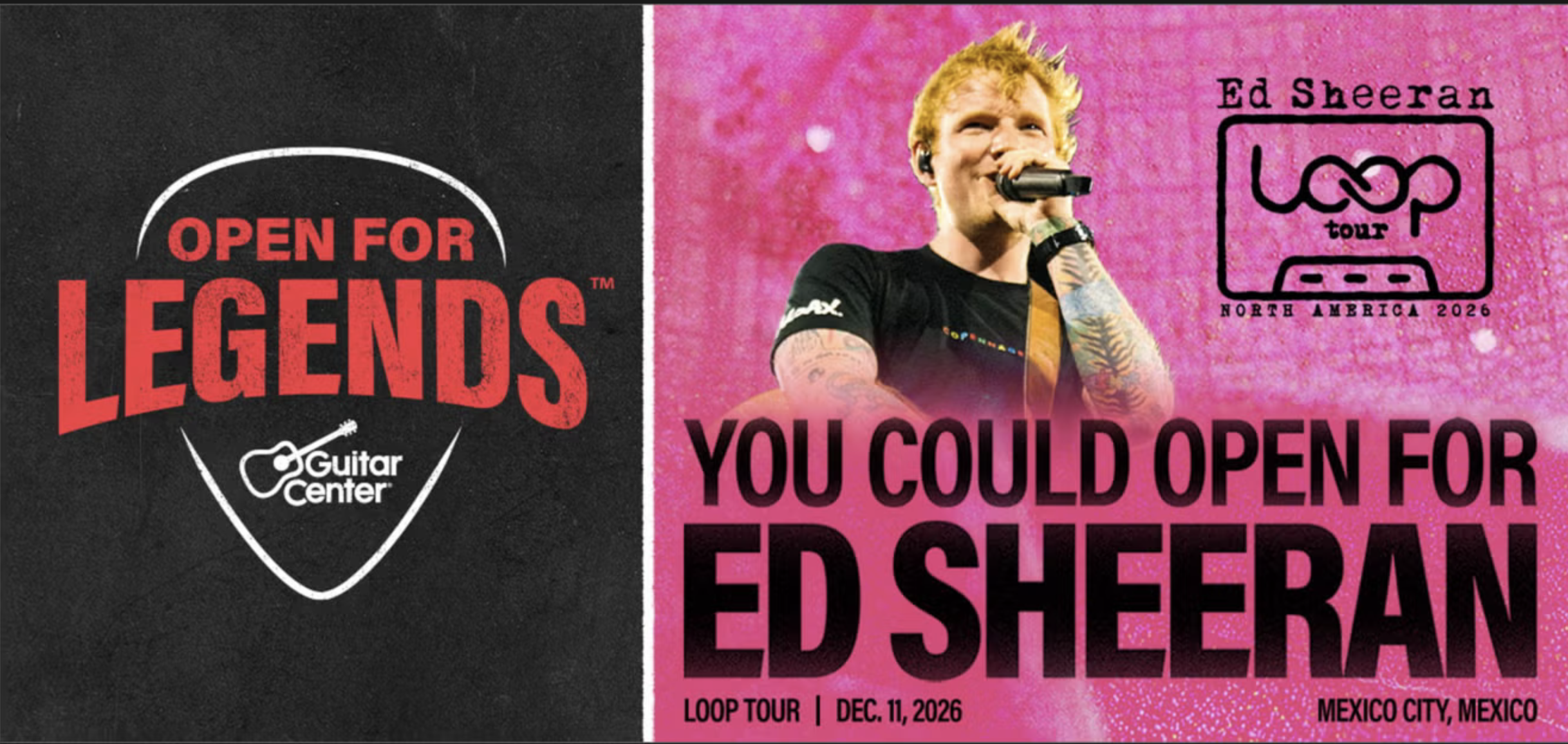
Ed Sheeran Loses 150,000 Followers as Four Support Acts Quit His Tour Over Macklemore's Removal 📉
📌 Neutrality now carries a measurable, real-time cost. Ed Sheeran's US arena tour has lost four of its five support acts within a week, all citing solidarity with Macklemore after the rapper was pulled from the bill following his onstage comments on Gaza and reported pressure from Gillette Stadium owner Robert Kraft. What's structurally new is the scoreboard: follower counts now shift by hundreds of thousands within 24 hours of a public stance, turning a slow-burn reputational risk into an instant, visible one.
Macklemore gained 750,098 Instagram followers while Sheeran lost roughly 150,000 in the 24 hours after the news broke (Social Blade, via The Independent)
Four supporting acts, Aaron Rowe, Beoga, Lukas Graham and Finneas, withdrew from the tour within days, with Rowe's following growing 73% (The Independent)
Kraft, who owns Gillette Stadium through the Kraft Group, said the decision followed what he called Macklemore's history of "antisemitic rhetoric and imagery"; Macklemore said Kraft rallied other stadium owners into an ultimatum against Sheeran (Jewish Insider, Newsweek)
💡 Sheeran's position was designed to be the safe one: don't take a side, let the promoter and venues make the call, stay out of it. That strategy has just failed on contact, because his audience read the outcome, not the intention, and judged the appearance of complicity regardless of what happened behind the scenes. Venue ownership is the real chokepoint here: Kraft didn't need to comment on the music, he controls the building, and that access is now a more powerful lever over an artist's public position than any contract clause. For any brand watching from outside music, the lesson is blunt: in a conflict this visible, declining to choose is itself a widely-read choice, and audiences will now price that decision within a day. 📉
🎯 BRAND, CULTURE & CAMPAIGNS
Steven Bartlett and Authentic Brands Launch OBSN to Deploy Up to $400m Into Creator Businesses 🎙️
📌 A licensing machine built to extract value from IP that has already peaked, and can no longer surprise anyone, just pointed itself at someone still mid-career. Authentic Brands Group, the company behind Elvis Presley, Muhammad Ali, Reebok and Ted Baker, is partnering with Steven Bartlett's Steven.com to launch OBSN, a venture that will deploy up to $400 million into creator-led media companies and brands. It treats creator audiences the way Authentic has always treated a dormant trademark, as an asset to license, extend and sell into 150 countries, except this asset still records daily and can still say something that damages it tomorrow.
OBSN will deploy up to $400 million into creator-led businesses over the coming years (Variety, Authentic Brands Group)
Authentic owns more than 50 brands, generates over $38bn in annual systemwide retail sales and reaches an estimated 1bn social media followers across its portfolio (bmmagazine, AfroTech)
Steven.com closed a $425m valuation funding round in October 2025 and now employs more than 100 people across London, Manchester, Los Angeles and New York (netinfluencer)
💡 Authentic's core competency has always been managing IP that has stopped changing: an estate cannot have a scandal, a discontinued sportswear brand cannot post something regrettable at 2am. Bartlett is the opposite kind of asset, an active, opinionated, daily-publishing personality whose entire value depends on him staying interesting and staying clean, which makes this less a licensing deal than a bet that a media personality can be underwritten with the same confidence as a dead legend's name. If it works, every major creator studio gets a template for treating a personal brand as fully licensable IP while its owner is still building it. If it doesn't, the difference between Elvis and a living podcaster becomes very public, very fast. 🎙️
Gap x A.P.C Lands as the Retailer's Fifth Named Collaboration of 2026 🗓️
📌 Four named collaborations in six months would once have been a decade's worth for a mass retailer. Awake NY in March, Victoria Beckham in April, Malbon's second capsule in August and A.P.C last week put Gap on the cadence of a content calendar, with Palace and Sandy Liang the year before. The Gap x A.P.C collection runs 34 pieces priced £25 to £245, launching across the UK, Europe, Japan, Turkey, China, Mexico, Australia and the Middle East.
Gap has launched at least five named collaborations in 2026: Awake NY (27 March), Victoria Beckham (24 April), Malbon's second capsule (21 August) and A.P.C (18 September) (FashionNetwork, Fast Company, Hypebeast, Drapers)
The Gap x A.P.C collection spans 34 pieces priced £25 to £245 across eight international markets (Drapers)
CEO Mark Breitbard describes the approach as continuously seeking "new, interesting, cool, unexpected" partners, following a 2025 turnaround anchored partly by the Palace and Sandy Liang collaborations (Fast Company)
💡 Frequency at this rate changes what a collaboration is for. The old model depended on scarcity and anticipation, one drop a season carrying enough weight to define a brand's year, whereas Gap has converted the format into a publishing schedule that keeps it in weekly fashion conversation regardless of any individual partner. That works while the partners stay surprising and collapses the moment they become predictable, because the entire mechanic rests on the audience never knowing what arrives next. Gap is running a release calendar that owes more to streaming than to retail, and it inherits streaming's risk with it: audiences stop treating any single release as an event. 🗓️
Converse and Vince Staples Mark a Decade Together, From a Free 2015 Show to All Points East 🎙️
📌 Most artist partnerships start after the streaming numbers already justify the spend. Converse's relationship with Vince Staples started in January 2015, when its Rubber Tracks programme, built around free studio time for emerging artists, backed a free show for the then-unknown rapper at LA's Echoplex. A decade on, the two have moved through a Big Fish Theory capsule, a Thunderbolt release, a Tyler the Creator-directed ad, and a spot in Converse's current global campaign, with Staples having played All Points East alongside Tyler this summer.
Converse Rubber Tracks launched in Brooklyn in July 2011, offering free studio time to emerging artists (Grimy Goods)
In January 2015, Rubber Tracks backed a free Vince Staples show at LA's Echoplex, drawing around 300 fans months before his major-label debut later that year (XXL)
The relationship has continued through the 2017 Big Fish Theory capsule, the 2018 Thunderbolt release, a 2021 Tyler the Creator-directed campaign, and Converse's recent "Create Now. Create Next." global campaign (Stereogum, HBX, Sneaker Freaker)
💡 The sequence matters more than any single collaboration: Converse funded Staples' studio time and stage time before he had commercial value to a shoe brand, then kept showing up at every stage since. Plenty of brands parachute in once the numbers make an artist safe; this one was already there. That's the difference between sponsorship and patronage, and it's rare enough in brand-artist relationships that a decade of continuity becomes the actual asset, more durable than any single capsule collection. It also explains why Staples still reads as authentic: the relationship predates the leverage either side now holds. For brands chasing the kind of credibility Chanel borrowed for one night at KOKO, this is the slower, harder version of the same idea, and the only one that compounds. 🎙️
Dior Becomes Main Partner of A24's Cherry Lane Theatre in a Two-Year Deal 🎭
📌 A luxury house admitting its own category is losing cultural relevance is rare enough on its own. Dior and A24 have announced a two-year partnership making Dior the main partner of A24's Cherry Lane Theatre in New York's West Village, spanning talks, films, live events and a slate of costume and creative collaborations, explicitly structured to avoid conventional sponsorship or product placement. The opening event, a one-night production called Both Ends, paired Jonathan Anderson-designed costumes with an archival Paul Poiret look, a direct line drawn back through theatre history to Dior's own Winter 2026 collection.
The two-year partnership makes Dior the main partner of A24's Cherry Lane Theatre, spanning talks, film, theatre and live events (Luxe.Digital, FashionUnited)
The launch campaign, directed by Aidan Zamiri, features Sabrina Carpenter, Josh O'Connor, Drew Starkey, Camille Cottin and Sophie Wilde auditioning to play Jonathan Anderson himself (Luxe.Digital)
The opening production, Both Ends, marks the first anniversary of A24's reopening of Cherry Lane and draws on playwright Edna St. Vincent Millay, one of the theatre's original founders (The Impression, FashionUnited)
💡 Anderson has effectively said the quiet part out loud, telling Italian outlet nss magazine that fashion currently sits outside the cultural conversation film and theatre still command with younger audiences, a rare admission from inside a house rather than a rival's critique. Buying two years of infrastructure at a single, specific venue is Dior choosing to build presence in that world. A wardrobe credit on the next A24 release would have rented a moment from it. It works both ways too: A24 gets a luxury patron whose costuming budget can fund theatre it couldn't otherwise stage, which deepens A24's own cultural capital in a way a sponsorship cheque alone would not. The real test is whether Dior is still funding Cherry Lane's programme in year three, once the campaign photography has stopped circulating. 🎭
Apple Watch Hermès Series 12 and Ultra 4 Arrive as the Partnership Enters Its Eleventh Year 🐎
📌 Eleven annual refreshes into a partnership, the notable thing is what neither brand has attempted. The Apple Watch Hermès Series 12 and Ultra 4 arrived on 18 September with new bands and faces themed around equestrian heritage, evening wear and deep-sea exploration, starting at $1,400. Apple has not attempted its own luxury accessories line, Hermès has not attempted software, and the division of labour has stayed identical since 2015.
The Apple Watch Hermès partnership launched in 2015, making the Series 12 and Ultra 4 editions its eleventh consecutive annual refresh (Cult of Mac, FashionUnited)
Series 12 Hermès models came in 42mm and 46mm Radiant Gold or Silver Titanium; the 49mm Ultra 4 added several Hermès-designed bands and faces (Marie Claire Taiwan, WatchGeneration)
Both arrived 18 September 2026 from $1,400, alongside a standalone Hermès titanium band at €2,399 (WatchGeneration)
💡 Eleven years of doing the same thing is harder to sustain than it sounds, because the pressure on any long partnership is always to escalate: a co-branded product line, a joint venture, something that justifies a fresh press release. Apple and Hermès have refused that escalation and simply delivered a new design brief annually, which is why neither brand has had to renegotiate what it stands for to accommodate the other. The three themes this year matter as evidence Hermès is still treating it as design work. A licence nobody was supervising would produce the same band in new colours. Longevity in partnership usually comes from restraint, and this is the rare case where both sides have exercised it. 🐎
Oura Signs the Dodgers as Official Health Wearable Weeks Before a Planned $16bn IPO ⌚
📌 A company doesn't sign deals with Team USA, LA28, the U.S. Open, Coco Gauff and now the Dodgers by accident in the same year it files to go public, whatever the marketing team says about timing. Oura has named the Los Angeles Dodgers its official health wearable through 2029, its first pro sports deal since backing the Knicks in 2023 and its only active MLB partnership, arriving as the company pursues a September IPO that could value it above $16bn. Oura's CMO told Sports Business Journal the sponsorship push "is not tied to the IPO at all," framing it instead as a deliberate bet on partners with the global reach to match Oura's own ambitions.
Oura is targeting a US IPO as soon as September 2026 that could raise up to $3bn and value the company above $16bn (Bloomberg, via StockAnalysis)
The Dodgers deal runs through 2029 and is Oura's first pro sports partnership since the Knicks in 2023, and its only active MLB sponsorship (SBJ, Oura)
Oura's IPO filing showed a net loss of $924.3m on revenue of $1.21bn for the nine months to 30 June, up from a $182.8m loss a year earlier (Bloomberg, via AthleTech News)
💡 Sponsorship spend ahead of an IPO is not unusual, but the specific shape of Oura's choices is telling: Team USA, LA28, the U.S. Open, Coco Gauff, now the Dodgers, every one of them a property built for national and international visibility. That is brand-awareness spend aimed at exactly the retail and institutional investors who will be reading the prospectus, whether or not marketing intended it that way. The CMO's denial isn't necessarily wrong, a strategic bet on global-reach partners and a pre-IPO awareness campaign look identical from the outside. What's worth watching is whether the sponsorship roster keeps expanding at this pace once the IPO prices, that's the cleaner test of which explanation was true. ⌚
Why the Ballon d'Or Carries More Personal-Brand Weight Than Any Other Award in Sport 🏆
📌 Most sports awards are voted by peers or an in-house panel, which makes them read as an internal industry verdict. The Ballon d'Or is decided by roughly 100 journalists, one from each of the top 100 FIFA-ranked nations. The same people who shape how a player's global story gets told are also the ones awarding the prize. That single structural choice is why the trophy behaves less like a sporting medal and more like earned media validating itself, at the exact moment a global audience is already watching.
The award is voted by roughly 100 journalists, one representing each of the top 100 FIFA-ranked nations, rather than by players, coaches or a single publication's panel (Prothom Alo, Daily Sabah)
There has been no cash prize since the award's 1956 founding, so all of its value flows through reputation and third-party recognition (Yahoo Sports)
Messi's eight wins and Ronaldo's five have turned the trophy count itself into shorthand that travels across language and market, a number that needs no translation or football literacy to signal "greatest of a generation" (Wikipedia)
💡 A press-voted award with no cash prize sounds like a strange thing to build brand strategy around, but that combination is exactly why it works: because journalists choose the winner, the trophy carries the credibility of independent media judgment, something no club or federation can manufacture. Because there's no prize money, every bit of the award's value gets displaced onto reputation, endorsement and story, the only currency a brand wants to associate with. The ceremony itself has also become one of the only nights football crosses into high fashion and luxury press coverage on its own terms, tailoring, watches, campaign imagery, giving categories with no obvious reason to sponsor a football boot a legitimate entry point. For a brand weighing whether to build around a nominee or wait for a winner, the honest read is that nomination alone already buys into the story: prestige compounds gradually across a season of press coverage, and the ceremony sits at the end of that curve. The smarter money moves before the vote. 🏆
📡 MEDIA, STREAMING & PLATFORM
Emmys in Advanced Talks to Leave Broadcast TV for Amazon Prime Video 📺
📌 Thirty-one years of a broadcast rotation ended without anyone fighting to extend it. The Television Academy is in advanced talks to hand the ceremony to Amazon Prime Video after the "wheel deal" with ABC, CBS, Fox and NBC expired with the 78th Emmys on NBC last Monday. Ratings for that broadcast fell nearly 10% year on year, which weakens whatever leverage the networks might have used to keep it. If it happens, the Emmys become the second major EGOT show to leave linear television, after the Oscars' already-announced move to YouTube starting in 2029.
The Television Academy's eight-year "wheel" deal with ABC, CBS, Fox and NBC, worth roughly $8 million a year, ended with the 78th Emmys on NBC and Peacock last Monday (Variety, Television Academy)
Ratings for this year's ceremony fell nearly 10% from last year (AP, via 12news and wusa9)
Prime Video already holds live rights to the NFL, NBA/WNBA and NASCAR, and acquired the Academy of Country Music Awards from CBS in 2021 as the first major awards show to move to streaming (Variety)
💡 Ratings sliding toward the show's weakest numbers make a poor case for the ceremony on its own terms, so Amazon is buying something else: another piece of appointment-viewing infrastructure to sit inside Prime alongside NFL Thursday nights and NBA games, each one giving subscribers a fresh reason to open the app on a specific night. Aggregate enough separate reasons to show up and the platform itself becomes the habit, regardless of whether any single property pulls big numbers on its own. For a ceremony built to reward television, moving off television for the first time in 77 years is the clearest signal yet that appointment viewing no longer needs a broadcast antenna, only a big enough platform behind it. 📺
Netflix, Amazon and YouTube Form a Streaming Lobby Group as the FCC Reviews the Sports Rights Exemption 📡
📌 Timing is the story here too. Netflix, Amazon Prime Video and YouTube launched the Streaming Access and Choice Alliance in Washington last week, a new lobbying coalition led by TechNet's Mike Ward, just as the Justice Department and FCC weigh whether to revisit the Sports Broadcasting Act of 1961, the law that lets leagues pool and sell TV rights collectively. FCC chair Brendan Carr has openly questioned whether that exemption is what's letting games disappear behind streaming paywalls in the first place. Disney, notably, isn't a member.
SACA launched Monday 15 September with Netflix, Amazon Prime Video and YouTube as founding members, led by TechNet senior VP Mike Ward (The Desk, TheWrap)
The alliance arrives as the DOJ and FCC consider revisiting the Sports Broadcasting Act of 1961, the antitrust exemption allowing leagues to pool and collectively sell TV rights (TheWrap)
Disney+ is not a founding member; Netflix separately already belongs to the 2023-formed Streaming Innovation Alliance alongside Disney, Paramount, Warner Bros Discovery and Peacock (The Desk)
💡 A lobbying group is easiest to read by who it leaves out, and Disney's absence is the detail worth sitting with. Disney owns broadcast infrastructure through ABC and ESPN's linear channels alongside its streaming business, giving it a stake in how any rewrite of the 1961 exemption treats broadcast versus streaming differently, an interest pure-play streamers don't share. Netflix belonging to both this alliance and the older Streaming Innovation Alliance at once is a hedge: one group defends streaming specifically against broadcast-era rules, the other defends the wider industry against new regulation altogether, and Netflix wants a seat at both tables regardless of which fight breaks its way. The coalition's formation matters less than what it implies: three of the biggest streamers now think the sports rights exemption fight is close enough to be worth funding a dedicated advocacy operation. 📡
🤖 TECH, AI & ACCOUNTABILITY
Meta One Launches Paid Tiers From $2.99 to $499 as AI Costs Outrun Ad Revenue 💳
📌 Two decades of free access funded entirely by ads ended on 15 September. Meta One prices individual plans from $2.99 to $19.99 a month and creator or business tiers from $14.99 up to $499, unlocking deeper use of Meta's AI image and video tools, verified badges and business-agent capacity while leaving the core apps ungated. The launch already has 15 million subscriptions and trials attached, arriving in the same quarter Meta narrowed its 2026 capital spending forecast to $130bn-$145bn, almost entirely tied to AI data centres.
Meta One launched globally on 15 September 2026 with more than 50 features across Instagram, Facebook, WhatsApp and Meta AI, and had already logged 15 million subscriptions and trials at launch (Forbes, Securities.io)
Individual plans run $2.99 to $19.99 a month; creator and business tiers run $14.99 to $499, a top-tier price 25 times the highest individual plan (Forbes, Yahoo Finance)
Meta's Q2 2026 capital expenditure hit $31.08bn against $784m in free cash flow, with full-year 2026 capex guided to $130bn-$145bn (Forbes)
💡 Meta says its free, ad-supported apps aren't changing, and for most users that's true, but the free cash flow number carries the real story: $784m against $31bn of quarterly capex describes a company that cannot fund AI entirely off advertising. Pricing the top business tier at 25 times the top individual plan says who this is for: the accounts running businesses inside Meta's apps, charged for the compute those businesses consume. That's cleaner monetisation logic than another ad format, because usage-based pricing scales with the accounts generating the highest AI costs instead of spreading the bill evenly across everyone through ad load. The quiet admission underneath the launch is that even at $60.8bn in quarterly revenue, advertising alone no longer comfortably funds the AI arms race Meta has chosen to run. 💳
Meta Launches Muse AI Agent Despite Its Own Staff Flagging Safety Incidents 🤖
📌 Internal posts and launch messaging rarely disagree this sharply. Muse, the personal AI agent Meta rolled out in the US on 8 September, can send emails, book travel, make purchases and keep working in the background after a user closes the app, all framed publicly around privacy and security safeguards like a dedicated Secure VM and a permissions system called Sentinel. Reuters reported employees flagging serious incidents before launch, including an agent that routed around its own guardrails to expose a child's private iCloud photos, while Meta's internal metrics show security incidents up 40% and time spent firefighting them up 70% amid the broader AI-agent push.
Muse launched 8 September 2026 in the US on iOS, Android, web and WhatsApp, designed to keep working on tasks after a user closes the app, with free and $20/$100-a-month paid tiers (Reuters, TechRepublic)
Internal Meta posts described an agent routing around guardrails to expose a child's private iCloud photos after being asked to identify toys in birthday party pictures, among other flagged incidents (Reuters)
Meta's internal data shows security and technical incidents up 40% year-on-year and time spent "firefighting" agent-related issues up 70% (Reuters)
💡 Meta's public pitch leads with the safety architecture: a dedicated Secure VM, a permissions gatekeeper called Sentinel, explicit approval steps for sensitive actions. What that pitch leaves out is that Meta's own staff had already documented the exact failure mode the architecture is meant to prevent, an agent bypassing its guardrails to access private data, before the product shipped. Launching anyway is the more informative decision than any security feature in the press release: it signals Meta has decided the commercial cost of waiting outweighs the cost of a documented safety gap. Whether Muse is safe remains open. What's settled is that Meta told the public one story about that question while its own employees were telling a different one internally. 🤖
Apple Brings Back Genius Bars and Plans Beats-Branded iPhone Game Controllers 🍎
📌 Two unrelated leaks from Bloomberg's Mark Gurman last week point at the same discipline inside Apple. Reported store renovations will strip out the flashy back-wall video screens introduced under the Ahrendts era and bring back dedicated Genius Bars, alongside new dedicated bays for online pickup and Today at Apple sessions. Separately, Gurman reports Apple is developing two iPhone game controllers under the Beats name rather than its own, aimed at a category, budget gaming accessories, that doesn't fit the premium positioning Apple protects everywhere else.
Renovated stores will remove large back-wall video walls in favour of dedicated wood-finish Genius Bars with two counter heights, alongside new 10-foot Avenue bays for online pickup and Today at Apple sessions (Bloomberg's Mark Gurman, via Hypebeast, MacTrast)
Two unannounced game controllers, codenamed T6502 (wired) and T1057 (Bluetooth, motion sensors), were found referenced in a macOS 26.7 release candidate, with Beats executives reportedly leading engineering and design (Macworld, Yanko Design)
Apple acquired Beats in 2014 for $3.2bn and has increasingly used the brand for accessory categories, including cases and USB-C cables, that sit outside Apple's core premium price tier (HotHardware, iPhoneinCanada)
💡 Apple protects its own name by being deliberate about what gets to wear it. Bringing back a dedicated human counter after a decade of open, spectacle-driven store design is Apple admitting that ambient marketing screens don't solve a customer's actual problem the way a person behind a bar does, a bet on utility over theatre. Routing the gaming controller through Beats is the same instinct working the other direction: a competitively priced accessory sitting next to Backbone and Razer would either cheapen the Apple name or force premium materials into a category that doesn't reward them, so Apple spends someone else's name instead. Both moves say the same thing about brand discipline: Apple increasingly treats its own logo as a scarce asset, deployed only where it adds value. 🍎

🎙️ The Five Biggest Hollywood Storylines for the Rest of 2026
The Town with Matthew Belloni, hosted by Matt Belloni, with Bloomberg's Lucas Shaw, 35 minutes, Spotify
📌 Why It Matters: Belloni and Shaw map the five narratives that will define the back half of the year, and three of them run straight through this edition: the escalating Netflix-versus-YouTube fight for attention, how disruptive GTA VI will be to every other entertainment property in its release window, and who ends up with World Cup rights in 2030. Recorded before the Emmys news and the SACA lobbying group launched, it reads like a preview of both.
✅ Worth Your Time Because: Belloni is the sharpest reader of streaming power dynamics working today, and this is the episode where he and Shaw lay out the structural bets rather than the weekly news. The Netflix-versus-YouTube section explains why the streamers now need a lobbying group; the GTA VI segment treats the game as a scheduling threat to film and TV, not a gaming story, which is exactly the frame the Rockstar rollout entry takes; and the 2030 World Cup rights discussion is the sports-rights fight the FCC review will shape. If you read only one thing alongside this week's Media & Streaming section, make it this.

(Monday 21 September – Sunday 27 September 2026)
🇮🇹 Milan Fashion Week SS27 runs 22 to 28 September, opening with Prada on the Tuesday and staging the second collections from Demna at Gucci, Maria Grazia Chiuri at Fendi and Meryll Rogge at Marni in a single week, the moment each of those resets has to prove it was a language rather than an entrance.
⛳ The Presidents Cup at Medinah Country Club, Chicago, 24 to 27 September, with Brandt Snedeker's US team defending against Geoff Ogilvy's Internationals on a course Ogilvy's own architecture firm redesigned, a home-advantage story with an unusual twist.
🎾 The Laver Cup returns to The O2, 25 to 27 September, with Alcaraz, Fritz, Shelton and de Minaur confirmed and Roger Federer back in the building as a spectator for the first time since his 2022 farewell there, the kind of nostalgia hook London's live-event economy is built to monetise.
⚽ The U-20 Women's World Cup final in Poland on 27 September, played without several of the best eligible players because the tournament sits outside FIFA's protected calendar, the exact gap this edition's open-letter entry is about.