
Welcome to the next edition of On The Record, thoughtful analysis on culture, entertainment, tech, fashion, music, sport, and brands. Here’s a round-up of key conversations and campaigns that caught my attention this week.
This week's stories share a single, sharpening logic: the contest has stopped being about who makes the best content and become about who owns the route to the audience. The clearest statement of it is financial, with Fox paying $22bn for Roku to own the interface rather than the programming, the Reuters Digital News Report confirming that social and video platforms have overtaken news organisations' own sites for the first time, and L'Oréal partnering OpenAI precisely because the large language model is becoming the new front door to beauty discovery. The same revaluation runs through sport: at FIFA's World Cup, Levi's turned a clean-stadium ban into the tournament's best free campaign and Polymarket's $2bn betting market dwarfed FIFA's own official prediction partner, both proving that the rights a governing body sells and the attention that actually accrues are now separate currencies, while Cape Verde's Vozinha became an overnight phenomenon driven less by a broadcaster than by CazéTV, the streamer holding the exclusive distribution. Where ownership is genuine rather than rented it compounds, as Taylor Swift's Songwriters Hall of Fame induction crowns an artist who bought back her masters, Absolut and Madonna draw on four decades of owned standing in queer culture rather than a Pride-month rental, and adidas builds real equity in Mexican football with Willy Chavarria, while those who only leased access are being repriced, from the under-16 ban prompting analysts to cut £1.3bn from UK digital ad forecasts to Brexit making the live route unviable for the emerging artists who depend on it most. The throughline is not that control is shifting in the abstract, but that distribution and direct ownership of the audience are now worth more than the content or performance they carry, and the players who built that ownership rather than leasing it by the campaign are the ones beginning to collect.

Commodore's $500 Callback 8020 Sells Restriction as a Premium Product 📵
📌 The intentional-tech category has quietly grown a luxury tier. The Callback 8020, a Linux-based flip phone running a customised Sailfish OS, blocks browsers, email and social media at the operating-system level, with the restrictions built to be permanent rather than switched off. It still runs around 99% of Android apps, so messaging, maps and music remain intact, which positions it less as a dumbphone than as a curated smartphone with the addictive surfaces stripped out. At $499 to start, the proposition is genuinely unusual: buyers are paying a smartphone price for deliberately fewer capabilities, with the friction itself reframed as the value.
Starts at $499.99, rising to roughly $640 for the Founders Edition, with pre-orders opening 30 June 2026 (Commodore)
Runs approximately 99% of Android apps through a sandboxed, de-Googled Sailfish OS built with Finnish firm Jolla (Commodore / Jolla)
Commodore brand acquired in 2025 by Christian "Peri Fractic" Simpson, the retro YouTuber now serving as CEO, who cites his own phone habit as the design brief (XDA / The Verge)
💡 The product on sale here is arguably the logo, not the handset. Commodore holds real heritage capital from the C64 era, the best-selling computer of all time, but it is spending that nostalgia in a category where it has no track record and where Light Phone, Punkt and a revived Nokia already sit. The sharper signal is what the price reveals about the market: restraint has become a status purchase, and attention scarcity is now something brands sell back to consumers at a premium rather than something they engineer out. Whether this compounds into a durable hardware business or simply rents a wave of digital-wellness sentiment depends on whether anyone keeps the phone once the novelty of the badge fades. 📵
UK's Under-16 Social Media Ban Quietly Redraws the Music Discovery Map 🎤
📌 The coverage has run almost entirely on child safety and a stand-off with Big Tech, which is where the government chose to point it. The consequence nobody is costing yet sits in music. The tier being walled off is the top of the fandom funnel, the most viral-native slice of the audience that turns a fifteen-second clip into a chart position, and removing it does not dent ticket revenue tomorrow so much as interrupt the supply line that feeds it years out. The quieter effect is structural: the ban rewards artists who own their fan infrastructure and raises the cost for everyone who has been renting reach cheaply on a feed.
Ban announced 15 June 2026, with the first regulations due before the end of the year and enforcement expected spring 2027 (GOV.UK)
Covers Snapchat, TikTok, YouTube, Instagram, Facebook and X, while messaging services WhatsApp and Signal remain exempt (NPR / GOV.UK)
Ofcom can fine non-compliant platforms up to 10% of global annual revenue, with court-ordered UK blocking as a backstop (Smartphone Free Childhood)
💡 This is the Capital Test applied to a whole generation of artists at once. Rented reach was the great equaliser of the last decade, and it is about to get more expensive and less reliable precisely for the acts who leaned on it hardest, the Olivia Rodrigo, Sabrina Carpenter and Chappell Roan tier built on the discovery loop this interrupts. The acts that look insulated are the ones who own their channels rather than borrow them, Taylor Swift being the obvious case. Expect the logic to surface in A&R weighting toward artists with a real live business, brand budgets moving toward IRL moments a 15-year-old can attend with a parent, and an eighteen-month window in which the smart money builds owned, direct channels rather than waiting to do it in a panic come spring 2027. 🎤
BBC Defunds Its Own Linear Institutions to Chase Platforms It Doesn't Own 📺
📌 The reflex reading is another legacy broadcaster shrinking, but the detail that matters is the brief. A former Google executive now runs the BBC, and his first move is to defund linear, axing six Radio 4 shows including The World Tonight, on air since 1970, and trimming the Today line-up, in order to "meet audiences where they are". The framing is reinvention; the harder truth is a public broadcaster trying to out-distribute a structural funding mismatch, spending against a fixed, politically contested input while its competitors run on variable, scalable revenue. With the Royal Charter up for renegotiation at the end of 2027, this round is existential, not cyclical.
550 roles cut across News, Nations and Content, the first phase of a plan to lose around 1,800 to 2,000 jobs and save £500m ($670m) over three years (BBC / Variety)
Commissioning spend cut by roughly £80m ($107m) in 2027-28, with six Radio 4 programmes axed including The World Tonight, running since 1970 (Prolific North)
Director general Matt Brittin, former President of Google EMEA, took the role on 18 May 2026, with the BBC's funding settlement due for renegotiation by the end of 2027 (Globe and Mail / Wikipedia)
💡 The audience did not disappear, it moved, and the BBC knows where to: YouTube, podcasts, streaming, creators. But "meet audiences where they are" is the same line management has reached for through every cuts round for years, and distribution was never really the core problem. The deeper bind is that the BBC holds rare owned cultural capital, trust, heritage, institutions like Today and The World Tonight, and is spending it down to chase reach on platforms it neither owns nor controls, the inverse of what an organisation with that equity should do. Appointing a Google executive to run it says the board has framed this as a platform problem; the likelier truth is a funding-model one, and the audience this restructure is really speaking to sits less in the schedules than in the 2027 Charter negotiation. 📺
News Gets Platformised: Rented Reach Overtakes Owned Channels as Trust Hits a Record Low 📉
📌 The line everyone will quote is that social and video have overtaken television, but the more consequential crossover is quieter. Platforms have now passed news organisations' own websites and apps as the most used route to news worldwide, which is owned distribution being beaten by rented distribution, and it is happening at the exact moment trust in news has fallen to its lowest level on record. The two trends compound badly. News brands are growing more dependent on channels they do not control while the one asset meant to differentiate them, credibility, erodes underneath.
Social and video networks are now the most used news source globally at 54%, ahead of news organisations' own sites and apps (51%) and TV (52%), with TV down 13pp and owned sites down 12pp since 2020 (Reuters Institute DNR 2026)
Overall trust in news sits at a record-low 37%, having fallen in 29 of 48 markets including the UK, while news avoidance has risen to 42% (Reuters Institute / IFJ)
AI chatbots as a news source rose from 7% to 10% in a year, reaching 16% among under-35s, and 52% of 18-24s now name social, video or AI as their main source (Reuters Institute)
💡 This is the data sitting underneath the BBC's cuts and every "meet audiences where they are" memo of the past year. The Capital Test reading is stark: news organisations spent a decade renting reach on platforms to chase scale, and have now rented their way past their own front door, with more people meeting the news on someone else's algorithm than on a masthead's own property. The danger is not the 54% itself but the pairing of rising platform dependence with falling trust, because a brand that no longer owns the relationship and no longer commands the credibility has very little left to monetise. The narrow opening sits in who pays and why: those who do are paying for what they cannot get anywhere else, which points the survivors toward distinctiveness and direct relationships rather than volume on rented land. 📉
Vozinha Earned the Performance, CazéTV Owned the Distribution: Where Star-Making Power Now Sits ⚽
📌 The easy version is a wholesome underdog story, and on the pitch it entirely is: a 40-year-old who did not turn professional until 25 kept European champions Spain scoreless on his country's World Cup debut and took Man of the Match. The part worth watching sits off the pitch. The performance was earned, but the fame was distributed, and the engine was CazéTV, the only Brazilian channel holding rights to all 104 matches, whose host clocked mid-broadcast that the goalkeeper had barely any followers and pointed 31 million subscribers at him. A single creator with exclusive national rights did in real time what a network's entire promotional machine used to take a whole tournament to manage.
Cape Verde, on their World Cup debut, held European champions Spain to a 0-0 draw in Atlanta on 15 June 2026, with Vozinha making seven saves and a team-high 68 touches (ESPN / Yahoo Sports)
His Instagram following went from roughly 50,000 before kick-off to more than 13 million within days, and is still climbing, surpassing the likes of Patrick Mahomes along the way (Yahoo Sports / Today)
The surge was amplified by CazéTV, run by streamer Casimiro "Cazé" Miguel and his 31 million YouTube subscribers, who urged viewers during the broadcast to follow the goalkeeper and has since taken credit for the wave (AP)
💡 Two assets changed hands here, and only one belonged to the goalkeeper. Vozinha banked a genuinely owned audience, 13 million-plus followers earned on merit, with the open question being whether a 40-year-old journeyman converts one night into anything durable before attention moves on. The larger shift is who held the lever: not a broadcaster but a creator with exclusive rights and a community trained to act on his cue, which is FIFA's own design, having spread 2026 across a record number of digital and creator deals to reach younger audiences. The star-making function legacy broadcasters once monopolised has relocated to creators who own both the rights and the audience relationship, and the governing bodies are handing them the keys on purpose. 📲
FIFA's Clean-Stadium Rule Tried to Erase Levi's and Handed It the World Cup's Best Free Campaign 👖
📌 FIFA's clean-stadium policy is one of the most aggressive pieces of commercial control in sport: for the duration of the tournament, any host venue carrying a non-sponsor name must strip or cover it, a rule that overrides the naming-rights contracts the venues already signed. Most affected brands complied quietly. Levi's, whose stadium became San Francisco Bay Area Stadium, draped its signage in a white tarp cut to the exact shape of its batwing logo, switched its own social profiles to match, and let the internet do the rest. The cover-up, not the logo, became the campaign, and it cost the brand effectively nothing to win the conversation around an event it was legally barred from appearing in.
Levi's holds a 10-year, $170m naming-rights deal for the Santa Clara venue, around $17m a year and renewed in 2024, voided for the duration of the World Cup (DesignRush)
Its Instagram post, captioned "Welcoming the world to the beautiful [redacted] stadium", passed 766,000 likes and nearly 9,000 comments within days (DesignRush)
The rule applies across all 16 host venues and supersedes existing contracts, with MetLife, Gillette, SoFi and Mercedes-Benz branding also stripped or covered (KQED / Social Samosa)
💡 The witty-stunt reading is true and the least interesting part of this. The rule exists to manufacture scarcity FIFA can sell back to its official partners as clean sightlines, which means the naming-rights holders who paid most for year-round visibility are precisely the ones erased during the single biggest event their venue will ever host. Levi's took that disadvantage and converted it into the exact upside the official sponsors paid for, without paying, and it only worked because the batwing reads from silhouette alone, roughly 170 years of equity compounded into an asset that survives being deleted. In Capital Test terms the official sponsors are renting the tournament's altitude for a window that expires on 19 July, while Levi's drew on standing it owns outright and let the restriction handle distribution, proving rights and attention now run as separate currencies, and you can capture a great deal of one while holding none of the other. 👖
Brexit Touring Barriers Are Hollowing Out the Live Route Just as It Becomes Music's Most Defensible Asset 🎸
📌 A parliamentary committee has put numbers to something the sector has said for years: touring the EU has become financially unviable for all but the most established UK acts. The headline figure is Kate Nash, a 20-year career and millions of streams, losing around £26,000 on her last European run, but the more telling detail is who the costs fall on hardest, the younger and working-class artists who cannot absorb a five-figure loss simply to play to European audiences. The report frames this as a technical fix rather than a Brexit re-run, recommending the UK rejoin EU cultural funding and renegotiate customs and transport rules. The deeper stakes are structural: this is the UK's artist development pipeline and cultural soft power being quietly thinned out, one unviable tour at a time.
Kate Nash reported losing around £26,000 on her last EU tour, plus roughly £13,000 on her UK circuit, despite two decades and millions of streams (UK Parliament / The Independent)
The Musicians' Union says 75% of musicians who previously worked in the EU have seen a decline in bookings, while UK artist appearances at EU festivals are down more than a quarter since Brexit (Musicians' Union / Best for Britain 2025)
The report, "Cultural Touring in the EU", urges the government to re-engage with Creative Europe and its proposed successor AgoraEU and to renegotiate customs and cabotage rules (CMS Committee)
💡 Read this next to the under-16 social media ban and the picture sharpens uncomfortably. The structural drift of this moment, platform dependence rising, discovery tightening, regulation nudging artists toward live as the one owned, defensible asset, all points to touring as the answer, and this report is the bill for that answer. The cross-border live route into the UK's largest adjacent market has been made prohibitively expensive precisely for the emerging and working-class acts who most need it to build a career the hard way, which makes the friction regressive: the established absorb it, the developing cannot, and the live opportunity concentrates among those who already own capital and infrastructure. It is a slow problem, which is exactly why it does not trend, and why the pipeline thins long before anyone notices the breakout that never arrived. 🎸
adidas and Willy Chavarria Build Standing in Mexican Football Culture Rather Than Renting It 👟
📌 Most national-team World Cup merchandise operates inside tight federation guardrails built to protect symbols, which is why most of it looks like merchandise. This does not. The adidas Originals collaboration with Chicano designer Willy Chavarria, "Comienza Con El Sueño" ("It Starts With The Dream"), pairs officially licensed Selección Nacional de México apparel with his oversized, identity-driven design language, and fronts the campaign with emerging young players rather than established stars. The choice to centre the dream and the players still chasing it, led by a designer whose entire body of work is about Mexican-American identity and belonging, is the tell that this is brand-building, not a celebrity rental.
Released globally on 10 June 2026 via adidas.com, the CONFIRMED app and Chavarria's own storefront, having first previewed at his Autumn/Winter 2026 runway (WWD / Modern Notoriety)
The campaign centres emerging Mexican talent including Jesús Gilberto Orozco, Jeremy Márquez, Omar Campos and Ariel Castro, shot on grassroots pitches rather than in stadiums (SneakerNews / Modern Notoriety)
Footwear anchors the range, led by the new Willy Mega Low alongside the Megaride Bones ($220) and Megaride Copa ($200), with skeletal motifs nodding to Mexican heritage (Complex / SneakerNews)
💡 This is the Capital Test landing on the right side of the line. Football is fashion's favourite reference point right now, and most of the resulting collaborations are renting the culture's aesthetics for a launch window, which fans clock instantly. adidas is doing the rarer thing: building durable standing in Mexican and Mexican-American football culture, the most loyal and fastest-growing constituency in the host region, by co-owning it with a designer whose equity in identity and belonging is genuinely his and predates football's fashion moment. That it reads as authentic rather than extractive, staged at a tournament hosted across the United States, Mexico and Canada and built on the immigrant dream at a charged political moment, is precisely because the equity behind it is owned rather than borrowed, and owned capital is the only kind still there once the tournament ends. 👟 (Source: David Skilling, Culture of Sport)
The Under-16 Ban Triggers a £1.3bn Ad Reallocation, and the Businesses Built on Cheap Social Reach Are Most Exposed 💷
📌 The commercial flip-side of the under-16 ban is now being priced. The money does not disappear when a third of pre-teens can no longer be reached through YouTubers and TikTok: it reallocates, and analysts have already cut the UK's 2027 digital ad forecast by £1.3bn to reflect it. The expected winners are owned and controlled environments, streamers' ad tiers, family-TV tentpoles and direct school and sport partnerships, while the exposed are the businesses built on cheap, rented social reach, including creator-led sports media and rights holders who leaned on the platforms to acquire teen audiences at low cost. It is the same owned-versus-rented revaluation running through this week's other media stories, now showing up directly in where brands put their budgets.
eMarketer cut its 2027 UK digital ad spend forecast by £1.3bn, to £17bn, after assessing the ban, with the hit concentrated in year one before an expected rebound (eMarketer / Guardian)
A third of 7-14s say YouTube ads and YouTubers are how they find things to buy, ahead of TikTok and TV ads, while UK ad-tier streaming viewers across Netflix, Amazon and Disney+ have reached 27 million (Beano Brain / Guardian)
Creator-led fan media is directly in the firing line: Mark Goldbridge's The United Stand was acquired by Gary Neville's The Overlap in April 2026, and the 2026 World Cup is the first broadcast on TikTok and YouTube (City AM)
💡 The industry's reassurance, that budgets will not shrink because the money simply moves, is true and beside the point. The real event is a forced revaluation of distribution: rented social reach was the cheap way to acquire young audiences, and the ban makes it expensive or impossible for the under-16 segment overnight, while owned and semi-owned environments, subscription streamers with ad tiers, TV tentpoles, direct school and sport relationships, absorb the spend. The businesses most exposed are the ones whose entire model assumed cheap social distribution would stay cheap, creator-led fan media and sports rights holders among them, where acquisition costs rise and valuations built on low-cost audience growth come under pressure. The same lesson keeps recurring this week: reach you rent can be repriced or removed by someone else's decision, and only the audience you own travels with you. 💷
FIFA Sold the Official Betting Rights, but $2bn in Wagers Went to the Platforms That Don't Hold Them 🎲
📌 The 2026 World Cup is on course to be the biggest betting event in history, and the way the money is flowing exposes a familiar gap. FIFA created a brand-new official prediction-market partnership and handed it to a little-known blockchain firm, ADI Predictstreet, yet almost none of the action has gone there. The volume is pooling instead on Polymarket and Kalshi, the unofficial operators holding no FIFA rights at all, where bets on the winner alone have passed $2bn. It is the Levi's lesson in another category: a governing body can sell the designation, but it cannot sell the liquidity, which flows to the product people actually use.
Macquarie forecasts more than $50bn wagered globally on the tournament, up from around $35bn in 2022, making it the biggest betting event on record (Macquarie / BBC)
Polymarket's "World Cup Winner" market alone has passed $2bn and kept climbing, while FIFA's official partner ADI Predictstreet sat below $100,000 in total World Cup volume on the eve of kick-off (FT)
It is the first World Cup with regulated US prediction markets taking action alongside sportsbooks, with roughly 65% of the US population now able to bet legally, up from about 40% in 2022 (Macquarie / BBC)
💡 This is the Levi's mechanic running in finance rather than fashion: rights and attention are separate currencies, and FIFA monetised the one it could sell while the value accrued to the platforms that built the better product. The deeper move is what prediction markets are doing to the category itself, dressing gambling as "markets" and using US commodity regulation and self-certification to operate where sportsbooks face tighter rules, then embedding odds straight into match streams so the bet becomes part of the broadcast. Treat the headline numbers with care, though: a chunk of Polymarket's record volume is liquidity-mining chasing platform rewards rather than genuine conviction, which is why a 0.01% outsider like Uzbekistan drew tens of millions. And the part the launch energy obscures is the oldest in the category, that the $50bn is largely a transfer from the roughly 99 in 100 bettors who lose over time to the operators turning a month of football into a customer-acquisition engine. 🎲
World Cup Delivers the Year's Biggest TV Audiences, Including the Young Viewers Linear TV Was Meant to Have Lost 📺
📌 Set against a week of stories about television's structural decline, the World Cup is quietly making the opposite case, and the detail that matters is who is watching. England's 4-2 win over Croatia peaked at 15.4 million on ITV, the biggest UK audience on any channel or streamer since Euro 2024 and comfortably ahead of the year's biggest entertainment hit, The Traitors, at 9.8 million. More telling than the headline figure is the demographic beneath it: at 2.3 million, it was the year's largest 16-34 audience, the exact group the platformisation narrative says linear TV can no longer reach. Live sport is not so much defying that decline as exposing its limit, the one format that still gathers a mass simultaneous audience, young viewers included.
England v Croatia peaked at 15.4m on ITV with a 14.2m match average, the highest UK peak on any channel or streamer since Euro 2024 and well ahead of 2026's next-biggest, The Traitors at 9.8m (ITV / Broadcast)
It delivered the year's biggest 16-34 audience at 2.3m, with the tournament opener a week earlier having set the previous 2026 high for that age group at 861,000 (ITV)
ITVX peak traffic ran 363% above an average evening during the match, underlining that live football is now a streaming as well as a broadcast event (Advanced Television / BT)
💡 This is the necessary counterweight to the week's decline stories, and it sharpens rather than contradicts them. Everyday viewing is fragmenting to social and streaming exactly as the Reuters data shows, but that is precisely what makes the rare simultaneous-mass moment more valuable, not less: as the floor of general TV erodes, the ceiling events that still aggregate millions at once become scarcer and therefore more premium. Those events are overwhelmingly sport, which is the real reason live rights fees and tournament ad rates keep climbing while the broader schedule shrinks, and the reason TV and family-event inventory are the quiet winners of the under-16 ad reallocation. The 2.3 million young viewers are the whole argument: in a market where reaching that audience on linear is supposed to be impossible, ninety minutes of football did it, and almost nothing else on television can. 📺
Taylor Swift Enters the Songwriters Hall of Fame as the Industry Turns the Song Into an Asset Class 🏆
📌 The honour is real and the timing is the story. Becoming the youngest woman ever inducted into the Songwriters Hall of Fame, in her first year of eligibility, lands at the precise moment the song has been reframed as a financial instrument, with catalogues changing hands for hundreds of millions and investor funds treating back catalogues like bonds. Against that backdrop, the induction recognises more than craft: it canonises the asset at the base of an empire built on owning every layer of itself. She is honoured for the songwriting, but the replicable lesson sits one level down, in what she did with the rights to it.
Inducted on 11 June 2026 as the youngest woman ever and second-youngest overall behind Stevie Wonder, in her first year of eligibility, 20 years after her debut single "Tim McGraw" (Billboard / CBS)
Her 2023 Eras Tour was the first to gross over $1bn, spawning the "Swiftonomics" shorthand for the local spending each run generated (Sky News)
In 2025 she bought back the masters to her first six albums after re-recording them as "Taylor's Versions", and has since filed to trademark her voice and image amid AI concerns (Sky News)
💡 Swift is the figure this edition keeps circling, and for good reason: she is the clearest working model of the owned-versus-rented thesis running through every other story this week. The industry's structural drift is to monetise the song by selling it, catalogues offloaded to funds, masters traded between owners, value flowing to whoever holds the rights rather than whoever wrote them. Swift inverted that, re-recording to strip the value out of masters she did not control and then buying the originals back, so that she now owns the songwriting, the recordings and the direct relationship with the audience in a single stack. The induction will be read as a tribute to her instinct, and it is, but the lesson the rest of the business should take is colder: in a market that rewards owners over renters at every layer, she made herself the owner of all of them, and that, more than the talent, is why she sits outside the pressures squeezing everyone else. 🏆
L'Oréal Partners With OpenAI to Avoid Being Disintermediated as LLMs Become Beauty's New Front Door 💄
📌 Strip the launch language and L'Oréal's latest move is a defensive one. At VivaTech this week the group announced a strategic partnership with OpenAI, the headline in a wider AI push, and its own digital chief named the reason directly: large language models are becoming the new front door to beauty discovery. The risk that creates is disintermediation, because if a consumer asks a chatbot what to buy, the model becomes the layer that owns the recommendation and the relationship, not the brand. L'Oréal's answer is to do both things at once, partner with the front door while building owned discovery infrastructure of its own, so it is not wholly dependent on a model it does not control.
L'Oréal announced the OpenAI partnership at VivaTech 2026 (17-20 June), spanning AI-powered consumer journeys and AI-native commerce as well as scientific research (Cosmetics Business / Luxury Tribune)
It sits alongside an expanded NVIDIA partnership, broadened in March 2026 from marketing into AI-driven computational chemistry for formulation (L'Oréal Finance)
The group reported €44.05bn in 2025 revenue and says it has trained more than 73,000 employees in AI, building owned tools including the Noli marketplace and a Beauty Knowledge Graph (Luxury Tribune / L'Oréal)
💡 This is the Reuters platformisation story arriving in beauty commerce, and L'Oréal has read it more clearly than most. When discovery moves to an LLM, the model becomes the front door, the same shift that pushed news audiences off publishers' own sites onto platforms, and the brand risks becoming a supplier to someone else's recommendation engine rather than the destination itself. The twin strategy is the tell: renting reach through OpenAI's front door buys presence where consumers now ask their questions, while owned assets like Noli and the Beauty Knowledge Graph are the hedge against depending on a model L'Oréal neither owns nor controls. The honest open question, and the one its "definitive source of beauty truth" framing is trying to answer, is whether any brand can stay the authority on its own category once the interface belongs to a general-purpose model that will happily recommend a competitor. 💄
Women's Sports Fans Don't Follow for Postcodes: a New Report Maps a Global, Owned, High-Spend Audience 🏀
📌 The recurring line on women's sport is that it is growing fast, but a new Genius Sports report points at something more structural: this fandom does not behave like traditional sports fandom at all. Just 7% of women's sports fans follow a team because of where they live, against 30% of men's sports fans, which means the audience is chosen and digital-native rather than inherited and geographic. In practice that makes a women's sports team a scalable brand rather than a local franchise, with the USL W's Minnesota Aurora drawing investors from all 50 states and 19 countries and the NWSL's Angel City shipping merchandise to more than 80. The commercial implication is the part the growth headlines miss: this is a portable, owned audience that compounds with reach, not with postcode.
Women's sports fans are 3x more likely than men's sports fans to buy from athlete-created brands, and increased their spend with formula brand Bobbie by 33% after its Alex Morgan campaign (Sports Innovation Lab / Genius Sports)
Just 7% of women's sports fans follow a team for its proximity, versus 30% of men's sports fans, making the audience global and digital-native by default (The Fan Project / The GIST)
These fans are 3.2x more likely than the general population to place a sportsbook bet and 2.6x more likely than general sports fans to attend concerts and festivals, yet remain under-targeted by the betting industry (Sports Innovation Lab / Genius Sports)
💡 Strip back the vendor framing, because Genius Sports sells the fan-activation tools this report recommends, and the underlying finding still holds: women's sport, building its commercial model a generation later than the men's game, skipped the geographic-franchise template and went straight to the modern owned-audience one. That is why it behaves more like a creator economy than a league, the athlete owns a direct, high-trust relationship that converts to commerce at triple the men's-game rate, and the fanbase travels with the brand rather than the stadium. For brands the practical read is that women's sport is a national and global opportunity still priced as a local one, which is the arbitrage, and the betting industry overlooking the most bet-prone audience it has is the clearest case of incumbents misreading a market because it does not look like the one they already know. The teams and athletes who grasp that they are building portable, owned audiences rather than regional followings are the ones who will compound the value instead of capping it. 🏀
Absolut x Madonna Is a Masterclass in Owned Cultural Capital, Not a Pride-Month Rental 🪩
📌 Most celebrity drinks tie-ins rent a famous face for a season and expire when the campaign does. This is the opposite, and the dates are the proof. Absolut, official vodka partner for Madonna's Confessions II, is reviving its "Absolut Perfection" art-collaboration heritage, the lineage that runs through Warhol, Haring and Versace, and pairing it with a history of advertising in queer media that dates to 1981 and a GLAAD partnership it has held since 1989. The campaign reads as continuity rather than opportunism precisely because both parties are drawing on standing they have genuinely held for decades, in the same world, rather than borrowing each other's relevance for the summer.
Absolut is the official vodka partner for Confessions II, out 3 July 2026, with the "Absolut Icon" campaign extending its bottle-silhouette art lineage from Warhol, Keith Haring and Versace to Madonna (Adweek / The Spirits Business)
The brand has advertised in LGBTQ+ media since a landmark 1981 Advocate placement and has been a GLAAD partner since 1989, with the campaign running in queer publications and along Pride parade routes plus a fresh GLAAD donation (MediaPost / Gayety)
The rollout spans four Absolut x Tabasco cocktails and a series of nightlife events, beginning with a Madonna and Stuart Price listening party at The Abbey in West Hollywood (Just Jared / That Eric Alper)
💡 On the Capital Test this is the rarest verdict, owning rather than renting on both sides, and worth studying for it. Absolut is not borrowing Madonna's relevance for a launch window; it is re-earning standing it has held in queer culture for over forty years, while she reaches back into her own canon, the purple corset and the Confessions name, rather than chasing a current trend. The timing sharpens the point: at a moment when corporate Pride support has grown noticeably more cautious under political pressure, a brand putting money into GLAAD and queer-media placements reads as conviction, and conviction is only credible from a brand that was there before it was easy. That is the whole lesson of owned capital running through this week's edition, stated in drinks: rented relevance evaporates the moment it becomes inconvenient, while the standing you genuinely own is what lets you hold a position when others retreat. 🪩
Fox Buys Roku for $22bn to Own the Front Door, Not Just the Content Behind It 📡
📌 The headline is consolidation, but the mechanism is more specific: a content company is buying the interface. Fox already owns the content, the NFL, MLB, Fox News and Tubi, what it lacked was control of how viewers find it and the data on what they do, and Roku is the home screen for more than 100 million households. The roughly $22bn deal would make the combined group the third-largest player in US television by viewing and hand Fox the discovery layer and first-party data it had previously been renting from platforms it did not own. The sharper framing, from analysts, is that streaming has stopped being a contest of content slates and become one of controlling the full stack: what people watch, how they find it, and how it gets paid for.
Fox is acquiring Roku at $160 a share, valuing it at around $22bn, with the combined company becoming the third-largest US TV player by share of viewing (Hollywood Reporter / AP)
Roku reaches more than 100 million global streaming households, over half of all US broadband homes, with the Roku Channel about 3% of US streaming, behind YouTube, Netflix, Disney and Prime Video (NBC News / Nielsen)
Fox shares fell roughly 15% on the announcement, a notable market verdict, with the deal expected to close in the first half of 2027 subject to shareholder and regulatory approval (AP / CNBC)
💡 This is the lesson the rest of the edition keeps teaching, now bought outright: the value sits in owning the front door, not the content behind it. Fox is moving from renting distribution, placing its content on an interface it did not control, to owning the shelf, the data and the recommendation logic for a hundred million households, and the tell is the price, because it sold its Roku stake at $58 in 2020 to fund Tubi and is buying the company back at $160 now that the discovery layer has become the prize. The promise that Roku stays "open and partner-friendly" sits in obvious tension with that logic, since whoever owns the home screen decides what surfaces, and rivals like Netflix and Disney now distribute partly through a shelf a direct competitor controls. The market's 15% one-day verdict suggests investors are not yet sure this is the right bet, but the direction is unmistakable: 2026's consolidation is a race to build closed, vertically integrated stacks, the same ecosystem-closing the Reuters data showed in news, now arriving in television. 📡
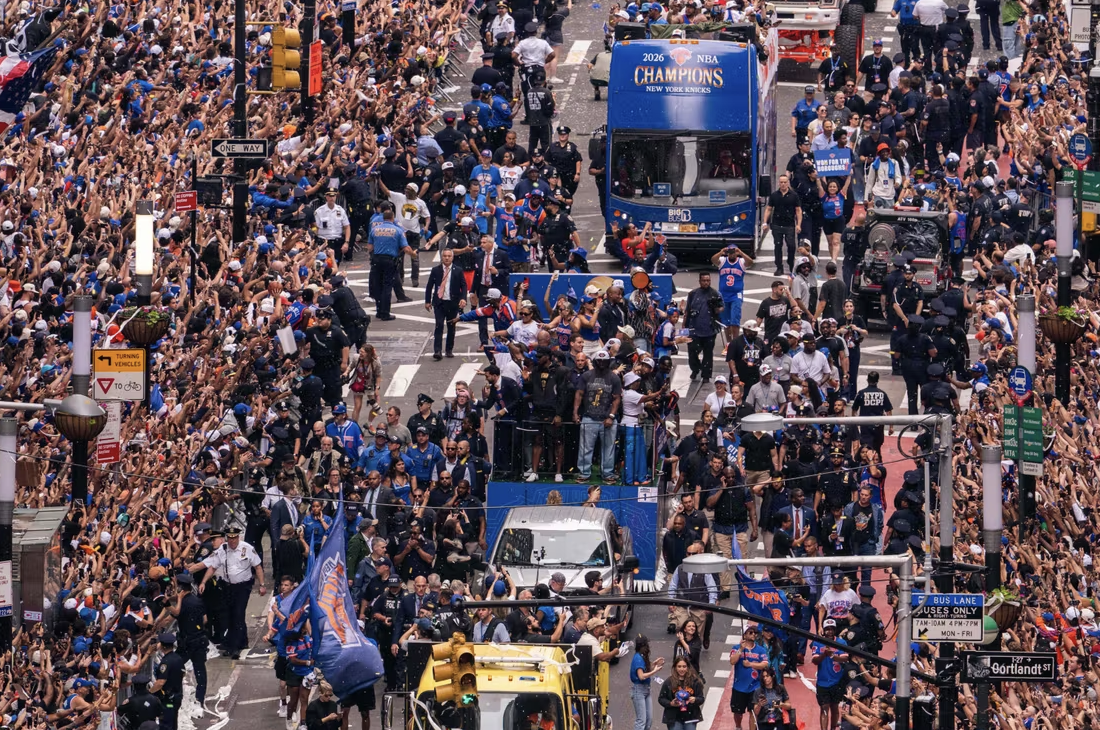
The Knicks' First Title in 53 Years Is a Reminder That Scarcity, Not Winning, Is the Real Brand Asset 🏀
📌 A championship a city has waited 53 years for is not the same product as one it expects. The New York Knicks' first NBA title since 1973, sealed by a Jalen Brunson Finals MVP run and marked with the franchise's first-ever ticker-tape parade, drew millions into Lower Manhattan and the largest single-event police deployment in NYPD history. The brand pile-on was immediate and predictable, with Nike, Pepsi, Michelob Ultra and others rushing to congratulate a team they had no hand in building. The more useful read is why the moment is worth so much: scarcity, not the trophy, is the asset, and a half-century drought manufactured a rare unifying event in a city and a media culture that almost never stop at the same time for the same thing.
The Knicks beat the San Antonio Spurs 4-1 for their first NBA title since 1973, with Jalen Brunson named Finals MVP (NBA / AP)
The 18 June parade through the Canyon of Heroes was the franchise's first ticker-tape celebration, drawing millions and an NYPD deployment of more than 10,000, its largest ever for a single event (NBC New York)
Brands including Nike, Pepsi and Michelob Ultra moved fast to attach themselves to the win (Adweek)
💡 The structural point sits underneath the confetti. In a fragmented attention economy, the rarest and most valuable thing is a moment that genuinely stops a whole city at once, and a 53-year wait is what manufactured one here, the same scarcity logic that lets a World Cup or a Swift tour command a premium the routine cannot. The Knicks and MSG own that scarcity outright; the brands posting congratulations are renting a moment they did not build, which is fine as reach but expires the instant the parade ends. The talk of a productivity hit and a city skipping work is good folklore but, for now, anecdotal rather than measured, and the more durable lesson is the one this edition keeps returning to: the asset is the thing only you own and cannot be bought in for the week, and a drought-ended, once-in-a-generation civic moment is about as un-rentable as cultural capital gets. 🏀

🎧 Should the BBC Have Travelled Stateside for the World Cup, or Stayed in Salford?
- The Rest Is Entertainment (Goalhanger), hosts Richard Osman and Marina Hyde
📌 Why It Matters: Two of the most connected voices in UK media unpick a pair of decisions that go straight to the heart of this week's BBC story, whether a public broadcaster under serious financial pressure should be flying crews across the Atlantic for a tournament at all, and what it means that it has reportedly put Doctor Who, one of its crown-jewel formats, "out to tender". Both are resource-allocation and IP-ownership questions dressed as editorial ones, which is exactly the lens the edition keeps applying.
✅ Worth Your Time Because: It's the sharp, insider counterweight to the week's heavier consolidation coverage. Osman, a TV producer who knows how these calls actually get made, and Hyde, one of the best media columnists going, are candid about the economics underneath the gloss, how a cash-strapped BBC weighs spectacle against cost, why licensing out a flagship asset is either smart pragmatism or quiet surrender, and how the tournament's "content" is being fought over by everyone from broadcasters to Piers Morgan's podcast. It runs about 31 minutes, released mid-week, and it pairs naturally with the BBC-cuts and ITV-ratings entries while staying light enough to be a genuine palate-cleanser.

🦁 Cannes Lions International Festival of Creativity (22-26 June) - the advertising industry's defining week takes over the Croisette, where 15,000 delegates, the Lions themselves and the brand beach activations from Meta, Spotify and Amazon set the year's benchmark for "creative effectiveness", and offer the clearest read going on where creative power and marketing money are actually moving (AI, creators and retail media all in the mix).
⚽ World Cup group stage reaches its climax - England close Group L against Ghana (Tuesday 23rd, BBC) and Panama (Saturday 27th, ITV) before the tournament's brand-new Round of 32 begins on Sunday 28th, the point where the commercial and narrative stakes sharpen and the brand pile-ons we covered this week go up another gear.
👔 Men's Fashion Month reaches its Milan-Paris climax (22-28 June) - the decisive half of the menswear shows falls inside the week, opening Monday with Thom Browne's first-ever Milan show and shifting to Paris from Tuesday, where Saint Laurent reclaims the opening slot ahead of Pharrell's 9pm Louis Vuitton, before the season's biggest talking points land: Jonathan Anderson's latest Dior Men (Wed 24th), three seasons into fashion's most-watched job, Sarah Burton's first dedicated Givenchy menswear, and Michael Rider's first standalone Celine menswear show closing proceedings on Sunday 28th. The debut to clock beneath the houses is London's Studio Nicholson, the cult minimalist label staging its first-ever runway show on Friday 26th at Place Vendôme, alongside newer names worth tracking in Meryll Rogge, LVMH Prize winner Soshiotsuki and Song for the Mute, the week amounting to a blueprint for menswear a year out and a read on how creative directors are consolidating rather than chasing spectacle against a luxury slowdown.
🎾 Grass-court tennis lands in Eastbourne - the Lexus Eastbourne Open runs its WTA and ATP tune-ups this week as the last stop before Wimbledon opens on 29 June, a reminder that the British summer's most valuable sport property is about to monetise a fortnight of global attention.