
Welcome to the next edition of On The Record, thoughtful analysis on culture, entertainment, tech, fashion, music, sport, and brands. Here’s a round-up of key conversations and campaigns that caught my attention this week.

🎸 Radiohead Break O2 Attendance Record While Raising Funds for Samaritans and Grassroots Venues
Radiohead completed four sold out nights at London’s The O2, breaking the venue’s attendance record each evening and surpassing the previous benchmark set by Metallica in 2017. Across the run, nightly audiences reached up to 22,355, making the final performance the highest capacity show in the arena’s history. The band’s return to touring after seven years also introduced a “busking approach” to their setlists, performing in the round and drawing from a pool of around 70 tracks.
The shows carried a built-in £1 charity levy per ticket, with London proceeds donated to the LIVE Trust in support of grassroots venues, festivals and promoters. European dates apply the same levy to Médecins Sans Frontières, with Radiohead matching the full amount. Drummer Philip Selway also used the London dates to spotlight Samaritans, with volunteers collecting donations onsite as part of the charity’s International Men’s Day campaign highlighting male mental health.
22,355 attendees at the final night, The O2’s highest capacity show to date.
Four consecutive sold out nights, each breaking the previous night’s attendance record.
1£/1€ per ticket donated to charity across the tour, with European donations matched by the band.
Médecins Sans Frontières has delivered 1.2 million outpatient consultations, 390,210 emergency room consultations and over 29,000 surgeries in Gaza since October 2023.
For the live sector, this demonstrates how major artists can elevate fundraising for grassroots infrastructure while normalising charity levies at scale. It also reflects growing expectations on headline acts to bring social impact into the heart of touring operations.
💡 Arena-headline moments are increasingly doubling as civic platforms, as artists fold charity levies, mental health support and grassroots funding into the modern touring blueprint. 💚
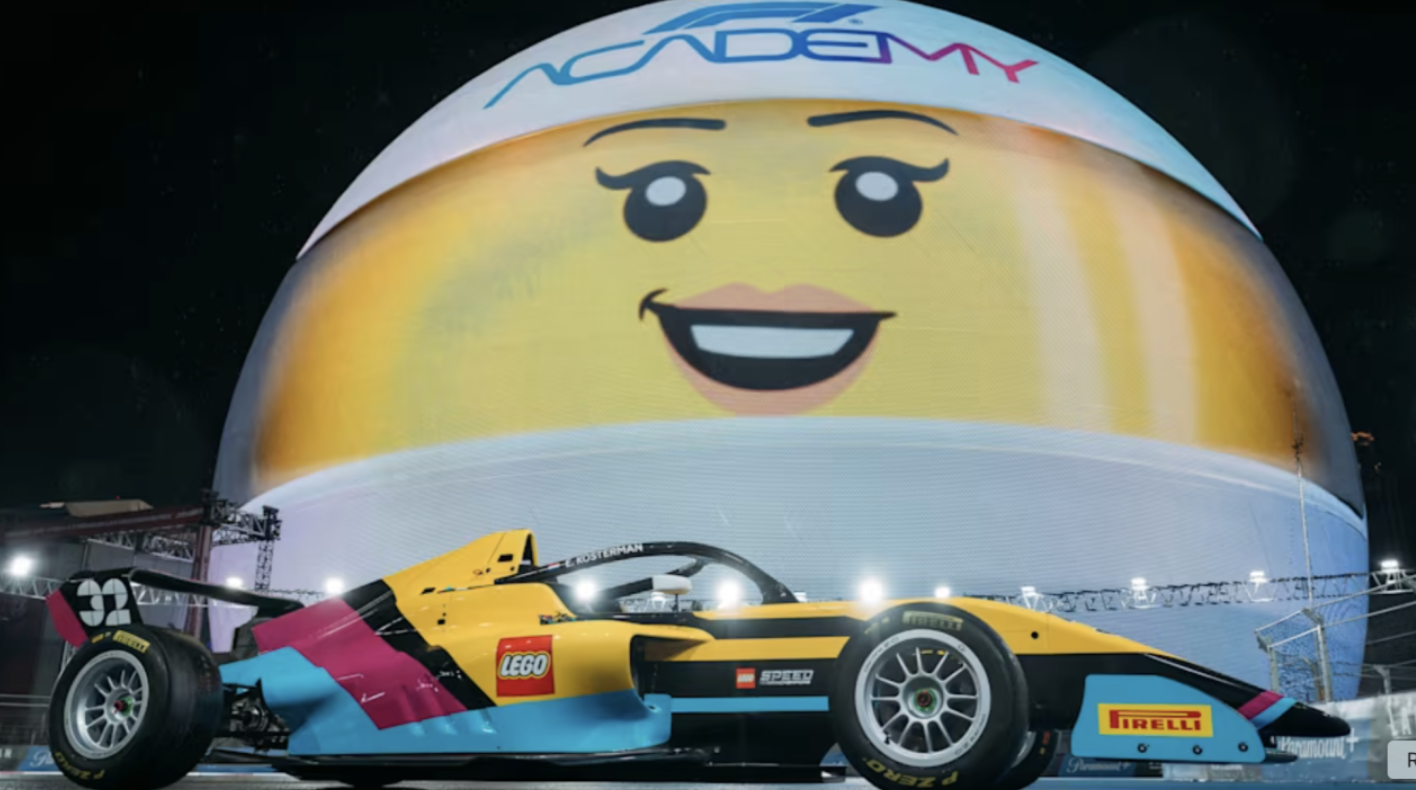
🏎️ LEGO Racing teams up with F1 ACADEMY to inspire the next generation
📌 The LEGO Group has unveiled LEGO Racing, its first ever motor racing team, created in partnership with F1 ACADEMY. The initiative expands its existing Formula One collaboration and aims to inspire young fans, particularly girls, to see themselves in motorsport. The programme spotlights representation, access and creative play as pathways into the sport, with Dutch driver Esmee Kosterman selected as the team’s inaugural driver and a new LEGO Speed Champions F1 ACADEMY set launching alongside the real-world livery. The partnership will run through the 2026 season and positions F1 ACADEMY as a prominent fixture of global race weekends, championing visibility for young female drivers.
22-year-old Esmee Kosterman becomes LEGO’s first official racing driver-ambassador.
The LEGO Speed Champions F1 ACADEMY set launches in parallel with the real-world debut.
The partnership aims to elevate F1 ACADEMY’s presence at every race weekend from 2026.
💡 Representation plus play equals a powerful entry point for girls into motorsport’s talent pipeline. 🚗✨
Why Modern Sports Partnerships Need More Than Just Being Seen 🎥
📌 A recent City AM opinion piece argues that badging remains a fundamental pillar of sports sponsorship. While visibility still matters, the strongest evidence across the industry shows that layered, content-led partnerships now deliver far greater impact than logo presence alone. With fan attention increasingly fragmented, passive exposure struggles to cut through. According to Nielsen’s Global Sports Report 2024, 70% of fans now engage with sport primarily through short-form social content, not live broadcast, meaning sponsorships must travel across platforms to reach full audience potential. Meanwhile, 81% of Gen Z sports fans expect brands to add value through storytelling, creator collaborations or behind-the-scenes access (Deloitte Sports Fan Insights, 2023). The shift is clear: visibility may drive awareness, but meaningful engagement and multi-format content increasingly determine cultural relevance, brand affinity and long-term equity.
60% of global fans say they are more likely to recall brands that produce ongoing content around a sport or team rather than those with passive logo placement (Nielsen, 2024).
Social-first activations extend reach to younger and more diverse audiences that traditional broadcast visibility misses.
Partnerships that deliver narrative, utility or community value outperform pure exposure models on brand favourability and intent (WARC, 2024).
💡 In today’s sports ecosystem, visibility sparks awareness, but content, relevance and storytelling are what convert it into lasting brand meaning 📣
🎬 James Cameron-backed Marlow Studios approved in major boost for UK film production
The British government has approved the 750 million pound Marlow Studios development in Buckinghamshire after overturning an initial refusal on conservation and sustainability grounds. The site will house 18 soundstages, a skills academy and extensive production facilities, positioning it alongside Elstree, Pinewood and Leavesden as a cornerstone of UK screen infrastructure. The decision lands the same week as Rachel Reeves’ autumn budget, which confirmed a 40 percent reduction in business rates for eligible English film studios until 2034. Backed by figures including James Cameron, Sam Mendes and Pippa Harris, the project is framed as a strategic investment in emerging tech, talent development and the UK’s competitiveness in a rapidly scaling global creative economy. Planning experts note the government prioritised growth and industry benefit over local infrastructure concerns, reflecting the wider economic value of the sector.
The UK’s film and high-end TV production spend reached 7.1 billion pounds in 2023 (BFI).
The screen industries contribute over 12 billion pounds in GVA annually to the UK economy (Creative Industries Council).
UK studio occupancy has remained above 85 percent during peak production months, reflecting sustained global demand (BFI).
💡 A clearer industrial strategy for film is emerging, with the UK doubling down on studio capacity and fiscal incentives to stay competitive in a global content boom. 🎥
Guinness Storehouse taps Robyn Lynch for new team uniform refresh 🍺
📌 Irish designer Robyn Lynch has unveiled a bespoke uniform collection for the Guinness Storehouse, drawing directly from the brand’s archives for inspiration. The range includes denim workwear with laser-etched detailing, reflective embroidered harps referencing Guinness’ iconic symbol, and Irish-made knitwear that champions local craft. As part of the Storehouse’s 25th anniversary celebrations, Lynch has also created a limited-edition hoodie and T-shirt featuring reimagined Guinness motifs. The collaboration reinforces Guinness’ ongoing investment in cultural craft and brand heritage while spotlighting emerging Irish design talent.
Guinness Storehouse attracts over 1.7 million visitors annually, making it Ireland’s most visited tourist attraction (Fáilte Ireland).
Branded merchandise and experiential retail account for over 20% of revenue at major global visitor experiences (TEA/AECOM Theme Index).
The global licensed apparel market is forecast to reach £250 billion by 2030, driven by heritage and nostalgia-led brands (Statista).
💡 Heritage design remains one of the most effective brand-building tools, especially when paired with contemporary talent and locally made craft ✨
🇪🇸 Real Madrid Builds One of Europe’s Largest Sport–Tech Innovation Districts
📌 Real Madrid and the Community of Madrid have agreed a protocol to establish the Madrid Innovation District, a 120-hectare technology and skills ecosystem within Real Madrid City. The project dedicates 85 hectares to innovation, education and R&D, backed by 1.3 billion euros in infrastructure investment. PwC forecasts the district will generate 1.2 billion euros annually for regional GDP and support 23,000 permanent jobs each year, alongside 4,700 roles during construction. The district will host tech companies, AI and data education centres, research institutions and startups, reinforcing Madrid’s position as a leading European sport-tech hub. For Real Madrid, the project diversifies revenue beyond matchday and media, expands partner activation potential and increases the long-term commercial value of its land and facilities. For brands like Emirates and adidas, the district strengthens strategic alignment and opens new R&D and innovation-led collaboration opportunities.
120 hectares in total, with 85 hectares allocated to innovation, technology and R&D
1.2 billion euros projected annual GDP contribution (PwC)
23,000 permanent jobs created per year
1.3 billion euros in infrastructure investment
4,700 jobs during the construction phase
💡Top clubs are evolving into full-scale innovation engines, using physical infrastructure to secure long-term economic, cultural and commercial influence. ⚡
🇪🇺 EU Touring: Brexit Barriers Are Getting Worse for UK Creators
📌 A new survey in UK Music’s This Is Music report shows that the impact of Brexit on EU touring is not stabilising but deteriorating. Despite the UK music industry contributing a record £8 billion to the economy in 2024, growth slowed sharply, and the data reveals worsening outcomes for touring artists, crews, and music businesses. Thirty two percent of creators say they were affected by Brexit this year, up from 28 percent, and of those impacted, 95 percent reported reduced earnings. The burden falls heaviest on lower earners and early career artists for whom added costs, red tape, and admin make EU touring increasingly unviable. PRS for Music data also shows a 27 percent drop in small and medium EU live performance claims since 2019, limiting opportunities for artists, songwriters and DJs. Broader industry impacts extend to merchandise companies, labels, managers, studios and tour operators, all reporting higher costs, slowed hiring, and in many cases, the need to shift value and operations into Europe to cope.
32 percent of creators affected by Brexit this year, up from 28 percent in 2023
95 percent of those affected say earnings decreased, up from 87 percent
27 percent drop in EU performances under 5,000 capacity since 2019
💡 Brexit is creating a structural competitiveness gap for UK artists and music SMEs, pushing work, revenue, and talent development away from the UK. 🎼
🏛️ National Trust Launches Fundraiser To Protect Cerne Giant
📌 The National Trust has begun a fundraising drive to secure 340 acres of land surrounding the Cerne Giant, aiming to protect the chalk figure’s landscape, expand conservation efforts and enable further archaeological study. The purchase is intended to safeguard public access, restore habitats for threatened species such as the Duke of Burgundy butterfly, and ensure long-term environmental resilience. Archaeologists say the acquisition will unlock the ability to examine settlement and ritual activity across millennia, building on findings that date the giant to the late Saxon period. Local concerns about potential development or restricted access prompted the move, with the Trust seeking an additional £300,000 to complete the deal through donations and public engagement initiatives, including a ‘cheeky giant’ pin badge and opportunities to join rechalking next year.
£2.2 million already allocated from Trust funds, grants and bequests
340 acres of land included in the planned purchase
£300,000 targeted through the public appeal
💡 A reminder that heritage stewardship is becoming a participatory act, with institutions using storytelling, access and conservation to deepen public engagement in national culture. 🌿
🏎️ PepsiCo x Mercedes-AMG PETRONAS F1: Landmark 2026 Global Partnership
📌 PepsiCo has announced a multi-year global partnership with the Mercedes-AMG Petronas F1 Team, uniting Gatorade, Sting and Doritos in a first-of-its-kind three-brand collaboration with an F1 team. The deal places PepsiCo inside the sport’s explosive global momentum, spanning performance, fan engagement and culture. Gatorade will integrate its GSSI-led hydration science into the team’s performance programmes, supporting drivers in a sport where cockpit temperatures can exceed 50°C and sweat loss can reach 4kg per race. Sting leverages its dominance across high-growth energy drink markets to align with F1’s expansion in Asia, while Doritos will activate bold, culturally-led fan experiences during race weekends. For Mercedes, the partnership enhances performance, unlocks new revenue streams and extends the team’s reach across PepsiCo’s billion-plus daily consumers.
F1’s global cumulative TV audience reached 1.92 billion in 2024 (Formula One Group)
Fans under 35 now make up 46% of F1’s global audience (Nielsen)
Live race attendance exceeded 6 million in 2024, up 24% since 2019 (Formula One Group)
Gatorade holds over 70% of the US sports drink market (Circana)
Energy drinks are growing at an 8.3% CAGR globally (Mintel)
Doritos is a $5bn-plus global retail brand (PepsiCo Annual Report)
💡 The partnership signals how F1 is becoming a premium cultural platform where performance tech, youth culture and global brand ecosystems now converge at scale. ⚡️
🎬 Stranger Things Finale Heads to Cinemas + Netflix Unveils Major Brand Collabs
📌 Netflix has confirmed that the Stranger Things Season 5 finale will run for 2 hours and 5 minutes, with more than 500 theatres across the US and Canada hosting fan screenings timed to the global streaming premiere. Running from 31 December through 1 January, the cinematic release underscores the cultural scale of the show’s final chapter. The rollout arrives alongside a slate of brand partnerships, including a 2,593-piece LEGO Creel House set and consumer collaborations spanning Gatorade, Eggo and the Indiana Fever. The momentum of multiple high impact releases signals the franchise’s continued cross-generational pull and its value as a branded entertainment touchpoint in the peak TV era.
500+ theatres participating across the US and Canada
Finale runtime confirmed at 2 hours 5 minutes
LEGO x Netflix Creel House set contains 2,593 pieces
💡 Brands are treating Stranger Things as a cultural tentpole, using the finale to activate high heat fandom and drive premium engagement across physical, digital and retail channels. 🧩
🎬 Billie Eilish Teams Up With James Cameron for 3D Concert Film
📌 Billie Eilish will release a new 3D concert documentary, co-directed with James Cameron, in cinemas on 20 March 2026 via Paramount. The project was filmed during four sold-out Manchester shows on her Hit Me Hard and Soft tour and produced with Darkroom Records, Interscope Films and Lightstorm Entertainment. Eilish describes the collaboration as a dream come true, marking her first time co-directing a major theatrical release. The film follows previous documentary projects including The World’s a Little Blurry and Happier Than Ever, signalling her continued expansion into high production-value music film-making. Recent tours remain a major cultural and commercial engine, with global concert revenues surpassing 2023 levels and multiple music films crossing into theatrical territory. Music-driven theatrical releases have also proved resilient, with concert films generating strong event-based turnout in cinemas.
The Hit Me Hard and Soft Tour was among 2024–25’s top-grossing global tours, contributing to worldwide tour revenue that exceeded £7 billion last year (Live Nation, Variety).
The past 18 months have seen a surge in music-led cinema events, with Taylor Swift and Beyoncé’s concert films jointly generating more than £300 million at the global box office (AMC, Deadline).
Event cinema attendance rose 6 percent year on year, driven by live music and performance films (Comscore).
💡 A-list artist collaborations with world-renowned filmmakers are redefining the scale and storytelling potential of concert films, creating new cinematic revenue streams for music brands and culture-makers. 🎥
🔍 Pinterest Bets Its Future On Search
📌 Pinterest has repositioned search as the centre of its platform strategy, with CEO Bill Ready calling it the “core of the business.” The company has moved away from short-form video and livestream commerce to focus on intent-driven discovery shaped by younger users. Pinterest has now reported nine consecutive quarters of growth and says two-thirds of all user activity is search-related, supported by new visual and AI-powered tools. With more than half of its audience now Gen Z, the platform argues that search behaviour offers stronger commercial signals than entertainment-led feeds. As competitors from TikTok to Reddit lean into search, Pinterest is carving out a distinct visual search niche that aligns closely with shopping intent.
Pinterest reports 600 million monthly active users
Two-thirds of user interactions come from search
17% YoY revenue growth in Q3, marking nine consecutive quarters of growth
47% of Gen Z report using Pinterest for search (Adobe)
ChatGPT holds 80% traffic share in the AI search category (May report mentioned in article)
💡 Pinterest’s bet on visual, intent-rich search positions it as one of the few platforms where discovery and commerce are naturally aligned, giving brands clearer signals than entertainment-first feeds. ✨
🛒 OpenAI Positions ChatGPT as a Personal Shopper
📌 OpenAI has introduced a new shopping research experience inside ChatGPT, allowing users to request product recommendations contextualised by previous conversations. The tool surfaces products one-by-one, with options such as Not Interested or More Like This to refine results, eventually generating a personalised buying guide. Recommendations link directly to retailer sites today, with a paid Instant Checkout feature set to enable in-chat purchasing soon. The move places OpenAI in direct competition with Perplexity, which already offers PayPal-enabled Instant Buy. OpenAI reports that millions of users are now using ChatGPT for product discovery, signalling a rapid rise of AI-driven shopping behaviour within just two years.
52 percent of global consumers used generative AI for product research in 2024, up from 15 percent in 2023 (Boston Consulting Group).
Retail ecommerce powered by AI recommendation engines is forecast to exceed 30 percent of global online sales by 2026 (McKinsey).
70 percent of UK shoppers say personalised product suggestions make them more likely to convert (Deloitte).
💡AI is rapidly becoming a frontline shopping interface, shifting discovery and conversion from search engines to conversational assistants 🛍️
📌 Why Influencer Marketing Is Working in F1 (and What Other Sectors Can Learn)
Influencer marketing has become one of Formula 1’s most effective growth levers. While traditional fans may dismiss it as noise, brands inside and outside motorsport are leaning in because it delivers reach, narrative and cultural pull. Unlike MotoGP, where fans can directly buy and ride what their heroes use, F1’s product is fundamentally inaccessible. No fan arrives in an F1 car, which shifts the commercial centre from product to lifestyle. Influencers act as the bridge, selling emotion, aspiration and access rather than machinery.
F1’s complexity also plays a role. Technical regulations, aero design and power unit strategy are hard to decode at speed, so creators act as cultural translators, turning engineering into entertainment. They fill the access gap left by rights-controlled media by showcasing behind-the-scenes moments fans would never otherwise see. Their content works because they become the emotional proxy for an experience that most fans will never physically have.
This model has transferrable lessons. Any industry with high complexity, high price points or high aspiration can borrow from F1’s playbook. Brands that activate across multiple markets can use creators as narrative glue. And businesses with internal talent or specialist expertise can let creators humanise it. F1 demonstrates that influencers are most powerful not as megaphones, but as meaning-makers.
62 percent of global fans say F1 content from creators helps them feel more connected to teams and drivers (Nielsen Sports).
F1 has added over 35 million social followers since 2020, with creator collaborations cited as a major driver of engagement (F1 Annual Report).
70 percent of fans aged 16 to 34 engage with F1 primarily through digital and creator-driven content rather than broadcast (Motorsport Network).
💡 Influencers thrive in F1 because they translate an inaccessible product into a cultural experience, a blueprint any aspirational or complex brand can borrow. 🎥
🏏 ChatGPT joins WPL as premier partner for next two seasons
📌 Indian cricket’s Women’s Premier League (WPL) has unveiled a new slate of commercial partners collectively valued at US$5.4 million for the next two seasons. ChatGPT and Kingfisher Packaged Drinking Water join as premier partners, while Bisleri replaces Amul as beverage partner and Ceat renews as strategic time-out partner. The deal marks the first time ChatGPT has ever sponsored a sports league, signalling AI’s growing presence in fan engagement and sports operations. For brand and culture professionals, the move highlights the increasing convergence between women’s sport, commercial innovation and emerging technology, reinforcing WPL’s momentum as a fast-growing global property.
The new WPL sponsorship package is valued at I₹48 crore (US$5.4 million).
WPL viewership for the 2024 season reached 200 million across TV and digital platforms (BCCI).
Women’s sports sponsorship value grew 22 per cent year on year in 2024 (Nielsen Sports).
💡 AI’s arrival as a frontline sports sponsor shows how women’s leagues are now becoming testing grounds for next-gen fan technology and commercial experiments. 🤝

How e.l.f. Beauty Is Boldly Disrupting Women’s Sports, ft. Patrick O'Keefe
📌 This episode spotlights one of the most culturally influential brand moves happening right now: e.l.f. Beauty’s aggressive, purpose-driven investment across women’s sports - from soccer and wrestling to hockey, racing, and beyond. Patrick O’Keefe breaks down how e.l.f. is rewriting the rules for brand behaviour in underrepresented sport spaces.
e.l.f. isn’t just “sponsoring” women’s sports - they’re treating it like a core cultural engine. For marketers and brand strategists, this episode is a masterclass in modern brand relevance.
✅ Worth Your Time Because:
• It decodes the strategy behind one of the most talked-about brand playbooks in culture right now. Patrick explains how e.l.f. turns purpose, equity, and cultural disruption into marketing that actually grows the business - not just the press headlines.
• It shows why women’s sports are becoming a high-ROI brand battleground. The episode details how e.l.f.’s portfolio approach across soccer, wrestling, racing, hockey, and more creates omnipresence in a still-underserved, high-momentum cultural space.
• It offers a blueprint for brands seeking authentic cultural capital. Instead of chasing the biggest leagues, e.l.f. goes where fandom is passionate, overlooked, and ready for community-first brand partnerships - a strategy many marketers are now trying to replicate.
• It provides actionable perspective for leaders navigating purpose-driven marketing. Patrick breaks down how to invest in culture without falling into tokenism, how to push category norms, and how to build relevance with audiences who expect brands to have a point of view

LONDON
🎭 Paddington: The Musical – Savoy Theatre – ongoing A joyous new West End musical with original songs by Tom Fletcher (McFly); widely praised with multiple five-star reviews for its charm, inventive staging, and heart-warming festive appeal.
🩰 The Nutcracker – London Coliseum (English National Ballet) – 11–14 Dec A Christmas essential: Tchaikovsky’s score, lavish sets and timeless choreography attracting families, culture-seekers and seasonal London visitors.
🎶 Robert Plant’s Saving Grace – Royal Festival Hall – 11 Dec A rare London appearance from the legendary Led Zeppelin frontman, blending folk, blues and Americana for a distinctive winter concert moment.
🎷 Tomorrow’s Warriors: Extraordinary Winter Showcase – Southbank Centre – 14 Dec A platform for next-generation UK jazz talent; culturally important, community-driven and influential within London’s young creative music scene.
🎤 RnB Xmas Ball – The O2 – 8 Dec A nostalgic, high-energy lineup featuring Boyz II Men, Toni Braxton and Dru Hill — a major festive arena draw tapping into ’90s/’00s R&B fanbases.
🎸 The Last Dinner Party – London Headline Show – 8 Dec Breakout indie act of the moment bringing art-rock theatricality to their December London date — a magnet for younger culture-forward audiences.
🖼️ Gilbert & George: 21st Century Pictures – Hayward Gallery – ongoing A major contemporary art exhibition from the iconic duo, offering bold visual storytelling and strong cultural cachet during the festive season.
🖼️ Val Lee: The Presence of Solitude – Hayward Gallery – ongoing Atmospheric, introspective contemporary work — ideal for audiences seeking a quieter, art-led counterpoint to December’s noise.
✨ Winter Light – Southbank Centre – ongoing Free outdoor art installations transforming the riverside into a festive, photogenic trail — a reliable seasonal hub for public art, content capture and family visits.
🎻 Christmas with the Academy – St Martin-in-the-Fields – 12 Dec A refined classical Christmas programme featuring the Academy of St Martin in the Fields — attracting both traditional classical audiences and seasonal concert-goers.
🎼 A Festival of Carols – Royal Albert Hall – 9–10 Dec One of London’s most atmospheric Christmas choral experiences, filling the Hall with orchestral arrangements and massed voices.
🎭 Twelfth Night – Barbican Centre – from 8 Dec A bold new staging of Shakespeare’s festive-spirited comedy — Barbican programming with cultural weight and creative credibility.
NYC
🎼 Handel’s Messiah – Carnegie Hall – 13 Dec A major seasonal classical highlight; prestigious performers and a historic venue combine for an archetypal New York holiday musical moment.
🎷 Jazz at Lincoln Center: Big Band Holidays – Rose Theater – 12–15 Dec Yearly jazz favourite led by the Jazz at Lincoln Center Orchestra; sophisticated, high-energy festive arrangements that draw culturally fluent audiences.

📰 The New York Times sues the Pentagon over unprecedented press restrictions
The New York Times has filed a federal lawsuit challenging the Pentagon’s new media-access rules, which bar journalists from requesting any information not explicitly pre-approved for release, even if unclassified. The policy introduced in October triggered an extraordinary industry-wide revolt. Almost every major newsroom refused to sign the agreement and turned in their credentials. Press-freedom groups described the shift as unprecedented in modern US defence reporting because it limits not only responses but the scope of inquiry itself.
For decades, the Pentagon briefing room has relied on diversity of newsroom presence. Rival networks, wire services, international correspondents and specialist defence reporters have collectively shaped accountability. The new rules invert this tradition by creating a system where permissible questions are defined in advance by government officials.
A historical parallel: why the mechanism matters
Media historians have voiced concern not because the Pentagon is replicating authoritarian systems, but because the structure of constraint echoes earlier legal regimes that restricted what journalists could investigate. A commonly referenced example is the 1933 Editor’s Law in Nazi Germany, which required editors to publish only state-approved material and criminalised reporting deemed undesirable by the government. The relevance here is structural: historically, limits on inquiry rather than simply limits on answers have formed the basis for more extensive information control.
The Pentagon rules sit far from those extremes. Yet the underlying logic aligns with a long-documented pattern where governments shape public narratives by shaping which questions may be asked.
Who refused: a cross-industry rejection
More than 40 outlets declined to sign, including ABC, NBC, CBS, CNN, AP, Reuters, Bloomberg, The New York Times, The Washington Post, The Wall Street Journal, NPR, Politico, Axios, Military Times, Defense News and many others. International titles such as The Guardian and the Financial Times also refused. Their editorial profiles span centre-left, centre-right and nonpartisan.
Notably, Fox News and Newsmax also rejected the terms, underscoring that the refusal cut across ideological lines and centred on press-freedom principles.
Who accepted: an ideologically concentrated, predominantly far-right cohort
Only 15 reporters signed the agreement. The most prominent outlets among them are:
OANN, widely classified by independent media-bias audits and academic studies as far-right, with a documented history of promoting partisan and conspiratorial narratives.
The Epoch Times, consistently identified as right-wing to far-right in media-research assessments, with a strong ideological editorial line.
The Federalist, which multiple nonpartisan media classifiers categorise as strongly conservative or far-right in its framing and commentary.
OANN is now the only named legacy outlet regularly attending Pentagon briefings. New invitations to Gateway Pundit, Human Events and LifeSiteNews reinforce the shift, as all three are routinely categorised by independent research groups as far-right publishers. This represents a marked ideological narrowing of the briefing room.
Why the shift matters: the risks of narrowed inquiry
The new ecosystem introduces three structural risks.
1. Reduced scrutiny Fewer independent voices means fewer opportunities for probing, adversarial questioning.
2. Government-defined agenda-setting If questions must be pre-approved, officials gain disproportionate control over which issues reach the public record.
3. Increased vulnerability to misinformation A press corps concentrated in outlets with well-documented far-right leanings, variable fact-checking standards and a track record of partisan amplification increases the risk that unchallenged narratives take root.
The Times’ lawsuit argues that conditioning access on the surrender of basic journalistic freedoms violates the First Amendment. Press-freedom organisations have echoed this, emphasising that restricting the right to ask questions marks a fundamental departure from democratic norms.
A wider lesson for institutions
Credibility depends on plural oversight. Systems that limit who may ask questions, or what they may ask, inevitably shape what the public is permitted to know. Historical examples show that once constraints on inquiry are normalised, they rarely remain narrow.
💡 When the only voices left in the room sit on the far-right, the issue is not ideological imbalance alone but the erosion of the public’s right to robust, diverse scrutiny.
🔥 Global touring revenues hit $9.3 billion in 2024, marking one of the strongest live-music cycles on record (Live Nation, Pollstar).
🎬 The UK screen sector delivered £13 billion in GVA and supported 245,000 jobs last year as governments ramp up studio investment (BFI, Creative Industries Council).
⚽ Women’s sport revenues are projected to reach $2 billion in 2025, with sponsorship growing 22 percent year on year (Nielsen Sports, Deloitte).
🏎️ Over 70 percent of F1 fans aged 16–34 now engage primarily through digital and creator-led content, reinforcing the sport’s shift to cultural entertainment (Nielsen Sports).
🔍 Around 60 percent of Gen Z use platforms like TikTok, Pinterest and Instagram as search tools, merging social discovery with commerce (Google, Adobe).
🤖 More than 50 percent of global consumers used generative AI for product research in 2024, up from 15 percent in 2023 (Boston Consulting Group).