Welcome to the next edition of On The Record, thoughtful analysis on culture, entertainment, tech, fashion, music, sport, and brands. Here’s a round-up of key conversations and campaigns that caught my attention this week.

This week is about leverage. Influencers are no longer just shifting product, they’re shaping political narratives. AI is collapsing discovery, commerce and infrastructure into the same surface. Legacy brands are chasing growth while trying not to undo years of credibility work. Across culture, sport, fashion, media and platforms, the pattern is consistent: attention is fragmenting, but control is concentrating. This edition tracks where power is actually moving, before those shifts get reframed as trends.

Brand Power, Culture & Commercial Tension
Where credibility, hype and money collide.
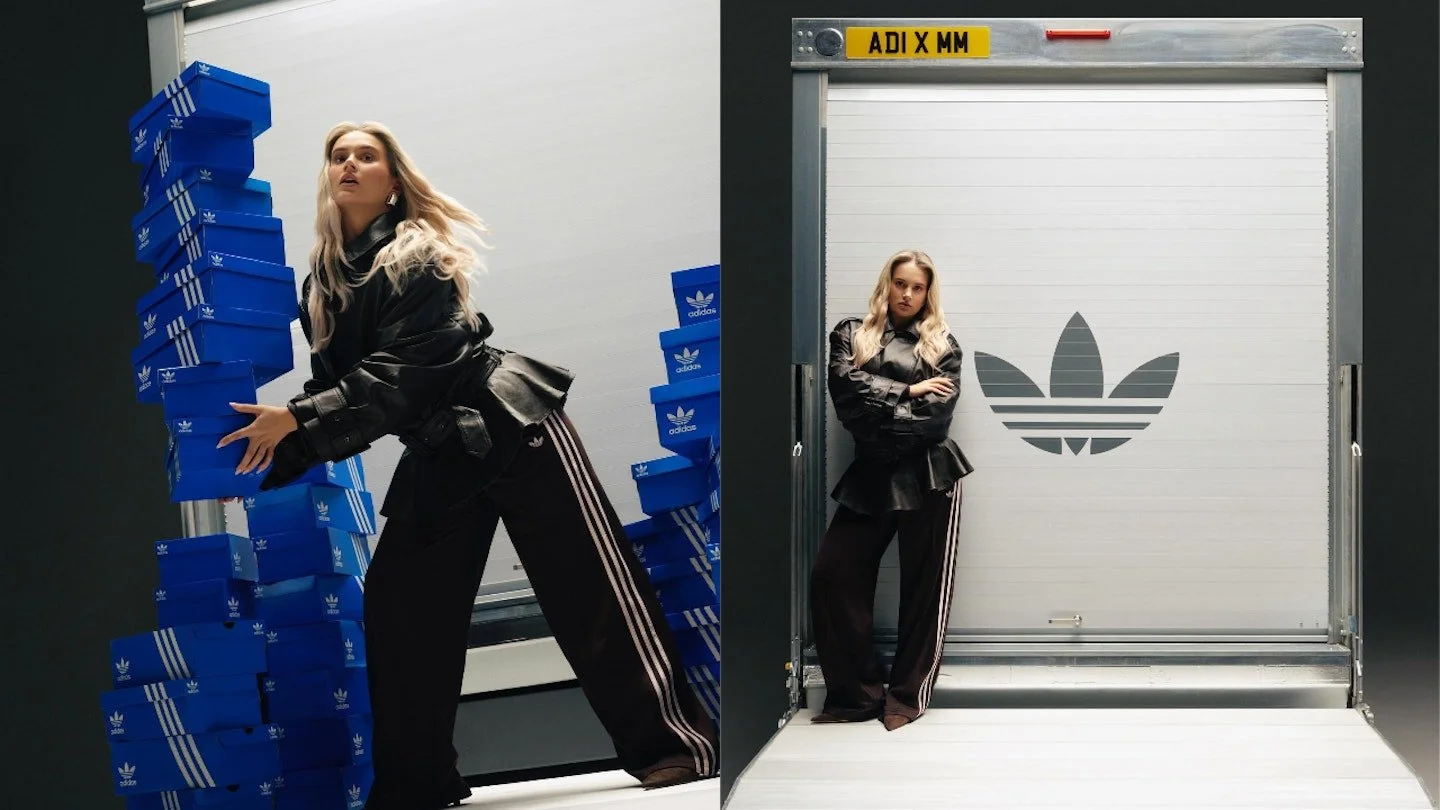
👀 Why Adidas x Molly-Mae Is Bad-Good Business 👟📲
📌 Adidas surprised the sneaker and sportswear world by announcing a footwear collaboration with mega-influencer Molly-Mae, a move that appears at odds with the brand’s recent athlete-first, credibility-led rebuild. Under CEO Bjørn Gulden, Adidas has spent the past two years refocusing on sport, performance categories and culturally credible partnerships, making this influencer-led collaboration feel like a deliberate commercial detour rather than a brand statement. From a business standpoint, the logic is clear: Molly-Mae’s 8.5m Instagram following and highly loyal fanbase all but guarantee sell-through and short-term audience growth. But strategically, the move risks signalling a return to a 2020-era playbook, raising questions about how much influencer-driven hype Adidas needs as competition intensifies and growth expectations tighten.
Molly-Mae has over 8.5m Instagram followers, driving high conversion potential
Adidas has posted double-digit quarterly sales growth for 18 months, with FY25 revenue projected at ~$27bn
Bank of America issued a rare double downgrade on Adidas stock last week, citing possible slowdown risk
💡 Short-term sales wins can still dilute long-term brand meaning, and Adidas’ latest collab shows how commercial logic and cultural strategy don’t always align ⚖️
Source: SportsVerse, Daniel-Yaw Miller
👀 Why Elton John Has Launched an Alcohol-Free Alternative to Champagne 🥂✨
📌 Elton John has entered the drinks category with the launch of Elton John Zero Blanc de Blancs, a 0% Chardonnay-based sparkling wine designed as an alcohol-free alternative to Champagne. The move is rooted less in commercial necessity and more in personal need, reflecting Elton John and partner David Furnish’s teetotal lifestyle and their frustration with the lack of high-quality, celebratory non-alcoholic options for entertaining. Drawing on his long-standing sobriety and selective approach to brand partnerships, the product is positioned as a premium, inclusive choice for social and fundraising occasions where non-drinkers still want to feel part of the ritual.
Elton John has been sober since 1990 and is one of the world’s most high-profile non-drinkers
The product is designed for celebratory moments traditionally associated with Champagne
Elton John Zero is retailing in the UK at £10 and is stocked by Sainsbury’s and select restaurants
💡 This is celebrity branding driven by lived experience, not licensing, signalling how alcohol-free products are moving from compromise to cultural centre stage 🌍
👀 Nike Shuts Its 529 Broadway SoHo Flagship in New York 🏬🗽
📌 Nike has closed the doors to its landmark 529 Broadway flagship in Manhattan, ending the run of a store once positioned as ‘the future of sport retail’. Opened in 2016, the five-storey SoHo space blended multiple sports, immersive experiences and community-led programming inside the former Prescott House Hotel, becoming a global reference point for experiential retail. While the closure is symbolic, it follows the sale of the building last year to Ingka Group for $213m, and Nike has confirmed it is actively seeking a new SoHo location.
The 529 Broadway store opened in 2016 as a flagship for Nike’s future-facing retail vision
The building was sold to Ingka Group for $213m in January 2025
Nike has said it remains committed to maintaining a presence in SoHo
💡 This marks the end of an era for flagship retail, but also reflects how even the most iconic brand spaces are being reshaped by real estate shifts and new retail priorities 🧠
👀 Why Fragrance Is Becoming the Latest Red Carpet Accessory 👃✨
📌 Fragrance is emerging as a new status symbol on the red carpet, with perfume brands increasingly sponsoring celebrity hairstylists, make-up artists and beauty professionals for major moments like the Golden Globes. While scent remains invisible to audiences at home, the strategy reflects a shift in how luxury fragrance brands seek cultural relevance, embedding themselves within the backstage ecosystem that shapes celebrity image-making. Rather than competing for overt logo placement, fragrance is positioning itself as an insider marker of taste, intimacy and craft, aligned with the people who curate red carpet looks rather than the outfits alone.
Fragrance brands are sponsoring celebrity beauty professionals rather than talent directly
The strategy prioritises backstage influence over visible product placement
Red carpet moments are being used to build cultural credibility, not immediate awareness
💡 In a world saturated with visuals, fragrance is betting on proximity, influence and insider access, proving that cultural capital doesn’t always need to be seen to be felt 🧠
👀 The WNBA’s Golden State Valkyries Elevate Merch With a Fashion-First Collab 🏀✨
📌 Women’s basketball continues to blur the lines between sport, fashion and culture, with the Golden State Valkyries teaming up with designer Rupal and Sephora on an elevated sweatsuit that rethinks traditional team merchandise. Inspired by the Valkyries’ identity, the collection moves beyond logo-led apparel into considered design, positioning WNBA merch as lifestyle fashion rather than game-day kit. Available exclusively at the Golden State Shop, the collaboration reflects how women’s sport is increasingly setting the pace for culturally relevant, style-driven brand partnerships.
The sweatsuit was developed collaboratively between the designer, the team and Sephora
The collection reframes WNBA merchandise as fashion-forward lifestyle wear
The pieces are available exclusively via the Golden State Shop
💡 Women’s sport isn’t just influencing fashion, it’s redesigning what modern merch can be, culture-led, wearable and built for life beyond the arena 🧠
2. Platforms, Power & Political Influence
When creator culture becomes infrastructure.
👀 Right-Wing Influencers Have Flooded Minneapolis 🧢📹
📌 Right-wing influencers have descended on Minneapolis following the fatal shooting of Renee Nicole Good by a federal agent, producing viral content that frames the city as lawless and positions ICE enforcement actions as justified self-defence. Clips filmed by creators embedded on the ground are being rapidly amplified by right-wing aggregation accounts and commentators, turning social media footage into political evidence used to defend the Trump administration’s expanded ICE presence in US cities. The reporting highlights how influencer-generated content is increasingly shaping public narratives around immigration enforcement, mirroring official messaging from Department of Homeland Security and feeding directly into cable news discourse. It also underscores how creator culture, state power and political messaging are converging in real time, with platforms acting as accelerants rather than neutral channels.
Influencer footage from Minneapolis has been reposted to millions via right-wing aggregation accounts
ICE is reportedly planning to spend around $100m on influencer content and geo-targeted ads for recruitment
A single viral YouTube video linked to Minnesota immigration claims exceeded 3m views and influenced federal enforcement decisions
💡 Influencers are no longer just commentators, they’re becoming informal extensions of state narrative-building in high-stakes political moments 📡
👀 Wanda Sykes and Mark Ruffalo Wear “BE GOOD” Pins at the Golden Globes 🤝🎬
📌 At the Golden Globes, Wanda Sykes and Mark Ruffalo wore “BE GOOD” pins in a visible show of solidarity with Minneapolis, the family of Renee Good, and victims of ICE enforcement across the US. The gesture linked a major cultural moment to ongoing political and human rights concerns, using the red carpet as a platform for protest and remembrance. Both figures have a long track record of public advocacy, making the pins part of a broader pattern of sustained, values-led activism rather than a one-off statement.
The pins reference solidarity with Renee Good’s family and communities impacted by ICE
Ruffalo has consistently challenged Trump-era authoritarianism and backed climate and voting rights causes
Sykes has been a prominent voice for LGBTQ+ and trans communities, particularly youth-focused organisations
💡 This is celebrity activism at its most effective, translating visibility into moral clarity and reaching audiences beyond traditional activist circles 🌍
👀 Calls to Boycott the 2026 FIFA World Cup Intensify ⚽️🚨
📌 Pressure is mounting on FIFA after reports that around 16,800 fans cancelled their tickets overnight amid growing calls to boycott the FIFA World Cup 2026. The backlash is being driven by concerns over fan safety, political protests and broader human rights issues linked to policies in the host region, amplifying reputational risks for the tournament. In response, FIFA has scheduled an emergency meeting next week to address cancellations, safety anxieties and the potential impact on the tournament, which is due to take place across the US, Canada and Mexico from 11 June to 19 July 2026.
Around 16,800 ticket cancellations were reported in a single night
FIFA has called an emergency meeting to assess fan safety and reputational fallout
The tournament is set to span three host countries over five weeks
💡 Mega-sporting events are now as much about political legitimacy and trust as they are about the game itself 🌍
👀 UK Threatens Action Against X Over Sexualised AI Images of Women and Children ⚠️🤖
📌 The UK government has warned it could support regulatory action against X, including a potential block in the UK, amid growing concern over the platform’s AI tool Grok being used to generate sexualised images of women and children. Ministers signalled full backing for Ofcom as it conducts an expedited investigation, after concluding X has not done enough to protect users or test the technology adequately before release. The case is shaping up as a major test of the UK’s Online Safety regime, with tensions rising between free speech arguments and platform accountability as AI-generated abuse becomes harder to contain.
Ofcom has fast-tracked an investigation into Grok after requesting information from X
Regulators have powers ranging from multimillion-pound fines to court-ordered platform blocking
X has since limited image generation features to paying subscribers, a move the UK government criticised as inadequate
💡 This is a defining moment for how governments regulate AI-powered platforms, where safety, ethics and enforcement are colliding with free speech rhetoric 🧠
👀 X Suspends the @Twitter Handle Amid Ongoing Rebrand Fallout 🐦⚠️
📌 X has suspended the long-dormant @Twitter account, with users encountering an “Account Suspended” notice citing violations of the platform’s rules. The handle had been inactive since before Elon Musk acquired the platform in 2022 and remained unused following the rebrand from Twitter to X in 2023 and the shift to x.com in 2024. While no specific breach has been publicly detailed, the move is symbolically charged, effectively severing one of the last visible ties to Twitter’s legacy identity as X continues to redefine itself.
The @Twitter handle has been inactive since before Musk’s acquisition
The suspension notice cites rule violations without further explanation
The move follows X’s broader effort to move on from the Twitter brand entirely
💡 Suspending @Twitter isn’t about moderation, it’s about symbolism, signalling a clean break from the past as X tightens control over its identity 🧠
3. Media Wars, AI Infrastructure & Institutional Control
👀 Paramount Threatens Proxy Fight in Battle for Warner Bros Discovery 🎬⚖️
📌 Paramount has escalated its hostile pursuit of Warner Bros Discovery by threatening a proxy fight, suing to access internal financial analysis, and urging shareholders to reject a rival deal with Netflix. After losing out to Netflix’s $82.7bn offer for WBD’s studio and streaming assets, Paramount has gone directly to shareholders with a higher all-cash bid, arguing WBD withheld material information that could change how the two offers are evaluated. The move signals a rare, high-stakes governance battle in modern media M&A, where shareholder votes, board control and transparency are becoming as decisive as deal price.
Netflix’s offer values WBD’s studio and streaming business at $27.75 per share
Paramount’s hostile bid values the full business at $30 per share, all cash
Paramount plans to nominate directors and push shareholders to vote against the Netflix transaction
💡 This fight shows how legacy media consolidation is now being decided as much in boardrooms and courtrooms as in strategy decks 🧠
👀 Meta Unveils ‘Meta Compute’ to Power Its AI Ambitions ⚙️🤖
📌 Meta has launched a new ‘Meta Compute’ initiative to centralise and massively scale its artificial intelligence infrastructure, bringing data centres, compute capacity and supplier partnerships under a single strategic umbrella. Announced by CEO Mark Zuckerberg, the initiative is designed to support Meta’s push into frontier AI and its long-term pursuit of ‘personal superintelligence’, with plans to build tens of gigawatts of computing capacity this decade. Co-led by infrastructure chief Santosh Janardhan and Daniel Gross, Meta Compute signals a decisive shift towards treating energy, data centres and compute scale as core strategic assets, even as concerns grow around power consumption, water use and environmental impact.
Meta plans to build tens of gigawatts of AI compute this decade, scaling to hundreds over time
The company committed up to $72bn in capital spending in 2025 to support AI and infrastructure
Meta has secured long-term power through 20-year nuclear energy agreements in the US
💡 AI leadership is no longer just about models, it’s about owning the energy, infrastructure and supply chains that make intelligence possible 🔌
👀 Apple Turns to Google’s Gemini to Finally Fix Siri 🍎🤖
📌 After years of playing catch-up in AI, Apple has agreed a multi-year partnership with Google that will put Gemini at the core of Siri’s cloud-based intelligence. Rather than rebuilding everything in-house, Apple will use Google’s large language models to handle more natural conversation, broader knowledge and complex requests, while keeping privacy-sensitive processing on-device through its own systems. The move reflects mounting pressure on Apple to make Siri genuinely useful, as voice assistants evolve from basic commands into conversational, context-aware tools.
Gemini will provide the backend AI powering Siri and Apple Intelligence features
A redesigned, LLM-powered Siri is expected to launch in spring 2026
Apple has faced persistent criticism over Siri’s reliability and limited capabilities
💡 This is Apple choosing pragmatism over pride, signalling that in the AI era, speed and capability now matter more than going it alone ⚙️
4. AI, Commerce & the Interface Layer
👀 JD Sports Becomes Shoppable via ChatGPT, Copilot and Other AI Platforms 🤖🛍️
📌 JD Sports is rolling out a new AI-native commerce model in the US, allowing consumers to search and purchase footwear, apparel and accessories directly within platforms such as ChatGPT, Microsoft Copilot and Google Gemini without leaving the app. The move positions AI tools as a fully transactional retail channel, not just a discovery layer, with integrated payments and checkout baked into the experience. Enabled through a new partnership with CommerceTools and Stripe, the initiative forms part of JD’s wider ‘Beyond Physical Retail’ strategy as it prepares for a future where shopping decisions increasingly happen inside AI interfaces.
JD customers in the US will be able to complete purchases inside AI platforms in a single click
JD is the first retailer to use CommerceTools and Stripe’s agentic commerce suite
The rollout starts in the US, with UK and Europe set to follow in 2026
💡 AI is quietly becoming the new storefront, and JD is treating large language models as a sales channel, not a marketing experiment 🧠
👀 The Creator Economy Shift: What Marketers Need to Know for 2026 🎥📊
📌 The creator economy is no longer an experimental channel but a core pillar of brand strategy, according to new analysis from Because of Marketing in partnership with Modash. Valued at an estimated $250bn globally, the sector continued to grow in 2025, but brands adopted a far more cautious, performance-led approach amid economic uncertainty. This has reshaped how marketers invest, who they work with and how success is measured, prioritising predictability, speed and defensible ROI over scale and hype.
The creator economy is now valued at around $250bn globally
85% of marketers cited Instagram as their top sales-driving channel in 2025, followed by TikTok
Investment in YouTube as a sales channel fell 42%, despite long-form content matching or outperforming short-form on conversions
Nearly 60% of marketers reported significantly better performance from smaller, niche creators
Over 80% of marketers prioritised niche creators over celebrities or macro influencers
27.9% fewer marketers plan to invest in long-term creator partnerships in 2026 compared with 2025
More than half of marketers increased spend on affiliate and performance-based models in 2025
💡 The creator economy hasn’t cooled, it’s professionalised, and in 2026 the winners will be brands that balance fast short-form wins with durable, trust-led creator relationships 🧠
👀 How Influencer Marketing Is Changing in 2026 🎥📈
📌 Influencer marketing budgets are set to grow again in 2026, but the playbook is shifting fast, according to reporting by Vogue. One-off, pay-to-post deals are increasingly ineffective in a saturated social landscape, pushing brands towards deeper, more strategic partnerships where creators act as long-term collaborators rather than media placements. As video continues to dominate platforms and audiences seek information as much as entertainment, creators are evolving into consultants, shaping content formats, narratives and brand integration in more produced, structured ways that go beyond traditional lifestyle posting.
Influencer marketing budgets are expected to rise for another consecutive year
Static, aesthetic-led posts are delivering weaker results than video-first formats
Brands are shifting from transactional posts to ongoing creator partnerships
💡 In 2026, creators aren’t just distribution channels, they’re strategic partners shaping how brands show up in a video-first culture 🧠
👀 The Future of AI in Marketing: Key Takeouts for Brands and Marketers 🤖📊
📌 New insights from Marketing Against the Grain, synthesised and shared by Future Social, point to a clear shift in how AI is reshaping modern marketing. The central message is not replacement but amplification, with AI increasingly acting as a collaborator that enhances productivity, personalisation and scale while leaving creativity and strategy firmly in human hands. The research draws on expert perspectives from HubSpot, a16z, Asana and Graphite, outlining how AI is already delivering measurable gains across content, growth and go-to-market execution, and where marketers should focus next.
AI integration is already delivering 15–20% productivity gains for engineering and product teams when embedded across workflows
AI agents are emerging as “digital teammates”, capable of handling multi-step goals rather than single tasks
Hyper-personalised AI-driven chat and email have driven up to 80% increases in conversion rates
AI-managed customer support now accounts for 25% of HubSpot’s support volume, equivalent to over 100 roles
AI-driven sales emails achieved a 94% higher conversion rate than human-written emails in cold outreach tests
Only ~10% of ranking search content contains significant AI-generated text, and search engines are already penalising overuse
Long-term advantage comes from human-in-the-loop systems, where AI drafts and scales while humans refine, edit and direct strategy
💡 The takeaway for 2026: AI will commoditise execution, but differentiation will come from human creativity, strategic thinking and the ability to orchestrate AI systems effectively at scale 🧠
5. Bodies, Behaviour & Cultural Redesign
👀 A Milestone for Women’s Football 🩸⚽️
📌 UEFA has released a new consensus statement on menstrual cycle tracking, marking a significant step forward in athlete welfare and evidence-led practice in women’s football. Developed by a multidisciplinary panel spanning science, medicine and sport, the guidance positions tracking as a tool for education, empowerment and wellbeing, while clearly stating that current evidence linking menstrual cycles to performance or injury risk remains inconclusive. Crucially, the framework prioritises standardisation, ethics and informed consent, aiming to ensure data is used responsibly and in the best interests of players rather than as a performance surveillance tool.
The guidance was developed by a multidisciplinary expert panel across medicine, science and sport
Evidence linking menstrual cycles to performance or injury risk is currently inconclusive
The statement emphasises ethics, consent and athlete-first data governance
💡 This signals a shift from experimentation to responsibility, where women’s sport starts building systems around care, not just competition 🌍
👀 ‘Soft Partying’ Is Replacing Late-Night Club Culture ☕️🎧
📌 Millennials and Gen Z are increasingly opting out of booze-led nightlife in favour of ‘soft partying’, a shift towards daytime and early-evening social experiences centred on connection, wellbeing and curiosity, according to Business Insider. Formats such as coffeehouse DJ sets, supper clubs, academic lectures and early-morning dance events are gaining traction, reflecting changing attitudes to alcohol, health and how people want to spend their social time. The trend is already reshaping the live events economy, with brands and platforms moving quickly to meet demand for sober-friendly, culturally enriching experiences.
Ticket sales for sober-friendly events on Eventbrite rose 92% year-on-year
Daytime and early-morning events are outperforming traditional late-night club formats
Alcohol is increasingly being de-centred in favour of wellbeing and community
💡 Nightlife isn’t dying, it’s being redesigned, and ‘soft partying’ shows how culture is shifting from excess to intentional connection 🌱

🎙️ The True Meaning of Cultural Relevance
The WARC Podcast
Host: David Tiltman
Featuring: Leila Fataar, author of Culture Led Brands
📌 This episode tackles one of the most overused - and misunderstood - ideas in modern marketing: what it actually means for a brand to be “in culture.”
Released in 13th January 2026, it arrives at a moment when brands are navigating fragmented audiences, micro-communities, creator ecosystems, and declining trust in traditional influence models.
Leila Fataar and WARC’s David Tiltman move beyond trend-chasing to interrogate how cultural relevance is built, who defines it now, and why old playbooks no longer work in an age of decentralised cultural power.
✅ Worth Your Time Because:
Reframes cultural relevance for 2026: Positions “being in culture” as participation, contribution, and alignment - not borrowed aesthetics or short-term hype.
Directly addresses creator & micro-influencer shifts: Explores how influence is fragmenting, and what that means for brand credibility and scale.
Strategic, not superficial: Grounded in long-term brand building rather than campaign-led moments - ideal for senior marketers and strategists.
Credible industry lens: WARC’s analytical approach makes this episode especially valuable for professionals balancing creativity with effectiveness.
Highly relevant across fashion, music, sport, and lifestyle: The insights apply wherever brands rely on cultural capital to remain meaningful.

🔥 Top 5 Things to Do This Week
🎾 Australian Open (19–25 Jan) – Quarter-finals to finals week at the first Grand Slam of the year, delivering peak global attention, celebrity visibility and cultural cut-through.
🎬 Sundance Film Festival (22–26 Jan) – Final days of Sundance, when breakout indie films emerge and the year’s film conversation quietly locks in.
🖼 London Art Fair (21–25 Jan) – The UK art world’s first major commercial moment of the year and a sharp read on emerging taste and talent.
🎨 Tate Modern (final week) – Last chance to catch a winter blockbuster exhibition before it closes and cultural feeds peak.
🏆 Critics Choice Awards (25 Jan) – One of the clearest signals of Oscars momentum, with wins often shaping the rest of awards season.
👀 Things to Be Aware Of This Week
📣 Critics Choice Awards winners announced (25 Jan) – Results frequently align with Oscar outcomes and influence campaign narratives.
💰 Sundance Film Festival acquisition deals (22–26 Jan) – Final-week buying sprees often define which films dominate streaming and awards later in the year.
🏅 Australian Open finals (24–25 Jan) – Men’s and women’s champions crowned during one of the biggest global sports moments of Q1.
🏈 NFL Conference Championships (25 Jan) – Decides the Super Bowl finalists and delivers one of the highest-viewed sports weekends of the year.
🎶 Eurosonic Noorderslag (21–24 Jan) – Europe’s influential showcase week for new music, where future festival line-ups and label priorities take shape.
🌍 World Economic Forum Annual Meeting (19–23 Jan) – Davos week sets the tone for political, tech and corporate narratives that will ripple through culture all year.

🔥 The Australian Open reaches over 1 billion viewers globally across broadcast and digital, making it one of the most valuable cultural and commercial sports moments of Q1. (Tennis Australia)
🎬 More than 40 percent of Sundance films that secure distribution deals do so in the final days of the festival, shaping the year’s indie film and streaming pipeline. (Sundance Institute)
🖼 The UK art market generated over £10.8bn in sales last year, with January fairs like London Art Fair acting as the first confidence signal for collectors and galleries. (Art Basel & UBS)
🎨 Major museum exhibitions see up to a 30 percent attendance uplift in their closing week, driven by social sharing, press coverage and deadline-led demand. (Arts Council England)
🏆 Critics Choice Awards winners have aligned with eventual Oscar winners in over 70 percent of major categories, reinforcing their role as a key momentum marker in awards season. (Academy Awards analysis)