• Work Overview
  • About
  • Partnerships
  • Testimonials
  • On The Record
  • Linkedin

Vicky Elmer

(née Beercock) | VP of Global Communications & Marketing | Brand, Culture, Reputation

  • Work Overview
  • About
  • Partnerships
  • Testimonials
  • On The Record
  • Linkedin

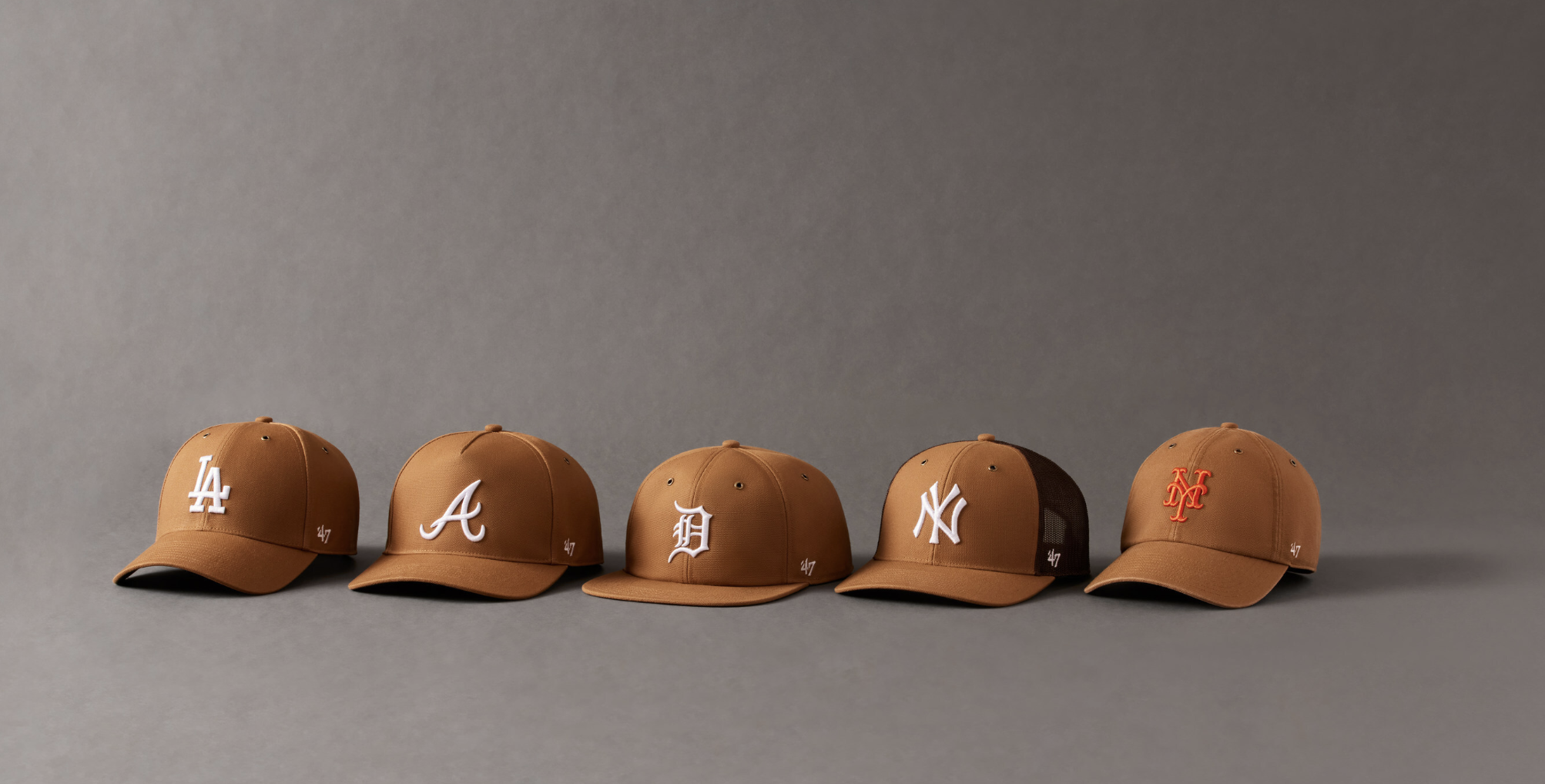
🧢 Heritage Meets Hustle: Carhartt x '47 Bring Grit Back to Sports Merch

In a climate where fandom meets fashion and utility is the new luxury, Carhartt and '47 have reignited a collaboration that’s more about culture than clothing. Dropping in time for MLB All-Star Week 2025, the Carhartt x '47 collection is built for those who show up with intensity - whether they’re clocking in or cheering from the bleachers. This isn’t about flash, it’s about function with meaning. And it lands at the intersection of workwear and sports loyalty at a moment when both have cultural currency.

🧠 The Stats Speak:

  • Sports merchandise is booming: The global licensed sports merchandise market is expected to reach $57.5 billion by 2030 (Allied Market Research, 2023).

  • Utility wear is in demand: Workwear-inspired fashion grew 12% YoY in 2024, according to Edited.

  • Crossover collabs count: 61% of Gen Z consumers prefer brands that collaborate with others to create limited collections (YPulse, 2024).

✅ Pros - The Cultural and Commercial Upside

  • Authenticity: Both Carhartt and '47 have decades-deep heritage. This adds weight and credibility to their collaboration.

  • Utility-forward design: Using Carhartt’s rugged duck cloth brings a level of practicality to fan gear, appealing to buyers who want durability alongside team pride.

  • Expanded reach: By covering all 30 MLB teams and planning rollouts for NBA, NFL, NHL and NCAA, the collection maximises its relevance across fan communities.

⚠️ Cons - Limitations to Watch

  • Nostalgia fatigue: The "heritage" positioning risks feeling recycled if not backed by new energy or storytelling.

  • Limited seasonal wearability: Heavy-duty workwear isn’t always comfortable or practical in warmer climates.

  • Distribution bottlenecks: Launching across multiple leagues may create fulfilment challenges and staggered interest.

🔍 Opportunities - What Brand Marketers Should Note

  • Lifestyle integration: The collection’s blend of fashion and function taps into the “all-day wear” trend. Fans increasingly want merch that transcends game day.

  • Storytelling potential: The link between hard work and team loyalty offers rich territory for campaigns that spotlight real fans and workers.

  • Retail partnerships: The rugged aesthetic opens up placement opportunities beyond traditional sportswear retail, including streetwear boutiques and workwear-focused outlets.

🚧 Challenges - Strategic Risks Ahead

  • Standing out in a crowded collab market: Sports and fashion collabs are frequent. Without clear positioning, this one risks blending into the noise.

  • Brand dilution: If not carefully curated, expanding across too many leagues could undermine the tight cultural focus.

  • Sustainability expectations: Gen Z and younger millennial buyers will be scrutinising the environmental impact of durable goods made from cotton and synthetic blends.

🔑 Key Takeouts

  • Heritage brands are finding new cultural relevance by leaning into utility, grit and crossover appeal.

  • Sports merch is no longer just memorabilia - it’s becoming an everyday fashion category.

  • Fans want collections that reflect their lifestyle, values and identity - not just their team colours.

  • Strategic collaborations can bring new life to legacy brands when executed with purpose and narrative cohesion.

📌 Next Steps for Brand Marketers

  1. Dig deeper into fan personas - Who’s buying utility-driven merch and why? Look beyond superfans to find under-served micro-communities.

  2. Balance nostalgia with narrative - Make heritage relevant by telling new stories. Highlight modern-day fans, workers and their passions.

  3. Expand utility beyond apparel - How might this aesthetic translate into gear, content or digital activations?

  4. Align with purpose - If you’re tapping into “hard work” as a theme, show commitment to worker rights, fair labour, and sustainable materials.

  5. Think cross-league but stay culturally coherent - Every sport has a different fan culture. Tailor messaging and creative to match, rather than take a one-size-fits-all approach.
categories: Sport, Fashion
Monday 07.14.25
Posted by Vicky Beercock
 

🎬 Nintendo Levels Up: Why Brand Expansion Into Film & TV Matters More Than Ever

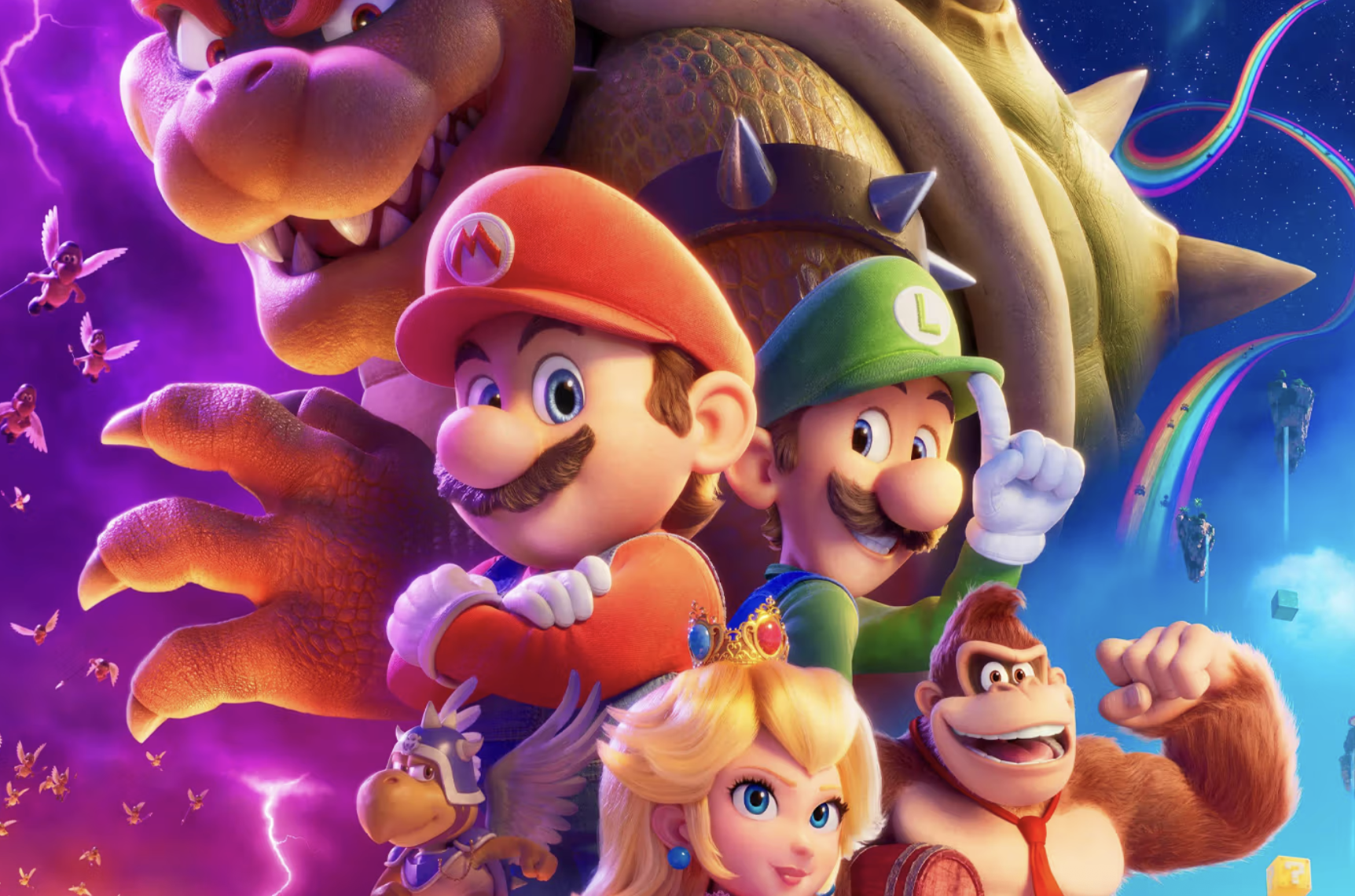
Nintendo is no longer just a gaming company. With the success of The Super Mario Bros. Movie and the upcoming Legend of Zelda adaptation, the Japanese gaming giant is signalling a new era - one where its beloved IPs are not only playable, but watchable. Brand professionals should take note: this is more than a franchise cash-in, it’s a strategic shift in how iconic IPs are leveraged across entertainment platforms.

📊 The Stats Behind the Strategy

  • The Super Mario Bros. Movie grossed over $1.3 billion USD globally, making it the second highest-grossing animated film of all time (Box Office Mojo, 2024).

  • 84% of Gen Z say they prefer brands that bring stories to life across multiple formats - games, series, and movies (WARC, 2024).

  • Nintendo’s IP expansion aligns with its strategy to “expand the number of people who have access to Nintendo IP”, according to President Shuntaro Furukawa.

This isn’t just smart marketing. It’s cross-generational world-building.

✅ Pros – What’s Working?

  • Brand Longevity: Bringing legacy titles like Zelda to new media introduces them to younger audiences who might not own consoles.

  • Creative Control: Nintendo’s hands-on production approach protects brand integrity and storytelling quality.

  • Cultural Relevance: Film and TV adaptations keep franchises top-of-mind in a saturated entertainment landscape.

⚠️ Cons – What Are the Limitations?

  • Creative Risk: Adapting beloved games carries high expectations. Any misstep (e.g. casting, tone) could alienate core fans.

  • Resource Diversion: Investments in media production may risk focus on game innovation if not tightly managed.

  • Platform Saturation: Not all IPs translate well to film or TV. The risk of overexposure is real.

🌟 Opportunities – Where Should Brands Pay Attention?

  • Transmedia World-Building: Nintendo’s strategy mirrors what Marvel and Pokémon mastered - creating interconnected ecosystems across media.

  • Merchandising & Licensing: Films open up new layers of monetisation through toys, apparel, and collabs.

  • Brand Partnerships: New IP adaptations mean more opportunity for co-branded campaigns (e.g. fast food, fashion, streaming platforms).

🧱 Challenges – What Stands in the Way?

  • IP Sensitivity: Nintendo fans are notoriously protective. Even high-quality adaptations must meet intense scrutiny.

  • Global Consistency: Ensuring localisation, cultural relevance, and character authenticity across regions is complex.

  • Distribution Dependence: Nintendo will likely rely on Hollywood’s gatekeepers - balancing control with accessibility is crucial.

🔑 Key Takeouts

  • Nintendo is transitioning from a games-first company to a broader entertainment IP powerhouse.

  • Visual media allows iconic franchises to evolve and reach new demographics.

  • Maintaining quality, authenticity, and cultural alignment is critical for long-term success.

  • This is part of a larger trend: brands becoming media ecosystems.

📍Next Steps for Brand Marketers

  1. Study the Playbook: Analyse how Nintendo maintains creative control and authenticity in adaptations.

  2. Think Ecosystem, Not Channel: Look beyond platform silos - how can your brand exist across experiences, not just campaigns?

  3. Collaborate with IP Owners: Partnerships with legacy or fandom-rich brands can offer long-term cultural relevance.

  4. Anticipate the Next Wave: If Metroid or Donkey Kong are next, expect a new slate of cross-media collabs and licensing openings.

Nintendo is building the blueprint for a future where IP is platform-agnostic and brand storytelling lives wherever audiences are watching, not just playing.

categories: Gaming
Monday 07.14.25
Posted by Vicky Beercock
 

📱 AR Meets the Arena: Snapchat and RWS Global Revolutionise In-Stadium Fan Engagement

As stadium experiences compete with at-home viewing, tech-driven innovation has become key to drawing fans into physical venues. That’s why the new partnership between Snap Inc. and RWS Global matters. Announced just ahead of the World Aquatics Championships and British & Irish Lions Tour, this collaboration brings augmented reality (AR) directly to spectators’ seats, merging live sport with immersive digital overlays.

This isn’t Snap’s first foray into sports engagement, but it marks a strategic evolution - shifting from personal mobile AR to large-scale, communal in-venue experiences. For brand marketers and event sponsors, it’s a signpost of where fan activation is heading next.

🚀 Pros – What’s Working?

1. Enhanced in-venue entertainment
Snapchat’s AR Lenses, integrated with RWS Global’s PV4 playback system, offer real-time visual overlays synced with venue screens—giving fans playful, branded interactions during downtime.

2. Scalable innovation
The technology will debut at major events across multiple venues, showing its adaptability to different sports formats and audience scales.

3. Monetisation for rights holders
Custom AR games and filters provide new commercial inventory for sponsors, with opportunities for branded experiences, social sharing, and data capture.

⚠️ Cons – Limitations and Risks

1. Device reliance
Fans still need smartphones to engage with AR lenses, which could limit participation among demographics less comfortable with tech or with poor connectivity in-stadium.

2. Experience fragmentation
AR activations may add novelty but risk becoming a distraction or gimmick if not tightly integrated with the core sports experience.

3. Brand saturation
As more sponsors jump into AR-led activations, the novelty may wear off, leading to cluttered or overly branded environments.

🔍 Opportunities -  What Should Brands Watch?

1. Co-creation with fans
Snapchat lenses offer personalisation potential. Brands that use AR to let fans co-create content—like designing a virtual jersey or making their own replay GIF - will unlock higher engagement.

2. Global-local hybrid experiences
AR activations can be tailored by venue and audience. This presents an opportunity for brands to blend global campaign consistency with regional cultural relevance.

3. Integration with first-party data
Venue-based activations could tie into wider CRM strategies if ticketing data and AR interaction insights are connected - boosting personalisation for future marketing.

🧱 Challenges -  What Could Get in the Way?

1. Connectivity infrastructure
Many stadiums still struggle with bandwidth. For AR activations to run smoothly, venues must invest in robust mobile and Wi-Fi capacity.

2. Content fatigue
Without regular updates or campaign refreshes, even the best AR experiences can become repetitive over time.

3. Measurement and ROI
AR engagement is still hard to quantify in direct sales or brand lift terms. Clear metrics and case studies will be essential to justify ongoing investment.

✅ Key Takeouts

  • Snap and RWS Global are scaling up AR for communal in-stadium experiences.

  • The initiative offers brands new monetisation and engagement formats.

  • AR activations must balance novelty with strategic integration.

  • Infrastructure and measurement will be make-or-break factors for long-term success.

🔮 Next Steps for Brand Marketers

  • Audit your sports partnerships: Where could AR enhance existing activation plans?

  • Co-develop with platforms: Work directly with Snap to shape branded lenses tailored to your audience and tone.

  • Think post-event: Capture and repurpose fan-generated AR content for broader campaigns or CRM.

  • Plan for refresh cycles: Treat AR like a content series, not a one-off stunt - keep it fresh and relevant.

  • Push for data access: Collaborate with event organisers to ensure your AR activations feed into a wider data ecosystem.

The future of live sport isn't just on the pitch - it's layered in lenses, triggered by cheers, and shared through stories. As AR becomes a fixture of the stadium experience, the most memorable fan moments may no longer be just about what happens in the game, but how audiences see and share it.

categories: Sport, Tech
Monday 07.14.25
Posted by Vicky Beercock
 

📈 YouTube Shorts Surge: What 200 Billion Views Say About Platform Power

YouTube has made a commanding play in the short-form video space, with YouTube Shorts now racking up 200 billion daily views. That’s a staggering leap from 70 billion just four months ago- a 186% increase that was officially confirmed by CEO Neal Mohan at the 2025 Cannes Lions Festival. For context, TikTok - long the benchmark in bite-sized content - reports around 1 billion daily views, making YouTube’s reach across mobile and TV screens almost unfathomable in scale.

What’s Driving the Growth?

A major factor behind the surge is YouTube’s revised view-counting policy, which now tracks “quick scrolls” in its metrics - mirroring TikTok’s approach. This recalibration has clearly inflated topline numbers, but the impact isn’t just technical. It reflects how YouTube is re-architecting its platform to suit attention dynamics, rather than resist them.

At the same time, YouTube’s dominance on connected TVs continues to deepen. Viewers are now consuming over 1 billion hours of YouTube content daily on TV screens. Nielsen data from May 2025 shows that YouTube accounted for 12.5% of total U.S. TV viewership, outperforming Netflix, Disney+, and even linear networks.

Pros -  Platform Scale and Multi-Screen Strength

  • YouTube’s integration of Shorts into its wider ecosystem allows creators and brands to funnel audiences from short-form content into long-form or livestream formats.

  • Its dominance on TVs and desktop as well as mobile provides an unmatched multi-touchpoint presence.

  • With 200 billion daily views, distribution power is no longer a TikTok monopoly.

Cons -  Measurement Complexity and Viewer Intent

  • The new “scroll as view” metric muddies comparisons with earlier performance and other platforms.

  • Not all views signal attention, let alone engagement or conversion. Brands may be chasing volume over value.

  • Shorts monetisation and creator satisfaction remain ongoing pain points.

Opportunities -  Brand Ecosystems, not One-Off Moments

  • YouTube’s short-form tools are now part of a larger media funnel. Brands can design layered strategies that travel from 15 seconds to 15 minutes.

  • With YouTube leading on TV screens, there’s an opening for brand storytelling that behaves like broadcast but moves at social speed.

  • YouTube’s cross-format capability allows for better data aggregation and audience insight, especially for brands using Google’s ad ecosystem.

Challenges – Culture, Relevance and Creator Migration

  • TikTok still drives the cultural “zeitgeist”, setting the tone for trends, sound, and style. YouTube’s scale doesn't guarantee cultural influence.

  • Maintaining creator trust and incentivising Shorts-specific content will be crucial to keeping momentum.

  • The user experience on Shorts remains less immersive and community-driven compared to TikTok or Instagram Reels.

Key Takeouts

  • YouTube Shorts now commands over 200 billion daily views -  up 186% since March 2024.

  • Platform dominance extends beyond mobile, with 1 billion+ daily TV watch hours.

  • Measurement changes boost visibility, but raise questions about true engagement.

  • For brands, YouTube offers the most integrated multi-format video ecosystem currently available.

Next Steps for Brand Marketers

  • Audit your short-form presence: Are you leaning too heavily on TikTok? YouTube now offers more reach and media integration.

  • Think beyond the scroll: Design campaigns that flow from Shorts into deeper formats - how does your message evolve across 15 seconds, 60 seconds, and 15 minutes?

  • Optimise for TV: With YouTube leading on living room screens, creative built for larger formats deserves fresh focus.

  • Clarify your metrics: Don’t confuse views with value. Start defining what engagement actually means for your brand in a short-form world.

categories: Tech, Culture
Monday 07.14.25
Posted by Vicky Beercock
 

🍺 The Pint Whisperer: How A Middle-Aged Man with a Moustache Became a Transatlantic Cult Hero

In an internet age defined by filters, fitness tips, and algorithm-optimised hustle, a 55-year-old bloke from Manchester is quietly rewriting the rules of influence - one beer at a time.

Meet Barry “Bazza” Langford: retired electrician, devoted real ale enthusiast, and unlikely digital sensation. With more than 170,000 followers on Instagram and counting, Bazza has found fame by doing something profoundly simple – drinking pints in pubs and saying exactly what he thinks about them.

No editing suites. No slick brand partnerships. Just a man, a pint, and the warm buzz of a local boozer. His verdicts? Delivered through Yorkshire drawl and down-to-earth charm, with catchphrases like “proper nectar” and “that’s a pint wi’ shoulders.”

The Power of Plainness

Bazza’s appeal lies in his raw normality - and that, ironically, makes him exceptional. Amid the relentless gloss of online life, he offers a moment of respite. His videos - often filmed in noisy taprooms with wobbly lighting and chatty locals in the background – cut through because they feel real.

According to Fast Company, 88% of consumers now prioritise authenticity when deciding which influencers to follow. Bazza didn’t read the report - he’s just living it.

Why It Works

Pros - What's clicking with audiences?

  • Authenticity over aspiration: Unlike wellness influencers or lifestyle gurus, Bazza doesn’t sell perfection. He offers relatability.

  • Community-led growth: Much of his success has been grassroots. Fans - who call themselves “Bazzmates” - organise meet-ups and even produce unofficial merch.

  • Cultural crossover: American fans have embraced him as a kind of anti-influencer. When he toured the East Coast earlier this year, queues snaked outside pubs from Boston to Brooklyn.

What’s the Catch?

Cons – Where are the limits?

  • Niche appeal: Bazza’s brand of British pub culture may not resonate everywhere. Some find the content repetitive or overly specific.

  • Platform risk: He remains largely reliant on Instagram. Any algorithmic shift or policy change could dampen reach overnight.

  • Brand hesitancy: While fans adore him, not every advertiser is ready to back a man who rates beers with phrases like “that’ll put hairs on your pint.”

The Wider Opportunity

Opportunities - What should brands take note of?

  • Recession-era resonance: In a time of economic strain, simple pleasures like the pub pint carry emotional weight. Bazza taps into this cultural mood.

  • Alternative masculinity: His presence offers a counter-narrative to hyper-masculine influencers. He’s warm, vulnerable, and emotionally available - without trying to be.

  • Local-led storytelling: Brands exploring regional voice or community-focused marketing could learn from his tone and cadence.

Headwinds Ahead

Challenges - What might derail the buzz?

  • Scalability: Bazza’s lo-fi charm doesn’t translate easily into slick formats. Attempts to polish it could dilute the appeal.

  • Fame friction: As his profile grows, so does the risk of losing the lowkey intimacy that drew fans in.

  • Cultural missteps: With transatlantic success comes new scrutiny. A single offhand comment could invite backlash, especially in the US media landscape.

Key Takeouts

  • The craving for authenticity isn’t slowing down - Bazza embodies it.

  • Community-first creators can rival traditional influencers in engagement.

  • Simplicity, when done right, can be powerful cultural currency.

  • Lo-fi doesn’t mean low-impact - sometimes, it means more.

  • There’s a growing appetite for kinder, softer male role models in digital spaces.

Next Steps for Brand Marketers

  • Think small to go big: Micro-moments, regional voices, and real-world familiarity can have huge cut-through.

  • Reframe influence: Not all ambassadors need a professional content studio. Sometimes a shaky video in a pub is exactly what people want.

  • Invest in joy: As the cultural climate skews heavy, there’s space for levity. Bazza’s content reminds us that simple pleasures can drive serious engagement.

In the end, Bazza isn’t trying to be anyone’s guru. He’s just here for a decent pint - and for those watching, that might be more than enough.

Monday 07.14.25
Posted by Vicky Beercock
 

🛹 Depop Drops into Tony Hawk’s Pro Skater 3+4: Style Meets Skate Culture

Skateboarding’s fashion legacy has long outlived the half-pipe - and with the relaunch of Tony Hawk’s Pro Skater 3+4, Depop is rolling in with a collaboration that threads style directly into gameplay.

This partnership blends nostalgic skate energy with the next generation of style-led resale. As part of the tie-in, Depop users can explore curated “get the look” collections inspired by real skaters including Riley Hawk, Nora Vasconcellos, Sammy Montano, Henri Yoro, and Sierra Prescott - a nod to skateboarding’s deep influence on youth fashion.

🧢 What’s in the drop?

  • Exclusive in-app style edits from featured skaters

  • A collab storefront with graffiti icon Neckface

  • Depop-branded gear available for in-game character customisation, including a bespoke skate deck

  • Brand placement across select classic skate maps

By embedding a fashion resale platform into the DNA of a beloved gaming title, Depop and Activision Blizzard are tapping into two powerful communities: nostalgic gamers and trend-setting Gen Z style lovers.

💡 Why it matters for brands
This is more than merch - it’s a signal of where digital culture is headed. Fashion, gaming, and resale are converging in ways that feel both native and credible. For platforms like Depop, it’s an opportunity to meet audiences where they are - controllers in hand, ready to express identity not just in real life, but on-screen too.

🎮 Tony Hawk’s Pro Skater 3+4 is out now. Whether you're popping ollies or just browsing the latest fits, this drop hits all the right notes.

Monday 07.14.25
Posted by Vicky Beercock
 

🎬 Streaming Shake-Up: Disney and ITV Forge Unprecedented Content Partnership

The streaming wars just took a surprising turn. In a first-of-its-kind deal, The Walt Disney Company and ITV have announced a strategic content-sharing initiative designed to give UK audiences a curated taste of both platforms. From 16 July 2025, a rotating selection of high-profile content will be available across Disney+ and ITVX at no extra cost - a move poised to blur platform boundaries and reshape how British viewers engage with premium streaming.

A Cross-Pollination of Audiences

This landmark collaboration sees Disney+ hosting a “Taste of ITVX,” featuring hit British titles like Mr Bates vs The Post Office, Spy Among Friends, Love Island, and The 1% Club. Meanwhile, ITVX will offer “A Taste of Disney+,” showcasing Emmy-winning and globally popular content such as The Bear, Andor, Only Murders in the Building, and The Kardashians.

It’s a strategic alliance that aligns two legacy broadcasters in a mutually beneficial bid to increase reach, drive sampling, and entice subscribers.

📊 Supporting Stats

  • 74% of UK consumers now use at least one streaming service, with more than half juggling three or more subscriptions (Ofcom, 2024).

  • ITVX reached over 3.5 billion streams in 2024, cementing its place as the UK’s leading AVOD platform (ITV Annual Report).

  • Disney+ saw global growth of 11% YoY in Q2 2025, but European subscriber growth has plateaued since late 2024 (Statista).

✅ Pros - What’s Working?

  • Expanded Reach: Each platform taps into a new audience base. Disney gains exposure among mainstream UK viewers who lean towards domestic content, while ITVX benefits from the prestige and scale of Disney's global library.

  • User Experience: Content discovery improves with a “low-friction trial” of premium shows, encouraging viewers to explore without the barrier of an extra subscription.

  • Brand Reinforcement: The curated selections act as brand samplers, allowing each service to showcase its strongest genre pillars and storytelling.

⚠️ Cons - What Are the Risks?

  • Content Cannibalisation: Offering premium titles for free could dilute the perceived value of subscriptions if not carefully managed.

  • Viewer Confusion: Platform-hopping may complicate the customer journey, especially across ad-supported and premium tiers.

  • Short-Term Impact: Unless conversion metrics are high, this could become more of a branding play than a growth engine.

🚀 Opportunities for Brands

  • Advertising Innovation: ITVX Premium remains ad-free for ‘Taste of Disney+’, but the broader model opens new inventory opportunities for advertisers targeting cross-platform audiences.

  • Cultural Co-creation: There’s potential for joint marketing campaigns that celebrate shared IPs or themed moments - e.g. British crime dramas meet American thrillers.

  • Sampling as Strategy: Brands outside entertainment can learn from this content sampling approach, applying it to DTC, FMCG, and retail launches.

🧱 Challenges to Watch

  • Licensing Complexity: Rights management and regional restrictions remain a hurdle in these hybrid models.

  • Measurement Metrics: Evaluating success will depend on both hard conversion data (subscriptions) and softer brand engagement KPIs.

  • Long-Term Scalability: Is this a one-off promotional play or a stepping stone towards deeper streaming syndication models?

📝 Key Takeouts

  • Disney and ITVX are pioneering a cross-platform content-sharing model aimed at boosting discovery and engagement.

  • This move signals a shift towards more collaborative, less siloed streaming strategies in saturated markets.

  • It offers a proving ground for subscription sampling, curated curation, and soft conversion tactics.

👉 Next Steps for Brand Marketers

  • Monitor viewer sentiment and engagement around cross-platform discovery - it’s a cue for how audiences may respond to brand co-creation.

  • Think in ecosystems, not silos. Strategic partnerships can unlock reach and relevance when audiences are fragmented.

  • Take inspiration from content bundling. Sampling high-value offerings (think early access, tiered trials, or freemium ranges) can drive product discovery across sectors.

This is a meaningful signal of how traditional media giants are adapting to a fragmented, loyalty-light streaming landscape. Keep watching.

categories: Tech
Thursday 07.10.25
Posted by Vicky Beercock
 

🎸 Black Sabbath's Final Bow Was a £140M Power Chord for Charity.

Here’s what happened when metal legends, cultural memory, and real purpose collided in Birmingham:

👇
✅ £140 million raised for three UK charities: Birmingham Children's Hospital, Cure Parkinson’s, and Acorns Children's Hospice.
✅ Thousands packed Villa Park to witness the final Sabbath moment - joined by Metallica, Slayer, and a wave of global fans.
✅ Ozzy Osbourne - seated on a gothic black throne crowned with a bat - delivered a dramatic farewell performance, gold cane in hand.
✅ Musical director Tom Morello (Rage Against The Machine) said it took over a year of planning - calling it “a labour of love.”

✅ Donations will fund:
- A giant aquarium and new cinema for young patients at Birmingham Children’s.
- Support for children’s palliative care amid rising demand at Acorns.
- Research and patient support at Cure Parkinson’s - a cause close to Ozzy, who revealed his diagnosis in 2020.

This was cultural legacy with purpose.

Even the loudest genres can deliver quiet power when mobilised for good.

Read more via BBC: https://www.bbc.co.uk/news/uk-england-birmingham-68843728


🗞️ For more cultural deep dives across music, sport, fashion and fandom, subscribe to On The Record: https://lnkd.in/eczFBS_4

categories: Impact, Music
Thursday 07.10.25
Posted by Vicky Beercock
 

🎬 Feast or Famine: The Uneven Boom in UK Film and TV Production

Why the UK’s global production glow is masking a local industry in crisis

The UK is basking in the spotlight of big-budget Hollywood productions, from Avengers: Doomsday to The Lord of the Rings: The Rings of Power. Yet behind the scenes, much of the domestic industry is in disarray. While the soundstages are humming with activity, thousands of UK-based workers face chronic underemployment. This split-screen reality has created an unstable industry juggling extreme growth at the top and widespread stagnation below.

📊 Supporting Stats

  • UK film and high-end TV investment jumped 31% in 2024 to $7 billion (British Film Institute).

  • However, the number of total productions dropped by 30% year-on-year - fewer, bigger projects dominate the landscape.

  • 68% of UK film and TV workers surveyed by Bectu in early 2024 reported being out of work.

  • Over one-third are planning to leave the industry within five years.

  • Prestige programming fell by 25% (BFI), driven by streamer pullback and domestic broadcaster cuts.

✅ Pros: What’s Working?

Global Demand for British Infrastructure

  • London’s Pinewood Studios and the UK’s state-of-the-art facilities remain irresistible for U.S. productions, drawn by generous tax incentives and experienced crew bases.

Government Incentives

  • A new UK tax credit for independent films under $20 million (as of April 2025) is driving cautious optimism and renewed investment in mid-tier British filmmaking.

Upskilling Momentum

  • Past shortages triggered rapid skills development, with ScreenSkills and BFI-backed programmes elevating thousands of crew to senior positions during the COVID-era surge.

⚠️ Cons: What’s Not Working?

Freelance Fatigue and Burnout

  • The freelance-heavy workforce is exposed to boom-bust cycles with limited job security. A majority of crew are now idle despite the high-profile productions.

Disappearing Mid-Budget Space

  • Streamer consolidation and inflated costs have squeezed out lower-budget UK productions. Even acclaimed projects like The Mirror and the Light required major pay cuts to move forward.

Overcapacity, Underemployment

  • While production value is up, actual job creation is not. Expensive tentpole projects hire short-term, specialised teams, leaving many traditional crew roles sidelined.

💡 Opportunities: What Brands Should Watch

Homegrown Storytelling Incentives

  • The independent film tax credit is a model that could be extended to prestige TV. A local-first funding ecosystem may unlock unique British narratives fit for global export.

Cultural Reinvestment from Streamers

  • There are rising calls for a UK streamer levy (akin to models in France and Germany) that could fund domestic storytelling — potentially reshaping local content investment.

Cross-Sector Talent Mobility

  • Bridging gaps between unscripted TV, high-end drama, and indie film could help redeploy sidelined talent. Brands involved in production should encourage cross-training and reskilling.

🧱 Challenges: Structural Headwinds

Local Broadcaster Decline

  • Budget cuts at the BBC, Channel 4 and others have hit domestic programming hard, with ripple effects on content diversity and crew employment.

Geopolitical Instability

  • A potential Trump administration has floated tariffs on foreign film and TV production, which could devastate international work in the UK.

Inflated Production Costs

  • The presence of major studios has driven up costs industry-wide, pricing out many smaller UK-led projects and exacerbating inequalities between global and local production.

📝 Key Takeouts

  • UK’s film and TV sector is thriving in value but shrinking in volume.

  • Major U.S. studio investment props up headline figures but leaves many UK workers behind.

  • Domestic content creation is under threat from cost pressures and lack of commissioning.

  • Policy levers like targeted tax credits and levies could rebalance the ecosystem.

  • Long-term, sustainable growth depends on rethinking workforce structure and creative funding.

🔮 Next Steps for Brand Marketers

  • Support Local IP: Partner with or fund British indie productions to help diversify content pipelines and associate your brand with cultural relevance.

  • Advocate for Structural Reform: Lobby for policies that stabilise the creative ecosystem - such as levies on streamers and reinvestment in public broadcasters.

  • Back Skills Mobility: Invest in cross-functional talent development within production, especially initiatives that connect brand storytelling with emerging UK creative talent.

  • Rethink Production Strategy: Don’t rely solely on high-gloss global projects. Explore partnerships with smaller-scale UK teams who offer fresh perspectives and creative agility.

The UK remains a powerhouse for global production. But without recalibration, the spectacle on screen may come at the cost of local sustainability - and cultural depth.

Read more on Variety here: https://variety.com/2025/film/global/uk-hollywood-boom-bust-local-film-tv-1236429372/

categories: Impact
Thursday 07.10.25
Posted by Vicky Beercock
 

🧹 Cleaning House: YouTube Tightens Rules on AI-Generated ‘Slop’ Content

YouTube’s crackdown on “inauthentic” content marks a strategic shift in the platform’s fight against low-effort, AI-generated media. As of 15 July, the company will update its YouTube Partner Program (YPP) monetisation policies, targeting mass-produced and repetitive content - much of it now made possible by generative AI tools.

For brand marketers, recruiters, and content strategists, this policy update is more than a tweak to platform guidelines. It signals a growing platform-wide push to preserve quality, trust, and authenticity in the age of synthetic content.

📊 Supporting Stats

  • AI content is booming: According to Goldman Sachs, generative AI could automate up to 25% of content creation across industries by 2025.

  • Low-quality content is on the rise: A 2024 report from 404 Media uncovered that a viral YouTube true crime channel was entirely AI-generated, sparking user backlash and wider platform scrutiny.

  • Trust is fragile: Research from Edelman’s Trust Barometer shows that 61% of global consumers say they would lose trust in a platform if it profits from misleading or fake content.

✅ Pros - What’s Working?

  • Clarification, not overreach: YouTube insists this is a “minor update” designed to provide clearer examples of inauthentic content. This could help creators better navigate what’s monetisable.

  • Spam deterrence: Cracking down on mass-produced AI content helps reduce spam-like experiences for users, which could increase watch time for high-quality content.

  • Brand protection: For advertisers, clearer boundaries help ensure their ads don’t appear alongside deepfakes, misinformation, or AI-generated “slop.”

⚠️ Cons - What Are the Limitations?

  • Unclear enforcement: The actual policy language hasn’t been released, which creates uncertainty for creators and agencies alike.

  • Reaction and remix grey areas: While YouTube says reaction videos and clip commentary are safe, the subjective nature of what counts as “original” could lead to over-moderation.

  • Risk of over-correction: Without nuance, some small creators using AI ethically could be penalised alongside bad actors.

🔍 Opportunities - What Should Brands Focus On?

  • Authenticity as currency: This policy shift reinforces that audiences (and platforms) value originality. Brands investing in distinctive, human-led content will stand out.

  • Human-AI hybrids: AI isn’t banned - but lazy automation is. Brands can explore ethical, creative AI integration (e.g. voice cloning with disclosure, AI-enhanced scripting) that complements rather than replaces human input.

  • Content audits: Now is a smart time to evaluate brand channels and partnerships for content integrity and alignment with evolving YPP standards.

🚧 Challenges - What Barriers Persist?

  • Platform inconsistency: YouTube’s track record of enforcement is mixed. Scams, deepfakes, and AI spam still surface despite tools for reporting them.

  • Speed of AI innovation: AI video creation is advancing faster than moderation systems can adapt. This creates whack-a-mole enforcement challenges.

  • Monetisation anxiety: For creators and agencies managing influencer talent, these updates raise fears of sudden demonetisation without clear recourse.

📌 Key Takeouts

  • YouTube is updating monetisation rules to combat AI-generated, repetitive, or spammy content.

  • The update, while framed as minor, reflects growing concerns about platform quality and user trust.

  • Ethical AI use is still allowed, but originality and value-add are critical.

  • Brands must reassess content strategies, especially where AI tools are involved.

🎯 Next Steps for Brand Marketers

  • Audit creator partnerships for content originality and compliance with YouTube’s evolving standards.

  • Avoid full automation: Refrain from publishing fully AI-generated content without significant human input or editorial oversight.

  • Prioritise disclosure: Where AI is used, make it transparent to viewers.

  • Explore quality signals: Invest in creators and content that demonstrate thought leadership, creativity, and audience trust - all of which are likely to be favoured by future algorithms.

YouTube’s tightening grip on AI slop isn’t just policy housekeeping. It’s a cultural signal: originality still pays.

categories: Tech, Music, Culture, Gaming, Sport, Impact, Fashion, Beauty
Thursday 07.10.25
Posted by Vicky Beercock
 

🏁 Apple on the Grid: What Its Bid for Formula 1 Broadcast Rights Means for Brands

Why Apple’s move into live F1 coverage signals more than a media land grab

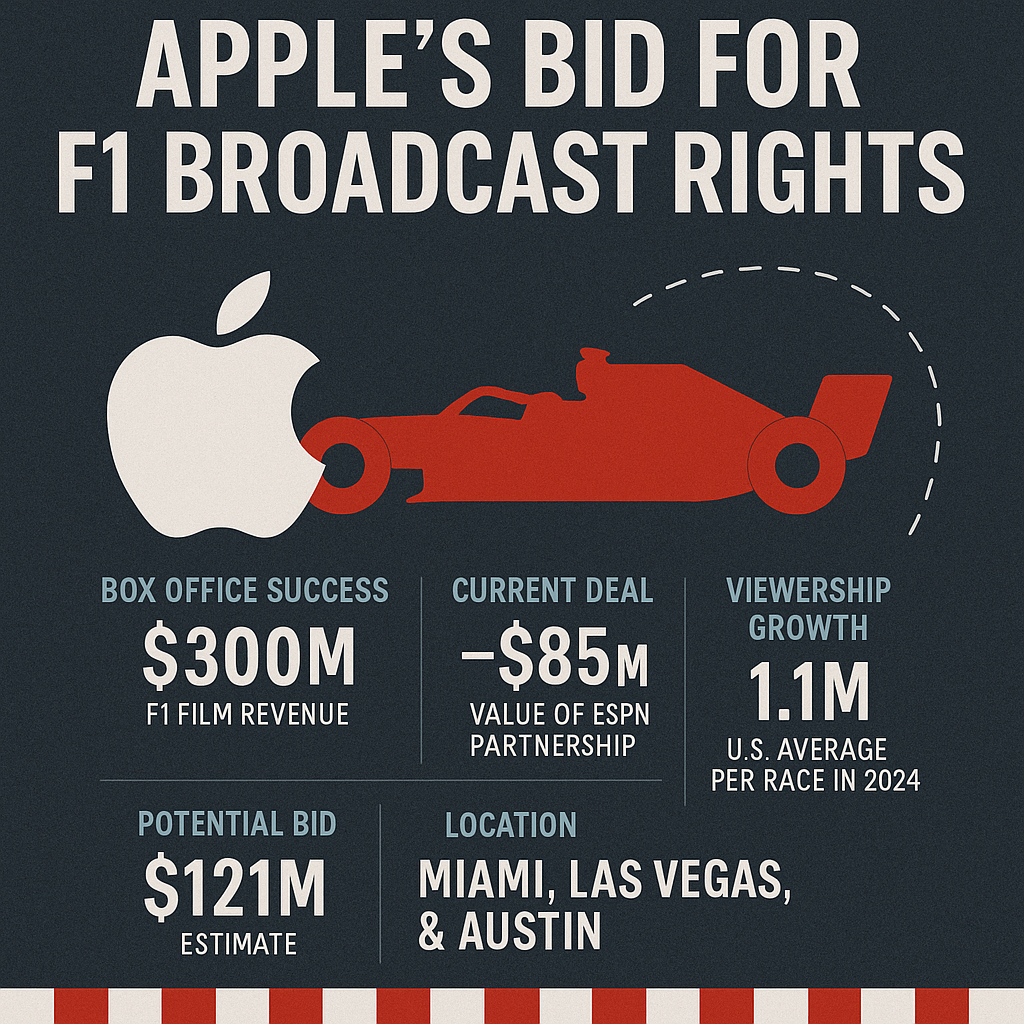
Apple is reportedly vying for the US broadcast rights to Formula 1, challenging Disney-owned ESPN as the sport’s current contract nears expiration. This move comes on the heels of Apple’s first box office hit, F1, starring Brad Pitt - a film that generated around $300 million globally and positioned the tech giant as a serious contender in mainstream entertainment.

Beyond broadcasting, Apple’s interest in Formula 1 is a signal to brand marketers, strategists, and rights holders: the convergence of content, sport, and culture is accelerating, and platforms are no longer just distributors - they’re experience makers.

📊 Supporting Stats

  • Apple’s F1 is now its highest-grossing original film, bringing in approx. $300 million (FT, July 2025).

  • Formula 1’s US broadcast deal with ESPN is currently worth ~$85 million annually. Citi analysts estimate the next deal could reach $121 million per year (pre-film release projection).

  • F1 viewership in the US has more than doubled under Liberty Media, from 554,000 in 2018 to 1.1 million in 2024.

  • Apple’s services revenue, which includes Apple TV+, reached $100 billion annually.

✅ Pros - Why Apple + F1 Makes Sense

Cultural Momentum
With the rise of Drive to Survive and celebrity-endorsed films like F1, the sport is reaching new demographics - notably younger and female audiences in the US.

Platform Synergy
Apple’s ecosystem allows seamless integration of content across devices, subscriptions, and services. F1 coverage could live alongside original films, fan engagement apps, AR experiences, and commerce touchpoints.

Advertising Value
F1 is premium inventory - global, high-income audience, live event-driven. Apple could elevate the commercial proposition with precision ad tech and first-party data.

⚠️ Cons - Strategic Risks and Uncertainties

Cost vs. Value
With expected rights costs rising, and the film’s momentum possibly hard to sustain, the ROI on a broadcast deal remains uncertain. Apple would be competing not just with ESPN, but potentially with other tech giants.

Streaming Saturation
Consumers are increasingly selective about subscriptions. Apple TV+ may struggle to convert sports viewers unless it bundles F1 meaningfully into broader offerings.

Control and Complexity
F1 already operates its own streaming service. Apple would need to navigate co-existence or negotiate exclusivity without undermining Liberty Media’s direct-to-consumer model.

🚀 Opportunities for Brands

Integrated Storytelling
F1’s fusion of technology, speed, drama and global locales is ideal for immersive, cross-platform brand narratives - especially in travel, luxury, automotive, and tech.

New Touchpoints
Apple’s data and device ecosystem (from iPhones to Vision Pro) could offer brands new tools for in-race experiences, AR overlays, and hyper-personalised campaigns.

Audience Growth
This shift could further energise the American market for F1, where interest is booming. For US-based or youth-targeting brands, it’s an opening to enter motorsport with cultural relevance.

🧱 Challenges Ahead

Rights Fragmentation
With multiple players eyeing F1, brands may face a splintered media landscape - requiring cross-channel coordination and careful ROI evaluation.

Creative Constraints
Apple’s tight control over brand integrations and user experience may limit sponsorship formats compared to traditional broadcasters.

Cultural Fit
F1’s identity is rooted in Europe and elite heritage. Maintaining authenticity while adapting to US and tech-driven formats will be a fine line to walk.

📝 Key Takeouts

  • Apple’s bid for F1 rights reflects a deeper integration of entertainment, sport, and platform power.

  • The success of F1 (film) may reshape how media companies value and approach sports IP.

  • Brands should view live sport not just as media inventory, but as a strategic cultural platform.

  • Apple’s ecosystem could redefine fan engagement, but risks remain around fragmentation and cost.

🔍 Next Steps for Brand Marketers

  • Audit your sports strategy: Is your brand showing up where culture is heading, not just where it’s been?

  • Explore integration models: Think beyond traditional sponsorship. What could your brand do with Apple’s tech if F1 goes live?

  • Track rights evolution: Whether Apple wins or not, F1 is becoming more premium and platform-led. Plan media budgets accordingly.

  • Experiment with immersive formats: Use this moment to pilot AR, audio, or in-race engagement ahead of mainstream adoption.

Thursday 07.10.25
Posted by Vicky Beercock
 

🏈 Shifting the Sidelines: Women Are Quietly Redefining NFL Ownership

The NFL has long projected an image rooted in tradition, masculinity, and legacy. But behind the gridiron spectacle, a quieter transformation is unfolding in the boardrooms: women are becoming a growing force in team ownership.

With the Indianapolis Colts now officially led by the three daughters of the late Jim Irsay, 12 of the league’s 32 teams currently count women as either controlling owners or significantly active stakeholders. This includes high-profile figures like Kim Pegula (Buffalo Bills), Dee Haslam (Cleveland Browns), and Denise DeBartolo York (San Francisco 49ers). Women now represent over 37% of top-tier ownership structures in the league - a substantial shift for a sport often perceived as slow to diversify.

This trend reflects a broader evolution. According to Forbes, the number of female sports team owners across all US leagues has increased by 30% since 2015. And it's not just in ownership - ESPN reports that 38% of NFL league office roles are now held by women, with over 50% of entry-level hires also female. These shifts suggest a growing pipeline of female leadership shaping the sport from multiple angles.

It’s a notable change in a league that didn’t see its first female owner until 1947, when Violet Bidwill inherited the then-Chicago Cardinals and became the first woman to win an NFL championship. Nearly eight decades later, the landscape remains uneven - but the influence of women in ownership is no longer an anomaly.

🏟️ NFL Teams with Female Ownership or Leadership (2025)

A record 12 of the 32 NFL franchises now include women as controlling owners or with major leadership roles. These include:

  • Indianapolis Colts - Carlie Irsay-Gordon (CEO), Casey Foyt (Executive Vice President), and Kalen Jackson (Chief Brand Officer) lead the team after their father’s passing.

  • San Francisco 49ers - Denise DeBartolo York has served as Co-Chair since 2001, continuing the DeBartolo family legacy.

  • Kansas City Chiefs - Sharron Hunt, daughter of founder Lamar Hunt, is an influential part-owner.

  • Cleveland Browns - Dee Haslam co-owns the team and plays a visible leadership role in operations and strategy.

  • Buffalo Bills - Kim Pegula is team President and CEO (currently on medical leave), a central figure in the team’s resurgence.

  • New Orleans Saints - Gayle Benson is the principal owner and also owns the NBA’s Pelicans.

  • Detroit Lions - Sheila Ford Hamp has been principal owner since 2020 and is part of the Ford family legacy.

  • Las Vegas Raiders - Carol Davis, widow of Al Davis, maintains control alongside her son Mark Davis.

  • Tampa Bay Buccaneers - Glazer family co-ownership includes daughters with active roles in franchise oversight.

  • Tennessee Titans - Amy Adams Strunk has served as controlling owner since 2015 and has prioritised operational consistency.

  • Seattle Seahawks - Jody Allen became team owner after her brother Paul Allen’s death and manages multiple team assets.

  • Denver Broncos - Carrie Walton Penner and Mellody Hobson are key members of the Walton-Penner ownership group.

🔍 Is Women’s Leadership Driving Revenue?

  • NFL as a whole generated over $23 billion in revenue in the 2024 fiscal year, with nearly 9% growth year-over-year .

  • Some franchises with female leadership are among the highest-valued teams:

    • The 49ers were valued at around $8.5 billion during their latest deal

    • The Chiefs hold a valuation of $4.85 billion

    • The Raiders stand at $6.7 billion

  • Balance-sheet impact: Under NFL rules, teams receive shared media revenue (~$400M+ per team annually), and this distributed revenue accounts for the majority of franchise income. Having women in ownership ensures they benefit directly from this steady revenue stream.

  • Brand and fan alignment: Women make up 46% of NFL fans; visible female leadership can strengthen fan engagement, reaffirms brand trust, and support merchandising growth.

🧠 Key Takeouts

  • 12 of 32 NFL franchises now have women in major ownership roles - a historic milestone

  • These teams include several of the league’s most valuable franchises - e.g. 49ers, Chiefs, Raiders.

  • While individual impact data is limited, shared revenue models ensure all owners, including women, benefit from NFL commercial success.

  • Female leadership aligns with a fanbase that's nearly half women - enhancing potential brand equity and loyalty.

🔎 Next Steps for Brand Marketers

  • Partner with teams led by women, tapping into their brand credibility and fan resonance.

  • Activate storytelling around diverse ownership in campaigns, particularly when targeting female fans.

  • Review sponsorship strategies, recognising that leadership diversity can be a differentiator in the market.

  • Track future data releases: aim to benchmark commercial impact on women-led teams compared to league averages.

categories: Impact, Sport
Thursday 07.10.25
Posted by Vicky Beercock
 

🚀 Netflix in Orbit: What Live Space Coverage Means for Brands and Culture

Netflix is heading to space - and taking 700 million subscribers with it. The streamer has announced plans to broadcast live rocket launches, spacewalks, and real-time views from the International Space Station. It’s a bold extension of Netflix’s recent move into live content, which already includes NFL games, the Tyson vs. Paul fight, and Beyoncé’s halftime show. For NASA, the goal is clear: tap into Netflix’s massive audience to ignite fresh interest in space. For brand strategists, it opens up a new frontier for cultural relevance and live media engagement.

🚀 The Pros: Space Becomes Streamable

  • Mass Reach Meets Mission Control: Netflix's live events can reach over 700 million subscribers globally. For NASA, this scales beyond niche science audiences into global popular culture.

  • New Formats for Fan Engagement: Live streams of missions and spacewalks could resemble event-viewing, creating shared global moments, much like a sports final or concert.

  • Legitimises Live Content for Netflix: This isn’t just another reality show - it positions Netflix as a hub for high-stakes, real-time storytelling.

🪐 The Cons: Signals and Saturation

  • Audience Fatigue: With live sports, concerts, and political debates already in the mix, there’s risk of over-saturating live formats without clear differentiation.

  • Science Isn't Always Spectacle: Space missions can involve long periods of calm. Unlike a boxing match or concert, these moments may lack the adrenaline rush audiences expect.

  • NASA’s Own Channel Risks Obscurity: NASA+ offers this content for free, but may lose visibility if Netflix becomes the dominant space-viewing platform.

🌌 The Opportunities: Brands on the Launchpad

  • Sponsorship and Brand Integration: Think Red Bull Stratos or SpaceX livestreams - space content offers high-impact, high-visibility opportunities for brands to align with innovation and exploration.

  • STEM and Youth Engagement: Educational and aspirational tie-ins can connect brands with younger audiences inspired by space science and tech.

  • Eventising the Cosmos: Major launches or milestones could become new cultural moments - an opportunity for brand activations, second-screen experiences, or real-time campaigns.

☄️ The Challenges: Risk, Relevance, and Representation

  • High-Stakes, Low-Control: Live space events carry the risk of delays, malfunctions, or even tragedy. For Netflix and partners, this means operating with caution.

  • Commercialisation vs Credibility: Over-branding could undermine the authenticity or scientific integrity of the content.

  • Cultural Equity in Space: Who gets to be represented in this next media frontier? Diversity, access, and narrative framing will all be under scrutiny.

🧭 Key Takeouts

  • Netflix’s space content is a cultural shift, not just a programming update.

  • NASA is betting on pop culture to extend the appeal of space science.

  • Brands have a rare chance to align with awe-inspiring, globally unifying moments.

  • The risk of turning space into just another content stream is real.

🛰️ Next Steps for Brand Marketers

  • Monitor Launch Dates: Treat major space events as potential brand moments. Prepare creative, social, and experiential campaigns around them.

  • Explore Collaborations: Partner with space-focused orgs or educational groups for purpose-led activations.

  • Use Caution with Tone: Avoid gimmicks. Space is serious and awe-inspiring - any brand involvement must respect the format and its risks.

  • Plan for Second Screens: Livestreams open doors for social engagement, Q&As, AR overlays, and influencer commentary. Think beyond the main event.

Netflix’s journey into orbit isn’t just a programming twist - it’s a signal that space, science, and spectacle are converging. The next big live moment might not be on Earth.

categories: Tech
Thursday 07.10.25
Posted by Vicky Beercock
 

🕶️ Meta’s Smart Bet: Why Its €3B Stake in EssilorLuxottica Matters for Brand Marketers

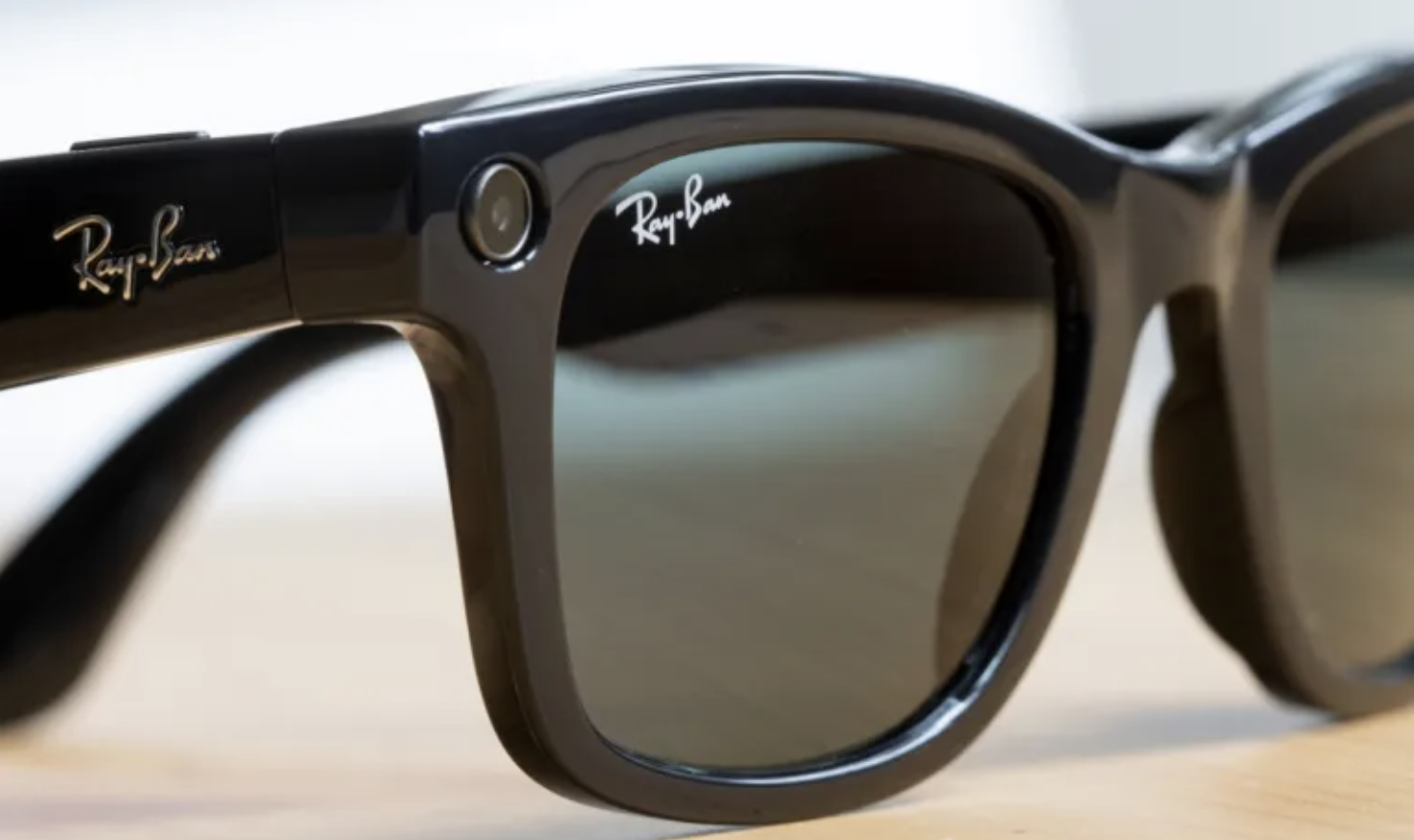
Meta has reportedly acquired a 3% stake in EssilorLuxottica, the eyewear giant behind Ray-Ban and Oakley. The €3 billion ($3.5 billion) investment signals more than a financial move - it’s a strategic deepening of Meta’s long-term push into AI-powered hardware, particularly smart glasses. For brand marketers, this signals a growing convergence of fashion, tech, and augmented experiences - and a new frontier for branded interaction.

Smart Glasses Are Becoming Mainstream

Smart glasses are no longer novelty gadgets. Ray-Ban Meta glasses, launched in 2021, have seen stronger-than-expected uptake, prompting deeper collaboration between the two companies. The addition of Oakley-branded glasses in 2025 further expands Meta’s footprint.

According to Counterpoint Research, smart wearable shipments are expected to reach 600 million units globally by 2027, with smart glasses making up an increasing share thanks to their blend of function and style.

What’s Working: Pros

  • Blending Style and Tech: Unlike bulky headsets, smart glasses from Meta x EssilorLuxottica integrate cameras, AI assistants, and voice commands into traditional eyewear styles.

  • Brand Equity Built-In: Ray-Ban and Oakley bring decades of cultural cachet, helping smart glasses sidestep the “gadget” stigma that plagued earlier wearables.

  • Direct-to-Consumer Ecosystem: Meta’s ownership of the hardware enables control over user data, interface, and services - bypassing gatekeepers like Apple or Samsung.

Limitations and Risks: Cons

  • Privacy Backlash: Always-on cameras and voice assistants raise surveillance concerns, especially in public spaces.

  • Fragmented Market: Many players - from Amazon to Snap - are competing, with no clear standard or dominant form factor yet.

  • Battery and Tech Constraints: Miniaturisation of sensors and batteries remains a technical challenge, limiting extended use.

Opportunities for Brands

  • Immersive Advertising: Smart glasses open the door for context-aware branded overlays - from virtual product try-ons to real-world-triggered content.

  • Hands-Free Search and Commerce: AI-powered voice interfaces can enable seamless product discovery and voice shopping.

  • Location-Based Activations: Brands could build activations where digital layers appear in physical spaces - offering exclusive content, offers, or narratives.

Challenges Ahead

  • Platform Dependency: Early brand integration may hinge on Meta’s ecosystem, creating reliance on its APIs and data policies.

  • User Adoption Curve: While growing, smart glasses adoption is still niche relative to smartphones or smartwatches.

  • Creative Format Limitations: The screenless nature of some models means brands need to rethink UX beyond visuals.

Key Takeouts

  • Meta’s €3B stake cements smart glasses as a core hardware pillar, not an experimental side project.

  • The fusion of fashion and function (Ray-Ban, Oakley) gives smart glasses cultural traction.

  • Brand experiences must evolve to fit AI-driven, screenless, voice-first interfaces.

  • Smart glasses offer a glimpse into the future of ambient, always-available branded interaction.

Next Steps for Brand Marketers

  • Start Prototyping: Develop voice-first or audio-based branded content for wearable interfaces.

  • Monitor Smart Wearables: Track consumer sentiment and behaviour around emerging smart glasses platforms.

  • Engage Early: Partner with Meta or other platforms for early branded beta activations - to learn, iterate, and lead.

  • Think Beyond the Screen: Rethink your brand’s identity in an ambient, visual-light, context-heavy future.

Meta’s investment in EssilorLuxottica is not just a bet on smart glasses - it’s a signpost toward the next major shift in how people experience digital content in the real world. For marketers, the time to explore is now.

categories: Fashion, Culture, Gaming, Impact, Tech, Music, Sport
Wednesday 07.09.25
Posted by Vicky Beercock
 

📱 TikTok's US Reinvention: What It Means for Brands, Creators and Culture Marketers

TikTok is preparing to split. According to The Information (July 7, 2025), the platform is developing a U.S.-specific version of its app ahead of a possible sale to American investors. The redesigned app could hit U.S. app stores by 5 September, with users expected to migrate fully by March 2026.

This development is driven by U.S. political pressure: former President Donald Trump confirmed discussions with China are set to resume, stating a deal is “pretty much” in place. But Beijing’s stance on ByteDance divestment remains unclear, especially following tariff escalations earlier this year.

For brand and creator marketers, this is more than a policy story. It’s a shift in the infrastructure behind the most culturally potent social platform in the U.S., home to over 135 million monthly active users, and a key engine for youth trends, creator commerce, and real-time content discovery.

✅ Pros: What Could Work in Marketers’ Favour

Platform continuity, with political cover
If a U.S. version helps TikTok avoid a ban, the platform gets a new lease on life with less regulatory uncertainty. That brings much-needed stability to brands and creators who’ve held back due to legal ambiguity.

Opportunity for region-specific innovation
A U.S.-operated version could develop custom tools, formats and features tailored to domestic user behaviour and commercial needs. Think: better brand safety controls, integrated commerce, or enhanced first-party data access.

Potential return of cautious advertisers
TikTok’s U.S. ad revenue is expected to grow from around $10 billion in 2024 to over $14 billion in 2025. A U.S.-sanctioned version could trigger budget reallocation in Q4 and beyond, especially among marketers seeking a stable, scalable alternative to Meta or YouTube.

First-mover advantage during relaunch
If TikTok reframes itself publicly around the U.S. launch, early brand partners could benefit from increased visibility, promotional support, and platform favouritism.

❌ Cons: Risks and Limitations to Monitor

Fragmentation across markets
Two versions of TikTok could mean diverging algorithms, user interfaces, or product roadmaps. Global campaigns may require localisation not just in message, but in platform mechanics.

Friction in user migration
Users will need to download a new app by March 2026. That opens up a window of churn, confusion, and content drop-off - especially among less tech-savvy or casually engaged users.

Creator monetisation could stall
If monetisation tools (Creator Fund, gifts, brand collabs) lag during the transition, top creators may diversify to other platforms. That threatens TikTok’s cultural edge and brand reach.

Continued political exposure
Even if the app relaunches under U.S. ownership, regulatory scrutiny won’t vanish. Data practices, content moderation, and youth safety remain open targets for legislation.

⚠️ Watchouts for Brand, Creator and Influencer Marketers

  • API and data access may change. Campaign measurement tools and analytics platforms could experience lags or require re-integration with the new U.S. app.

  • Influencer performance benchmarks may reset. If engagement metrics shift due to user drop-off or algorithm tweaks, influencer rates and ROI models may need recalibration.

  • Paid media planning needs agility. Paid placements might face a brief pause or changes in approval processes. Flexibility in budget allocation will be key.

  • Creator contracts may need updating. Usage rights, timelines, and KPIs tied to TikTok activations should account for app migration scenarios and audience volatility.

📌 Key Takeouts

  • TikTok is developing a new U.S.-specific app, reportedly launching 5 September 2025, with full user migration expected by March 2026.

  • 135M+ U.S. monthly users and 1.6B+ globally are affected—core audiences for creator-led campaigns.

  • Global ad revenue exceeded $23B in 2024, with U.S. revenue expected to hit $14B+ by end of 2025.

  • If TikTok is pulled from the U.S., up to $8.6B in ad spend could migrate to competitors like Instagram and YouTube.

  • This shift is both a risk and an opportunity for brands ready to move quickly and creatively.

🎯 Next Steps for Brand Marketers

  1. Map exposure to TikTok U.S.
    Audit current spend, creator partnerships, and campaign dependencies. Identify key risks and backup plans.

  2. Scenario-plan for split platforms.
    Develop strategies for U.S.-only TikTok operations, especially if global features diverge or if content must be localised for performance.

  3. Engage creators early.
    Proactively brief creator partners on what’s known, plan long-term relationships, and be ready to support their transition between versions.

  4. Monitor platform announcements closely.
    Watch for updates to commercial policies, new ad tools, and the timeline of deprecation for the old app.

  5. Stay agile across your short-form mix.
    Invest in creative flexibility that can move between TikTok, Reels, Shorts, and emerging formats as needed.

TikTok’s U.S. reboot marks a new phase in the platform’s evolution - from global disruptor to regional battleground. For marketers, it’s not just about brand presence. It’s about preparedness, speed of response, and having the right creators in your corner as the next version of TikTok takes shape.

categories: Culture, Impact, Tech, Music, Beauty, Fashion, Gaming, Sport
Wednesday 07.09.25
Posted by Vicky Beercock
 

How Unilever Used AI to Make Soap Go Viral: Culture Meets Content at Scale

Unilever’s cookie-scented Dove drop didn’t just clean up on TikTok - it scrubbed away any lingering doubt that AI-powered, creator-led marketing is the new playbook for FMCG relevance. This campaign offers a sharp case study on how big brands can marry technology and culture to drive sales and social clout. But it’s not without its trade-offs. Let’s break it down.

🔍 Campaign Recap: The Scent of Success

To launch its limited-edition Crumbl cookie-inspired Dove body care line, Unilever went big on scale, speed, and scent-driven storytelling. A vast influencer network helped the brand pull in over 3.5 billion earned impressions, and 52% of customers who bought the product were new to Dove. Crucially, these results weren’t just down to influencer volume - they were enabled by a smart AI-powered content infrastructure.

Unilever used Nvidia’s Omniverse platform to create digital twins of its products - down to packaging, label and language variants - and fed these into its own Gen AI Content Studios to generate thousands of visual assets a week. These assets were then deployed across its influencer network, and remixed again via AI to fit platform-specific formats and audience segments.

✅ The Pros: What Worked

1. Speed and Scale Without Creative Burnout

Unilever moved from generating “single digit” assets per month to thousands per week. That level of scale is unheard of in traditional CPG creative workflows. It gave influencers fresh, brand-ready content to work with - allowing for faster campaign launches, A/B testing, and trend responsiveness.

2. Influencer ROI That Converts

A powerful stat backs this up: 49% of consumers now make purchases monthly as a result of influencer content. In beauty and personal care, where trial is key, social validation is often more persuasive than legacy brand equity. This campaign showed that tapping into trusted creators still delivers - especially when amplified by AI-enabled formats.

3. New Customer Acquisition at Volume

The standout figure: 52% of sales came from first-time Dove buyers. That’s a strong result for a legacy brand, proving that culturally relevant limited editions can act as a brand gateway. It’s also a rare example of influencer work tied directly to incremental growth.

4. Asset Remixing for Maximum Reach

By using AI to resize, reformat and reposition creator content, Unilever extended campaign life and adapted it for each platform. From TikTok sound-on formats to Instagram carousels and Stories, the brand avoided creative fatigue and ensured higher content fit.

⚠️ The Cons: Risks and Trade-Offs

1. Too Much Volume Can Kill the Vibe

There’s a point where content volume becomes noise. Pushing thousands of branded assets per week may satisfy algorithms, but risks audience fatigue. Without strong creative direction, brands can drift into generic, forgettable content.

2. Authenticity at Risk

While influencer content performs best when it feels spontaneous, AI-optimised assets can tip into over-produced territory. If creators become mere content distributors instead of storytellers, the trust that underpins influence starts to erode. Already, over a third of marketers cite authenticity concerns when using AI-generated content.

3. The AI Influencer Question

Unilever hinted at exploring AI-generated influencers in the future. But 37% of consumers already say they find AI avatars less trustworthy than humans - raising the risk of backlash, especially in categories like skincare where emotional connection and credibility matter.

4. Lack of Guardrails

AI-generated content and virtual influencers remain largely unregulated. Only around 22% of brands currently have AI influencer disclosure guidelines, despite 78% planning to implement them. Without governance, the risk of reputational damage - through undisclosed AI usage or misleading content - is real.

🧭 Key Takeouts for Brand Marketers

1. Start with Humans, Scale with AI

The most effective campaigns still begin with culturally fluent creators. AI is a tool for scale and speed - not a replacement for taste and tone. Use it to adapt, not to dictate.

2. Put Cultural Relevance First

Don’t confuse tech innovation with cultural impact. The Crumbl collab worked because it tapped into a real trend - food-inspired beauty - not just because it used AI. Culture is the soil; AI is the fertiliser.

3. Treat Content Like Inventory

You don’t just need more content - you need the right mix, at the right time, for the right channel. Build modular content ecosystems that allow for remixing, personalisation and localisation. Think of assets as a supply chain, not a finished product.

4. Future-Proof Your AI Ethics

Start building internal playbooks for AI disclosure, content governance and creator transparency. It won’t just help mitigate risk - it will build trust with consumers and regulators alike.

🧠 Final Thought: The New Brand OS

Unilever didn’t just run a campaign - it demonstrated what the future brand operating system could look like. Creators fuel culture, AI enables distribution, and digital twins make agility real. For FMCG brands looking to remain culturally relevant and commercially viable, this is the blueprint.

But let’s not forget: while AI helps you move fast, it’s still the humans who decide where to go.

Check out the WSJ’s take here: https://www.wsj.com/articles/how-unilever-used-ai-to-make-soap-go-viral-8e723717?mod=cio-journal_lead_story

categories: Tech, Beauty, Culture
Wednesday 07.09.25
Posted by Vicky Beercock
 

On The Record Linkedin Newsletter 8th July

categories: Linkedin Newsletter
Tuesday 07.08.25
Posted by Vicky Beercock
 

Club World Cup’s Growing Pains: A Marketing Misfire or a Format in Need of Patience?

FIFA’s revamped Club World Cup should have been a landmark moment: a chance to showcase the world’s top club sides in a fresh, global tournament format. Instead, the early headlines have focused on half-empty stadiums, tepid atmospheres, and troubling stats. With over 1 million empty seats across the group stage, it’s time to ask: is the Club World Cup concept oversaturated or simply in need of refinement and time?

Let’s break down what went wrong - and how it can be salvaged.

What Went Wrong: A Marketing Miss at Every Turn

1. Confusing Value Proposition
For casual fans, the Club World Cup still doesn’t carry the same prestige as the UEFA Champions League or even domestic leagues. Marketing failed to communicate why this matters. What’s the story? What’s at stake?

2. Poor Market Fit
Hosting group stage games in large, historic venues like MetLife and the Rose Bowl might have looked good on paper, but the lack of local club connection meant empty seats and disengaged crowds. Cincinnati and Orlando saw crowds below 7,000 - that’s barely MLS level on a bad day.

3. Oversaturation and Timing
The Club World Cup now competes for attention in a calendar bursting at the seams. Players are stretched thin, clubs are reluctant, and fans are fatigued. A bloated football schedule combined with summer tournament overload (Euros, Copa América, Olympics) makes it tough to carve space.

4. Underwhelming Broadcast Impact
Despite being on primetime cable (TNT, TBS, truTV), the English-language broadcasts averaged just 360,000 viewers. For context, that’s less than an average Premier League match on NBC in the US.

Is the Market Oversaturated - or Just Not Ready (Yet)?

This is the central tension: was the Club World Cup doomed by a saturated sport marketing landscape, or does it just need time to embed?

The answer is: both.

Yes, the football calendar is saturated. The modern fan is overwhelmed by matches, and this tournament doesn’t yet have the cultural weight to cut through. But new formats always need time to grow. The UEFA Nations League, Women’s Champions League revamp, even T20 cricket faced similar scepticism early on.

The Club World Cup can work, but it needs to earn its place - not just demand it.

How FIFA Can Improve the Club World Cup

1. Anchor It in Culture
Let the host cities and regions influence the tournament identity. Right now, it’s “World Cup Lite.” To thrive, it must feel different - not just look like a scaled-down international tournament.

2. Fix the Format
Cut the number of matches. Make it tighter, knockout-based, and easier to follow. No fan wants to wade through 48 group stage games in June.

3. Align with Club and Player Needs
This can’t become another source of player burnout. FIFA must work with clubs and players’ unions to ensure sustainable travel, rest, and incentives.

4. Make the Stakes Clear
Fans follow jeopardy. Tell the story. Is this the club version of international glory? Then show why lifting this trophy matters - to fans, players, and brands.

5. Smarter Ticketing and Stadium Strategy
Stop chasing optics. It’s better to have a full 20,000-seat venue than a half-empty 60,000-seat one. Build the atmosphere first, then scale.

Conclusion: It’s Not Game Over, But Time for a Rethink

The Club World Cup isn’t a total failure - yet. But FIFA must decide if this is a genuine new pillar in global football or just a branding exercise stretched too thin.

The attendance figures don’t lie, and the player fatigue is real. But with sharper strategy, cultural grounding, and better storytelling, the Club World Cup could still become what FIFA hopes: a truly global celebration of the best in club football.

But for now? The audience isn’t buying in. Literally.

categories: Sport
Tuesday 07.08.25
Posted by Vicky Beercock
 

How TikTok's ‘Add To Music’ App Is Reshaping Streaming: What Marketers Need To Know

As music marketers, we’ve long known that TikTok is a top-of-funnel cultural engine for hits. But now, with its ‘Add To Music’ app integration, the platform is closing the loop between discovery and streaming in a way that’s both frictionless and powerful - with major implications for campaigns, fan strategy, and ROI.

After a full global rollout in 2024, TikTok’s Add To Music App feature is officially making waves. It’s earned the Music Consumer Innovation Award at the 2025 Music Week Awards and is already responsible for over one billion track saves to streaming platforms like Spotify, Apple Music, YouTube Music, Amazon Music, Deezer, and - most recently - SoundCloud.

This is a behavioural shift.

📊 High-Impact Stats Marketers Shouldn’t Ignore

  • 1+ billion tracks saved via Add To Music – TikTok

  • SoundOn-released Show Me Love by WizTheMC hit No.3 in the UK and has clocked 446,009 units in consumption (Official Charts Company)

  • TikTok has driven "many billions" of off-platform streams via the feature (TikTok internal data)

  • Spotify’s Viral 50 Global charts are increasingly filled with tracks going viral on TikTok first

💡 Key Takeouts

  • Discovery is now directly measurable: TikTok has gone from being a vibes-based virality machine to a performance marketing tool for music.

  • Frictionless conversion: Fans can now move from swipe to stream with one tap, turning hype into habit.

  • Full-funnel strategy is essential: From creation on TikTok to streaming platform performance, marketers now need to map and optimise the entire user journey.

  • Platform loyalty is changing: SoundCloud’s integration signals TikTok’s ambition to stay platform-agnostic and support all music ecosystems - not just the majors.

✅ Pros for Music Marketers

  • Direct attribution: For the first time, you can more confidently track TikTok virality to streaming spikes.

  • Increased artist independence: With SoundOn and integrated streaming, TikTok offers a start-to-scale solution for unsigned acts.

  • Cross-platform amplification: TikTok becomes a launchpad, not a silo. This creates a more sustainable post-viral trajectory.

⚠️ Considerations and Watchouts

  • Short attention spans still rule: Saving a track doesn’t guarantee full streams or long-term fandom. Retention strategies are critical.

  • Data visibility may be limited: Brands and marketers might not always have access to platform-level data unless integrated with label or platform partners.

  • Over-reliance risk: Building campaigns too TikTok-heavy could limit audience diversity across age and genre lines.

⏭️ Next Steps for Music Marketers

  1. Integrate Add To Music prompts into campaign storytelling. Highlight where fans can save or stream.

  2. Build artist funnel strategies that account for TikTok virality and how to retain fans beyond the platform.

  3. Use SoundOn smartly: Independent artists should explore how to tap TikTok’s in-house label services to maximise early traction.

  4. Collaborate across DSPs: Use TikTok as the ignition point, but build out broader playlist and editorial support with platforms like Apple Music, Spotify, and YouTube Music.

🎯 What This Means for Brand Marketers

TikTok’s Add To Music feature isn’t just a win for artists - it’s a cultural leverage point for brands that want to tap into music-driven moments with sharper conversion and cultural impact.

Music has always been a brand’s shortcut to emotion. Now, it’s also a shortcut to action.

Whether you're launching a campaign, activating talent, or building a branded content series, TikTok’s integration with DSPs creates a new bridge between brand affinity and measurable behaviour.

💡 Key Opportunities for Brands:

  • Drive deeper storytelling through sound: Branded content that uses emerging tracks can now help push them onto streaming platforms, giving your brand a role in music’s success story.

  • Tap into music discovery culture: Partner with artists who are rising via TikTok and use the Add To Music feature to create a trackable journey from content to conversion.

  • Use music as a campaign trigger: Think beyond sync - the right track placement in a brand moment can now translate directly into saves, shares, and streams.

  • Enhance creator partnerships: Collaborate with creators who can integrate music authentically into their content and encourage followers to save tracks, linking fandom with action.

🚀 Bottom Line

TikTok’s Add To Music feature is more than a button: it’s a strategic shift in how music is marketed, discovered, and consumed. For artists and marketers alike, it’s time to rethink release strategies through the lens of TikTok-enabled streaming pathways.

This is music marketing in motion – and we’re just getting started.

categories: Impact, Music, Tech
Tuesday 07.08.25
Posted by Vicky Beercock
 

e.l.f. Isn’t Playing Games: How Beauty’s Underdog Is Winning Sports Marketing

By now, most brand strategists know that investing in women’s sport is no longer a fringe play - it’s one of the most high-impact, high-return moves in modern marketing. But what e.l.f. Cosmetics is building under CMO Kory Marchisotto isn’t just a sponsorship portfolio, it’s a blueprint for how purpose-led sports marketing can unlock both equity and mass-market opportunity.

From the PWHL to the NWSL, NASCAR to Twitch, and even the Super Bowl, e.l.f. isn’t “entering” sports - it’s rewriting the rules of engagement. Here’s why their approach is one every brand marketer should be studying right now.

1. This Is Access Marketing.

Marchisotto puts it best: e.l.f. isn’t selling makeup, it’s selling access. And that insight is what transforms each sports partnership into a cultural movement. By backing women athletes across underserved sports and untapped fanbases - from IndyCar’s Katherine Legge to Paralympic swimmer Anastasia Pagonis - e.l.f. is doing more than turning up. It’s holding the door open.

Stat to know: 94% of women in the C-suite played sports. e.l.f. connects the dots between access to sport and access to power - turning every sponsorship into a statement on leadership, visibility, and inclusion.

2. e.l.f. Sees the Gaps Where Other Brands See Risk

In a sports marketing landscape where only 9% of sponsorship dollars go to women’s sports (Sports Innovation Lab, 2023), most brands hesitate. e.l.f. acts. The brand's Super Bowl strategy? Spotting that 50% of the audience are women, but less than 1% of ads actually speak to them. Cue Jennifer Coolidge, age 60, in an unapologetically pink moment of disruption. And then back again the next year, with an 80-year-old fronting a spot. Proof that e.l.f. doesn’t just back underdogs - it centres them.

Brand move: Instead of following demographics, e.l.f. flips them into strategic insight. Where others see a women-heavy audience as irrelevant to sport, e.l.f. sees massive underexposure, and therefore, massive brand potential.

3. It’s Not Just Who They Sponsor - It’s How They Show Up

This isn’t about logo slaps and generic media buys. When e.l.f. activated around Katherine Legge at the Indy 500, the result was seismic. The brand’s installation had queues stretching for miles - surrounded by legacy oil and gas sponsors, e.l.f. became the symbol for a new era. A pink car, a female driver, and fans who’d never seen themselves reflected on track before. Emotional relevance, brand-first design, and disruption in one move.

4. From Twitch to Wrestling: Playing Where Others Aren’t

One of e.l.f.’s earliest moves was launching a Twitch channel (e.l.f. You) after discovering that 77% of women on the platform had experienced bullying. Rather than exit the space, e.l.f. created one. The channel became a digital sanctuary where makeup, gaming, and identity could coexist - with real talk, financial literacy, and leadership lessons thrown in. That same mindset led to the brand sponsoring women’s high school wrestling, now the fastest-growing girls’ sport in the US.

This is future-forward brand marketing. Less about being seen in all the usual places. More about finding where your audience isn’t yet seen, and turning up with purpose.

5. Partnerships With Cultural Architects, Not Just Teams

From Billie Jean King to Sarah Spain and the iHeart Women’s Sports Audio Network, e.l.f. aligns with changemakers. Their “Change the Board Game” campaign reframed leadership in a visual, viral way - pushing for more women and diverse leaders on corporate boards. The power here? Using sports not just for fan engagement, but as a lens to challenge systems and influence structures.

Why This Matters

e.l.f.’s model is proof that sports marketing - done right - is no longer about placing logos, it’s about placing values. In a media and cultural landscape where representation is the battleground, e.l.f. shows how beauty brands (and beyond) can activate in sport not to follow culture, but to build it.

For CMOs and strategists, this is a case study in:

  • Identifying underleveraged audience spaces

  • Reframing DEI into action-based strategies

  • Using brand as a bridge between access and equity

  • Understanding fan culture not by sport, but by unmet need

High-Impact Stats Recap:

  • 94% of women in the C-suite played sport (EY)

  • Only 9% of sponsorship dollars go to women’s sport (Sports Innovation Lab, 2023)

  • 50% of Super Bowl audience are women, yet less than 1% of ads target them (e.l.f. insight)

  • 77% of women on Twitch report being bullied (e.l.f. research)

  • Women’s wrestling is the fastest-growing high school sport in the US (NFHS)

Final Word:

This is not a campaign playbook. It’s a paradigm shift. e.l.f. isn’t playing the sponsorship game. It’s changing it - and inviting the industry to rethink what sports marketing can do for brand equity, audience trust, and long-term cultural impact.

Check out the full interview on Adweek for deeper insights from Kory Marchisotto. https://www.adweek.com/brand-marketing/elf-cosmetics-sports-marketing-cmo-kory-marchisotto/

categories: Beauty, Sport
Monday 07.07.25
Posted by Vicky Beercock
 
Newer / Older