Vicky Elmer-Beercock
Culture That Converts | Identity, Reputation, Standing | Chief Brand Officer · Head of Brand & Culture
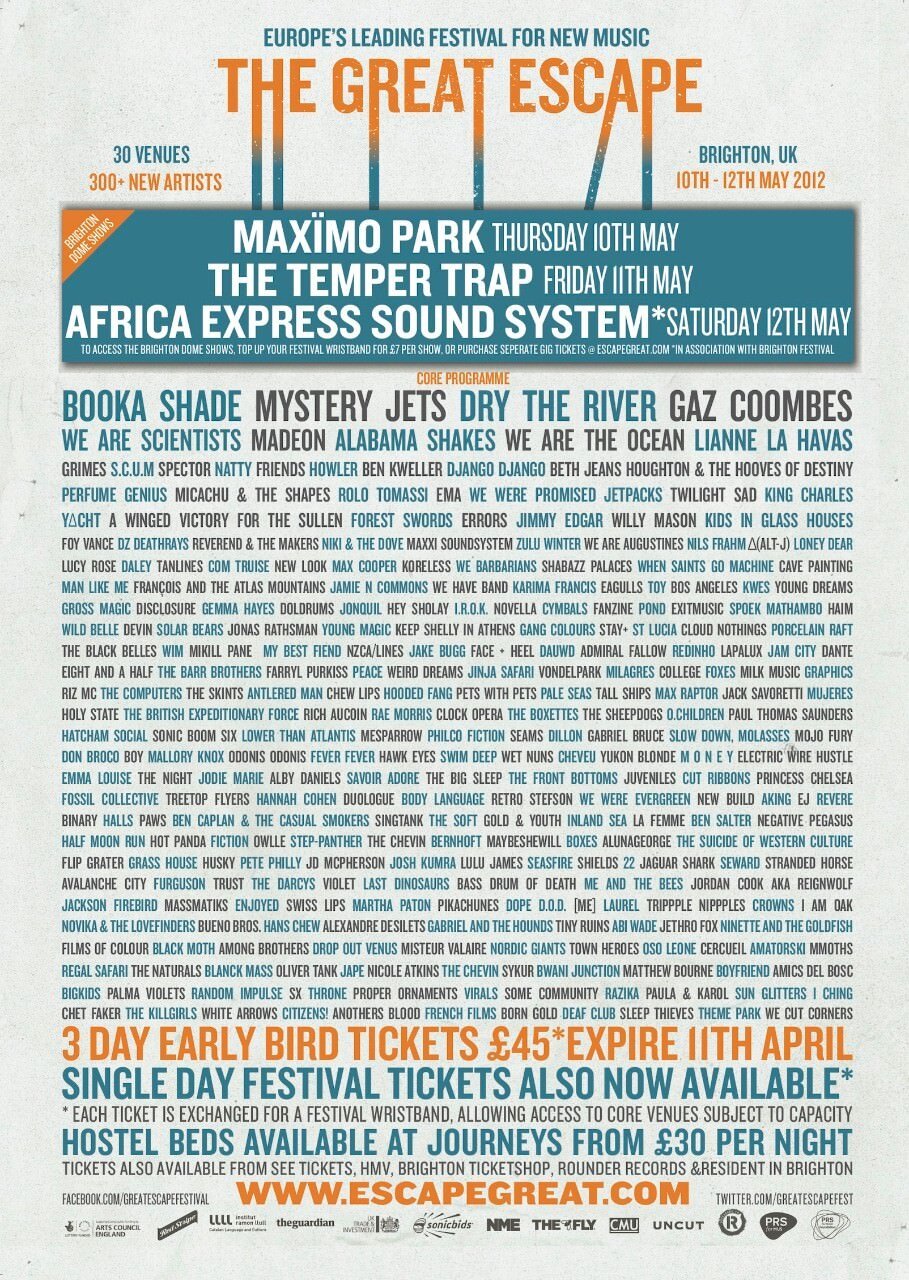
The Great Escape x The Guardian partnership
The Great Escape was critically respected and industry-credible. What it needed was national reach - the kind that moves tickets, raises profile beyond the music industry bubble and signals to artists and agents that the festival belongs in a different conversation.
The solution was the festival's first ever partnership with a national newspaper. Not a sponsorship. A value exchange - structured so that The Guardian got genuine editorial access to one of the most significant emerging music festivals in the UK, and The Great Escape got the media weight, distribution and cultural authority of one of the country's most respected mastheads.
The negotiation, structuring and delivery of that partnership was led from the festival side.
The Strategic Approach
The partnership was designed around a principle that is straightforward to state and difficult to execute: both sides had to get something real.
For The Guardian, that meant genuine editorial access - first refusal on festival content, behind-the-scenes footage, artist interviews, podcast recording, coverage across print and digital music sections. The integrity of the editorial relationship was non-negotiable. A Guardian partnership that felt like advertising would have undermined the value of having it.
For The Great Escape, that meant marketing and media inventory with genuine commercial reach - full-page festival advertising in The Guardian, placements in the Guardian Guide and Festival Guide, logo placement across promotional materials, branded venue presence, conference speaker involvement, ticket competitions across print and digital, social amplification, newsletter placements and inclusion in the Music Weekly podcast.
The balance between those two sides - editorial integrity and commercial return - was the architecture of the deal. Getting it wrong in either direction would have compromised both.
Delivery
The partnership was delivered as a fully integrated, omnichannel collaboration across pre-event, live festival and post-event phases, coordinating editorial, commercial and marketing stakeholders on both sides. Onsite, The Guardian had a branded presence within festival venues and newspapers available across the site - extending the partnership into the physical festival experience rather than treating it as a purely above-the-line media arrangement.
Impact
The Great Escape's first sell-out of both delegate and general tickets came during the partnership period. National profile, industry credibility and audience reach all moved materially. The festival's positioning with artists, agents and industry professionals was elevated in ways that paid media alone could not have achieved.
Strategic Significance
What this partnership demonstrated is that the most durable media collaborations are not bought - they are structured. When both parties have something the other genuinely needs, and when the governance is clear enough to protect each side's interests, the relationship compounds over time rather than depreciating after year one.
That model - editorial integrity plus commercial return, governed by mutual value rather than paid sponsorship - is increasingly relevant across festivals, sport and cultural platforms. The Great Escape x Guardian partnership was an early proof of concept for an approach that is now considered best practice.