Welcome to the next edition of On The Record, thoughtful analysis on culture, entertainment, tech, fashion, music, sport, and brands. Here's a round-up of key conversations and campaigns that caught my attention this week.
The week divides along a single line, and it runs between the people positioned to buy into a market before it proves itself and the people being priced out of the one they helped build. Nike put its name on the front of a London City Lionesses shirt, at a club posting £902,000 in revenue against a £10.6m loss, and priced the deal on the roster rather than the accounts; it is doing the same in Formula 1, arriving as licensing royalties are projected to reach as much as $310m by 2028. Alex Morgan's TOGETHXR bought equity in Bet on Her rather than a content partnership, more than 30 directors are putting $25m into the Village Theatre, fabric took a four-year exclusive on St Paul's, and Alexia Putellas turned her WSL debut into a broadcast channel. Every one of those moves is made from a position of surplus. The other half of the edition shows what the same logic costs further down: UK arena acts are touring Europe 56% above 2019 levels while small-venue performances sit 22% below, Berlin's clubs are full and losing money because food and drink has fallen from 60% of income to 20%, 14 of 20 Premier League clubs raised season-ticket prices while automated touting crackdowns flagged loyal fans, London's artist workspace only just stopped shrinking, and Vogue Business found brands describing themselves as patrons in the same week a culture writer asked publicly for $10,000. WPP's further 1,000 cuts and an Instagram label that catches only the clumsy operators sit on the same side of the line. Dolly Parton, who died this week at 80, is the one figure in the edition who never had to buy in, because in 1974 she refused to sell the asset. The scarcest thing in culture right now is the position to move early, and this week it was held almost entirely by people who already had it.

⚽ SPORT, POWER & GOVERNANCE
Nike Prices London City Lionesses on What They're About to Become ⚽
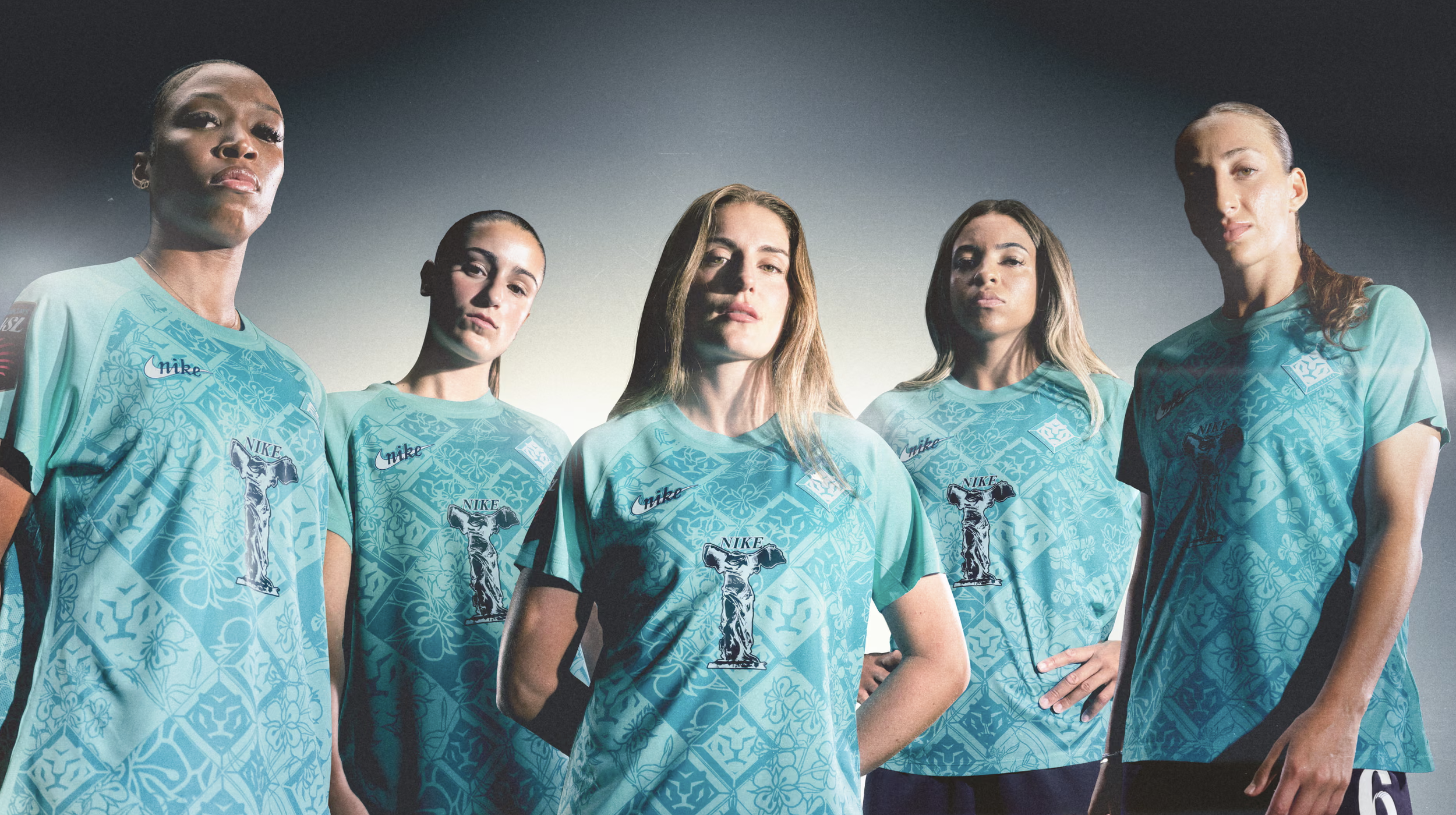
📌 A shirt sponsorship deal at a club with under £1 million in annual revenue is now being described by its own owner as bigger than some Premier League front-of-shirt agreements. London City Lionesses' new multi-year deal with Nike, unveiled ahead of the WSL season opener against Manchester United, expands an existing kit partnership into the club's most valuable piece of commercial real estate, the shirt front. Owner Michele Kang told BBC Sport it is the largest women-only front-of-shirt deal in the sport and, in her words, “not a charity cheque.” Neither the value nor the length of the agreement has been disclosed.
London City's 2024-25 accounts show revenue of £902,000 against an operating loss of £10.6m, the season they won promotion to the WSL (Yahoo Sports, AOL)
Kang says the deal exceeds the reported $4m shirt agreement for NWSL expansion side Atlanta, and some Premier League clubs' front-of-shirt deals (BBC Sport, via Yahoo Sports, AOL)
WSL wage rules cap club spending at 80% of relevant revenue plus up to £4m in owner contributions, meaning a sponsorship of this scale directly raises what London City can spend on players (AOL)
💡 The undisclosed fee matters less than the gap sitting behind it: a club posting £902,000 in revenue against a £10.6m loss has just landed a shirt deal its owner says beats Premier League money. Nike is pricing the roster London City assembled this summer, headlined by two-time Ballon d'Or winner Alexia Putellas, betting that reach compounds faster than the balance sheet catches up. Taking the front-of-shirt position rather than staying a kit supplier is the tell, since Nike's wordmark almost never occupies that spot, and doing so here reads as staking permanent territory in women's football rather than renting a season's headline. The WSL's wage cap turns that bet into leverage immediately, because 80% of whatever this deal is worth becomes squad spending power the moment it lands. Kang's refusal to call this charity is really a claim that the market has started pricing potential the same way it prices performance, and Nike got there before its rivals did. Read this alongside Putellas's own ElevenTV launch in Media below and the Nike F1 entry in Brand: the same club, the same brand, and the same instinct to buy in before the numbers are proven. ⚽
English Football's Anti-Tout Crackdown Is Catching Loyal Fans in the Net ⚽
📌 English football's most loyal supporters are being caught in the same net set for ticket touts. New research from Aston University and Manchester Metropolitan University, published via The Conversation, found that season ticket revocations and automated anti-touting systems at clubs including Arsenal, Manchester United and Liverpool are disproportionately flagging genuine long-standing fans, often those helping family members manage their accounts, rather than the organised resale operations they were built to catch. The Athletic reported that 14 of the 20 Premier League clubs raised season ticket prices for 2026/27, continuing a trend that has pushed match ticket costs up 800% since 1990. Reduced concessions for young and older supporters compound the effect, reshaping who can actually afford to be in the stadium.
The cost of Premier League match tickets rose 800% between 1990 and 2025, with one reported case of a 111% increase for a child's season ticket (The Conversation, Aston University/MMU research)
Liverpool's anti-touting action with Merseyside Police led to the seizure of £1.2m in assets tied to organised ticket resale (The Conversation)
The Athletic reported that 14 of the 20 Premier League clubs raised season ticket prices for 2026/27 (The Athletic)
💡 The genuine touting problem gives clubs useful cover for a policy that does something broader: automated detection systems can't distinguish a bot harvesting hundreds of tickets from a fan managing a parent's account, so the crackdown's false positives fall almost entirely on supporters least equipped to appeal an algorithmic decision. That connects directly to the pricing side of the same research: an 800% rise in ticket costs since 1990 and shrinking concessions for the young and the old are doing deliberately what the touting crackdown does by accident, both push the same demographic, long-standing local support with limited spending power, toward the exits in favour of fans who'll pay more and buy more merchandise. Prime Minister Andy Burnham's public fight with FIFA president Gianni Infantino over selling a stake in the World Cup lands on exactly the same structural question English clubs are answering at home: whether a competition's value sits with the people who show up every week or with whoever can be sold a bigger stake in it. The domestic version has no boycott threat behind it, which is precisely why it's moving faster. ⚽
Chase Turns the Valkyries' Home Court Into a Variable-Cost Sponsorship 🏀
📌 A basketball court became a live donation meter for two nights in Oakland. The Golden State Valkyries debuted their first custom court, the Chase Freedom Court at Ballhalla, with Chase donating $1,000 for every basket the team made across its August 2 and 4 wins over the Toronto Tempo, raising $98,000 for the Golden State Community Foundation. It's the only co-branded partner court in the WNBA this season, building on the “Chase Freedom Cash Back Courts” format Chase has already run at WNBA and NBA All-Star weekends. The design sits inside a broader league-wide pattern: the NBA uses similarly bold, team-specific court designs for its in-season Cup tournament, and previously refurbished outdoor courts across Mexico, Argentina, Brazil and the Dominican Republic as part of its 75th-anniversary programme.
The two-game Chase Freedom Court run raised $98,000 for the Golden State Community Foundation, which has delivered more than $50 million in cumulative Bay Area impact since 2012 (Valkyries, OurSports Central)
Chase Freedom has been the Valkyries' Founding Partner and shield-jersey sponsor since September 2024 (Valkyries)
The NBA's Latin America court refurbishments, part of its 75th-anniversary season, covered courts in Mexico, Argentina, Brazil and the Dominican Republic (NBA)
💡 Look at where the cost sits, because that is the clever part of this structure. Tying the donation to baskets made turns Chase's spend into a variable cost pegged to game excitement rather than a fixed sponsorship fee, so a blowout win generates a bigger, better headline for the brand than a close, low-scoring game would. That's a very different mechanic from the NBA Cup's court designs, which are pure spectacle with no charitable trigger attached, or the Latin America refurbishments, which are grassroots access plays with no in-game commercial hook at all. Three different logics are wearing the same “custom court” costume, showmanship, community fundraising and market development, and treating them as one undifferentiated trend obscures which one a given sponsor is actually buying. For a Founding Partner like Chase, tying donations to live performance also means the team's on-court success compounds the brand's own goodwill story, a more durable alignment of incentives than a logo on the floor ever was. 🏀
Alex Morgan Didn't Partner With a Women's Sports App, She Bought Equity In One 📲
📌 A media company that built its business telling women's sports stories is now buying a stake in the infrastructure fans use to actually follow the games. TOGETHXR and Alex Morgan's investment firm Trybe Ventures have acquired an equity stake in Bet on Her, an app that consolidates live scores, schedules, stats, news, podcasts and social features across more than 60 women's sports leagues worldwide, alongside a map of women's sports bars and watch parties. TOGETHXR will bring its storytelling and audience to the app; Bet on Her becomes the daily utility layer TOGETHXR's readers use to find and follow games. The deal follows the same pattern as Trybe Ventures' equity stake in Unrivaled, the 3-on-3 women's basketball league.
TOGETHXR and Trybe Ventures acquired an equity stake in Bet on Her, Inc., not a content or sponsorship partnership (PR Newswire, Comunicano)
Bet on Her consolidates live scores, schedules, stats, news and social features across more than 60 women's sports leagues, plus a map of sports bars and watch parties (PR Newswire)
Trybe Ventures previously took an equity stake in Unrivaled, the 3-on-3 women's basketball league built with player ownership from the outset (Comunicano)
💡 Ownership versus promotion is the distinction that matters here. TOGETHXR could have simply run content partnerships driving its audience to Bet on Her, the standard playbook for a media brand with reach and no product; instead it bought equity, meaning growth in Bet on Her's usage now compounds directly onto TOGETHXR's balance sheet rather than just its engagement metrics. That's consistent with the pattern Trybe Ventures set with Unrivaled, and it reflects a specific bet: that media fragmentation in women's sports, fans currently piecing together coverage across a dozen scattered apps and broadcasters, is itself the more valuable asset to control than any single piece of original content about the games. TOGETHXR has not yet published the download and engagement numbers that would prove the app moved, and until it does the trade press will treat this as a headline rather than a business. I'd back the structure regardless: in a market growing faster than any single league's own distribution can serve it, the aggregation layer is worth more than any one property, and TOGETHXR now owns a piece of it. SoundCloud and Alexia Putellas, elsewhere in this edition, are making the same move from different directions. 📲
Sports Teams Are Hiring Fashion Creative Directors as Standard Infrastructure Now, Not a Stunt ✂️
📌 What started as marquee-franchise novelty is becoming a standard hire across sports. The NFL appointed Kyle Smith as its first fashion editor in late 2024, building partnerships with Abercrombie & Fitch, Breitling and Veronica Beard around player style. Indiana's Pacers and Fever named Jas Bell global design and product director in June, after his Stranger Things jersey collaboration for the Fever sold out and won a Clio. Washington Spirit and the New York Knicks have made similar hires, with Ronnie Fieg's Kith continuing to produce capsule collections for the Knicks, including one marking their 2026 NBA Championship run. Business of Fashion frames this as a genuine strategic shift rather than a marketing add-on, with the caveat that the sports industry is still working out where the role's boundaries sit.
Kyle Smith, appointed the NFL's first fashion editor in late 2024, has built league partnerships with Abercrombie & Fitch, Breitling and Veronica Beard (Business of Fashion, Washington Post)
Jas Bell's Stranger Things jersey collaboration with the Indiana Fever sold out and won a Silver Clio Sports Award before he was named Pacers Sports & Entertainment's first global design and product director in June 2026 (Sports Illustrated, Andscape)
The New York Knicks, 2026 NBA Champions, marked the win with a Kith-designed capsule including a custom leather bomber jacket, continuing Ronnie Fieg's role as the team's creative director since 2022 (Hypebeast, Highsnobiety)
💡 Watch where the newest hires are landing. The NFL and the Knicks have the cultural gravity to make any partnership look inevitable; the Fever, the Pacers and the Washington Spirit need the creative work to generate attention rather than simply channel it, and that is where this has moved past novelty. It's a harder job than dressing an athlete who's already famous, and it's why the Fever's Stranger Things sellout matters more than any single tunnel-walk fit, it proved a WNBA team could manufacture desirability from scratch rather than borrow it. BoF's own reporting hedges on whether the industry knows what this role is for yet; I'd put it more bluntly. A creative director who can read “the cultural nuance of a place” and translate it into a corporate structure is a rare skillset, demand has already outrun the supply of people who have done it twice, and the teams hiring next will be paying for the title long before they know how to brief it. ✂️
🎶 MUSIC, LIVE & CULTURE
London's £64bn Creative Economy Rests on Workspace Numbers That Just Held Steady 🏙️
📌 A creative economy worth £64 billion a year is being held together by workspace numbers that only just stopped falling. London's Deputy Mayor for Culture, Justine Simons, has laid out the scale of the challenge behind the capital's £64 billion creative economy in a new interview, revealing that the number of artists' workspace sites across the city merely held stable last year rather than growing. The Creative Enterprise Zones programme, now 12 sites strong, is targeting 80,000 square metres of permanent affordable workspace, a direct response to artists being priced out as land values rise. It's a rare admission from City Hall that protecting London's creative infrastructure has become a defensive operation against the market rather than a straightforward growth story.
London's creative economy is worth £64 billion a year, with one in five jobs in the city now creative (Entrepreneur.com)
12 Creative Enterprise Zones are targeting 80,000 square metres of permanent affordable workspace (Entrepreneur.com, Greater London Authority)
The number of artists' workspace sites in London held stable last year, following a period of significant loss since 2016 (Entrepreneur.com)
💡 Holding workspace numbers flat after a decade of losses is being presented as a win, and that's the real story. Culture here is playing defence against London's own property market rather than being built into its growth. Land values are moving faster than planning policy can compensate for, so mechanisms like the Creative Land Trust and Creative Enterprise Zones function as a holding pattern against displacement rather than genuine expansion. Forget the £64 billion and the 80,000 square metres; the only figure that will tell you if this is working is whether workspace totals ever climb again once current protections bed in. The Creative Land Trust, which buys buildings outright to keep them as studios, is the one lever here that removes space from the land-value cycle rather than pleading with it, and City Hall should be judged on the number of buildings it actually holds rather than the number of zones it has drawn. Right now, hardwiring culture reads as triage dressed as strategy. 🏙️
More Than 30 A-List Directors Now Own a Piece of Hollywood's Premiere Pipeline 🎬
📌 A theatre most studios would have let go dark is instead being personally bankrolled by the people who fill it. The Village Directors Circle, a collective that includes Christopher Nolan, Steven Spielberg, Guillermo del Toro and more than 30 other filmmakers, acquired Westwood's roughly 1,000-seat Village Theatre in early 2024 after its previous lease collapsed. The group is committing $25 million to restore the century-old venue, with the nonprofit American Cinematheque, which already runs the Egyptian and Aero theatres, set to operate and program it from a planned 2027 reopening.
The Village Directors Circle acquired the roughly 1,000-seat theatre in February 2024 after its lease with Regency Theatres expired (LA Times, Deadline, Variety)
The restoration is a $25 million capital project, with American Cinematheque set to manage and program the venue from a 2027 reopening (American Cinematheque, multiple outlets)
American Cinematheque already operates the Egyptian Theatre, Aero Theatre and Los Feliz 3, giving the venue an experienced operator from day one (American Cinematheque, Hollywood Reporter)
💡 Notice who holds what. The filmmakers hold the capital and the asset, American Cinematheque holds the operating expertise and the programming, and that split is deliberate. For decades, the venues that host a film's most consequential public moment, its premiere, have sat inside chains and landlords with no particular stake in cinema as a craft, just real estate. Owning the room outright removes that dependency entirely, using the same collective-action instinct these directors already rely on informally during awards season. It reads less like nostalgia and more like the industry's most bankable names insuring their own supply chain at a moment when arthouse and premiere-grade venues keep closing rather than opening, The transferable part is the structure, ownership plus a specialist operator, and I'd expect the next version of it to appear in London or Paris within two years, because the same venues are closing there for the same reasons. 🎬
Fabric Turns a Post-Revocation Comeback Into an Exclusive Cathedral Residency 🕍
📌 One of London's most heavily scrutinised nightlife brands has just landed a four-year exclusive at one of the city's most protected buildings. Fabric has signed a partnership running until 2030 to become St Paul's Cathedral's exclusive partner for contemporary music events, following one-off shows with RY X in 2024 and Patti Smith in 2025. The first event under the new deal takes place on 29 October, with the lineup still unannounced. St Paul's said it hopes the partnership will draw new visitors to the building; fabric called it “an extraordinary and unexpected coming together of two very different parts of London.”
Fabric's 2024 debut event with RY X sold 95% of the Cathedral's 2,000-capacity in three hours, with a waiting list of over 4,000 (fabric, AOL)
The new deal runs four years, from 2026 to 2030, with fabric as the Cathedral's exclusive contemporary music partner (fabric London, Yahoo News)
Fabric had its licence revoked in 2016 after Islington Council found a “culture of drug use” at the venue, following the deaths of two 18-year-olds (Yahoo News)
💡 Start with the 2016 licence revocation, because a decade later it is still the fact that changes how this reads. Fabric spent years rebuilding trust with regulators and the public after losing its licence outright, and the venues it has since partnered with, the British Museum, the London Coliseum, the Shard, now St Paul's on an exclusive four-year deal, all share one quality fabric's own building never fully escaped: institutional legitimacy it doesn't have to defend on its own. Heritage venues carry their own security infrastructure, licensing history and public trust, which means fabric gets access to spaces its old reputation would once have made unthinkable, while the institutions get a proven operator that can sell out 2,000 seats in three hours and bring in an audience that skews younger than their usual visitor base. That's a more durable trade than a single stunt event, and the multi-year exclusivity signals fabric wants this read as a business model rather than a novelty. Canterbury's “rave in the nave” backlash and petition show how quickly that goodwill evaporates if the programme reads as a club night in a church rather than music that answers the building, which is why St Paul's framing of its own tone matters as much as who fabric books. On this evidence fabric knows the difference, and the four-year term says the Cathedral believes it too. 🕍
SoundCloud Stops Losing the Sale It Was Already Sending Fans Elsewhere to Make 💿
📌 A platform that has spent years pointing its own users toward the exit is finally building a door that leads somewhere useful. SoundCloud has launched a beta letting artists sell tracks directly from their profiles and keep the full proceeds, taking zero commission on each sale. Fans can buy and download in whatever format the artist uploads, MP3 or WAV, without leaving SoundCloud. The beta starts with roughly 200 US-based Artist Pro creators who already have Fan Support enabled, with a wider rollout planned for autumn, building directly on SoundCloud's July acquisition of Nina Protocol, an independent platform that already let artists sell music and keep everything.
More than 250,000 artists currently link out to external platforms to sell music, with SoundCloud sending over 500,000 users elsewhere each year to complete those purchases (SoundCloud, via Music Business Worldwide)
The beta launches with roughly 200 US-based Artist Pro creators, expanding to all eligible creators this autumn (SoundCloud, MusicTech)
Bandcamp, the direct-to-fan incumbent, takes 15% commission on digital sales, dropping to 10% once an artist passes $5,000 in sales (Music Business Worldwide)
💡 Half a million users a year. That is how many people SoundCloud has been sending to Bandcamp and elsewhere to buy the music it hosts for free, and it matters far more than the zero-commission headline. The number is an admission: SoundCloud's own users have been routing around a missing feature for years, and the company is only now building the thing its own traffic data proved people wanted. Undercutting Bandcamp's 15% fee to zero is a strong opening move, but it's easier to make a generous offer when you're arriving late enough to skip the cost of building the trust Bandcamp spent two decades earning with the same audience. The scale gap matters too: 200 creators in beta against a quarter of a million already linking out elsewhere means SoundCloud is testing the mechanics on a tiny fraction of the demand it says already exists, so the hard part now is operational, payments, fraud and tax handling at scale; the artists were persuaded years ago. 💿
Brexit's Touring Damage Is Concentrated Entirely at the Bottom of the Market 🎫
📌 A government-commissioned report has now put a hard number on a problem the music industry has been describing anecdotally for five years, and the detail buried inside it is sharper than the headline figure. New DCMS research, carried out by Ipsos UK and Nordicity and underpinned by PRS for Music data, found the UK touring sector lost an estimated £208 million in gross value added and 2,490 jobs between 2022 and 2024 because of post-Brexit red tape. But that loss isn't evenly spread: stadium and arena tours by UK artists in the EU are now 56% above 2019 levels, while performances at general live venues remain 22% below. UK Music, the Musicians' Union and PRS are calling on the government to deliver on its existing manifesto commitment to ease EU touring within the current framework, rather than any change to the UK's relationship with the bloc itself.
Stadium and arena tour performances by UK artists in the EU are now 56% above 2019 levels; general live venue performances remain 22% below, which is where nearly all of the £208m loss is concentrated (DCMS, Ipsos UK, Nordicity)
The UK touring sector lost an estimated £208m in GVA and 2,490 jobs between 2022 and 2024; the same barriers cost EU host countries an estimated £1.04bn and 17,010 jobs over the same period (DCMS, PRS for Music)
The Independent Society of Musicians' own survey work found 47.4% of musicians report less EU work since Brexit, with 27.8% reporting none at all (ISM)
💡 One number reframes this whole report, and it is buried in the detail: stadium and arena tours by UK artists in the EU are now 56% above 2019 levels, while general live venue performances remain 22% below. That is an industry splitting in two rather than declining evenly. Acts with the resources to absorb carnet costs, cabotage restrictions and Schengen paperwork are touring Europe more than ever; everyone else is being priced and processed out of a market that used to be the place they built an audience before they could fill an arena. That's the mechanism worth naming: red tape doesn't just cost money, it acts as a scale filter, and a filter that removes the bottom of the pipeline eventually thins out who's left to headline the arenas a decade from now. Three reports in fifteen months have now documented this precisely, and the manifesto commitment everyone keeps citing is only worth anything if it is aimed squarely at the small-venue tier, because the arena acts have already solved this for themselves. 🎫
Keffe D's Own Memoir Becomes the Evidence That Convicts Him, 30 Years On 🎤
📌 Nearly three decades after Tupac Shakur was shot in Las Vegas, the case has closed not on forensic evidence but on the words of the man who spent years publicly narrating his own role in it. A Nevada jury found Duane “Keffe D” Davis guilty of first-degree murder with a deadly weapon on 31 August, convicting him of orchestrating the September 1996 shooting in retaliation for an earlier fight involving his nephew. Prosecutors built their case largely around Davis's own police interviews and his 2019 memoir, Compton Street Legend, in which he repeatedly placed himself in the car the shots were fired from. Davis, 63, maintains his innocence and plans to appeal; sentencing is set for 13 October, with a possible maximum of life without parole.
The jury deliberated for under three hours after an 11-day trial before returning the guilty verdict on 31 August 2026 (Reuters, NBC News)
Davis is the only person ever charged in Shakur's 1996 killing, and the only one of the men believed to have been in the car who is still alive (AP, Nation)
Prosecutors' case centred on Davis's 2019 memoir and years of press, television and YouTube interviews in which he described his role in the shooting (NBC News, tbreak)
💡 No new forensic evidence convicted Davis. The content he spent years building a public profile on did, and that is the detail that will outlast the verdict. A memoir, television interviews, YouTube appearances: all of it existed because true-crime hip-hop nostalgia is a genuine market, and Davis understood he had something valuable to sell in it. That's the uncomfortable throughline for anyone covering this case from a media angle, the same appetite for proximity-to-legend content that made Death Row-era mythology a durable commercial category is what generated the paper trail prosecutors used to close the file. Whatever comes next, in Tupac's catalogue, in the documentaries this trial will inevitably generate, will be built on the same commercial instinct that put Davis in front of a jury in the first place. 🎤
Warner Music's Social Justice Fund Is Still Expanding While Others Quietly Retreat 🎶
📌 A commitment made in the aftermath of George Floyd's murder is now six years old and still growing, at a moment when plenty of corporate peers have gone quiet on theirs. Warner Music Group and the Blavatnik Family Foundation have announced nearly $6 million in 2026 grants across 17 organisations through their joint Social Justice Fund, six of them first-time recipients including Atlanta Music Project, Freedom Reads and the Global Black Economic Forum. The latest round brings the fund's total commitments to more than $52 million since its 2020 launch, working toward a stated $100 million target by 2030.
The 2026 round distributes nearly $6 million across 17 organisations, six of them first-time grantees (WMG, Blavatnik Family Foundation)
Total fund commitments now exceed $52 million since the fund launched in June 2020 with a $100 million target (Billboard, Music Ally)
New grantee Freedom Reads will build 75 libraries inside US prisons over the next five years (WMG, WebWire)
💡 Six years matters more than $6 million here. Most corporate social-justice funds announced in the weeks after George Floyd's murder in 2020 either quietly wound down or went conspicuously silent as the political climate around DEI shifted through 2023 to 2025. WMG's fund has instead kept publishing new grantee tranches on a regular cycle and remains roughly on pace for its original $100 million target, which makes persistence itself the signal here rather than any individual grant. That durability is easier for a music company to sustain than most, its own catalogue and artist roster give it a direct, ongoing commercial interest in the same communities the fund supports, so the spend reinforces relationships WMG needs anyway rather than sitting apart from the business as pure reputation management. 🎶
Dolly Parton Dies at 80, Having Never Once Sold the Asset That Mattered ✍️
📌 Dolly Parton has died in Nashville aged 80, following a brief battle with cancer. Before anything else, she was a songwriter, credited with more than 3,000 songs, who understood the value of her own catalogue decades before the industry caught up. In 1974 she turned down Elvis Presley's request to record “I Will Always Love You” rather than hand over half the publishing Colonel Tom Parker demanded; eighteen years later Whitney Houston's version became one of the best-selling singles ever recorded, and every royalty went to Parton. She built rather than licensed, taking over a struggling Pigeon Forge theme park in 1986 and turning it into Dollywood, and founded the Imagination Library in 1995, which has since given away more than 330 million free books to children across five countries.
Parton wrote more than 3,000 songs across a six-decade career, retaining ownership of her publishing throughout (multiple outlets)
The Imagination Library has distributed more than 330 million free books to children across the US, Canada, UK, Australia and Ireland since 1995 (Euronews)
US flags were lowered to half-staff nationwide, including at the White House, through 1 September 2026 (White House proclamation)
💡 Hold onto the 1974 refusal. It is the hinge her entire career turned on, and every subsequent decision, building Dollywood instead of licensing her name, keeping the Imagination Library free rather than monetising it, declining two Presidential Medals of Freedom rather than being claimed by one side of American politics, followed the same logic: control the asset, and let the rest follow from that. She achieved something close to impossible in a fractured culture, genuine ownership across audiences who agree on almost nothing else, and she got there by refusing to be edited by anyone, including the people offering her the biggest cheques. That's the actual lesson for anyone building a brand around a person rather than a product: the self has to be authored in full and kept, because anything licensed out piece by piece eventually leaves nothing that is actually yours. ✍️
Berlin's Clubs Are Full and Still Losing Money, and Nobody Saw the Real Cause Coming 🪩
📌 Berlin's Clubcommission has published its first comprehensive survey of the city's nightlife scene since 2019, and the numbers contradict the standard decline narrative. Roughly as many clubs have opened as closed since 2020, and 83% of surveyed venues report at least 50% occupancy. But only 61% broke even in 2025, down from 79% in 2017, with 39% now operating at a loss. The gap sits in what happens after people walk through the door: food and drink revenue has fallen from 60% of club income in 2017 to just 20% today, while admission has risen from 21% to 59% over the same period.
83% of surveyed Berlin clubs report at least 50% occupancy, while only 61% broke even in 2025, down from 79% in 2017 (Clubcommission Berlin, DJ Mag)
Food and drink revenue fell from 60% of club income in 2017 to 20% today, while admission revenue rose from 21% to 59% over the same period (Clubcommission Berlin, Electronic Groove)
Watergate closed at the end of 2024 after 22 years; SchwuZ filed for bankruptcy in July 2025 and closed that November (DJ Mag, Resident Advisor)
💡 Club economics always ran on the bar. The door covered artists, security and a fraction of overheads; the drinks kept venues solvent, which is why a full room and a failing model were never as connected as the standard narrative assumed. A generation drinking less has hit exactly the part of the model that was doing the heavy lifting, and the study's own revenue split proves it precisely: food and drink went from being the majority of club income to a fifth of it in eight years. That reframes the fix entirely, the usual playbook for a struggling venue, stronger lineups, harder marketing, rebuilding the audience, does nothing here because the audience already showed up. Any live venue, festival or experiential retail business that has quietly treated footfall as a proxy for financial health is exposed to the exact same gap. 🪩
The Met's Galliano Retrospective Collapses a Month After Its Own Preemptive Damage Control 🎭
📌 A show the Met tried to stakeholder-proof before it even launched has been cancelled anyway. The Metropolitan Museum of Art and John Galliano jointly announced that “John Galliano: Horizons,” the Costume Institute exhibition planned to launch the 2027 Met Gala, will not proceed. Galliano's statement thanked director Max Hollein, curator Andrew Bolton and Vogue's Anna Wintour for the honour, reaffirmed accountability for antisemitic and anti-Asian remarks that ended his run at Christian Dior in 2011, and said he didn't want the ongoing debate to distract from the Costume Institute's work. He would have been only the third living designer to receive a solo Costume Institute show.
The Met had held discussions with Jewish community leaders before announcing the exhibition in July, hoping to pre-empt backlash; the cancellation followed roughly a month later (PBS News)
Galliano would have been only the third living designer honoured with a solo Costume Institute exhibition (WWD)
Galliano used the statement to thank those who supported his 15 years of sobriety and recovery from alcoholism and addiction (Met Museum press release)
💡 The Met ran its consultation playbook correctly, briefing Jewish community leaders ahead of the announcement specifically to prevent this outcome, and the backlash arrived anyway. That is the uncomfortable part: pre-clearing the framing of a difficult exhibition doesn't neutralise the objection when the actual question, whether the institution should honour this particular designer at all, was never one curatorial care could resolve. The joint statement, mutual gratitude, no assigned fault, a graceful exit for both sides, reads as the standard reputational off-ramp, and Anna Wintour's continued public backing of Galliano confirms this was never really about disowning him personally, only about the optics of a solo retrospective landing during Gala week. What the Met actually loses here is less the show itself and more the credibility of community consultation as a defence the next time a similarly loaded subject comes up. 🎭
🎨 BRAND, CULTURE & CAMPAIGNS
Nike Times Its Formula 1 Return to When the Bet Is Already Proven 🏎️
📌 A sport that spent the last decade turning grid culture into global streetwear is about to get sportswear's most storied name back on the grid. Nike has reportedly opened talks with Formula One Management over a potential sponsorship and licensing deal, its first meaningful F1 presence since its Michael Schumacher-Ferrari partnership ended in 2002. Nike executives were seen at May's Miami Grand Prix, and Cadillac drivers Valtteri Bottas and Sergio Perez have already appeared in Nike footwear, alongside custom Cadillac-branded Nike Dunks gifted to team executives. No deal has been confirmed, and F1 already has established relationships with adidas, Puma, Castore and New Era.
F1's annual licensing royalties are estimated at $80m to $150m today, with analysts projecting as much as $310m by 2028 (Sports Business Journal, via SGIE)
Nike's last F1 deal ran with Michael Schumacher at Ferrari from 1996 to 2002; adidas has since signed Mercedes and Audi, and Puma holds F1's official licensing partnership (GPFans, SGIE)
Nike CEO Elliott Hill took over in October 2024 with an explicit mandate to reverse the brand's decline (SGIE)
💡 Twenty four years out of a sport is the kind of gap that would sink most comeback narratives before they start, and yet the timing here reads as deliberate rather than desperate. Formula 1's crossover into streetwear was proven by Drive to Survive and by the brands that committed early, which means Nike is betting on a market that has already shown its numbers, with licensing royalties on a trajectory to roughly double by 2028, rather than guessing whether motorsport and youth culture intersect at all. That is a different kind of entry than the one adidas or Puma made, arriving speculatively ahead of the boom, and it fits a pattern under CEO Elliott Hill of using proven, high-growth categories to rebuild momentum rather than chasing every emerging trend. The question that decides this sits with Formula One Management, which has to want a second major licensing partner crowding a market Puma already owns. If it does, Nike enters a maturing category at exactly the point its growth curve stopped being a guess, and that is the right way in for a brand rebuilding heat rather than spending it. This week's podcast has Nike's own brand lead explaining the same logic from the inside. 🏎️
adidas Foundation Opens €2m Fund Ahead of the 2027 Women's World Cup in Brazil ⚽
📌 A €2m fund opening this month is targeting three countries two years before any of them host a ball. The adidas Foundation has launched The Next Move, a grant programme aimed at organisations using sport to reduce gender-based violence and discrimination in Brazil, Argentina and Colombia, ahead of the 2027 Women's World Cup. Individual grants of €150,000 to €250,000 will run over three years, with the Expression of Interest window opening 7 September. The timing puts the money into host communities long before the tournament itself becomes the story.
Total commitment of €2m will fund grants of €150,000, €200,000 or €250,000 over a three-year period (adidas Foundation)
Brazil hosts the 2027 Women's World Cup, with Argentina and Colombia both qualifying directly to represent the region (FIFA, OneFootball)
Eligible organisations must show annual income between €100,000 and €2.5 million, with priority given to groups reaching Indigenous, Afro-descendant, migrant and LGBTQI+ communities (adidas Foundation)
💡 Grant windows tied to major tournaments usually open the year before kickoff, timed to a press cycle. This one opens with almost two full years still on the clock, and that timing is the whole story. adidas already has a direct commercial stake in 2027, having designed the tournament ball and kits, which means the philanthropy and the commercial programme are running on the same relationship with the region, built earlier and on different terms. Funding local organisations for three-year grant cycles rather than single-tournament activations is what building cultural capital in a market actually requires, because the relationships outlast the event and the goodwill isn't contingent on results on the pitch. It will get a fraction of the coverage a shirt deal or a ball launch gets, and that says more about how brands and the trade press value long-horizon work than it does about the programme, which is the better-built of the two. ⚽
Brands Are Calling Themselves Patrons While Culture Workers Are Still Broke 🎨
📌 A trend piece about brands rediscovering patronage landed the same week one of its subjects was joking, only half-joking, about needing a one-off $10,000 to keep going. Vogue Business's “Should Brands Be Patrons of Art and Culture?” surveys a shift from campaign-style marketing toward funding relationships with individual creators and institutions: Substack's new sponsorship model, which pairs brands like Balenciaga directly with writers, Nothing opening its Central Saint Martins product launch to 300 students, and executives framing the approach as building genuine relationships rather than borrowing culture for a campaign. Music and culture journalist Shaad D'Souza, who turned his Instagram into the independent Shaad Magazine, posted around the same time about surviving without steady income despite “amazing talented friends and thrilling professional opportunities,” signing off in the voice of the magazine itself.
Substack's expanded sponsorship programme pairs brands including Balenciaga, Ralph Lauren, Uber and T-Mobile directly with individual newsletter creators, funding their work rather than running standard ad placements (Vogue Business)
Nothing opened its Phone 4(a) launch at Central Saint Martins to 300 students, framing access and mentorship as a form of patronage alongside direct funding (Vogue Business)
D'Souza's post described going without steady income despite sustained editorial output and professional demand (Instagram)
💡 Every brand executive quoted in the piece describes patronage in the language of relationship and trust, autonomy for the creator, no expectation of immediate return, genuine belief in the work. That's a real and different posture from a campaign brief, and it's not nothing. But the test of a patronage model has nothing to do with the language brands use to describe it; it is whether the people it is meant to support can stop performing precarity as content to survive. D'Souza's post reads as a joke because that's the register culture writers have learned to use when asking for money in public, and it lands as a joke because everyone recognises the gap between what these institutions say they value and what they're actually willing to pay for it. Brands moving from borrowing culture to funding it is a genuine, welcome shift in posture, but posture isn't the same as rate cards, and until the second one changes, the first one is still marketing with better manners. 🎨
The Honey Deuce Is Now a $20 Million Line Item, Not Just a Cocktail 🍈
📌 A drink built from vodka, lemonade and melon balls is now one of the US Open's most reliable revenue lines. More than 738,000 Honey Deuces were sold at the 2025 tournament, up 32% year over year, generating close to $17 million at $23 each. Boardroom reports that 2026 sales are projected to approach 900,000, which would put revenue at roughly $20.7 million from a single concession item. The tournament's food operation scales with it: this year's projected numbers include 2.4 million melon balls, 135,000 pounds of beef, 12 tons of crab, shrimp and lobster, and 12,500 tennis-ball-shaped specialty cookies, according to Boardroom.
More than 738,000 Honey Deuces sold in 2025, up 32% year over year, generating close to $17 million at $23 each (USTA, Boardroom)
Boardroom projects 2026 sales approaching 900,000, worth roughly $20.7 million if the projection holds (Boardroom)
Sales have grown from 24,000 at the drink's 2007 debut, priced at $12, to 450,000 in 2023 and 738,459 in 2025 (multiple outlets)
💡 Demand was never the constraint on this business. Pour speed was, and the USTA fixed it with a draft system that makes a Honey Deuce in 12 seconds. That is the detail that turns a viral drink into a scalable revenue line: once the bottleneck at the bar disappears, growth becomes a function of foot traffic and price rather than staffing. The ingredients cost little; what's being sold is the photograph, the skewer of melon “tennis balls,” and a souvenir cup people keep as a memento of attending, which is why the USTA can raise the price six times since 2012 without denting volume. That pricing power, rather than the aesthetic, is what concessions operators should be studying. A single SKU, engineered for speed and shareability rather than variety, is outperforming entire food categories at the same event, which says more about where margin lives at a live event than any amount of menu expansion would. 🍈
📱 MEDIA, STREAMING & PLATFORM
Amelia Dimoldenberg Closes Chicken Shop Date While It's Still at the Top 🍗
📌 A decade-plus run built from a youth-club interview format is ending at the height of its cultural relevance, timed to Dimoldenberg's own move into higher-value IP rather than any dip in interest. Amelia Dimoldenberg announced on Instagram that Chicken Shop Date will close after a final run of episodes, twelve years after it launched in 2014 and roughly a billion YouTube views later. The show's social following grew from 830,000 to 4.4 million since 2022 alone, right as Dimoldenberg was assembling a scripted development slate with the BBC and Amazon MGM's Orion Pictures. She confirmed the news on 3 September.
Chicken Shop Date launched in 2014 and closes after a 12-year run, with roughly 1 billion YouTube views across its lifetime (Deadline)
The show's social following grew from 830,000 to 4.4 million since 2022, while Dimoldenberg's YouTube channel now holds over 3.4 million subscribers (Deadline)
Dimoldenberg is developing a BBC young adult drama and a romantic comedy film with Amazon MGM Studios' Orion Pictures (Deadline)
💡 Everywhere the framing is grief, an era ending, but the numbers tell a sharper story: this show is being retired at its highest point of reach. Dimoldenberg built Chicken Shop Date on a format legacy media couldn't have commissioned, a teenager's youth-club idea that grew into the industry's own red carpet, and she's ending it exactly when that position is strong enough to fund a jump into scripted development with the BBC and a major studio. That sequencing matters more than the sentiment: creators who wait for a format to decline before pivoting lose the negotiating position that made the pivot valuable in the first place. What looks like nostalgia content is really an exit executed with the same discipline as the show's own deadpan style, timed and controlled, designed to convert audience equity into ownership of new IP before anyone else can. The lesson for brands watching creator partnerships is that the strongest talent treats reach as capital to be spent rather than a franchise to be milked. 🍗
Sephora Cedes the First-Look Moment on New Products to TikTok Shop ✨
📌 Beauty's biggest discovery engine is getting first access to beauty's biggest retailer's newest products. Sephora is launching Sephora Drop Shop, a US pilot on TikTok Shop beginning 19 September, built around exclusive monthly product drops revealed through creator content and a celebrity-hosted TikTok Live before anything appears on Sephora's own site or in its stores. Only the retailer's own Sephora Collection will hold a permanent spot on the storefront, every other brand's presence is limited to its drop window. Sephora is framing the move as a “test and learn” pilot rather than a global rollout.
Beauty is TikTok's most searched category, generating more than a billion beauty-related searches each month (Sephora, Cosmetics Business)
Sephora Drop Shop pilots in the US from 19 September 2026, with select products later rolling out to Sephora.com, in-store or other retail partners (Sephora Newsroom, Retail Dive)
Sephora Collection is the only brand with permanent placement on the storefront, all partner brands appear only during limited-time drops (Business of Fashion)
💡 The celebrity Lives and monthly drop format are now standard social commerce furniture, so the detail worth noticing sits elsewhere, in the asymmetry over what gets permanent shelf space. Sephora's own private label sits on the storefront indefinitely, while every partner brand, including whichever one TikTok's algorithm makes famous, gets a single exposure window before disappearing. That reads as Sephora testing platform dependency on other people's brands before committing its own beyond the house label, a sensible hedge for the retailer and a genuine risk for any partner brand whose entire discovery moment now lives inside someone else's app for four weeks. TikTok built its dominance by giving discovery away for free, and TikTok Shop is the mechanism for charging retailers like Sephora to access it now, so paying for temporary slots rather than permanent placement tells you Sephora hasn't decided the price is worth committing to yet. The brand Sephora hands the first debut slot to is the one it trusts TikTok's audience with, and that choice will tell you more about its real read on the platform than anything in the launch release. ✨
Alexia Putellas Turns Her WSL Debut Into a Spanish Broadcast Launch 📺
📌 A debut match is being used to launch more than a playing career this weekend. Alexia Putellas has launched ElevenTV, a YouTube channel that has acquired Spanish broadcast rights to show one WSL match per matchday, beginning with her own London City Lionesses debut against Manchester United in Friday's season opener. The channel has partnered with Spanish football personality Julio Maldonado's Mundo Maldini and will build out interviews, analysis and original formats around the matches. It sits alongside Putellas's existing Eleven Foundation, which funds girls' football development programmes across Latin America.
ElevenTV will air one WSL match per matchday in Spain, launching with Putellas's own debut against Manchester United (Teleprensa, Infobae, 2Playbook)
The WSL is separately streaming all matches from its own YouTube channel for free in Spain this season, as the league expands from 12 to 14 clubs (2Playbook)
ElevenTV has partnered with Mundo Maldini, the YouTube channel of Spanish football commentator Julio Maldonado (2Playbook)
💡 The WSL is streaming every match free on its own YouTube channel in Spain at the same time, and that single fact changes the read: ElevenTV has to win attention rather than gatekeep access. Putellas is betting that a famous face curating one match a week beats a league account showing all of them, competing with the rights holder's own free distribution using personality and original content instead. That is a harder trade to win than exclusivity would be, but a more durable one if it works, because audiences who come for Alexia are more likely to stay for the channel than for the fixture list alone. The WSL giving its matches away for free in Spain actually makes her bet legible rather than redundant: she is selling a way to understand the league to an audience that already trusts her, in a market where the WSL itself has no existing following to lean on. It becomes a real media business only if the original content outlives her own fixtures as the draw, and on the evidence of who she has partnered with, Mundo Maldini's audience rather than a club's, that is the plan rather than the hope. It also makes the Nike shirt deal in Sport read differently: the club's biggest signing arrived with her own distribution channel. 📺
NFL Expands Its TikTok Deal as YouTube Edges Into Live Football 🏈
📌 A league that already owns Sunday afternoons is expanding its presence on the platform where fans spend the rest of the week. The NFL has renewed and expanded its multi-year partnership with TikTok, adding new GamePlan content hubs for game-day discovery, extending its Pro Events fan hub (first built for the FIFA World Cup) to football, and growing Pulse Premiere, the ad product that pairs brand campaigns with NFL and club content. The league will now post across nine TikTok accounts, including a flagship hub with more than 20 million followers, and NFL-tagged posts grew more than 32% over the past year. Financial terms were not disclosed.
NFL content will run across nine TikTok accounts, including a flagship hub with more than 20 million followers (Tubefilter)
Posts using the #NFL hashtag grew more than 32% over the past year (TikTok, via Global Dating Insights)
TikTok's Pro Events fan hub, previously built for the FIFA World Cup, is now expanding to cover the NFL (Tubefilter, Social Media Today)
💡 Look at who else is circling the NFL's short-form attention right now. YouTube already hosts NFL Sunday Ticket and live game broadcasts, and is visibly pushing into the exact daily-highlights territory TikTok has owned for years, which makes this renewal less about discovering a new audience and more about the NFL keeping a second major platform relationship live while its most important distribution partner starts competing on TikTok's own turf. Pulse Premiere is the part that matters commercially: it turns NFL and club content into ready-made ad inventory for brands without the league having to build or sell that inventory itself, extending NFL monetisation into a format its own broadcast deals were never built to reach. Expanding Pro Events, a format TikTok proved out at the World Cup, into NFL football also shows TikTok treating its own sports products as reusable infrastructure rather than one-off activations, a template it can now sell to any league willing to pay for it. None of this touches the actual game rights, which is exactly the point: the NFL is diversifying where fandom happens so no single platform, including the one that now streams its games, ends up controlling the whole relationship. 🏈
🤖 TECH, AI & ACCOUNTABILITY
Instagram Will Only Punish AI Influencers It Can Actually Catch 🤖
📌 Reach is now the enforcement mechanism for identity online. Instagram is replacing its optional “AI creator” tag with a mandatory “AI-generated profile” label for any account built around a synthetic person, cutting Explore and recommendation reach for accounts that skip it. The change follows reporting on waves of AI-generated influencers pitching apps and, in some cases, posing as doctors. Creators who use AI tools to edit real photos or captions are exempt; the label only applies where the person themselves isn't real.
Unlabelled AI-generated profiles lose visibility in Explore and recommendations, a major discovery channel for growing an audience (Digital Trends, Engadget)
The change replaces Instagram's previous optional “AI creator” label (AlternativeTo, Business Today)
Investigations by Wired and The Guardian found AI-generated influencer networks messaging users to drive app sign-ups and posing as medical professionals (American Bazaar, Android Headlines)
💡 This only works against personas Instagram's own detection can identify, which means accounts sophisticated enough to evade classification face no penalty at all, while smaller or clumsier operators get demoted first. That inverts the usual enforcement logic: the label punishes visibility rather than existence, so a fake persona that never seeks Explore placement can keep operating undetected indefinitely. Meta's own recommendation systems still lean heavily on AI to decide what real humans see, which makes this a rule about disclosure rather than a rule about AI itself. The policy is only as good as the classifier behind it, and classifiers lose arms races against personas built specifically to beat them; expect this to catch the clumsy operators and miss the ones that matter. 🤖
Brussels Puts ChatGPT in the Same Regulatory Box as Google Search 🇪🇺
📌 A conversational answer engine has just been filed under the same rulebook built for ranked blue links. The European Commission has designated ChatGPT a Very Large Online Search Engine under the Digital Services Act, the first time any AI chatbot has received the classification. OpenAI reported roughly 159 million average monthly ChatGPT search users in the EU, more than three times the 45 million threshold that triggers designation. Reddit and Roblox were designated Very Large Online Platforms in the same announcement, with all three given until the end of 2026 to comply.
OpenAI reported approximately 159.1 million average monthly ChatGPT search users in the EU, against a 45 million designation threshold (European Commission, Search Engine Journal)
Designated services must assess systemic risks around minors, illegal content and election integrity, publish detail on recommendation systems, and submit to independent annual audits (European Commission)
Non-compliance carries fines of up to 6% of global annual revenue (AI Chat Daily)
💡 The Commission is folding ChatGPT into the search-engine category because it “searches the web” in response to prompts, which is true but sidesteps how differently the product actually behaves: a ranked list of links lets a user weigh sources for themselves, while a single generated answer collapses that judgement into OpenAI's own synthesis. Applying search-engine obligations, recommendation transparency, a non-personalised option, systemic risk audits, to a product that doesn't rank anything is a regulatory stretch, and how OpenAI complies will effectively set the template regulators use for the next AI product this size. The timing also lands awkwardly: ChatGPT joins the DSA's most scrutinised tier just as OpenAI is trying to build an actual advertising business inside the product, so the compliance cost arrives right as the commercial upside starts looking real. 🇪🇺
WPP Cuts 1,000 More Jobs and Says the Quiet Part About AI Out Loud 📉
📌 Nearly a fifth of the advertising industry's combined 18-month job losses have now landed at one company alone. WPP plans to cut up to 1,000 more roles by the end of 2026 under CEO Cindy Rose, adding to roughly 11,000 jobs already eliminated since early 2025. The cuts sit inside a wider restructuring, Elevate28, that consolidates WPP into four AI-unified divisions and targets £500 million in annualised savings by 2028. At least 18,000 jobs have been cut across WPP, Omnicom and Dentsu combined over the same period.
WPP has cut roughly 11,000 roles since early 2025, bringing headcount to 97,388 as of 30 June 2026 (Financial Times, HR Katha)
The Elevate28 programme targets £500m in gross annualised cost savings by 2028, with £100m expected in 2026 alone (HR Katha)
At least 18,000 jobs have been lost across WPP, Omnicom and Dentsu combined in 18 months (HR Katha)
💡 What makes this round different is that WPP is naming AI as the reason rather than treating it as background noise behind a generic restructuring line. That's a shift in how holding companies are willing to talk about their own business model: for decades, agencies sold client access to large teams of specialist labour, and AI tools that let clients draft, edit and run campaigns themselves attack that model at its foundation as well as its margins. Rose's bet, folding creative agencies under one AI-unified structure, only works if WPP can sell judgement and strategy at a price clients won't replicate with a subscription, and 1,000 more redundancies is the clearest signal yet the company doesn't think the old headcount-for-hire structure survives that test. The real risk for WPP sits less in this round of cuts and more in whether the thinner organisation that remains can still win the pitches that used to justify the size. 📉
The FTC Says Amazon Quietly Turned an Honest Auction Into a Rigged One ⚖️
📌 An auction format that was supposed to reward honest bidding is at the centre of a federal case alleging the opposite happened for seven years. The FTC and 22 state attorneys general have sued Amazon, alleging it told advertisers they were bidding in a second-price auction, where the winner pays just above the next-highest bid, while secretly layering in a “soft reserve price” that pushed most winners to pay their own full bid instead. The complaint alleges the practice ran from 2019 to 2026, affected more than 1.2 million advertisers, and extracted over $20 billion. Amazon called the suit “misguided,” said the FTC “fundamentally misunderstands how advertisers operate,” and countered that its system saved advertisers roughly $8 billion between 2021 and 2025 by prioritising ad relevance over highest bid.
The FTC alleges Amazon's “soft reserve price” pushed winning advertisers to pay their own full bid in roughly 70 to 80% of auctions in recent years, extracting over $20 billion from 1.2 million advertisers since 2019 (FTC)
Amazon says average winning bids on Sponsored Products ads fell 50% between 2019 and 2025, and that roughly 92% of placed ads are not awarded to the highest bidder (Amazon, via CBS News)
Amazon generated more than $68 billion in advertising revenue last year, making it the third-largest digital ad platform behind Google and Meta (CNBC)
💡 A second-price auction only works as a trust mechanism because bidders believe honesty is rewarded, so they bid closer to what a placement is genuinely worth to them rather than shading it down defensively. The FTC's allegation is that Amazon captured the benefit of that honest bidding behaviour while secretly charging first-price economics on top of it, meaning the alleged deception targeted advertisers' own bidding psychology rather than the auction result. Amazon's defence, that relevancy-based ranking saved advertisers $8 billion, answers a different question than the one being asked: whether the auction mechanic was misrepresented, not whether the eventual outcomes were good value. That gap, between “was this a fair auction” and “did advertisers still come out ahead,” is the whole case, and on the FTC's own internal-document evidence the first question is the one that decides it. ⚖️

How Nike Built the Biggest World Cup Campaign Ever
The Debrief, hosted by Sheena Butler-Young, with Nike VP of Global Brand Management Helena Thornton and BoF sports and fashion correspondent Mike Sykes, 49 min, The Business of Fashion
📌 Nike's VP of global brand management breaks down the thinking behind “Rip the Script,” the campaign the brand built around its 2026 World Cup push, and why she treats a tentpole tournament as a catalyst for sustained brand storytelling rather than a standalone marketing moment.
✅ Worth Your Time Because: This is the sharpest available companion to this edition's Nike/F1 entry, same brand, same CEO-driven “Sport Offense” turnaround logic, but from the inside. Thornton is unusually direct about treating major sporting moments as internal cross-functional forcing functions rather than pure marketing plays, and her comments on grassroots investment outlasting tournament campaigns sharpen the read on why Nike is willing to enter a crowded, unproven category like F1 rather than chase every emerging trend. Mike Sykes, whose quote appears directly in this week's sports-creative-directors entry, is one of the two interviewers, which makes this a genuine connective thread across the edition.

Monday 7 September – Sunday 13 September 2026
US Open Finals takes over Flushing Meadows, with the women's final on Saturday 12 September and the men's final on Sunday 13 September, closing out a record $108 million prize-money tournament and the Honey Deuce's biggest sales year yet.
New York Fashion Week runs Thursday 10 to Tuesday 15 September, opening with Henry Zankov's debut for Diane von Furstenberg and closing with Thom Browne, the first NYFW season under the CFDA's new fur-free policy.
Toronto International Film Festival opens Thursday 10 September for its 51st edition, kicking off eleven days of premieres, industry deals and awards-season positioning ahead of the autumn festival circuit.