
Welcome to the next edition of On The Record, thoughtful analysis on culture, entertainment, tech, fashion, music, sport, and brands. Here's a round-up of key conversations and campaigns that caught my attention this week.
This week the same tension keeps surfacing under very different mastheads: institutions trying to claw back control they'd quietly lost, set against the moments that actually land happening nowhere near anyone's plan. Nike is cutting more than a thousand online distributors in China specifically to win back pricing control, in the same week YouTube fought off a TV-style measurement system that would have handed advertisers exactly the transparency the platform has spent years courting to be called television. FIFA extracted a record $9 billion from a World Cup it expanded largely to tighten its own grip on the calendar, yet the tournament's most talked-about brand moment belonged to Under Armour, a sponsor with a fraction of Nike or Adidas's presence, off the back of one goal nobody could have scripted. Regulators asserted a different kind of control entirely, a judge paused Paramount's $110 billion Warner Bros. Discovery deal and the FCC weighed a broadcaster's licence renewal against whether it chose to air a presidential address. Meanwhile American Eagle backed Lamine Yamal months before the market had priced him, and Bottega Veneta and Loewe both discovered that running the same stunt in the same season cancels out the recall either brand was chasing, proof that the moments people actually remember still happen closer to the ground than any boardroom plan.

⚽ World Cup: The Business Behind the Tournament
FIFA Books a Record $9 Billion Off a Format It Just Doubled in Size ⚽
📌 Spain's 1-0 extra-time win over Argentina closed out the 2026 World Cup, but the tournament's real winner was FIFA itself. The governing body brought in more than $9 billion in revenue, the most lucrative World Cup on record, and the main driver was FIFA expanding the field from 32 teams to 48 and turning a 64-match tournament into 104, more than any surge in ticket demand or breakout narrative. President Gianni Infantino has already floated pushing to 64 teams for 2030.
● 2026 revenue exceeded $9 billion, up from roughly $7 billion at Qatar 2022, driven largely by the jump from 64 to 104 matches (FIFA, CNBC)
● The 48-team format was the first expansion of its kind in the tournament's history, adding 14 teams to the previous field (FIFA)
● Infantino has proposed expanding the 2030 tournament to 64 teams, which would give roughly a third of all eligible nations a place in the competition (FIFA, via reporting)
💡 FIFA has found a revenue lever that has nothing to do with whether the football is any good, it just needs more matches on the calendar. Adding teams is a distribution decision dressed as a sporting one: more games means more broadcast windows, more sponsor inventory and more matchday tickets to sell, regardless of whether the expanded field raises the standard of play or dilutes it. The 64-team version Infantino is already floating for 2030 is where this stops being theoretical, somewhere between 104 and 128 matches, fan fatigue, broadcaster appetite or host-city logistics hits a wall this model has never been tested against, and the tournament that finds that wall will be the one that costs FIFA more than it earns. 🏆
The World Cup Final Just Became the Second-Biggest US TV Audience Since 1994 📺
📌 Spain's 1-0 extra-time win over Argentina drew a combined 62.8 million viewers across Fox, Telemundo and Peacock, more than double the 2022 final's US audience and the largest audience for any sporting event in the country since the 1994 Winter Olympics outside of the Super Bowl. The number capped a tournament that broke viewership records almost every round, and it lands just as FIFA prepares to open bidding for the 2030 US media rights, which Fox and Telemundo have held without real competition since 2022.
● The final drew 62.8 million combined viewers, with Fox's English-language broadcast averaging 38.9 million and Telemundo and Peacock's Spanish-language coverage reaching 23.9 million, itself a record for Spanish-language television (Axios, Hollywood Reporter)
● Fox's audience was up 132% on the 2022 final, and across the tournament Fox averaged 7.7 million viewers per match, more than double its audience for both the 2022 and 2018 World Cups (Axios, Hollywood Reporter)
● Fox One added 2.8 million new subscribers in June, more than 2.5 times its previous monthly record, while Peacock added an estimated 3.75 million sign-ups over the same period (Axios)
💡 Fox and Telemundo got these rights the easy way, FIFA simply extended their deals after the 2022 tournament without opening it up to competing bidders. That won't happen again. A record-breaking audience this large gives FIFA every incentive to run a genuine auction for 2030, and gives Amazon, Netflix or a streaming-first bidder a real reason to make a serious offer for rights that just proved they can out-draw almost anything in American sport except the Super Bowl. The number that will actually decide that next auction is subscriber conversion rather than audience size, both Fox One and Peacock turned World Cup viewers into paying subscribers at a rate no single broadcast figure can match, and whichever bidder can prove it will do that again is the one FIFA sells to. 🏆
FIFA's First-Ever Halftime Show Draws the Reviews the Super Bowl Usually Gets ⚽
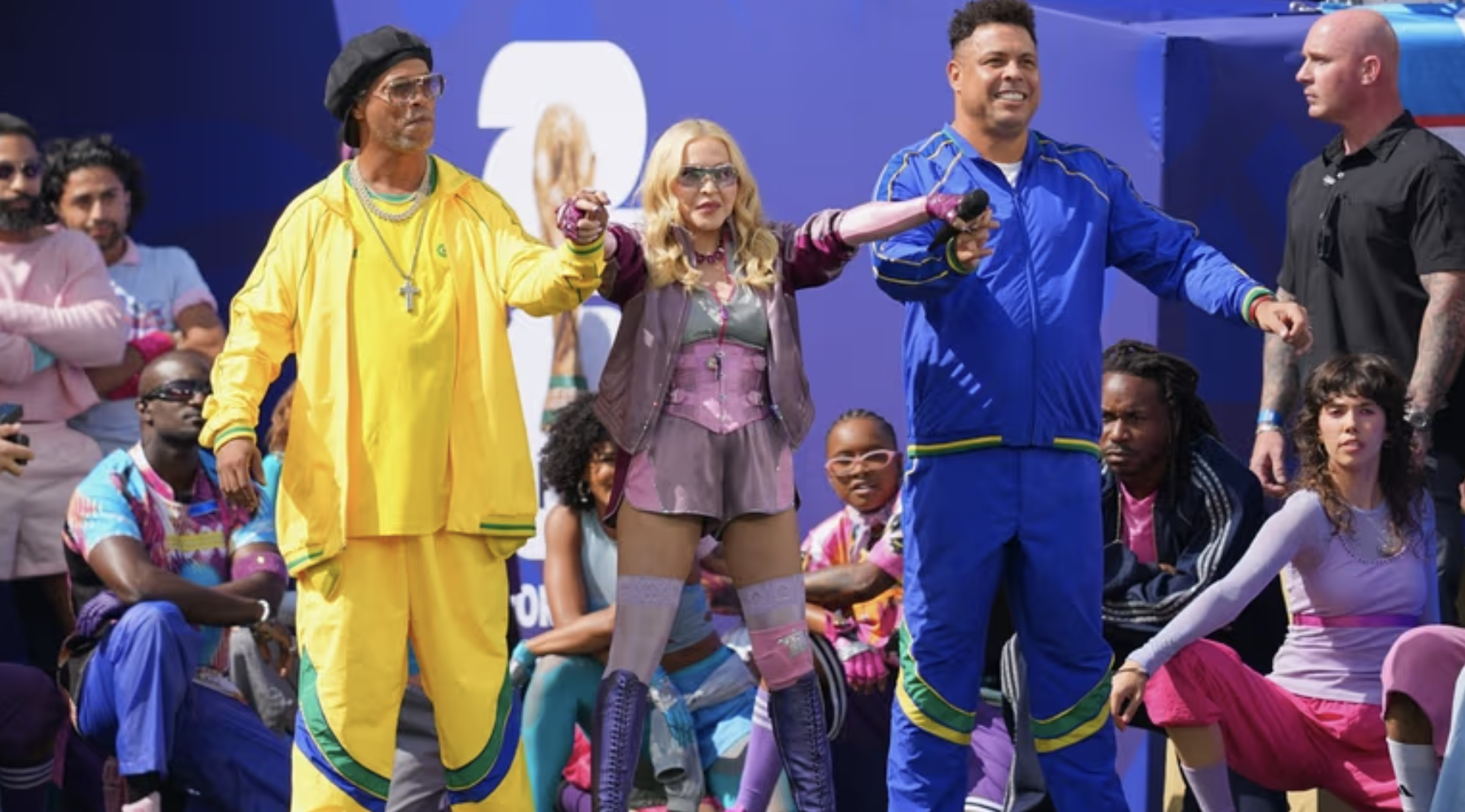
📌 Coldplay's Chris Martin was appointed creative curator of the first halftime show ever staged at a World Cup final, assembling Madonna, Shakira, Justin Bieber and BTS into an 11-minute segment produced with Global Citizen. The reception has been mixed at best. Writing in i, critic Ed Power called the show cheesy, tepid and annoying, arguing it fit a tournament FIFA seems determined to turn into pure spectacle rather than football.
● The halftime show was the first in World Cup final history, running roughly 11 minutes and featuring more than 350 performers (Billboard)
● Coldplay's Chris Martin served as creative curator rather than headline performer, working alongside Global Citizen and FIFA to book the lineup (NBC News, MSN)
● The production was tied to the FIFA Global Citizen Education Fund, which has raised over $60 million for children's education to date (Billboard)
💡 FIFA borrowed the Super Bowl's format without borrowing the thing that makes it work, decades of the NFL treating the halftime show as its own cultural event with its own dedicated audience. Bolting an 11-minute variety segment onto a final that already has its own built-in drama doesn't automatically produce a moment, it just gives critics something to compare unfavourably to years of Super Bowl production values. Madonna is already close to the ceiling on star wattage, so casting bigger isn't the lever FIFA has left to pull for 2030, if this format survives at all, the fix has to come from tightening the show itself, better integration with the match, sharper pacing, rather than another marquee booking. 🎤
Argentina's Redemption Arc Curdled Into a Villain Story Mid-Tournament ⚽
📌 Four years ago, Argentina's 2022 World Cup win completed the one gap in Lionel Messi's career and produced a final widely called the best ever played. This year the same team, en route to the final against Spain, found itself cast as the tournament's antagonist. The quarter-final against Switzerland crystallised it: a VAR-driven mistaken identity call sent off Swiss forward Breel Embolo instead of Argentina's Leandro Paredes, prompting Switzerland's manager to call the officiating a disaster, and it followed earlier claims from Egypt that Argentina had benefited from favourable calls. FIFA's referees chief rejected any suggestion of bias, and no evidence of wrongdoing has been established, but the perception had already taken hold before the whistle blew.
● Argentina reached the final unbeaten in normal time across the knockout rounds, including contested wins over Egypt and Switzerland (Yahoo Sports, beIN Sports)
● Egypt's manager alleged pressure on officials after his side's 3-2 loss to Argentina, and formally asked FIFA to review the match (NBC)
● Switzerland's Murat Yakin called the Embolo red card completely not understandable after his side went down to ten men for over an hour (Fox Sports)
💡 The thing that changed between 2022 and 2026 is the story being told about Argentina, and only the story. A team built around one player's mythology gets read as inspiring right up until the moments that decide games start looking suspicious, and then the same devotion that made Messi's redemption arc so compelling gets read back as evidence something's rigged in his favour. No governing body has proven anything either way, and that's precisely the risk for anyone managing a brand or public figure through repeat cycles of visibility, a beloved narrative doesn't sit still, it can curdle inside a single tournament rather than over years, the moment enough close calls break the same direction. 🏆
Nike and Adidas Fight the World Cup on Two Different Battlegrounds 👟
📌 Nike isn't a FIFA sponsor this tournament. Adidas is. That single fact is shaping two entirely different playbooks, and the early data suggests both are working, just not in the same currency. Nike's kit sales are running at 2.5 times their 2022 volume and its wholesale channel, the piece of the business CEO Elliott Hill has staked the company's recovery on, is showing real upswing. Adidas, meanwhile, is winning the conversation happening around the games themselves.
● Nike has sold 2.5x the World Cup kit volume it moved in 2022, per CEO Elliott Hill (Nike Q2 earnings)
● Adidas holds 58% of team jersey sales versus Nike's 36% during the tournament's first half (M Science)
● Nike ran its TV spot 80 times during the May to June window, second only to Home Depot among all monitored brands, while spending $52.8 million combined with Adidas on media (AdClarity, iSpot)
💡 Nike built a franchise rather than a campaign. Rip the Script was designed from the start to be cut into dozens of standalone moments, which is why it could carry the Haaland villain twist the moment he broke through against Brazil, and why Nike could lean so hard into linear TV reach without a sponsorship badge to lean on instead. Adidas took the more conventional route, one big creative idea plus sponsorship rights, and it's winning on relevance and fan participation because that's precisely what sponsorship buys. Neither is really cheaper than the other, and the real discipline for anyone running a comparable playbook isn't choosing rights over culture or the reverse, both brands still needed the full storytelling machine behind their approach to land, it's making sure whichever asset a budget is buying is reinforcing the other rather than sitting in a separate spreadsheet measured by a separate team. 👟
Under Armour Wins the World Cup Without Sponsoring a Single Team ⚽
📌 Nike and Adidas dominated the World Cup's boot count by sheer volume, kitting out the overwhelming majority of players on the pitch. The moment that actually broke through belonged to neither. Ferran Torres scored the winning goal in Spain's final wearing Under Armour boots, instantly making it the brand's standout marketing moment of the tournament despite having a fraction of the on-field presence its rivals did.
● Under Armour had a small footprint of sponsored players at the tournament compared with Nike and Adidas, per social commentary tracking the story (Instagram, directorofsocial)
● The Ferran Torres moment is trending to become Under Armour's top-performing Instagram post of the year, ahead of a previous post featuring both Torres and Pedro Porro (directorofsocial)
● The moment is tied specifically to the World Cup final winning goal, the single highest-attention moment of the tournament (directorofsocial)
💡 Under Armour needed one player, in one moment, doing one specific thing. Nike and Adidas spent the tournament building reach through volume, dozens of players and kit deals stacking up impressions across every match. Under Armour got more from a single boot on a single foot at the exact second the World Cup was decided than either rival's entire sponsorship roster delivered. Nobody can plan to repeat this on command, but it's the strongest argument going for keeping a lean, opportunistic slot inside any sponsorship portfolio, one athlete, modestly resourced, positioned to catch a moment nobody could have scripted, because in a market this saturated one real moment still beats broad coverage nobody watches closely. 🥅
American Eagle's Five-Year Yamal Bet Just Paid Off Ahead of Schedule ⚽
📌 American Eagle signed Lamine Yamal as a global ambassador back in January, before the 19-year-old became the youngest player ever to win both the World Cup and the European Championship. That timing changes the economics of the deal entirely: the brand backed Yamal before the market had fully priced him in, and now gets a five-year runway with an athlete whose stock just cannot be replicated at this price by anyone signing him today.
● American Eagle signed Yamal to an unprecedented five-year ambassador deal in January, ahead of his World Cup and European Championship double (WWD)
● The first co-branded capsule launches 3 September 2026, with around 25 men's and unisex pieces (WWD)
● CMO Craig Brommers says the brand is treating this September's back-to-school push as the World Cup of denim internally (WWD)
💡 American Eagle signed Yamal before the market had any reason to price him the way it does now, and that's the entire trade. Any brand can sign a World Cup winner after the final, the harder and more valuable move is signing a teenager in January and letting the tournament do the work of turning him into one of the most bankable athletes on the planet, at a price locked in before that value existed. The lesson for talent deals generally sits in that sequencing, not in the size of the check, the best returns go to whoever commits before the data exists to justify the commitment, and the ambassador deals signed in the weeks after a big win are already paying the premium this one avoided. 👟
Adidas Puts Three Decades of Street Cred Into a Sports Bra 🏋️
📌 Adidas is launching Originals Sport, a new womenswear training collection built directly off the Superstar tracksuit rather than treating training as a separate design language from its heritage line. The range spans bras, leggings, tanks and layering pieces, reworking the Trefoil and three-stripe details through three proprietary technologies for ventilation, comfort and fit. Tate McRae, Emilia Mernes and volleyball star Harper Murray front the campaign, launching the same week Adidas is riding an all-Adidas World Cup final and roughly 1.5 billion euros in event-related sales.
● Originals Sport spans bras, leggings, tanks, onesies and layering pieces, built around Climacool, AdiSoft and Lycra Adaptiv technologies, retailing at $40 to $80 (WWD)
● The campaign is fronted by Tate McRae, Emilia Mernes and volleyball player Harper Murray, launching Thursday on adidas.com and in stores (Complex, WWD)
● The launch lands the same week Adidas CEO Bjorn Gulden said the brand expects roughly 1.5 billion euros ($1.7 billion) in World Cup-related sales, after selling four times more jerseys than at the previous tournament (Complex)
💡 Adidas is extending standing it has held for decades rather than borrowing a new aesthetic to chase the training category. The Superstar and three-stripe language has decades of standing behind it, and extending that into performance wear is a genuine claim, not a borrowed one, which is exactly why it can carry celebrity faces like McRae and Mernes as amplification rather than as the substance of the story. A brand with no design lineage of its own trying this exact move would be leaning entirely on whoever fronts the campaign to make it feel credible, and that's the test worth applying before copying it, does the heritage already exist to carry the extension, or would the celebrity be doing all the work alone. 🏋️
Harry Kane Is One of Football's Greatest Scorers and Still Not a Global Brand 👑
📌 Harry Kane has climbed above Pele in all-time World Cup scoring and sits level with Just Fontaine, yet his commercial profile remains modest next to peers with far less on the pitch. His Instagram following is half of Erling Haaland's and a fraction of Kylian Mbappe's. Marketing experts point to a simple gap: performance alone doesn't build a global brand, and Kane has never shown much appetite for the personality-led self-promotion that turns elite footballers into cultural figures.
● Kane's 12th and 13th World Cup goals moved him above Pele and level with Just Fontaine, leaving only Gerd Muller, Ronaldo, Miroslav Klose, Mbappe and Messi ahead of him (The Athletic)
● Kane's 18.7 million Instagram followers sit at roughly half of Haaland's audience and a fraction of Mbappe's 132 million (The Athletic)
● Kane's boot deal is with Skechers, a modest partner compared with Nike, Adidas, Puma or New Balance, and his other commercial ties lean toward long-term equity stakes in Reflow and 3Bears rather than high-visibility endorsements (The Athletic)
💡 Haaland built a genuine identity beyond football, a YouTube channel, a Nordic-strongman aesthetic, a Gen Z sense of humour on Snapchat, all deliberately shaped alongside his playing career. Kane built almost none of that, and the gap between the two comes down to one decision: Kane treated commercial visibility as optional rather than as part of the job. That's a real strategic choice with a real cost, McDonald's chose Beckham, a player who never got past a World Cup quarter-final, over Kane to represent England this tournament, purely because Beckham built the brand and Kane didn't, and it's the clearest proof yet that performance alone won't close a commercial gap this wide, no matter how many scoring records keep falling. 📸
Nike Bets on Fewer, Better China Storefronts Over More, Messier Ones 👟
📌 Nike is overhauling how it sells online in China, ending relationships with more than 1,000 digital storefronts run by wholesale partners and consolidating its presence down to its own website and app plus one official flagship each on Tmall, JD.com and Douyin. The move comes as Greater China revenue has fallen roughly 30% over five years, and it will hurt short-term numbers for both Nike and its retail partners, but it's a deliberate bet that a smaller, cleaner footprint beats a fragmented one that's been undercutting the brand's own pricing.
● Nike will cut ties with more than 1,000 online storefronts in China from January, consolidating sales onto its own channels plus one flagship each on Tmall, JD.com and Douyin (CNBC, Retail Dive)
● Greater China revenue fell 17% on a constant-currency basis in Nike's most recent quarter, with digital sales down 25% and wholesale down 19% (TIKR, Yahoo Finance)
● Retail partners Topsports and Pou Sheng, who generate 22% and 15% of their respective revenues from online Nike sales, both said the change would hurt their businesses in the near term (Retail Insight Network)
💡 Nike is deciding that a smaller, more controlled presence is worth more than a bigger, messier one, and choosing to absorb short-term pain from partners like Topsports rather than keep tolerating uneven pricing across its own marketplace is the harder version of a turnaround, the kind that shows up in a worse quarter before it shows up in a better one. Greater China VP Cathy Sparks framed it as reducing fragmentation rather than access, and for anyone managing a comparably fragmented distributor network elsewhere, that's the real test to apply, is the short-term revenue hit buying back genuine pricing control, or just buying a smaller version of the same problem. Whether it pays off here depends entirely on whether Chinese shoppers value consistency enough to follow the brand into fewer places to buy it. 🇨🇳
🏟️ Wider Sports Business
NFL Team Payouts Now Beat the Other Three Major Leagues Combined 🏈
📌 The NFL's national revenue hit roughly $14.5 billion for the 2025 season, handing each of the league's 32 teams more than $450 million before shared ticket revenue is even added. That per-team payout alone exceeds the combined national distributions received by teams across the NBA, NHL and MLB. With the league's media rights deals carrying opt-outs before 2029, the gap is positioned to widen further rather than close.
● NFL national revenue reached approximately $14.5 billion for the 2025 season, with each team's gross revenue exceeding $450 million (Sportico)
● That per-team distribution surpasses the combined national revenue distributions for teams across the NBA, MLB and NHL (Sportico, Bleacher Report)
● The NFL's current media rights deals with ESPN, Fox, CBS, NBC, Amazon and YouTube run through 2036 but include opt-outs in 2029, which the league is already exploring ahead of schedule (Sportico)
💡 The advantage sits in how evenly the number is spread, more than in its size. The NFL shares the large majority of its national revenue equally across all 32 teams, which means a small-market franchise banks close to the same national payout as the biggest brand in the league before a single local ticket is sold, and that's structurally different from other US leagues, where central revenue sharing is a smaller share of the pie and market size still does a lot of the work. It's also why the NFL can afford to explore renegotiating its media deals three years early, from a position of near-total leverage, while every other league still negotiating from dependence on its biggest markets is really watching this number to see how far that gap can widen before it becomes unbridgeable. 💰
The World Cup Final Just Became the Most Expensive Ticket in US Sports History 🎟️
📌 This year's Spain-Argentina final didn't just top the World Cup's own ticket records, it topped every major US sporting event ever tracked. TickPick recorded an average purchase price of $11,327 for the final, ahead of the last three Super Bowls and this year's Knicks-Spurs NBA Finals, making it officially the most expensive ticket US sport has ever produced. Even the cheapest available seat sat close to $7,000, a floor that put the match out of reach for most fans regardless of how the average is read.
● The 2026 World Cup final averaged $11,327 per ticket, ahead of Super Bowl LVIII in 2024 ($9,411) and Super Bowl LV in 2021 ($7,313) (TickPick)
● Super Bowl LIV in 2020 averaged $6,546, still higher than this year's Knicks-Spurs NBA Finals Game 3 at Madison Square Garden ($6,308) (TickPick)
● The final's most expensive recorded resale ticket sold for over $28,000 per seat (TickPick, Forbes)
● The get-in price for the final, the cheapest ticket available, was around $6,943, roughly 46% higher than it had been just two days earlier (Forbes, Yahoo Sports)
💡 A World Cup final outpricing the Super Bowl is genuinely new territory for US sport, and it says less about football's arrival here than about how thin the supply of true one-off events has become, scarcity that rare will always out-price recurring spectacle, whatever the sport. But the get-in price is the number that actually matters for who got to attend the biggest game FIFA has ever staged on US soil, and at close to $7,000 for the worst seat in the building, this was never a final an ordinary fan could realistically plan for. FIFA has spent this tournament talking about growing the game and reaching new audiences, and a scarcity strategy that prices out the middle-class fan entirely runs directly against that ambition, expect that contradiction to resurface hard the moment FIFA opens ticket sales for 2030, and expect brands chasing the same scarcity playbook elsewhere to face the identical trade-off, the mechanism that makes an event feel unmissable is what makes it inaccessible to most of the people it claims to be building for. 🏟️
The WNBA All-Star Game Is Pulling Fans From 40 States, Not Just Chicago 🏀
📌 StubHub's data on this year's WNBA All-Star Game in Chicago shows ticket sales up 32% on last year's record and roughly eight times higher than the last time Chicago hosted the event in 2022. The more telling number is geography: purchases span more than 40 states, with 63% of buyers coming from outside Illinois. StubHub describes the audience as both loyal and expanding, two-thirds are repeat customers on the platform, while nearly 80% are buying their first-ever ticket to Chicago pro sports.
● 2026 WNBA All-Star Game ticket sales are up 32% over last year's record and roughly 8x higher than the same point before the 2022 Chicago event (StubHub)
● Purchases span more than 40 states, with 63% of buyers coming from outside Illinois (StubHub)
● 66% of ticketholders are repeat StubHub customers, while almost 80% are new to Chicago pro sports on the platform (StubHub)
💡 A local team selling out its home arena is a strong ticket business. A league event pulling nearly two-thirds of its audience from outside the host state is something else, evidence that people are travelling specifically for the WNBA itself, not for Chicago as a destination or for any single team's local fanbase, and that distinction should be resetting how the league prices its national sponsorship inventory right now. The near-80% first-time buyer figure is the more important number long-term, this crowd hasn't finished converting into the league's broader ticket base yet, and any brand still treating WNBA sponsorship as a regional or team-specific buy is pricing against data that's already out of date. 🏆
ESPN's Women's Sports Sundays Beat Sunday Night Baseball's Old Numbers 🏀
📌 ESPN launched Women's Sports Sundays this year, replacing its Sunday Night Baseball slot with primetime WNBA, NWSL and AUSL games, a deliberate bet that women's sports could hold a premium broadcast window on their own merits. Early results are backing that bet up. WNBA broadcasts are averaging 1.3 million viewers through the first ten games, up 6% year over year, while AUSL games are averaging 204,000 viewers, up 213% on last year.
● ESPN moved WNBA and NWSL games into the Sunday primetime slot vacated by Sunday Night Baseball, running across nine consecutive weeks (ESPN, SportsPro)
● The most-watched Women's Sports Sundays broadcast to date, Fever-Aces, drew 1.6 million viewers, up 53% on ESPN's WNBA regular-season average from last year (Awful Announcing)
● ESPN's most-watched MLB broadcast this season, moved to a less favourable weeknight slot to make room for the new block, drew a comparable 1.6 million viewers, well below last year's Sunday Night Baseball peak of 2.73 million (Awful Announcing)
💡 The real test wasn't whether women's sports could draw an audience, that was settled long ago. It was whether ESPN could hand over one of its most valuable broadcast windows without taking a real ratings hit, and early numbers suggest the answer is close to yes, baseball's ceiling is still higher on its best night, but ESPN traded a fixed, familiar audience for a growing one, and growing audiences compound in a way a legacy audience mostly doesn't. If this slot holds its ground across a full season, expect every network sitting on a legacy tentpole to start asking the same question ESPN just answered, which of our own fixtures are actually still earning their spot against something newer. 📈
E.l.f. Bets on Live Events Precisely Where Its Audience Actually Shows Up ⚽
📌 E.l.f. Cosmetics showed up at the men's FIFA World Cup fan festivities in New York this month, but the more telling move was its presence at Gotham FC's rivalry match against Washington Spirit at Citi Field in Queens the week before. The activation included a tunnel walk and skill sessions for young players, continuing e.l.f.'s established pattern of in-person NWSL activations this year. The brand points to research showing a majority of US adults consider in-person events a key way to express fandom, framing the choice as data-led rather than opportunistic.
● E.l.f. activated at Gotham FC's Queens Classic against Washington Spirit at Citi Field, the first women's professional sporting event held at the venue, days before the men's World Cup final in the same region (Mets, MLB.com)
● The activation included a tunnel walk, skill sessions for young players, and direct engagement with young female soccer fans (e.l.f.)
● The brand has run a multi-year NWSL partnership across its Empowering.Legendary.Females roster, including athletes from both Gotham FC and Kansas City Current at earlier 2026 activations (Business Wire, Licensing International)
💡 Sponsoring the men's World Cup gets a brand into the same room as every other major advertiser chasing the same global audience. Showing up at a Gotham FC rivalry match in Queens gets it something scarcer, a direct line to the specific fans who prioritise showing up in person rather than just watching, and e.l.f.'s framing around fandom data is really a justification for choosing depth over reach in at least part of its soccer spend. That's a genuinely different bet to make in the same summer as the men's tournament, and the sharper takeaway for any brand spreading itself thin across every tentpole moment at once is that picking one smaller, more committed room to sit in can outperform trying to be everywhere the cameras are. 💄
Gen Z's Route Into Sport Skips the Game Entirely 🏟️
📌 A new study from USC Annenberg and the Acceleration Community of Companies puts a number on something brands chasing younger audiences have suspected for a while: for Gen Z, the sport itself is often the last thing that gets them through the door. Nearly four in five say they attend live sporting events for the celebrities, concerts or brand activations around the game rather than the competition itself, and half say content from athletes, fans or viral videos is what got them into sport at all.
● 78% of Gen Z respondents attend live sport for celebrities, concerts or brand activations rather than the game alone, with 39% saying they already have and a further 39% saying they would (USC Annenberg, ACC)
● 49% first got into sport through content made by athletes, fans or viral videos (USC Annenberg, ACC)
● 32% said they support individual athletes over any team or organisation, and 50% named lower ticket prices as the single change most likely to get them to more live events (USC Annenberg, ACC)
💡 This flips the usual funnel. Brands have spent years treating athlete content and fan-made clips as awareness tools that eventually lead someone to care about the sport. For nearly half of Gen Z, that content has become the destination rather than the on-ramp, and the live game is the optional add-on some of them never get to, which means any media plan still built around content as the top of a funnel leading to ticket sales has the order backwards for this audience specifically, sell the athlete and the moment and the sport comes along for the ride, sell the sport and you're competing with everything else on their feed. ⚽
🤖 AI, Platforms & the Creative Economy
Netflix Leans on YouTube's Biggest Names as Its Own Hits Run Thin 📺
📌 Netflix's latest engagement report, released alongside second-quarter earnings, lands at an awkward moment for a platform that built its identity on exclusive, in-house hits. The company's own numbers show a soft first half for original programming, with nothing coming close to last year's Adolescence. What's actually driving engagement in the kids and family category is non-exclusive content licensed straight from YouTube, the same platform Netflix's co-CEO Ted Sarandos has previously dismissed as a place people go to kill time.
● Ms Rachel's first 2026 season drew 37 million views, ranking as the ninth most-watched title on Netflix for the period (Netflix, "What We Watched")
● Her two seasons combined reached 69 million views, following 383 million hours watched across her eight 2025 episodes (Netflix)
● Netflix has added non-exclusive deals with Mark Rober, Danny Go!, the Matter family, Rhett & Link, Nick DiGiovanni, Alan Chikin Chow and the Stokes Twins in recent weeks (Netflix, The Ankler)
💡 Sarandos called YouTube a farm league. Netflix is now paying that farm league to supply the crop. What's changing hands is audience trust that took these creators years to build on someone else's platform, and Netflix gets to borrow it without holding any of the relationship, a real hedge against a thin content slate, but one with an expiry date, the moment a bigger platform outbids Netflix for the next Ms Rachel, the leverage sits entirely with the creator, and Netflix is left having rented an audience it never really controlled. 📺
Netflix Puts a Number on Its AI Use: 300 Titles and Counting 🤖
📌 Netflix used its Q2 2026 earnings call to disclose, for the first time, roughly how many titles have used generative AI, and the answer is around 300, mostly in post-production. Co-CEO Ted Sarandos framed it as workflow acceleration rather than a substitute for filmmakers, pointing to The American Experiment as the model case: 17 minutes of AI-assisted footage finished in about half the usual time and cost. The disclosure lands alongside a broader Q2 update, $12.56 billion in revenue and an ad business the company expects to double to $3 billion this year, and it arrives as Netflix keeps building out AI capability well beyond post-production.
● Around 300 films and series have incorporated generative AI, primarily for crowd scenes, battle sequences and worldbuilding visuals (Netflix, Q2 2026 earnings)
● The American Experiment completed 17 minutes of AI-enabled footage in roughly half the time and cost of traditional workflows (Netflix)
● Q2 revenue reached $12.56 billion, with the advertising business projected to double to $3 billion in 2026 (Netflix)
💡 The framing is enhance, don't replace, but Netflix also used an AI-generated Gene Wilder voice in Wonka's The Golden Ticket, and that's a different category of decision to a crowd scene getting digitally padded out, one is a cost workaround for a shot that wouldn't have fit the budget, the other is a studio deciding it can put words in a dead actor's mouth without ever needing his consent again. Bundling both under AI in post-production is doing a lot of work to keep the story sounding smaller than it is, and the line between those two categories is about to become a genuine brand safety question, anyone touching synthetic voice or likeness work should be drawing it explicitly now, before a bigger story forces the distinction into the open. 🎬
Unilever's Creator Network Hits 300,000, and AI Is Doing the Sorting 📋
📌 Scaling an influencer programme by 30x in a year forces a choice nobody wants to make out loud: hire an army of people to vet, brief and approve content, or hand that job to a system. Unilever's beauty and wellbeing arm has picked the second option, growing its creator roster from 10,000 to 300,000 across 190 countries and using AI to scan social platforms for qualified, brand-safe talent. Executives are careful to draw the line at automating the relationship, but the line between admin and creative control is blurrier than the framing suggests.
● Unilever's creator programme grew from 10,000 to 300,000 people in a year, spanning 190 countries (Digiday, Unilever)
● Typical campaigns have gone from 5 to 8 creators a few years ago to 25 to 30 creators now (PMG)
● US influencer marketing spend is forecast to grow 15.7% this year, reaching $13.7 billion by 2027 (eMarketer)
💡 The tell is in what PMG's Jennifer Quigley-Jones flagged rather than what Unilever's own executives said, heavy automation on the approval side doesn't just speed up admin, it pushes creators toward safe, brief-compliant content because anything that risks a flag takes longer to clear, or doesn't clear at all. Unilever frames AI as freeing up humans for the creativity, but a vetting and approval system is a creative gate too, it decides which ideas are low-friction enough to ship at 300,000-creator scale, and anyone running a comparable approval pipeline should be auditing right now whether it's quietly optimising for safe rather than good. 🤖
Gartner Says Half of AI-Driven Layoffs Will Be Undone by 2027 🤖
📌 Gartner is forecasting that half of companies which cut customer service headcount citing AI will rehire for those same functions by 2027, often under new job titles. The prediction sits alongside Forrester data showing 55% of employers who restructured for AI already regret the decision. The pattern Gartner and Forrester are both describing is companies discovering that giving AI a job built on judgment, and getting information retrieval back instead, was a very different trade to the one they thought they were making.
● Gartner predicts 50% of companies that cut customer service staff citing AI will rehire for similar roles by 2027, per a survey of 321 customer service leaders (Gartner)
● Forrester's Predictions 2026 report found 55% of employers who restructured for AI now regret the decision (Forrester, via Inc.)
● Klarna's AI chatbot was credited with the equivalent work of 700 agents in 2024, but by 2025 the company was hiring skilled humans back for complex disputes and emotionally charged cases (Inc.)
💡 The mistake was assuming access to information and the ability to exercise judgement are the same skill. AI can retrieve a policy instantly, it can't sit with a furious customer and decide, in the moment, that this specific case warrants an exception the policy doesn't cover, because that call depends on having made thousands of similar calls before and knowing which ones actually matter. Companies that cut those roles didn't just lose headcount, they lost the pattern recognition judgment is built from, and now have to rebuild it from scratch under a different job title, anyone restructuring around AI right now should be sorting roles into retrieval versus judgment before cutting, not after the whipsaw of rehiring proves which was which. 📊
YouTube Wants TV Ad Budgets Without TV-Style Scrutiny 📺
📌 YouTube has spent years positioning itself as television to attract the bigger, more stable ad budgets that come with that label, and increasingly more people are watching it on TV sets rather than phones. But when UK measurement body Barb built a genuine TV-style ratings system for individual YouTube channels, tracking viewership the same way it tracks broadcasters, Google's response was a cease-and-desist letter that shut the whole thing down. The dispute lands alongside separate scrutiny of YouTube over under-16 social media bans and a US jury finding that the platform was designed to be addictive.
● Barb and Kantar Media launched a service in July 2025 adding 200 YouTube channels to Barb's regular TV audience measurement, the first system of its kind (Broadband TV News, The Media Leader)
● Google issued a cease-and-desist letter in late January, arguing the measurement breached YouTube's terms of service around attributing viewing to individual creators (The Media Leader)
● Before the pause, Barb's data showed YouTube viewing on TV sets in the UK was dominated by very young children, with the Peppa Pig channel the only one to reach over 1% of British audiences in its early weeks (The Media Leader)
💡 Thinkbox CEO Lindsey Clay put the contradiction plainly, YouTube wants the credibility of being measured like television right up until that measurement actually happens, then it goes legal to stop it. That's YouTube protecting the ability to define its own audience on its own terms rather than submit to the same independent scrutiny broadcasters have accepted for decades, and the advertisers who've shifted budgets toward YouTube expecting TV-grade transparency in return should be treating this cease-and-desist as the actual negotiating leverage point going into the next round of upfronts, the transparency was conditional the whole time, available right up until it revealed something YouTube would rather advertisers didn't see clearly. 🎥
YouTube Rode the World Cup to an $11 Billion Ad Quarter 📺
📌 YouTube's ad revenue hit $11.06 billion in Q2 2026, up 13% year over year and ahead of Wall Street's $10.8 billion estimate, as Alphabet posted total revenue of $119.8 billion for the quarter. CEO Sundar Pichai pointed directly to live sport as a driver, noting that more than 1.7 billion unique viewers watched World Cup-related content on YouTube during the tournament. Google Cloud was the quarter's bigger standout, surging 82% to $24.8 billion on enterprise AI demand.
● YouTube ad revenue reached $11.06 billion, beating analyst estimates of roughly $10.8 billion (Variety, CNBC)
● Alphabet's total revenue rose 24% to $119.8 billion, with Google Cloud up 82% to $24.8 billion (Alphabet, Yahoo Finance)
● Pichai said 1.7 billion unique viewers watched World Cup-related videos on YouTube during the tournament, and more than 140 million users engaged with the AI-powered Ask YouTube feature in June alone (Hollywood Reporter)
💡 YouTube didn't need to own a single minute of World Cup broadcast rights to cash in on the tournament, it just needed to be where the conversation around the games happened. That's a fundamentally different position to Fox or Telemundo, who paid for exclusivity and carry all the risk of a tournament underperforming, YouTube gets the upside of every highlight clip and reaction video generated around an event it didn't licence, at a fraction of the cost, and any rights holder negotiating its next deal should be pricing that asymmetry in directly, the platform capturing the conversation for free is a genuinely different competitor to the one paying for the rights. 💰
Google and Idris Elba Fund AI Access for 100,000 African Creators 🌍
📌 Google and Idris Elba's Elba Hope Foundation have announced a $1 million initiative giving roughly 100,000 creators across Nigeria, South Africa, Ghana, Kenya and Sierra Leone free access to Gemini and other Google AI tools, alongside Elba's Akuna Wallet for cross-border payments. Announced at Google's first Africa Cloud Summit in Johannesburg, the programme frames itself around removing cost barriers for creators who've historically lacked the budgets bigger studios take for granted.
● The initiative is jointly funded by Google and the Elba Hope Foundation, covering around 100,000 creators across five countries (Google, Elba Hope Foundation)
● Google Senior VP James Manyika said the tools are aimed at creatives who don't have access to large studio budgets (Google, via Bloomberg)
● The programme includes Akuna Wallet, Elba's existing cross-border payments platform, alongside Gemini access (AfroTech, iAfrica)
💡 Google gets something out of this beyond goodwill, it's seeding Gemini as the default creative tool for a generation of African creators before any competitor gets the chance to, the same logic behind every free access programme tech companies run in emerging creator markets, today's free tier becomes tomorrow's paid dependency once the workflow is built around it. Elba's stake is different and more durable, he's converting personal credibility into ownership of infrastructure, the wallet, the studio ambitions in Zanzibar and Ghana, that keeps working whether or not this specific AI partnership pans out, worth watching which of the two bets is still standing once the free tier inevitably tightens. 🎬
Marketers Can't Measure AI's Carbon Footprint Because Big Tech Won't Show Them the Data 🌍
📌 A new survey of 200 senior brand marketers found 88% believe AI is increasing their company's carbon emissions and operational costs, yet only 36% say they've fully measured that impact, with a further 56% only partially measuring it. The gap comes down to data availability more than marketing diligence. Cloud and AI suppliers including AWS, Microsoft and Google have largely declined to share fully transparent emissions data, leaving companies working from what one agency called guesstimates.
● 88% of surveyed marketers said AI is increasing both carbon footprint and operational costs, with 42% calling the emissions increase significant (51toCarbonZero, Censuswide)
● Only 36% of respondents said they had fully measured AI's carbon impact, and 8% admitted they hadn't measured it at all (51toCarbonZero survey)
● 91% of respondents said sustainability credentials remain important when choosing agency, publisher or technology partners, with 41% calling them extremely important (51toCarbonZero survey)
💡 Marketers can only measure what suppliers choose to disclose. Cloud providers control the one dataset that would let their customers actually account for AI's environmental cost, and they've been slow to hand it over, according to the University of Bristol's Daniel Schien, even average figures at the cloud level don't capture the real variance between a text prompt and a video generation request. That's a genuine exposure for any brand making sustainability claims about its AI usage right now, those numbers can't be independently verified, and the 91% who still call sustainability credentials important in vendor selection are, in effect, grading a test where only the supplier gets to see the answer key. 📊
Instagram's New Caption Feature Is a Bigger Deal for Brands Than It Looks 📸
📌 Instagram has rolled out multi-caption carousels, letting creators and brands write a separate caption for every slide instead of one caption covering the whole post. It's been live for about a month and is only now starting to gain real traction, following the familiar pattern where new features take time to work their way into regular use. For brand accounts, the shift matters more than it sounds: a carousel showcasing a multi-piece collection can now speak to each item individually instead of cramming everything into one caption at the top.
● Instagram's multi-caption feature lets users assign a unique caption to each image or video in a carousel of up to 20 slides (Instagram, Campaign Middle East)
● The feature has been live for roughly a month, and adoption among brand and personal accounts has only started building meaningfully in the past week or so (SocialChain)
● Each slide's individual caption can carry its own keywords, which Instagram says could strengthen discoverability through the platform's search function (Inquirer)
💡 The shift worth watching is what this does to how carousels get built, not the caption limit itself. A single caption forces every slide into one collective story, which means brands have been writing carousels as a single unit even when the content underneath was really several separate points stitched together. Splitting captions per slide turns a carousel into something closer to a sequence of individual posts a viewer swipes through, each one searchable and self-contained, and any brand still treating carousels as one story rather than a sequence of standalone, keyword-rich slides is already behind on a format that's about to become the default rather than the edge case. 📲
Gen Z Is Reviving the iPod, and Apple Had Nothing to Do With It 🎧
📌 Apple discontinued the iPod line in 2022 after 21 years, but eBay searches for the iPod Classic rose 25% and the iPod Nano 20% between January and October 2025, driven largely by Gen Z buyers. The trend has its own name now, friction-maxxing, coined by The Cut's Kathryn Jezer-Morton to describe deliberately choosing effort and inconvenience over algorithmic ease. Some students are using iPods specifically to get around school phone bans, since the devices carry none of the connectivity that trips those restrictions.
● eBay searches for the iPod Classic rose 25% and the iPod Nano 20% between January and October 2025 versus the same period in 2024 (eBay, via Axios)
● A December study found 32% of participants in the iPod's revival were Gen Z, with 26% now using an MP3 player instead of streaming and 39% having modified or refurbished their device (Emily White study, via Axios)
● US on-demand audio streaming still reached 1.4 trillion songs in 2025, up from 1.3 trillion the year before, meaning streaming isn't losing ground overall (Luminate)
💡 Apple built one of the most valuable products in its history and then walked away from it, and the demand didn't disappear, it just went to eBay instead of Cupertino, proof that a company doesn't actually own a product's cultural relevance just because it owns the manufacturing rights. The single-purpose design that made the iPod obsolete against the smartphone is exactly what's making it desirable again now that the smartphone's all-in-one convenience has become the thing people want to escape. Apple isn't capturing any of this demand today, and that's the real story, there's genuine, untapped brand equity sitting in a 20-year-old discontinued product line that nobody, inside Apple or out, has decided what to do with yet. 🎵
📺 Media, Regulation & Institutions
A 14-Day Restraining Order Just Stalled Paramount's $110 Billion Warner Bros. Deal 🎬
📌 A federal judge has paused Paramount's proposed $110 billion acquisition of Warner Bros. Discovery for 14 days, granting a temporary restraining order requested by a coalition of 12 state attorneys general led by California's Rob Bonta. The states argue the combined company would dominate wide-release theatrical distribution, top-grossing film releases and the basic cable bundle, while Paramount maintains the deal is pro-competitive and remains on track to close by the end of September. A hearing on a longer preliminary injunction is set for 3 August.
● Judge Araceli Martinez-Olguin granted the 14-day restraining order after a coalition of 12 state attorneys general sued to block the deal on antitrust grounds (CNN, Deadline)
● The judge wrote that the states presented compelling evidence the combined firm would hold substantial market share in wide-release theatrical distribution, enough to presume the merger likely violates antitrust law (Deadline)
● The merger would unite Paramount, Warner Bros., CBS, CNN, TNT, MTV, BET, Paramount+ and HBO Max, and had already cleared federal antitrust review before the state-level challenge (NBC News, Fox Business)
💡 The federal government cleared this deal after an eight-month review of more than two million documents. What actually stopped it, at least temporarily, was a coalition of state attorneys general using powers that operate independently of federal antitrust enforcement, evidence of state AGs stepping into a gap left by a federal review process that increasingly defers to the administration in power. Any company weighing a major media consolidation now has to plan for two separate approval gauntlets, not one, and the second answers to entirely different political incentives than the first, that's the real cost this ruling has already imposed, regardless of how the merger itself resolves. 📺
Trump's Call to Pull ABC and NBC's Licences Is Now Inside an Actual FCC Review 📺
📌 President Trump used a 25-minute White House address on election security to call for ABC and NBC to lose their broadcast licences, after both networks declined to air the speech live on their primary channels, instead carrying it on their streaming platforms. The speech included claims that the 2020 and 2018 elections were rigged and stolen and that China had accessed millions of voter files, claims that remain contested and unproven. What makes this moment different from Trump's past threats is that FCC chairman Brendan Carr has confirmed the networks' decision not to air the speech will factor directly into an active review of ABC's broadcast licences.
● ABC has been ordered to put the licences of its eight owned-and-operated stations up for early renewal, a rare step that opens them to public challenge, which ABC is contesting as an extraordinary demonstration of power and coercion (Deadline, Variety)
● CBS, Fox and the CW carried the speech live on their broadcast networks, while ABC and NBC limited it to streaming and CNN did not air it live at all (NewscastStudio)
● FCC Commissioner Anna Gomez, the agency's sole Democrat, said the editorial decision not to air the speech is protected by the First Amendment and that using licensing power to punish it amounts to an attempt to bully broadcasters (Deadline)
💡 Every past president has had speeches skipped by one network or another, that's an ordinary editorial call broadcasters make under both parties. The new part is the regulator with the power to actually revoke a station's licence saying, on the record, that the snub itself will be weighed in a live licensing proceeding, and whether or not the specific election claims in the speech hold up, the structural question for any company operating under FCC oversight is now unavoidable, editorial decisions about what to air are starting to carry direct regulatory consequences, and that's a different operating environment than the one broadcasters have worked in for decades, regardless of which administration is in office. 🏛️
MSG's Leaked Celebrity Watchlist Turns Into a Fight Over the Real Story 🏟️
📌 A hack that exposed Madison Square Garden's internal celebrity risk-scoring database has turned into a defamation lawsuit over how that data should be read. Wired reported that the leaked database tagged roughly 100 of 40,000 people as LGBTQIA, under a headline claiming MSG kept a list of gay celebrities. MSG is now suing, arguing the story manufactured a discrimination narrative from a label whose actual purpose the article itself admitted was unclear.
● The leaked database covered around 40,000 people, of whom roughly 100 carried an LGBTQIA tag, with Wired's own reporting noting the reason for the label was unclear (Billboard, Wired)
● The data originated from a hack by the group ShinyHunters, after MSG refused to pay a ransom (Billboard)
● MSG's lawsuit names Wired's owner and three named staff, and must clear the US defamation standard of actual malice, proving Wired knew the story was false or showed reckless disregard for the truth (Billboard)
💡 The genuinely damaging fact is that MSG was running a risk-scoring system on celebrities at all, sorting people from low risk to do not host before they ever walked through the door, and that's the part of the leak MSG's lawsuit doesn't really contest. By fighting the case on the LGBTQIA framing specifically, where the evidence is genuinely ambiguous, MSG gets to look like the wronged party while leaving the broader surveillance practice mostly unexamined, and anyone in venue or event management running a comparable guest-screening system should expect this exact kind of scrutiny next, the lawsuit is winning today's headline, the underlying practice is the story that doesn't go away. 🎤
Newsrooms Are Turning Their Reporters Into the Product 📹
📌 For decades, a newspaper's authority sat with the masthead, not the byline. That's now being deliberately unwound. The New York Times, The Wall Street Journal, Fortune and The Economist are all investing in training programmes to get individual journalists comfortable on camera, treating video literacy as a core reporting skill rather than a bolt-on. The push follows Reuters Institute research showing audiences now get more news from social platforms and video than from news sites or publishers' own apps, and it's reshaping who newsrooms think their real audience relationship belongs to.
● 27% of people globally get news each week from news-focused creators or influencers, rising to 46% from creators of any type (Reuters Institute, 2026 Digital News Report)
● The New York Times hired a dedicated video training editor in March, and reporter-led video output doubled year over year in Q1 2026 (NYT, CEO Meredith Kopit-Levien)
● WSJ's Talent Lab has run group training for nearly 200 journalists since launching this spring (Wall Street Journal)
💡 The risk publishers aren't naming out loud is portability. A masthead's authority stays put when a reporter leaves, a following built around someone's face and voice on vertical video does not, it goes wherever that person goes next, which means publishers training journalists into personal brands are building an asset they don't fully own. The Economist's answer is the one worth copying, keeping its video strategy partly behind the paywall specifically so the relationship stays tied to the subscription, not the presenter, everyone else is still working out whether they built a journalist or grew a free agent, and that distinction will matter a great deal the first time one of these newly-minted talent leaves. 📰
🎨 Fashion, Culture & Closing Notes
Future Turns a $295 Sneaker Into a Three-Way Collectible 👟
📌 Future has teamed up with COMME des GARCONS PLAY and Brooklyn artist Robert Nava for a limited rework of the Converse Chuck Taylor 70, pairing Nava's angel, dragon and cave-painting-inspired artwork with Future's latest album era. Limited to 300 pairs and priced at $295 through Dover Street Market, the release ties directly into Future's album The Real Me, with the first 30 buyers receiving a signed copy.
● The collaboration is limited to 300 pairs worldwide, sold exclusively through Dover Street Market at $295 per pair (Hypebeast, Trend Hunter)
● Artwork by Robert Nava draws on angels, dragons, hybrid creatures, cave paintings and Egyptian art across the black-and-white colourway (Trend Hunter)
● The first 30 orders include a signed copy of Future's album The Real Me, following the collaboration's debut at Dover Street Market Paris in June (Trend Hunter, X)
💡 This release functions as a bundle of three separate fan bases stacked on top of one shoe, PLAY Converse collectors, Robert Nava's art buyers, and Future's fans looking for something tied to a specific album era, each of whom would probably buy the product on its own terms. That's what makes the 300-pair cap a genuine constraint rather than manufactured scarcity, and it's a transferable trick worth testing beyond streetwear for any brand sitting on more than one collaborator relationship at once, bundling a signed extra into only the first 30 orders adds a second, tighter tier inside the first, giving the most committed fans in any of the three audiences a reason to move fastest. 🎨
Bottega and Loewe Both Did the Ice Cream Fragrance Stunt, So Neither Owns It 🍦
📌 Two luxury houses landed on the same idea within weeks of each other this July: let people taste a fragrance before they buy it. Bottega Veneta set up an ice cream stand in London serving scent-inspired flavours in cups moulded to mimic its Intrecciato weave, each scoop paired with the corresponding perfume. Loewe followed with a two-week pop-up at De Beauvoir's Dreamery, built entirely around a bespoke pistachio gelato inspired by its pistachio-scented candle.
● Bottega Veneta's stand paired each ice cream flavour with its matching fragrance, styling the cups on the house's Intrecciato weave (Highsnobiety)
● Loewe's pop-up runs 16 to 30 July 2026 at The Dreamery, a neighbourhood wine bar and ice cream parlour in De Beauvoir (Loewe, Highsnobiety)
● Both activations are built around a single signature scent rather than a full fragrance range (Bottega Veneta, Loewe)
💡 Ice cream solves a real problem for fragrance marketing, a scent can't be photographed and most people won't buy blind, so a flavour gives them something to taste, post and remember instead. But the entire value of a stunt like this is recall, the ability for a customer to see a scoop of ice cream months later and think of one house and only one house, and with Bottega and Loewe running near-identical activations in the same city in the same month, neither gets that, a press cycle covering both together turns the format itself into the story rather than either brand's version of it. When two luxury houses reach for the same stunt at the same time, the real loser is memorability, the exact thing premium brand-building spend is supposed to protect, and whoever runs this next inherits a template rather than a fresh piece of brand world. 🍨
On Throws a Dinner Party With Almost No Sport In It 🍽️
📌 Sportswear brands used to prove themselves through performance data and athlete endorsements. On's latest activation, an immersive dinner in Berlin produced with creative studio Ante, argues the same standing can be built through an evening that has almost nothing to do with running. The event stitched together culinary direction, live music, floral installation and set design into a single sensory experience, with performance as the backdrop rather than the point.
● The dinner combined culinary direction, live music, floral installation, set design and photography under one creative brief (Ante Berlin, On)
● Ante Berlin led overall creative direction, working with Kaibarmitte on food, Carlssonx on music, Studio A Flor de Piel on flowers and Luca Bonzo on set design (Ante Berlin)
● The activation was framed around the intersection of sport, culture and community rather than product or performance features (On, Ante Berlin)
💡 What stands out is how little performance features in how the evening was built or described, every credited discipline, food, music, florals, set design, sits outside sport entirely, which means the brand is betting that lifestyle credibility now does more for its standing than another product story could. That only works if the audience already trusts the brand enough to follow it somewhere this far from the track, and On's Spike Jonze campaign with Zendaya made a similar bet at a much bigger scale, so this reads less like an experiment and more like a brand consistently choosing culture over performance as its main lever, worth stealing only for a brand that's already earned enough trust to be followed this far off-category. 🏃
Birmingham City University's Grads Just Made a Case for the Midlands 🧵
📌 The traditional path into British fashion runs through London, but this year's standout graduate work is coming out of Birmingham City University, recognised for World Craft City status in fashion and jewellery. Pieces from BCU's 1000 Threads runway in Brindleyplace and this year's New Designers showcase, including a magnet-clasp trench coat by Sean PJRLO and experimental bomber jackets from Marnz Designz, are doing more to signal where UK design talent is actually coming from than another London graduate show would.
● BCU's 1000 Threads runway featured 11 industry panel-selected collections exploring themes of international connectivity, heritage and archiving (BCU, Birmingham World)
● Standout pieces included Sean PJRLO's magnet-clasp trench coat, Marnz Designz's experimental bomber jackets, Zoe Bennett's tailoring, and embroidery and colour work from Frankie Hward and Nel Designs (BCU Fashion)
● BCU was recently recognised with World Craft City status in its Department of Fashion and Jewellery (BCU, Greater Birmingham Chambers of Commerce)
💡 A magnet-clasp trench coat is a genuinely commercial idea, not just a craft flourish, it solves a real closure problem in a way that's easy to imagine on a rail, and that's the detail worth paying attention to here, craftsmanship credentials alone don't make a graduate collection interesting, functional invention does. It's exactly the kind of specific technical thinking that gets a young designer noticed by a scouting team rather than just praised for effort, and Birmingham having a genuine claim to that kind of output, backed by an actual craft designation rather than a marketing line, makes it harder to treat London as the only serious address for scouting UK design talent before everyone else catches on. 🧵
The Country House Is Art's Hottest New Gallery Space 🏛️
📌 White Cube's exhibition at the National Trust's Claydon House treats a country house as a new kind of venue for collectors rather than tourists, going well beyond borrowing a pretty backdrop for a summer show. That marks a shift from the last decade's model, where estates like Chatsworth and Houghton hosted contemporary art largely as a visitor draw. A leading commercial gallery choosing a Grade I-listed manor over its usual white cube space signals something closer to a new sales channel than a cultural experiment.
● White Cube's show at Claydon House features 40 works by artists including Antony Gormley, Mona Hatoum and Tracey Emin, running until 14 September 2026 (Art Basel)
● Country houses now generate over £1 billion for the UK economy, a figure boosted by conservation efforts from the National Trust and English Heritage alongside cultural tailwinds like Downton Abbey (Art Basel)
● Houghton Hall's contemporary programme, running since 2015, has drawn an unusually international visitor base compared with its standard heritage audience (Art Basel, Lord Cholmondeley)
💡 Watch which institution moved first. The National Trust needed contemporary art to make its houses feel used rather than preserved, that's a straightforward visitor-numbers play. White Cube needs something different, a setting serious enough to justify serious prices, and a stately home solves a problem no gallery space in London can, it makes the art feel like it belongs somewhere with its own history rather than a blank room built to disappear behind the work. Country houses have moved from hosting art to becoming part of how it's priced, and expect more crossover deals between commercial galleries, auction houses and heritage estates as that realisation spreads beyond White Cube. 🖼️
Gen Z's Willingness to Spend Is Reshaping the British Festival ⛺
📌 Gen Z's appetite for spending on experience over possessions is rewriting what a British festival ticket buys. Fortnum & Mason picnics at Wilderness, hot tubs at £460 a booking, and loo lounges with Molton Brown soap and a resident DJ are now being sold as premium add-ons alongside the standard festival experience. Wilderness led the charge on this when it first launched in 2011 with fine dining and boutique camping built into its identity from day one, and the rest of the circuit is only now catching up, even as a wave of smaller independent festivals shuts down entirely.
● Almost 60% of UK Gen Z plan to attend a music festival in the next year, against 41% of UK adults overall (Mintel)
● Togather's Ottolenghi dining experience at Love Supreme sold out across 13 sittings and 845 diners at £65 a head, plus an £80 rosé option (The Guardian)
● 43 UK festivals were cancelled, postponed or shuttered in 2025, following a record 78 in 2024 (Association of Independent Festivals)
💡 Wilderness didn't invent the idea of comfort as a festival draw, it built its entire brand around it from launch in 2011, when muddy fields and warm beer were still the industry default everywhere else. Fifteen years on, the rest of the circuit is only now adopting the model Wilderness proved out, which means the premium-experience play is less a new trend than a strategy one festival committed to early, only now scaling across an industry that took over a decade to catch up. The same shift is splitting the market in two, festivals with the audience and infrastructure to sell premium add-ons are turning ticket buyers into a captive market for high-margin extras, while smaller festivals without that leverage need a genuinely different survival strategy, not a scaled-down version of the same playbook, because the same rising costs are squeezing them with none of the pricing power to offset it. ⛺
OpenAI Tries on Streetwear and the Fashion World Doesn't Buy It 🧢
📌 OpenAI released a small merchandise drop this week, a quarter-zip embroidered with Research in cursive, logo socks, a tote, and a t-shirt reading Good Research Takes Time. Fashion critics were unimpressed almost immediately, with CNN's Rachel Tashjian calling the aesthetic dated by half a decade and others rejecting it outright. It's the second Silicon Valley company this year to try building cultural credibility through clothing, following Palantir's chore coat launch in April.
● OpenAI's drop included a quarter-zip, socks, a tote and a slogan t-shirt, styled with a full lifestyle photoshoot (Dazed)
● CNN style reporter Rachel Tashjian described the aesthetic as resembling a five-year-old Kith or Aime Leon Dore look (Dazed)
● Palantir released its own chore coat line in April, part of a wider pattern of tech companies moving into apparel this year (Dazed)
💡 Merch works for brands that already have a relationship with an audience who wants to signal belonging, a band, a sports team, a restaurant with a cult following. OpenAI doesn't have that relationship, it has users, and a user isn't the same as a fan, wearing a Good Research Takes Time t-shirt doesn't say anything about the wearer's taste the way a band tee does, it just advertises which AI company they use. Tech's current taste push assumes credibility can be bought with well-cut cotton, and any tech company chasing cultural credibility through clothing should be building the actual fan relationship first, the real test it's failing is whether anyone wants to wear a company's internal culture on the outside of their body. 👕
Burberry's Turnaround Is Real, But Investors Aren't Buying the Story Yet 🧥
📌 Burberry posted its fourth consecutive quarter of same-store growth, with retail revenue up 5% to £455 million and growth returning across every major category for the first time in three years. The trench coat is doing the heaviest lifting, with the Portraits of an Icon campaign driving a 19% jump in new rainwear customers, and Gen Z in Greater China leading overall customer growth. None of that stopped the shares falling 6% on the day the results landed.
● Retail revenue rose 5% to £455 million, with comparable sales up 5% against a 1% decline in the same quarter last year (WWD)
● The Americas led growth at 12%, followed by Greater China at 9%, while EMEIA sales fell 3%, partly attributed to the conflict in the Middle East (WWD)
● The Portraits of an Icon trench campaign drove a 19% increase in new rainwear customers, with women's handbags returning to growth for the first time in the reporting period (WWD)
💡 A 6% share drop on a quarter with growth in every category tells you the market has moved past whether the turnaround is working to whether it's working fast enough to justify the multiple investors are paying for a full recovery story. Burberry's CEO can point to real, broad-based demand data, Gen Z customer growth, handbags recovering, outerwear up in double digits, and still lose on the day, because the market had already priced in a steeper trajectory than four consecutive quarters of steady, unspectacular growth. That's the gap brand leaders under pressure to show a turnaround always have to manage, the operational story and the market's story about that operational story are never quite the same audience, and only one of them moves the share price. 📈
Charli XCX Saves Her Biggest Swing for the Last Single Before the Album 🎬
📌 Camera is the fifth single Charli XCX has released since spring, and the last one before Friday's Music, Fashion, Film album lands. Stretching a rollout across five singles and several months is a long game to sustain, and Camera is where she spends the biggest card in her hand, a full film set built around actor Vincent Cassel, right at the point in the cycle where attention is hardest to hold and easiest to lose.
● Camera is directed by longtime collaborator Aidan Zamiri and stars actor Vincent Cassel on a staged film set (Pitchfork)
● It's the fifth single from the rollout, following Rock Music, the B-sides, SS26 and Wink Wink, ahead of the Music, Fashion, Film album (Pitchfork)
● Music, Fashion, Film is Charli's second album release of 2026, after the Wuthering Heights soundtrack, and precedes a tour with Underscores starting in September (Pitchfork)
💡 A five-single rollout only works if the final single still feels like an event rather than the last item on a checklist, and that's a sequencing problem more than a creative one. Cassel isn't interesting because Charli directed him, most artists appear in and shape their own videos, that's the norm, not the story, he's interesting because he's the most recognisable name saved for the very last release, deployed at exactly the moment a long campaign risks running out of steam. The lesson for anyone planning a multi-month release cycle is to hold the biggest card until the point where the audience's attention needs the most help, not the point where it's easiest to spend it. 🎥
Oasis Overtakes The Beatles, But the Real Story Is What's Doing the Lifting 🎸
📌 (What's the Story) Morning Glory? has just been crowned the UK's bestselling studio album of all time, pushing past The Beatles' Sgt. Pepper's in an updated ranking from the Official Charts Company. The timing is no coincidence. Oasis just wrapped a reunion tour, and Wonderwall spent the summer as England's unofficial World Cup anthem, climbing back to No. 2 on the singles chart three decades after release. The album's chart position looks like a historical fact. It's actually a live measurement of how much a well-timed cultural moment can move catalogue.
● Morning Glory has sold 6.2 million chart units since 1995, landing at No. 3 overall behind two hits compilations from Queen and ABBA (Official Charts Company)
● Wonderwall peaked at No. 2 on the UK Singles Chart after becoming tied to England's World Cup run (OCC, Billboard)
● The ranking blends pure sales with the last decade of streaming data, which is how Adele's 21 also leapfrogged Sgt. Pepper's despite being 45 years newer (OCC)
💡 A 30 year old album doesn't gain 6.2 million units by sitting still, it needs a reason for people to go back and stream it, and this year Oasis had two, a reunion tour and a football team adopting their biggest song mid-tournament. Strip those events out and the ranking is really measuring how well a catalogue can be reactivated on demand rather than how it performed on release, and that's the more useful read for anyone managing legacy IP, a bestseller list works as a live scoreboard rather than a monument, rewarding whoever finds the next moment to plug their catalogue into rather than whoever performed best decades ago, which means the job is hunting for that moment, not waiting for one to arrive. 🎧
JAY-Z's Yankee Stadium Show Was Staffed Like a Talent Roster, Not Run by One Director 🎤
📌 JAY-Z's three-night Yankee Stadium residency pulled off transitions between feuding rappers, surprise cameos and last-minute guest changes without a single visible seam. Musical co-director Adam Blackstone didn't manage that alone. He split the show across a small team, each person handling the guests they already had a working relationship with, Beyoncé's own musical director covering her segments, a specialist who'd worked with Slick Rick and Swizz Beatz taking theirs, Blackstone himself handling Eminem because of history between them.
● The three-night run featured over a dozen guests, including Beyonce, Rihanna, Eminem, Nas and Blue Ivy Carter (Genius)
● Musical director Adam Blackstone built a team of specialist directors, assigning each major guest's segment to whoever already had a working relationship with that artist (Genius)
● Live changes still happened on the day, including reworking a verse structure when Ja Rule couldn't perform and shortening Rihanna's segment to a single verse at her request (Genius)
💡 The lesson here isn't that a big show takes planning, that's obvious. It's the staffing model, instead of one music director trying to be the expert on every guest, Blackstone routed each segment to whoever already had the real relationship with that artist, Beyoncé's own musical director covering her segments, a specialist who'd worked with Slick Rick and Swizz Beatz taking theirs, Blackstone himself handling Eminem because of history between them. That's a genuinely different way to structure a production team for any event with a large, varied guest list, hire for existing trust with specific people rather than for one person's ability to manage everyone, and let each specialist carry the segment where their relationship actually does the work. 🎸
Lewis Capaldi Is Building a Gig Specifically for Unpaid Carers 🎫
📌 Lewis Capaldi has announced a one-off show at O2 Forum Kentish Town, run with ABLE2UK and Carers Trust, with every ticket reserved for a primary carer and one guest. The venue is being made fully accessible for the night. Most accessible gig initiatives are built around fans with disabilities attending a standard show. This one starts from a different access gap entirely, carers who often can't get to events because of the caring role itself, not because the venue isn't equipped for them.
● The event is a one-off show at O2 Forum Kentish Town, run in partnership with ABLE2UK and Carers Trust (Lewis Capaldi, Carers Trust)
● Every ticket is reserved for a primary carer plus one guest, rather than sold generally (Lewis Capaldi)
● The venue is being made fully accessible for the occasion, rather than offering standard accommodations within an existing show (Lewis Capaldi)
💡 Most artist-led accessibility work solves for the venue, ramps, hearing loops, sensory-friendly timings, for fans who want to attend but face a physical barrier once they arrive. This show solves for something upstream of that, the barrier is getting a night off in the first place, and the guest ticket does real work by making sure no one has to find separate cover to come. Building an entire gig around a specific access need most artists never name is a more precise piece of inclusion than a generic accessibility statement, because it's solving the actual problem rather than a version of accessibility that's easier to advertise, and it's the kind of specificity worth building into future brand or artist partnerships precisely because it's harder to copy. 🎶

🎙️ World Cup Winners, Losers and What Comes Next
The Bill Simmons Podcast (host: Bill Simmons), with Chris Ryan and Anthony Dabbundo
📌 Recorded live the night Spain beat Argentina 1-0 to lift the World Cup, this episode moves fast from final reaction into a proper winners-and-losers audit of the whole tournament, brands, storylines and all.
✅ Worth Your Time Because: This is the rare post-tournament recap that treats the commercial and cultural fallout as seriously as the football itself. Simmons, Ryan and Dabbundo spend a solid fifty minutes working through who actually benefited from this World Cup, individual stars, brands, broadcasters, and who got left holding nothing, before the conversation drifts elsewhere. For anyone piecing together the tournament's lasting brand and culture legacy, as this edition has been all month, it's a useful gut-check against everything the trade press has already said. It's also simply one of the most listened-to sports podcasts running right now, so it's shaping how a huge chunk of the audience is processing this summer.

👀 Things to Be Aware Of This Week
(Monday 27 July – Sunday 2 August 2026)
🏅 The Commonwealth Games run in Glasgow through to their closing ceremony on 2 August - a leaner, lower-cost edition of the Games than recent years, and a genuine test of whether a scaled-down format can still deliver the atmosphere and commercial value sponsors expect.
🌳 Wilderness Festival takes over Cornbury Park, Oxfordshire (30 July–2 August) - headlined by Scissor Sisters, Carl Cox and The Last Dinner Party, with a curated takeover from Annie Lennox raising money for The Circle's women's rights work.