Welcome to the next edition of On The Record, thoughtful analysis on culture, entertainment, tech, fashion, music, sport, and brands. Here's a round-up of key conversations and campaigns that caught my attention this week.
This week's stories keep returning to a single trade: industries handing judgement to systems, and value flowing to whatever those systems cannot reproduce. An unnamed brand let AI screening software pull Megan Rapinoe from a World Cup commercial, TikTok opened its Ads Manager to autonomous agents, and Google began measuring social platforms it doesn't host, each a case of decisions migrating from people to infrastructure with accountability lagging behind. Regulators and intermediaries are moving into the same territory from the other side, as Brussels orders Meta to switch off infinite scroll and autoplay by default, the Live Nation settlement enters public comment while a jury verdict already stands against the company's conduct, and Cloudflare prepares to block AI crawlers by default across a huge share of the web. Meanwhile the week's most commercially potent moments were precisely the ones no system produced: England fans sending a 30-year-old Oasis single to its highest-ever streaming position, 300,000 people queuing for Metallica's fixed address in Las Vegas, JAY-Z filling Yankee Stadium three times over with relationships instead of set pieces, and a Gap capsule built from Hailey Bieber's own biography. The split is widening in both directions at once: execution is being automated at speed, while the assets that still command a premium, provenance, relationships, unscripted attachment, are exactly the ones that cannot be.

DOJ Opens 60-Day Public Comment Window as Live Nation-Ticketmaster Settlement Faces Wider Scrutiny 🎟️
📌 A federal antitrust settlement that leaves Live Nation and Ticketmaster's core structure intact is now open to public challenge, following the Department of Justice's formal publication of the deal in the Federal Register. The move triggers a mandatory 60-day comment period under the Tunney Act, giving artists, venues and fans a formal, if largely symbolic, route to register objection before a federal judge rules on whether the settlement serves the public interest. The timing matters: the window runs in parallel with a separate case brought by more than 30 states that refused to join the deal and instead won a jury verdict in April finding Live Nation operated as an illegal monopoly.
● 60-day public comment period runs to 4 September 2026 under the Tunney Act (Federal Register)
● Six settling states to share $18.5m combined, against an estimated $4bn+ in Live Nation revenue over the same 60 days (NIVA)
● April jury found consumers overcharged $1.72 per ticket, with Ticketmaster controlling roughly 80% of major venue primary ticketing (Paul, Weiss)
💡 Live Nation's calmest reading of this window is the correct one: the company keeps operating, keeps earning and keeps its structure through every day the clock runs, and a comment process built for genuinely ambiguous settlements was never going to change that on its own. The pressure comes from the collision, because the question of whether this deal serves the public interest is now being weighed in the shadow of an April jury verdict that already ruled the underlying conduct illegal. Whichever track reaches the court first sets the baseline the other has to argue against, and that sequencing now matters more than anything filed during the 60 days. 🎟️
Metallica's Sphere Residency Triples to 24 Shows as Demand Overwhelms Ticketing System 🤘
📌 Ticket demand for a single residency just forced a rethink of the venue's own schedule inside a week. What began as an eight-show run at the Sphere expanded first to fourteen, then to twenty-four dates stretching from October 2026 into March 2027, making the booking the first time a metal act has headlined the venue. The scale of the rush, queues reportedly exceeding 300,000 people and a Ticketmaster outage blamed on a "targeted attack", says as much about pent-up demand for large-format residencies as it does about the band itself.
● Residency expanded from an initial 8 shows to 24, running 1 October 2026 to 13 March 2027
● Sphere's capacity of up to 20,000 per show puts total attendance across the run in the region of 400,000 to 480,000 fans
● Ticket queues reportedly exceeded 300,000, with resale prices ranging from around $700 to nearly $6,000 (Metal Insider)
💡 Start with the queue: 300,000 people chasing roughly 20,000 seats a night means the residency slot itself has become the scarcest commodity in live music, scarcer than access to the band. Sphere has spent two years proving a single fixed venue can generate touring-scale revenue without touring-scale logistics, and Metallica confirms even rock's biggest heritage acts will trade the road for one spectacular room. What the format still has to answer is supply: a calendar built for permanence needs a steady pipeline of acts big enough to fill it, and that list is far shorter than the demand suggests. 🤘
Amazon Stretches Prime Day Into a Beauty Sales Marathon, Forcing Rivals to Match the Calendar 🛍️
📌 A four-day discount window has quietly become the beauty industry's newest fixed point, and it isn't one any single brand controls. Amazon's Prime Day, extended to run 23 to 26 June, produced its clearest beauty ranking yet: haircare tools and supplement brands took the top sales spots, while more than a third of the top 100 skincare products sold came from Korean labels. The result complicates the usual assumption that discount events reward the biggest ad budgets, since much of the volume came from replenishment buying rather than genuine discovery, and every other retailer now has to plan its own promotional calendar around a date it doesn't set.
● Shark's FlexStyle Air Multi-Styler and Dyson's Airwrap i.d. Multi-Styler were the two top-selling beauty products across the event (Perpetua Prism, via Front Row)
● Nutrafol topped beauty brands by sales share at 3.6%, followed by Medicube at around 3% (Navigo Marketing)
● The top 10 beauty brands accounted for roughly 25% of all Prime Day beauty sales (Navigo Marketing)
💡 A 3.6% share was enough to win the entire event, and that thinness matters more than who technically topped the chart: no beauty brand holds real dominance during Prime Day, only a marginal lead over a crowded field competing for the same four days. Amazon's calendar increasingly functions as a tax on visibility, where brands must show up in ad spend and discount depth simply to stay in the frame, whether or not the volume pays them back. For challenger names like Medicube that tax still buys share cheaply; for legacy shelf brands further down the list, it confirms that retail presence elsewhere offers no protection from a platform setting its own promotional terms. 🛍️
Megan Rapinoe Says AI Software Flagged Her as a Brand "Risk" Over Trans Rights Advocacy 🚩
📌 A brand's endorsement decision became a talking point for exactly the reason it was designed to avoid. Megan Rapinoe wrote in a 13 July Marie Claire op-ed that she was pulled from a FIFA World Cup 2026 commercial after the unnamed brand's newly implemented AI software flagged her as a "risk" for having voiced support of trans rights. The disclosure lands as more brands adopt automated tools to screen talent and influencers for reputational exposure before signing endorsement deals, treating advocacy itself as a scoreable liability rather than a position to be judged case by case.
● Rapinoe says she was removed from a FIFA World Cup 2026 commercial shoot after a brand's AI risk-screening software flagged her (Marie Claire, 13 July 2026)
● The disclosure came in an op-ed responding to the US Supreme Court's 30 June ruling upholding state bans on transgender athletes in school sports
● Celebrity endorsement risk tools are marketed as guarding against swings that can shift brand recognition by up to 80%, or erase billions in shareholder value within weeks (Insurance Business, via CBC)
💡 Someone still wrote the criteria that scored advocacy as exposure, so automating the endorsement call has simply relocated the judgement while giving the brand a way to make a values decision without appearing to make one. That cover gets thinner as these tools spread, because a system built to screen for scandal struggles to distinguish a genuine liability from a public figure stating a position part of the audience dislikes. And for an industry already navigating politicised scrutiny of brand safety criteria this year, outsourcing the call to a black box creates a new exposure of its own: the accusation of quiet censorship, aimed at the brand that thought it was avoiding controversy altogether. 🚩
Reading Festival Bids to Turn a Warm-Up Day Into a Fourth Paying Day 🎪
📌 A day that currently earns nothing beyond camping fees could soon carry its own headline slot. Festival Republic has applied to Reading Borough Council for a licence change permitting amplified main stage music on Thursdays from 17:00 to midnight, extending a festival that has run Friday to Sunday for decades into a four-day event from 2027. The move brings Reading in line with sister festival Leeds, which already has a Thursday headliner this year, and reflects a wider push across UK festivals to extract commercial value from days currently treated as arrival and settling-in time.
● Licence application covers main stage amplified music only, Thursdays 17:00 to midnight, pending Reading Borough Council approval (BBC via Music Week)
● More than 100,000 people attend Reading each year, with Wednesday and Thursday currently unticketed for headline performances
● If approved, changes take effect from 2027; organisers have also applied to extend permitted alcohol sale hours
💡 On paper this is an administrative licensing change; in practice it quietly redefines what a festival ticket buys. Reading's camping ticket holders already pay to occupy the site from Wednesday, so a fourth performance day converts time fans were already spending into time the organiser can programme and monetise. Leeds has already proven the commercial logic with a Thursday headliner this year, which leaves the council deciding the pace of the shift and the rest of the UK circuit watching for its cue. 🎪
JAY-Z's Yankee Stadium Stage Was Almost Empty by Design 🏟️
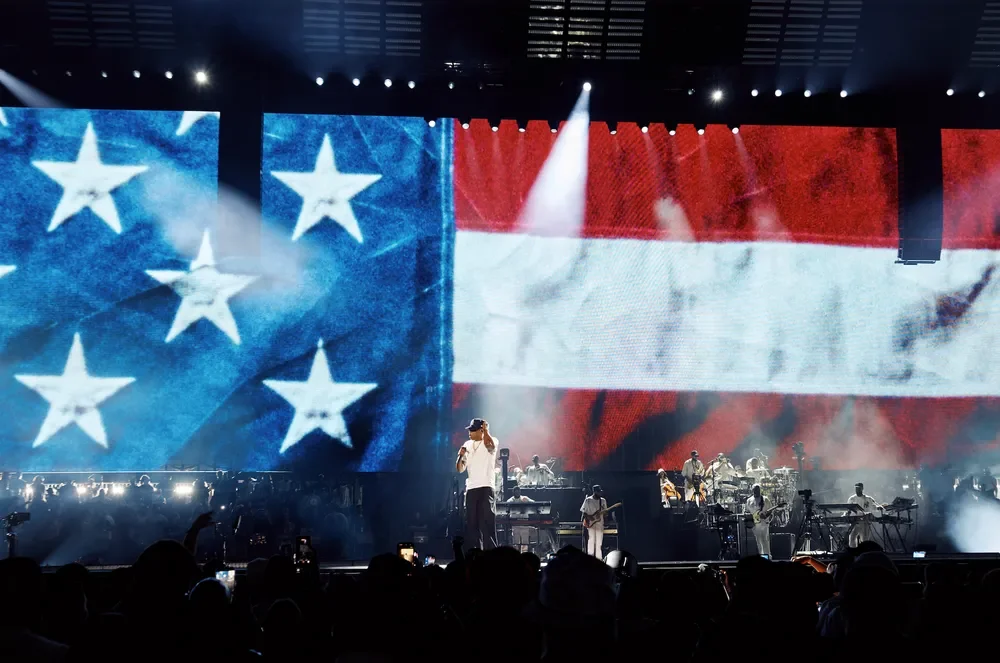
📌 The most expensive part of a stadium show is usually the part built to repeat in every city on the tour, and this residency deliberately skipped it. Creative director Willo Perron, who built Beyoncé's flying car for the Cowboy Carter tour, gave JAY-Z's three-night, 30th-anniversary Yankee Stadium residency a nearly bare stage instead, telling WIRED that "the statement piece in a Jay-Z show is Jay-Z." Around that stripped-back set sat everything else built for the anniversary: a Nike Air Force 1 referencing the original 1999 Roc-A-Fella promo shoe, stylist June Ambrose recreating a look from his 1997 "Streets Is Watching" video, and a Spotify and Roc Nation takeover of the Bowery subway station running archival footage and custom maps of his New York.
● Perron's set used a 2,952 sq ft archival-footage screen, a 10-piece band and an 18-piece string section instead of a signature set piece; guests including Beyoncé, Nas, Alicia Keys, Eminem and Rihanna each appeared once across the three nights (WIRED)
● The residency, originally booked for two nights, added a third ("Extra Innings") after the first two sold out; Yankees CFO Scott Krug told WIRED tickets moved faster than any event he'd seen at the stadium
● Musical direction (Adam Blackstone, 20+ years with JAY-Z), styling (June Ambrose, since the 1990s) and a friends-and-family Nike AF1 tied the production to relationships and archive JAY-Z has held for decades, rather than a one-off campaign
💡 Perron's flying-car comparison carries the whole argument: a set piece designed to repeat in every city is a production asset, while a guest who appears once, in one building, on one night, can never be replicated at the next stop. The shoe, the styling and the subway takeover all follow the same logic, since none of it would work in a city where JAY-Z lacked thirty years of relationships to draw on, and that is what made three nights in the Bronx feel scarcer than a world tour. Set against Metallica's Sphere run elsewhere in this edition, it sketches the two poles of the residency era: one sells the room, the other sells the roots. The brief that travels sits underneath the stage design: an activation that would work just as well in the next city is functioning as scenery, however elaborate it looks. 🏟️
Tyler, The Creator's Converse Archive Programme Turns Dormant Silhouettes Into a Franchise 👟
📌 A creative partnership approaching its tenth year just showed what patient archive work compounds into. Tyler, The Creator's GOLF le FLEUR* label releases a reworked Converse Pro Leather and new 1908 Jogger colourways on 16 July, the latest instalment in an archive-revival programme that has already turned dormant silhouettes like the Coach Jogger and Naut-1 into genuine sellers. The programme has quietly become one of footwear's clearest examples of a brand and a designer building durable cultural equity together, drawing on a back catalogue most companies would leave in storage.
Collection includes two Pro Leather colourways ($95) and two 1908 Jogger colourways ($115), released 16 July 2026 via Converse.com and GOLF le FLEUR* (SneakerNews, Sole Retriever)
Part of Tyler's ongoing "1908" archive programme, which has already revived the Coach Jogger, Naut-1 and Bronco Boot
The partnership dates back to 2017, when the first GOLF le FLEUR* One Star launched as a long-term collaboration rather than a one-off capsule
💡 Most sneaker collaborations borrow heat for a season; this programme has spent nearly a decade doing the harder thing, converting Converse's own archive into new demand. The model works because value compounds in both directions: Tyler's taste gets a canvas with genuine history, and silhouettes the market had forgotten return with a story already attached instead of a marketing budget standing in for one. For any brand sitting on a deep archive, this is the clearest current proof that a back catalogue can behave like a product pipeline when one credible curator is given the keys for long enough to matter. 👟
Oasis's "Wonderwall" Hits a New All-Time High on Spotify, Riding England's World Cup Run 🎸
📌 A 30-year-old song just outperformed almost everything released this year, and a football team is the reason why. Oasis's 1995 single "Wonderwall" climbed to number 2 on the global Spotify chart on 14 July, its highest-ever streaming position, after England players and fans adopted it as an unofficial anthem during the country's 2026 World Cup run. The surge followed England's quarter-final win over Norway on 11 July, when players and supporters were filmed singing the song arm-in-arm on the pitch.
● "Wonderwall" reached a new all-time peak of number 2 on the global Spotify chart on 14 July 2026, with 3.77 million streams in a single day (Pop Base)
● The track has never reached number 1 on the UK singles chart in 30 years, having peaked at number 2 on its original 1995 release
● The resurgence tracks directly to England's World Cup run, most recently the 11 July quarter-final win (Yahoo Entertainment)
💡 No campaign, sync deal or rights-holder push produced this; a crowd singing unprompted on camera did, and that remains a form of marketing nobody can currently buy at this scale. For Oasis, mid-reunion and still monetising a 30-year-old catalogue, the surge proves a song's commercial ceiling was never fixed by its 1995 chart peak, because streaming keeps handing old catalogues new attachment points. The sharper question for the industry is what happens to a song's value when a national team becomes its de facto sponsor, an association money can't buy and no legal team can fully control. 🎸
Yinka Ilori Picked Dunelm Over Luxury Brands for the Freedom, Not the Fee 🛋️
📌 A designer known for high-end collaborations just launched his biggest collection yet with a value retailer, and he says that was the point rather than a compromise. Yinka Ilori's 40-piece collection with Dunelm launched on 8 July, spanning chairs, beds, lighting and soft furnishings priced from £9, and marks the start of a three-year partnership. Ilori told Dezeen he chose the high-street retailer over past approaches from higher-end homeware brands specifically because Dunelm gave him freer creative rein across categories, something he says more premium partners had previously restricted.
● The 40-piece collection launched 8 July 2026, with prices ranging from £9 to roughly £299 for a sofa, marking the start of a three-year partnership between Ilori and Dunelm
● Ilori has previously collaborated with The North Face, MB&F, Veuve Clicquot, LG Electronics and Sonos, typically at higher price points
● The range draws on Leicester's 20th-century textile industry and the Asian, African and Caribbean communities who shaped it, referencing national flowers from those regions in its floral prints
💡 Look at the trade Ilori made to get here: less prestige by association, in exchange for genuine creative control and a price point that puts his work inside actual homes instead of aspirational mood boards. Most designer collaborations run the opposite calculation, where the premium partner buys credibility and the designer buys distribution. If the range performs across a three-year term, it makes an argument the high street rarely gets to make: that mass retail can now offer working designers the one thing luxury increasingly withholds, room to design. 🛋️
Scooter Braun's Ticket-Stub Story Explains How Kanye West's Best-Selling Tour Merch Got Made 🎫
📌 A manager's personal nostalgia became one of the best-selling pieces of tour merchandise in recent memory, according to the account of the person who pitched it. Scooter Braun, speaking on The Free Press's "Second Thought" podcast, described talking Kanye West out of skipping merch entirely for the 2016 Saint Pablo Tour by explaining that fans no longer kept physical ticket stubs. West brought Virgil Abloh into the room on the spot, and the resulting design, a plain shirt reading "Admission" with the show date, went on to become, in Braun's account, the tour's best-selling item and a record-breaker for tour merchandise.
● Braun recounted the story on The Free Press's "Second Thought" podcast, published in late May 2026
● West had initially resisted producing tour merch, reportedly telling Braun he didn't want to do it "if it isn't great"
● The "Admission" shirt was designed on the spot at West's New York apartment with Virgil Abloh present
💡 Strip away the anecdote and what Braun identified was a gap digital ticketing created: a generation of fans with no physical object left to prove they were there. Reframed that way, a plain shirt reading “Admission” stopped being merch and became a replacement artefact carrying real emotional weight, which is why it outsold everything else on the tour, at least in Braun's telling. Proof of attendance remains one of the most under-used ideas in live event merchandising, and this story explains exactly why it works. 🎫
Meta Pulls AI Feature That Let Users Generate Images From Any Public Instagram Account 🖼️
📌 A feature built to boost engagement instead became a live demonstration of what happens when consent is treated as an afterthought. Meta launched Muse Image, its first AI image model from Meta Superintelligence Labs, on 7 July, letting users generate synthetic images by tagging any public Instagram account as a reference, with the setting switched on by default for all adult users with public profiles. Within days, following backlash from SAG-AFTRA, talent agency CAA and privacy advocates, Meta pulled the tagging feature entirely, acknowledging it had "missed the mark."
● Muse Image launched 7 July 2026 and the tagging feature was withdrawn by 10 July, with reference access to public accounts switched on by default for all adult users (Variety, Technology.org)
● CAA, whose clients include Tom Hanks and Meryl Streep, publicly pressed Meta to change course; SAG-AFTRA also issued guidance urging members to disable the setting
● The rollback applies only to the Instagram tagging feature; Muse Image remains available for other image-generation tasks within the Meta AI app and WhatsApp
💡 Meta had the consent-first version of this feature available and chose the other one: opt-out by default meant every adult with a public Instagram profile became raw material for someone else's prompt the moment the feature shipped, a different order of risk from a platform simply hosting what people chose to post. The speed of the reversal is the tell, four days from launch to withdrawal once CAA and SAG-AFTRA mobilised. For brands planning their own AI-in-product launches the lesson runs deeper than one feature: audiences now extend very little benefit of the doubt on how their data is being used, and organised talent moves faster than a comms team can. 🖼️
EU Tells Meta to Switch Off Infinite Scroll and Autoplay by Default 📱
📌 A design choice that has defined social media for over a decade just got named as a regulatory violation rather than a product feature. The European Commission issued preliminary findings on 10 July accusing Meta of building Instagram and Facebook to be addictive, ordering the company to disable infinite scroll and autoplay by default, introduce genuine screen-time breaks, and soften recommendation algorithms away from pure engagement optimisation. Meta disputes the findings and can respond before the Commission reaches a final decision, but confirmation would expose the company to a fine of up to 6% of its global annual turnover, roughly $12 billion on current revenue.
● Preliminary findings issued under the EU's Digital Services Act on 10 July 2026, with Meta given the right to respond before a final ruling (TechCrunch, Forbes)
● The Commission specifically named autoplay, infinite scroll, push notifications and personalised recommendation systems as features that push users into "autopilot mode"
● Potential fine: up to 6% of Meta's global annual turnover, an estimated $12 billion ceiling based on 2025 revenue (The Next Web)
💡 Brussels has reclassified a decade of engagement-design orthodoxy as a compliance risk, and that reframing travels well beyond Meta: if a regulator can compel one platform to switch off autoplay and dial back its algorithm by default, the same argument reaches every feed, short-video app and recommendation engine built on identical mechanics. The fine remains hypothetical, but the design principle it targets is already on the record, since “engagement” as an unqualified goal now has a regulator willing to put a number on the cost of defending it. 📱
Cassette Tapes Are Selling Again, But the Comeback Story Is Messier Than It Looks 📼
📌 A nostalgia narrative usually smooths over the bumps in the data, and this one does exactly that. UK cassette sales have grown for roughly a decade, reaching their highest level since 2003, and US cassette album sales hit 446,500 units in 2025, up 17.5% year on year and roughly five times 2015 levels. But the format's most recent UK figures for the first half of 2026 show tape sales down 25.3% year to date despite a 16.2% uptick in the second quarter, a reminder that cassette remains the most volatile corner of a physical music revival still led overwhelmingly by vinyl.
● UK cassette sales have grown for roughly a decade, reaching their highest level since 2003 (BPI)
● US cassette album sales reached 446,500 units in 2025, up 17.5% year on year (Luminate)
● UK vinyl sales, by contrast, have grown for 18 consecutive years and outsell cassette by a wide margin, underlining how small and erratic the tape segment still is (Music Week)
💡 There's real substance to the ownership story, since a tape can't be pulled from a library or reshuffled by a recommendation engine, but the erratic quarter-to-quarter swings tell you what cassette still is: a cultural signal that has yet to mature into a stable commercial category. A handful of big-name reissues can distort the numbers in either direction, which is exactly what a 25% year-to-date drop alongside a 16% quarterly uptick looks like. The smarter play for labels and brands treats tape as a limited-edition, collector-driven product line and leaves the vinyl-trajectory comparisons alone. 📼
Pharrell's Louis Vuitton Wave Was Built on a Programme, Not Just a Runway Moment 🌊
📌 A striking set design usually gets forgotten within a news cycle, but the story behind this one had already been running for months before anyone saw it. Louis Vuitton's Spring/Summer 2027 menswear show in Paris was staged around a 26-foot artificial wave, narrated and directed by Brick Howze, founder of the Los Angeles collective Ebony Beach Club, itself a revival of a club by the same name that gave Black beachgoers a space of their own in Santa Monica in 1957. Months earlier, Pharrell had already brought Ebony Beach Club instructors to his hometown of Virginia Beach for Next Wave, a free, year-round swim and surf programme for local youth aged eight to 18.
● Louis Vuitton's SS27 show, staged 23 June 2026, featured an 8-metre wave installation with water supplied by Eaux de Paris on a closed loop (Wallpaper*, Designboom)
● Ebony Beach Club, founded in 1957 in Santa Monica, was revived by Brick Howze; its instructors also lead Pharrell's Next Wave programme at Virginia Beach's Atlantic Park Surf, launched October 2025
● Next Wave provides free swim and surf lessons to more than 100 Virginia Beach youth per session, in partnership with Adidas and Pharrell's VIRGINIA platform
💡 Run the test that matters for a moment like this, whether the imagery survives contact with what happens after the cameras leave, and the sequencing answers it: the same Ebony Beach Club instructors who narrated the Paris show had been teaching free swim lessons in Pharrell's hometown for months before the runway needed them. That order of events separates a designer who resourced a community before he had a use for it from a brand borrowing a community's story for one striking backdrop. It leaves the show functioning as proof of a commitment already underway, which is the rarest thing a fashion moment can be. 🌊
Hailey Bieber's Gap Denim Capsule Bets on Personal Nostalgia Over Celebrity Wattage 👖
📌 A celebrity collaboration usually leans on borrowed cultural heat, but this one is built almost entirely from the model's own biography. Gap and Hailey Bieber launched "The Hailey Jean" on 16 July, a two-silhouette, six-wash denim capsule priced at $89, with "1996" (Bieber's birth year) stitched into the hardware and back patches and her signature printed inside the pocket lining. The launch continues a run of high-profile Gap collaborations, following recent capsules with Victoria Beckham and KATSEYE, as the retailer works to reposition denim at what it calls the intersection of fashion, music and culture.
● "The Hailey Jean" launched 16 July 2026 at $89, in two silhouettes (Extra Baggy and '90s Low Rise Loose) across six washes, sold via Gap.com and select stores in North America, the UK, France and Japan (Variety, Gap Inc.)
● Design details reference Bieber's own wardrobe history rather than a licensed name: "1996" hardware for her birth year and her handwriting reproduced inside the pocket lining
● The campaign, produced by Bolded (OBB's branded content studio and a longstanding Bieber creative partner), was shot by Mario Sorrenti and set to The Cranberries' 1993 track "Linger"
💡 Whose story got told is the detail doing the work here: the product is built from specifics only Bieber's own biography could supply, a birth year in the hardware, her handwriting in the pocket lining, the jeans she says she wore as a kid. That's a slower, more expensive brief than a standard endorsement, and far harder for a shopper to dismiss as a rebadge. The real test for Gap sits past the sell-through: after Victoria Beckham and KATSEYE, can it keep finding collaborators willing to hand over something this personal, because that willingness, more than the celebrity roster, is what the strategy runs on. 👖
Nobel Laureates and AI Executives Sign Open Letter Warning of 'Radical' Economic Disruption 📊
📌 An open letter typically signals concern from one side of an argument, but this one is notable for who crossed over to sign it. More than 200 economists and AI researchers, including 16 Nobel laureates and executives from Anthropic, Google and OpenAI, released a statement on 13 July organised by Stanford's Digital Economy Lab, warning that AI could drive an economic transformation "larger than the Industrial Revolution, but unfolding over a vastly shorter time frame." Among the signatories were Daron Acemoglu and Simon Johnson, the 2024 Nobel economics laureates who had previously argued AI job-displacement fears were overstated.
● The letter, "We Must Act Now," was released 13 July 2026 by Stanford's Digital Economy Lab, signed by more than 200 economists and AI researchers including 16 Nobel laureates (AP, Al Jazeera)
● Signatories include figures from AI labs directly, among them Anthropic co-founder Jack Clark and Google's Jeff Dean, alongside former AI-displacement skeptics Acemoglu and Johnson
● The statement follows Anthropic's early-June proposal for a coordinated industry pause on frontier AI development, citing risks as models approach what it called "recursive self-improvement"
💡 Economists and AI executives warning about disruption is a familiar genre; what distinguishes this letter is who reversed position to sign it. Acemoglu and Johnson built their Nobel-winning case partly on the observation that past technology shocks rarely produced the mass unemployment people feared, so their signatures function as evidence that the profession's confidence in its own precedent is cracking. For brand and comms leaders the practical shift is timing: workforce and reskilling planning has moved from a hypothetical HR conversation for later this decade to a live board-level question, validated by the exact economists who used to counsel patience. 📊
Media's Rush Into Sports Coverage Is a Direct Response to "Google Zero" 📰
📌 A traffic collapse usually pushes publishers toward more content, not a completely different beat, but that's exactly what's happening across media right now. Politico's World Cup live blog, launched by a politics-first newsroom with no sports background, has generated 2.5 million pageviews in a month, while outlets from Vanity Fair to The New Yorker to Time have all made significant new bets on sports coverage this year. The driver goes beyond cultural relevance: as AI-generated search summaries erode traffic industry-wide, sports content has proven far more resistant to the decline than general news.
● Politico's World Cup live blog generated 2.5 million pageviews in its first month, run by political reporters with no sports background, including White House correspondent Sophia Cai
● Similarweb analysis found visits to roughly 50 sports sites fell just 2.8% over the past 12 months, compared with a 16.7% drop for general news sites, as AI search overviews reduce traffic industry-wide
● Vanity Fair, The New Yorker, CNN and Time have all made new sports investments this year, while the Washington Post cut its sports section in February, a split that shows the strategy isn't universal
💡 One gap explains the whole migration: sports site visits down 2.8% against 16.7% for general news. Always-on, real-time coverage is hard for an AI search summary to compress into a satisfying answer, which turns sports from an editor's passion project into a structural hedge against a traffic mechanism nobody in media controls. The catch is crowding: if every outlet chases the same defensive logic at once, the differentiation that made Politico's FIFA-as-political-story angle work becomes far harder to repeat, and a hedge everyone holds stops being a hedge. 📰
OpenAI's First Hardware Product Skips the Screen Entirely 🔊
📌 The company betting $6.5 billion on hardware has decided its first product won't have a screen at all. Bloomberg reported that OpenAI's debut consumer device will be a portable, screen-free smart speaker built around GPT-Live, designed to act as a "humanlike AI companion" that can control smart home devices, play media and hold real-time conversation. The device, still in development for a 2027 launch, is the first major output of OpenAI's acquisition of Jony Ive's io Products, and lands days after Apple filed a lawsuit accusing OpenAI of using trade secrets obtained through more than 400 former Apple employees who have since joined the company.
● OpenAI acquired io Products, Jony Ive's hardware startup, for roughly $6.5 billion; Ive's studio LoveFrom leads design, with former Apple executives Tang Tan, Evans Hankey and Paul Meade on the hardware team (Bloomberg, MLQ News)
● The speaker includes a camera, environmental sensors and a rechargeable battery so it can move between rooms, with mechanical parts designed to signal presence rather than sit as a static object
● Apple filed a trade-secrets lawsuit against OpenAI on 10 July, seeking an injunction that could delay the hardware launch; OpenAI says it isn't aware of evidence the claims have merit
💡 Watch the screen decision, because that's where the strategic bet sits: Amazon, Google and Apple spent a decade adding displays to smart speakers because a screen is easier to sell and easier to monetise, so shipping without one amounts to OpenAI arguing that conversation itself should be the interface layer for AI. Whether the argument gets its test is now partly a legal question. An injunction in Apple's suit would delay more than a speaker; it would establish how much of OpenAI's hardware roadmap depends on people who used to build Apple's. 🔊
Apple's Lawsuit Against OpenAI Reignites the Musk-Altman Feud, This Time With Competing IPOs at Stake 🥊
📌 A trade-secrets lawsuit between two other companies became the occasion for a decade-old rivalry to resurface within hours. Apple's 10 July suit against OpenAI, alleging former Apple employees passed along confidential hardware information, gave Elon Musk fresh material to revive his long-running feud with OpenAI CEO Sam Altman, the two co-founders who fell out after Musk left the company's board in 2018. The public sparring landed just weeks after both men took their rival AI ventures public within days of each other, SpaceX's record-setting IPO and OpenAI's confidential IPO filing, meaning the insults were traded by men now answerable to actual shareholders rather than just each other.
● Apple's lawsuit, filed 10 July, names OpenAI, io and two former Apple employees, alleging they shared confidential hardware files and supplier data
● Musk and Altman traded public jabs on X over the following weekend, reviving Musk's "Scam Altman" nickname and referencing competing model launches from the same week (GPT-5.6 Sol and Grok 4.5)
● The exchange follows a May court ruling that dismissed Musk's own lawsuit against Altman and OpenAI over the company's shift from nonprofit to for-profit structure, which Musk has said he will appeal
💡 The audience changed, and that changes the fight: both men are now selling a growth story to public shareholders, which converts personal insults into a proxy for business credibility. Musk needling Altman over Apple's lawsuit doubles as a jab at OpenAI's hardware ambitions on the way to its own listing, while Altman's “space datacenters” line targets the exact growth narrative SpaceX used to justify a record valuation. A fight that used to play out as founder drama now functions as investor messaging with jokes attached, and both sides know it. 🥊
Music Industry Coalition Launches Voluntary AI Labels as Generated Tracks Flood Streaming 🏷️
📌 A labelling system usually arrives after a problem has already reshaped a market, and the numbers behind this one make the timing look overdue rather than early. IFPI, the RIAA, the Recording Academy, SAG-AFTRA and several independent label bodies announced a voluntary framework on 10 July distinguishing "AI-Generated" tracks, where AI created most of a song's core elements, from "AI-Assisted" ones, where a human remains the primary performer. The framework arrives as Deezer reports AI-generated tracks now account for 44% of all new uploads to its platform, and Apple Music says a third of new uploads are wholly AI-made.
● The labelling coalition includes IFPI, RIAA, the Recording Academy, SAG-AFTRA, A2IM, WIN, IMPALA and the Human Artistry Campaign, announced 10 July 2026
● Proposed icons mirror existing explicit-content warnings: a black "AI" block for fully AI-generated tracks, a smaller white "ai" mark for AI-assisted ones
● Deezer reports AI-generated tracks make up 44% of new uploads; Apple Music reports roughly a third of new uploads are "100% AI" (IFPI, RIAA)
💡 A voluntary label lives or dies on whether the platforms carrying the metadata choose to display it consistently, and that quiet dependency is the catch in a system modelled on explicit-content warnings that themselves took years to standardise. The durable value is definitional: drawing a line between AI as a tool a human performer used and AI as the primary creator gives the market a distinction it has needed for longer than it has had one. Whether the label protects human artists commercially rests on something the coalition can't control, which is whether streaming services, distributors and aggregators all pass the metadata through instead of letting it drop somewhere in the pipeline. 🏷️
Netflix Weighs Bringing Back Linear TV and Bundling Rivals Like Peacock 📺
📌 A company that spent a decade training viewers away from scheduled TV is now considering bringing it back, and the reason is engagement rather than subscribers. The Wall Street Journal reported that Netflix executives have discussed adding always-on, genre-based live channels and bundling rival services including NBCUniversal's Peacock directly into its app, after the company's share of US TV viewership fell to 7.8% in April, its lowest level since May 2025. The moves would mark a genuine reversal of the on-demand-only model Netflix used to define the category, driven by a specific problem: subscribers are staying, but watching noticeably less once they're already paying.
● Netflix's share of US TV viewership fell to 7.8% in April 2026, its lowest since May 2025; its share of streaming time dropped from 21% to 17% over the two years to March 2026 (Nielsen, via WSJ)
● Several flagship series, including Avatar: The Last Airbender, The Four Seasons, One Piece, Running Point and Beef, saw audience declines in their second seasons
● Netflix's ad revenue reached roughly $1.5bn last year and is expected to roughly double to about $3bn in 2026, a business live, unskippable channels would directly support
💡 Read the live-channels idea as an ad strategy wearing a content strategy's clothes: a continuously running channel can't be skipped the way on-demand content can, which turns “always-on” into unskippable inventory at exactly the moment Netflix needs its ad tier to double. The Peacock bundling discussion is the structurally bigger move, repositioning Netflix from a destination people subscribe to into an aggregator reselling other companies' subscriptions, the role Amazon and Apple already occupy. Both ideas carry the same admission: the platform that trained audiences off scheduled television now needs some of that behaviour back. 📺
Google Search Console Now Measures Your Instagram and TikTok Posts, Not Just Your Website 🔍
📌 A measurement tool built entirely around domain ownership just added the ability to verify accounts a brand doesn't own or control at the code level. Google introduced "platform properties" on 7 July, letting brands and creators connect Instagram, TikTok, X and YouTube accounts to Search Console and see the same clicks, impressions and search queries previously reserved for owned websites. The release lands alongside data showing nearly 10% of Google's top 10 organic results now come from non-website platforms including social media, forums and video sites, a share that has been quietly growing as Google's results diversify beyond traditional web pages.
● Platform properties, announced 7 July 2026, support Instagram, TikTok, X and YouTube at launch, verified via account authorisation rather than domain ownership, Search Console's first property type that doesn't require a website (Google Search Central)
● The feature shows which specific posts and search queries drive Google traffic to social and video content, mirroring the Performance and Insights reports long available for websites
● Nearly 10% of Google's top 10 organic results are now occupied by non-website platforms such as social media, forums and video sites (Machined, State of Google Search 2026)
💡 Google building measurement infrastructure for content it doesn't host is an admission about where discovery now happens: enough of its own results point to platforms instead of pages that the old domain-ownership model of Search Console stopped describing reality. For brands the release closes a real blind spot, since a TikTok or Instagram post could always earn Google visibility, but nobody could see which posts did it or what people typed to find them. The harder question lands internally: content and SEO teams organised around the website now hold query data for channels the team doesn't control, and most org charts aren't built to act on it. 🔍
OpenAI, TikTok and Reddit All Upgraded Their Ad Infrastructure the Same Week 🤖
📌 Three separate ad-platform announcements landed within days of each other, and together they sketch where advertising is actually heading in 2026: not new placements, but new infrastructure for automation and measurement. OpenAI is hiring specifically to build ChatGPT ad formats beyond its single static unit, spanning image, video, native, conversational and interactive placements. TikTok launched Agentic Hub, a marketplace letting AI agents run campaign creation, creative generation and catalog management through its Business MCP, while Reddit opened self-serve split testing to every advertiser, letting brands compare two campaign strategies and get a statistically confident winner without needing an account rep.
● OpenAI posted engineering roles (one paying $230,000-$385,000) to build ChatGPT ad formats spanning text, image, video, native, conversational and interactive placements, moving beyond the single unit tested since February (Digiday, Search Engine Journal)
● TikTok's Agentic Hub, launched 30 June, lets AI agents handle campaign creation, creative generation and catalog management via TikTok's Business MCP, with partners including HubSpot, Wix and Constant Contact already publishing Skills
● Reddit's Split Testing, now self-serve for all advertisers with a $1,000 daily spend minimum, splits audiences at the user level and declares a winning campaign at 65% statistical confidence; beta data showed 4 in 5 tests identified a clear winner
💡 Taken together, the three announcements describe a race to make ad infrastructure legible to automated systems before advertisers find workarounds elsewhere. TikTok's is the structurally boldest: opening Ads Manager to third-party agents via MCP bets that agencies and tool-builders will do the platform's onboarding work for it, competing on openness while rivals keep advertisers inside closed dashboards. For brand teams the practical shift is that campaign execution is quietly moving from a skill marketers hold to a layer agents operate directly, which raises the same unanswered question across all three platforms: who is accountable when an AI agent, not a person, decided the media plan. 🤖
Publishers Are Building Real Leverage Against AI Crawlers, Not Just Suing Over Them 📰
📌 A year of lawsuits and complaints has started to turn into actual infrastructure, and the shift matters more than any single case. UK regulators ordered Google in June to let publishers opt out of AI training and grounding, with main provisions due by December and page-level controls following by March 2027, while Cloudflare separately announced it will block "mixed-use" crawlers, including Google's own, from ad-supported pages by default from 15 September unless site owners opt in. Both moves follow a collapse in referral traffic that some publishers say has cut visits by up to 90%, with independent publishers already going under.
● The UK's CMA ordered Google to let publishers opt out of AI training and grounding in search results, with main provisions from 3 December 2026 and page-level grounding controls following by March 2027
● Cloudflare will block "mixed-use" crawlers, including Googlebot, from ad-supported pages by default from 15 September 2026 unless site owners opt out, tied to a new "Pay Per Use" model already running with partners Ceramic.ai and You.com
● A coalition of major publishers (SPUR, including the Guardian, FT, BBC and the Associated Press) published a draft "Content Telemetry" standard in June to create a common measurement language for AI licensing deals
💡 Publishers have complained about AI scraping for two years; what changed this fortnight is the mechanism. A default-on crawler block from an infrastructure provider sitting in front of a huge share of the web operates on a completely different clock to litigation that takes years and tens of millions to resolve, as the New York Times has found. Cloudflare's move is the one to watch, because it forces AI companies to declare intent instead of hiding behind a single crawler, the precondition every other proposed fix, from licensing deals to telemetry standards to opt-out toggles, depends on. The unresolved part is speed: independent publishers are folding faster than any of these mechanisms can take effect, and infrastructure built to protect an industry is not the same thing as revenue that reaches it in time. 📰
Bellingham and Haaland's Bromance Is Doing Brand Safety Work Neither Club Had to Buy 🤝
📌 A viral moment between two players doesn't usually carry commercial weight beyond the highlight reel, but this one lands differently given who else is competing for the same audience. Footage of Jude Bellingham and Erling Haaland's friendship during England's World Cup run, playful, affectionate, entirely unstaged, has circulated widely at the same moment brands are growing warier of "manosphere" figures like Andrew Tate as sponsorship risks. Recent Ipsos polling found 76% of men aged 16-24 report having at least one positive male role model, a figure that complicates the narrative that this demographic is short on wholesome influences to sponsor around.
● Ipsos polling (May 2025, in partnership with JOE Media) found 76% of men aged 16-24 report having at least one positive male role model, and 76% of all respondents who'd heard of Andrew Tate held an unfavourable view of him
● Bellingham has publicly credited his mother Denise's influence over his on-pitch discipline, including managing a yellow-card risk during England's World Cup run
● Harry Kane's mental health foundation, launched in 2022, predates this moment but reinforces the same positioning among current England players
💡 Neither the FA nor either player's sponsors had to script this, and that's precisely what makes it valuable: brand-safe athlete positioning is usually manufactured through campaigns and media training, while this was two footballers being visibly themselves in a moment nobody could have planned. The Ipsos numbers puncture a lazy industry assumption at the same time, since 76% of young men reporting a positive male role model sits awkwardly beside the narrative that the demographic is short of wholesome influences to sponsor around. For sponsors nervous about which male athletes and creators to back, the practical read points to conduct that predates the camera: character that was on show long before anyone thought to package it. 🤝

Is The Sphere... A Good Business? 🎧
Trapital, hosted by Dan Runcie, with Tati Cirisano (MIDiA Research)
Why It Matters: Sphere Entertainment's economics, business model comps and residency strategy sit directly alongside this week's Metallica story, and Dan Runcie's show is one of the sharpest, most culturally fluent places covering the intersection of music, tech and business right now.
Worth Your Time Because: A direct companion piece to this edition's Metallica/Sphere coverage: Runcie and Cirisano pull apart whether Sphere Entertainment is closer to a movie theatre chain, a Broadway run, or a theme park business, and what that means for the venue's expansion plans. Useful listening for anyone thinking about residencies, venue economics, or how a genuinely new entertainment format gets valued by markets that don't have a clean comparison for it.

(Monday 20 July – Sunday 26 July 2026)
🚴 The Tour de France (26 July) concludes on the Champs-Élysées - still the most reliable annual proof that a single sporting event can dominate European outdoor advertising for three straight weeks.
🎪 Comic-Con International (23–26 July) takes over San Diego - no longer just a fandom convention, it's become one of the year's biggest testing grounds for how studios and brands stage-manage fan reaction before wider release.
🏴 The Commonwealth Games (23 July – 2 August) open in Glasgow - a lower-wattage multi-sport event than the Olympics, but a real one for host-city economics and sponsor visibility across 74 nations.
🏎️ The Hungarian Grand Prix (24–26 July) runs in Budapest - F1's mid-season stretch continues to pull in a demographic and sponsor mix increasingly disconnected from the sport's traditional petrolhead base.
🎪 Latitude Festival (23–26 July) turns 20 at Henham Park, Suffolk - headlined by David Byrne, Teddy Swims and Lewis Capaldi, it remains the UK's best case study in a festival brand that sells atmosphere and cultural range as much as any single act.
Coming up: Wilderness Festival follows the next weekend (30 July – 2 August) at Cornbury Park, marking its 15th edition with Scissor Sisters and Carl Cox, including an Annie Lennox-curated takeover raising funds for The Circle.