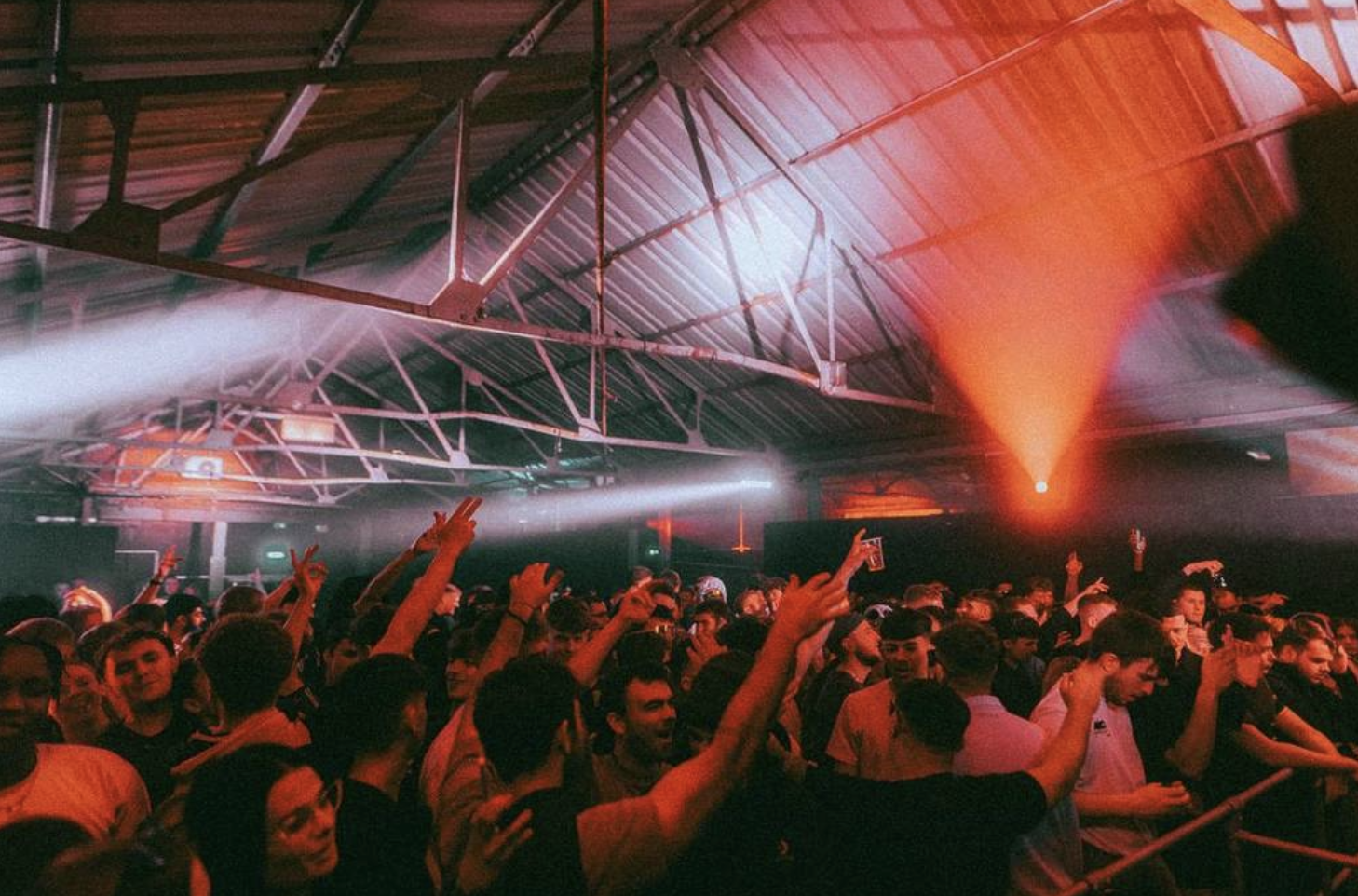
Birmingham needs more trains into Moor Street. The current plan for getting them there would take apart the district that made the city's music scene, at a time when grassroots venues across the UK are already running out of road.
With the help of Save Our Scene UK, I've written to Shabana Mahmood MP about the Midlands Rail Hub plans for Digbeth. This one is personal. I spent the early part of my career in Birmingham working for Angel Music Group, and I know how much of the city's music scene grew out of rooms like these.
What's being proposed
The Midlands Rail Hub is a £1.75bn scheme to move regional services from New Street to Moor Street, freeing capacity at the busiest station outside London and adding up to 300 extra trains a day into or out of Birmingham. I'm not arguing with any of that. The city needs it.
My problem is the scheme as currently drawn. Widening the Bordesley Viaduct as proposed puts XOYO, The Night Owl, Club Colette, Mama Roux's, Luna Springs, Suki10c, The Warehouse and The Drop Inn, along with other venues and independent businesses, in line for demolition or displacement, with construction pencilled in for 2030. I haven't seen any plan for what happens to them.
Some of these venues have taken more than a decade to build. The Night Owl has been on Lower Trinity Street since 2015. Mama Roux's owner describes the arches as the business's home of almost 18 years, and says he found out it was earmarked for potential demolition from a post on X. The room has hosted Jorja Smith and Little Simz on the way up.
The consultation material described the affected area as a low-lying industrial part of the city, including the River Rea. It didn't mention the venues. It's hard to read that and conclude the Alliance knew most of them were there.
Why a closed venue stays closed
These rooms pay bar staff, sound engineers, promoters and security. New artists play their first shows there, and scenes with nowhere else in the city find a room there.
A grassroots venue that closes rarely opens again somewhere else. The licence doesn't transfer with the postcode. Neither do the promoter relationships, the neighbours who've learned to live with the noise, or the audience who know the way there after midnight. Compensation can cover a building. It can't rebuild a scene that took fifteen years to form.
The national picture
Digbeth would be losing these venues into a sector with very little slack left. The Music Venue Trust's latest annual report counted 30 grassroots venues closing permanently in the year to July 2025, with another 48 stopping live music altogether. Average profit margins sat at 2.5%, and more than half of venues made no profit at all. Over 6,000 jobs went in a single year, around 19% of the workforce, and the MVT's Mark Davyd pointed out who those cuts hit first: trainees, junior sound engineers, box office staff. The first rung of the ladder.
The touring circuit has shrunk to match. 175 UK towns and cities, home to around 25 million people, no longer get regular shows from professional touring artists. Every room that closes makes the next tour harder to route, which makes the next room harder to sustain.
The fix everyone agrees on is still stuck. The £1 grassroots levy on arena and stadium tickets is now collecting and distributing real money through the LIVE Trust, but adoption has stayed voluntary. By the MVT's count, only 8.8% of 2025 shows had signed up. The government set 30 June 2026 as the date by which the voluntary scheme had to prove itself, with statutory action on the table if it didn't. That deadline has passed, and the sector is still waiting.
So the industry is trying to fund the bottom of the pyramid with one hand while infrastructure planning can remove a whole cluster of it with the other. Birmingham is the sharpest example I've seen of those two things happening at the same time.
It's worth noting the contrast with what's happening in London this week. Apple has just built a 600-capacity room from scratch at Battersea Power Station, because the live reaction in a room that size is the one thing streaming can't replicate. The value of a small room is obvious enough that one of the world's biggest companies is paying to create one. Birmingham already has several, and is at risk of drawing a viaduct through them.
What I've asked for
The Alliance has called this an early-stage consultation, and its own statement says feedback will be used to look at ways to avoid, reduce or manage impacts. So there is still time to change the design. I've asked for two things.
1️⃣ Go back and look at the alternatives properly, with Digbeth's cultural and economic value in the assessment, and with the real cost of land acquisition and a contested public inquiry on the table.
2️⃣ Whatever the final design, give straight answers on relocation support, market value compensation and a timeline. Affected businesses also need a guaranteed seat at the table through the second consultation in summer 2027, the Transport and Works Act Order submission in early 2028, and the public inquiry that follows. Night-time economy operators need their own facilitated session, because their situation is the most urgent.
Birmingham has spent years building its reputation as a home for grassroots music. It would be a strange result if a rail project quietly took apart the scene all that investment was meant to support.
If Digbeth matters to you
Save Our Scene can help you write to your MP. It takes two minutes, and the number of letters counts.
https://www.saveourscene.uk/the-scene/news/don't-let-them-demolish-digbeth-email-shabana-mahmood