Welcome to the next edition of On The Record, thoughtful analysis on culture, entertainment, tech, fashion, music, sport, and brands. Here's a round-up of key conversations and campaigns that caught my attention this week.
The most valuable thing in culture this week was the moment an audience reacts, and the stories split on who owns the place where that happens. Apple opened a 600-capacity room at Battersea with recording and broadcast studios behind the stage, YouTube secured Coachella's livestream to 2030, and Live Nation said 47 of the top 75 touring markets outside the US still lack a modern arena. In Digbeth, meanwhile, a rail scheme threatens the grassroots rooms where Birmingham's scene formed, and Music Venue Trust is funding a free magazine to fill venues like them. Online, the platforms moved the reaction into a prompt box, with Spotify and YouTube inviting people to type what they want, even as Google was fined €403m for inferring interests from where people went and Snap declined to say what trained its new song generator. In sport the same question played out as governance: Frauen-Bundesliga clubs take over their own league from July 2027, FIFA chose a 26,700-seat stadium for its women's club final, and Nike kept the Mercurial's pull after Mbappé left for On. Paramount's settlement showed the pattern at the top of the market, with nearly half the combined company's equity going to foreign investors and every voting share staying with the Ellison family and RedBird. Across all of it, the audience's response has become the asset, and this week's winners were the ones holding the room, the feed or the vote when that response arrives.

⚽ SPORT, POWER & GOVERNANCE
Mbappé Leaves Nike for On, and Nike Sells His Boots Anyway ⚽
📌 On 18 September, Kylian Mbappé ended a Nike relationship dating back to 2006 to become the face of On's move into football and an equity partner in the brand, but On's boots won't reach retail until 2027. In the Madrid derby he wore all-white Nike Mercurial Superfly 11s with the Swoosh blanked out, still identifiable by the red Zoom Air unit in the soleplate. Within days a near-identical whiteout preset appeared on Nike By You, in the same week Nike dropped out of the S&P 100.
The whiteout Mercurial Superfly 11 preset costs £299.99 in the UK and $325 in the US on Nike By You (Footy Headlines, DesignRush, Tribuna)
Nike left the S&P 100 on 21 September after almost 18 years, with its market value down about 78% from its November 2021 peak (Fortune, Forbes, Sole Retriever)
On targets net sales of at least CHF 5.6bn, close to $7bn, by 2029, with football and golf both launching in 2027 (On press release, WWD, Sporting Goods Intelligence)
💡 Nike left the S&P 100 in the same week it showed where its value still sits: in a silhouette fans recognise from the soleplate alone. On bought the face and Nike kept the product, so every time a camera finds Mbappé's feet before On's boot is ready, its biggest football signing is advertising a rival's engineering, and Nike turned that into a sellable preset at almost no cost. Football boots sell down a price ladder, from the pro model to the pair a ten-year-old wears to training, and at its investor day On made clear it is staying at the top, having nearly doubled its average selling price since 2023 and chosen golf, a sport built on premium spend, as its next category. That makes Mbappé a halo for a premium brand rather than a route into the mass market. It's a coherent strategy, as long as the boot that finally reaches his feet in 2027 justifies the price. 👟
Frauen-Bundesliga Clubs Take Over Their Own League from 2027 🏟️
📌 A quarter of a century after Germany's men's clubs took over their own league, the women's top flight is going the same way. On 18 September an extraordinary DFB Bundestag voted unanimously to hand the Frauen-Bundesliga to FBL, the clubs' own league association. From 1 July 2027, FBL will run and commercially market the 14-team division, while the second tier stays with the DFB. The clubs chose full independence after walking away from a planned joint venture with the federation earlier this year, and FBL president Katharina Kiel takes a seat on the DFB presidium.
FBL takes over operations and commercial rights on 1 July 2027, under a framework agreement with the DFB that runs to 2034 (Kicker, ZDF)
The DFB Bundestag vote on 18 September was unanimous (dpa via Tagesspiegel, neunzigplus)
FBL can now negotiate media rights directly from the 2027/28 season, with the first tender covering two seasons (Kicker, Sportschau)
💡 Walking away from the federation's joint venture was the decisive move, because it meant the clubs accepted the financial risk in exchange for control of the product. Media rights are where that bet gets tested first, and a two-season opening tender is a smart hedge: short enough to reprice quickly if audiences grow, long enough to give broadcasters a reason to invest in coverage. England made the same move when the clubs' own company took over the WSL in 2024, and what it shows is that independence hands the clubs the negotiation while leaving the price to the market. The value has to be built through scheduling, broadcast quality and matchday investment in the women's game itself, rather than borrowed from the men's Bundesliga brand. From 2027 every sponsor, broadcaster and naming partner negotiates with the clubs' own body rather than the federation, which is the practical change for anyone holding a women's football budget. With the Women's Euro coming to Germany in 2029, FBL has a fixed date by which its product needs to look like a league worth buying. 🏟️
FIFA Women's Champions Cup Final Goes to Miami's 26,700-Seat Nu Stadium 🌴
📌 After an inaugural edition that finished in London with Arsenal as champions, FIFA's six-confederation women's club competition is taking its final four to Miami. Nu Stadium, Inter Miami's new ground, will host the semi-finals, third-place match and final in January 2027. FC Barcelona and Club América Femenil have already qualified directly for the last four, and the other places are still being settled across the remaining confederations.
Semi-finals on 27 January, with the third-place match and final as a double-header on 31 January 2027 (FIFA, Reuters)
Nu Stadium opened in April 2026 with a capacity of 26,700 (Reuters, Inside World Football, Inter Miami)
💡 Picking a 26,700-seat venue was the smartest call in the announcement, because a women's club final looks full on television in a room that size and half-empty in an NFL bowl, and the broadcast picture is what sells the next edition. Miami also gives FIFA a crowd with more than one reason to turn up. Club América brings one of Mexico's best-supported clubs to one of the most Latin American cities in the US, Barcelona brings the most recognisable name in women's club football, and Inter Miami's own supporters get a January fixture in their new home during the MLS off-season. For the stadium, it fills dates in the quietest month of the domestic calendar. For FIFA, it tests whether a women's club final can travel to a neutral market and still feel like a destination. 🏆
LeBron James Signs a $15m-a-Year Polymarket Deal 🏀
📌 Prediction markets have become sport's newest big-money sponsor category, and now they have signed the sport's most famous player. Front Office Sports reports Polymarket is paying LeBron James $15m a year as an endorser rather than an investor, for social and content work focused on football rather than basketball. The deal lands while leagues are split on the category: MLB and the NHL have partnered with prediction markets, the NBA is reportedly close to agreements, and the NFL is holding out.
$15m a year from Polymarket, against a 76ers salary of about $3.9m this season (Front Office Sports, reported by CBS Sports and SGI)
MLB has named Polymarket its exclusive prediction-market partner, and the NHL partners with both Polymarket and Kalshi (Front Office Sports)
💡 A football-only clause is the most revealing line in the contract, because it exists to keep one of the NBA's biggest names clear of markets on his own sport. Prediction markets are regulated federally as financial products, rather than by the states that license sportsbooks, which lets them move into sponsorship faster than leagues can write integrity rules. Nobody has suggested James has done anything wrong, and the carve-out shows the deal was built to avoid exactly that question. It also shows where an athlete's value now sits: in reach and credibility that a platform will pay nearly four times a playing salary to borrow, with the integrity risk carried by the league paying that salary. 🎲
🎶 MUSIC, LIVE & CULTURE
Apple Opens a 600-Capacity Music Venue at Battersea Power Station 🎙️
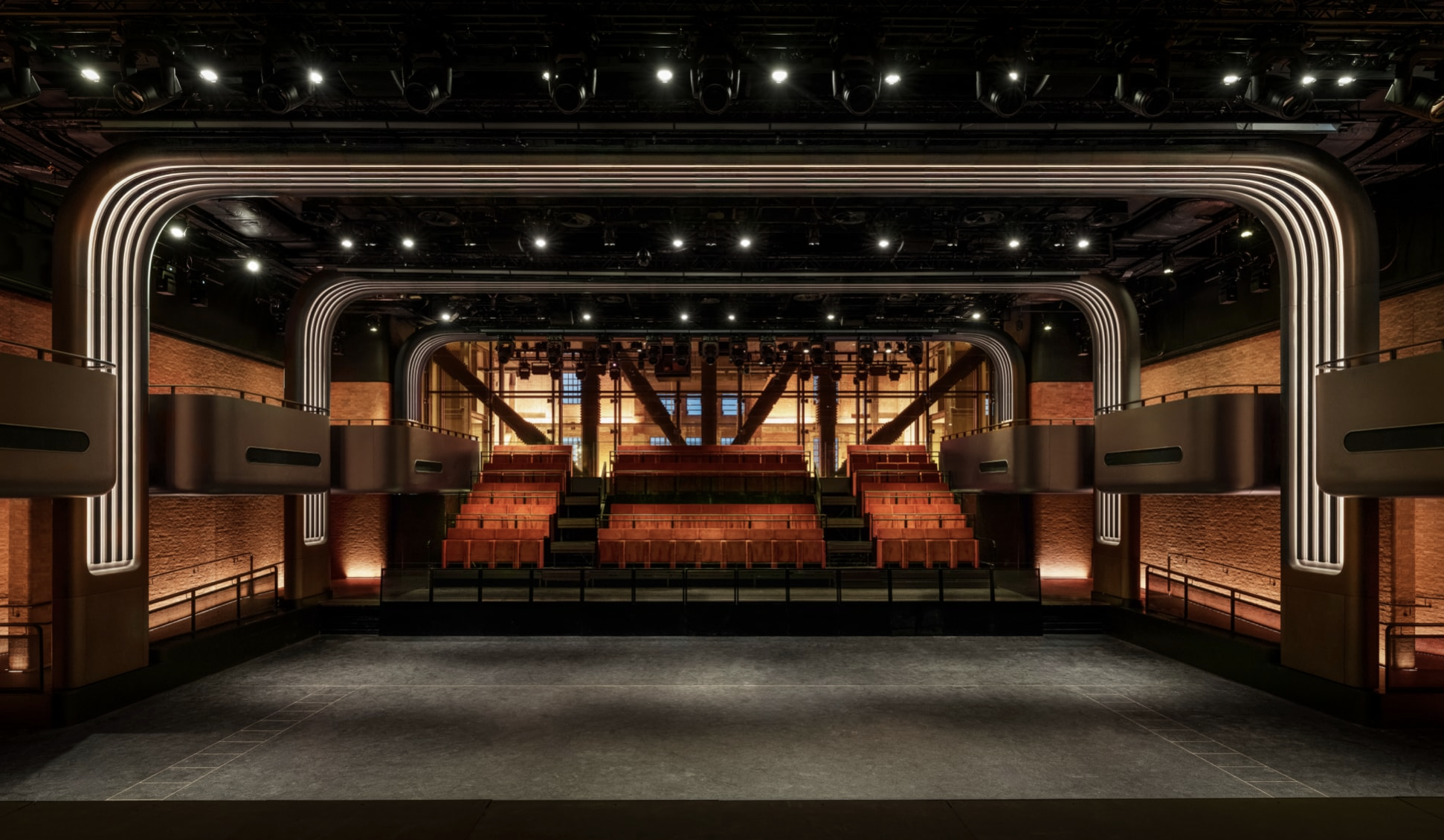
📌 Every streaming service sells the same catalogue, so the competition has moved to what surrounds it. Apple Music Hall opens to the public today, 28 September, a 600-capacity venue inside Battersea Power Station, home to Apple's London campus, built as a concert hall, recording studio and global broadcast facility in one. An artist can play an intimate show and leave with a finished Spatial Audio recording, a broadcast-ready mix and multicamera video. Apple Music Radio's London hosts now broadcast from new studios in the same complex.
600 capacity, a 38-foot reconfigurable stage and a 48-speaker spatial sound system (Apple Newsroom, Official Charts, NME)
Two dedicated recording and mix studios, with performances livestreamed globally (NME, MacRumors)
All of Apple Music Radio's London-based shows now broadcast from Battersea (Official Charts, That Eric Alper)
💡 YouTube renewed Coachella this week, a stage it hires for two weekends a year, while Apple has built a permanent one and moved its radio operation next door. That matters because of what labels now trust: follower counts and viral moments can be bought or gone by Thursday, but an artist who can hold 600 people through a new song gives a campaign something solid to build on. Apple has designed the room so the interview, the show, the recording and the global broadcast can all happen within a few hours of a release. It fits a long pattern at Apple, from the iTunes Festival to Apple Music Live, of building infrastructure the industry then organises itself around, and this time it captures the one thing streaming never could carry, the live reaction. The measure of its wider value will be how much of that stage goes to artists still building an audience, because that is where a room like this would do the most for the live economy around it. 🎙️
Non-English Artists Now Headline 30% of Live Nation's Top Tours 🌏
📌 The biggest change in touring since the pandemic has been who is on the bill. Live Nation president and CFO Joe Berchtold told a Goldman Sachs conference that non-English-speaking artists now account for 30% of the company's top 50 tours, up from 8% before Covid, driven by Latin and K-pop acts. He expects that share to pass half before long. He also named the constraint on growth: buildings, not demand.
Non-English-speaking artists: 30% of Live Nation's top 50 tours, up from 8% before the pandemic (Music Business Worldwide, Pollstar, Digital Music News)
47 of the top 75 touring markets outside the US lack modern arena infrastructure, and Live Nation now operates 25 arenas against five a decade ago (Music Business Worldwide, Dork)
A record 159 million people attended Live Nation shows in 2025, the first year more fans attended outside the US than inside it (Music Business Worldwide, Dork)
💡 Forty-seven of the 75 biggest touring markets outside the US lack a modern arena, and that number matters more than the 30%. The next decade of live music will be shaped by whoever builds those rooms, and Live Nation already runs 25 arenas, with more than half of its 48-venue pipeline outside the US. That turns a cultural shift into a real-estate strategy: the artists driving growth come from markets where a single company can own the venue, the promotion and the ticketing at once, while its US business is still contested by regulators and rivals after the monopoly verdict covered here in April. Demand is becoming more global and more diverse, while the infrastructure serving it concentrates with the company that already leads. 🏟️
Spotify Launches a Support Programme for 10,000 Independent Artists a Year 🌱
📌 Editorial playlists have launched careers for a decade while offering little beyond the placement itself. On 17 September Spotify launched Fresh Finds Forward, which invites around 10,000 independent artists a year from its Fresh Finds playlists into a 12-month programme. It includes free studio time in the US, LANDR and Splice software, priority access to tour and music video partnerships with Spotify, and six months of therapy through BetterHelp. There is no open application: an editor adding you to a playlist is the invitation.
Around 10,000 artists a year, each with 12 months of benefits, with eligibility backdated to 1 January 2026 (Spotify Newsroom, Music Business Worldwide, Technobezz)
US studio time at Electric Lady in New York, The Lighthouse at Ocean Way in Nashville and Spotify Studios in Los Angeles (Technobezz, We Rave You)
Fresh Finds playlists have featured more than 80,000 artists across 127 countries in over a decade (Spotify Newsroom, We Rave You, company figure)
💡 Entry runs entirely through a Spotify editor's decision, which turns the playlist team into something close to an A&R department that doesn't sign anyone. Artists get studio time, software and support that labels used to fund, and Spotify gets first claim on the relationship at the moment it matters most, before a label or manager arrives, with its brand attached to the tour and video partnerships that follow. It answers a real complaint from independent artists, that a playlist add brings attention without infrastructure, and the therapy provision is an honest acknowledgement of what that pressure costs. Read alongside Taste Profile, launched the same week, Spotify is now shaping both ends of discovery, what listeners are asked to request and which new artists get a head start, so the thing to watch is how narrow that editorial funnel becomes. 🎧
BBC and Ivors Academy Agree a 50% Royalty Floor for Composers 🎼
📌 Media composers have spent years pushing back against buyouts, where a one-off fee replaces the royalties a score goes on to earn. This week The Ivors Academy announced commissioning guidelines agreed with the BBC, BBC Studios Music Publishing and the Musicians' Union. They set a minimum publishing share for composers and commit to prioritising human creativity in relation to generative AI. They also promise more transparent pitching and contracts, credit for additional writers, and wider access for underrepresented composers.
Composers are to receive at least 50% of mechanical and performance royalties under BBC Music Publishing agreements (The Ivors Academy)
The BBC will share the guidelines with independent production companies making programmes for it (Broadcast, The Ivors Academy)
💡 The line with the longest reach is the easiest to miss: the BBC will pass the guidelines to the independent producers who make much of its programming, taking a standard written for one commissioner into the wider market. A public broadcaster setting a royalty floor creates a reference point every other commissioner will be measured against, which is what the Ivors and the MU have been working towards since their Fair Score campaign began in 2021. The generative AI commitment lands the same week Snapchat put an AI song generator behind a paywall without saying what trained it. One part of the industry is writing human authorship into its contracts while another won't answer basic questions about its models. Composers now have a documented standard to point to when they negotiate with everyone else, and that includes brands commissioning original music for content, who will find their buyout terms compared against a public broadcaster's. 🎶
Music Venue Trust Funds a Free Print Magazine for 500 UK Venues 📰
📌 Music titles have spent a decade folding, and grassroots venues have been closing alongside them. From 1 November, 26-year-old music site Drowned in Sound moves into print with SHOWNOTES, a free quarterly magazine distributed at more than 500 UK venues and funded by a launch grant from Music Venue Trust. It is edited by Hannah Ewens, formerly of Vice and Rolling Stone, with poster designer Raissa Pardini as creative director. Its stated mission is to get more people to more gigs.
50,000 copies of the 64-page first issue, distributed free at more than 500 UK venues from November and quarterly after that (Press Gazette, Music Ally)
Launched with a grant from Music Venue Trust, the charity that campaigns to protect UK grassroots music venues (Music Ally, Record of the Day)
💡 Distribution at the venue door is the decision that makes the rest work. It puts the magazine in the hands of the only audience with proven intent, people already standing in a room they paid to be in, and gives venues back a role in recommendation that streaming feeds took over years ago. In the same week Spotify and YouTube asked listeners to type what they want into a prompt box, this is the opposite model: a human edit picked up at the door and read on the way home. The grant turns a charity best known for campaigning into a funder of demand, the half of the grassroots problem that lobbying alone can't solve. Its lifespan will come down to sponsors, because free print is always paid for by someone, and the test is whether partners buy into the readership or try to buy the edit. 🎸
🛍️ BRAND, CULTURE & CAMPAIGNS
Reebok's Reissues Are Selling Out, but It Still Needs a Comeback Product 🔁
📌 Some of the most talked-about sneaker releases of the past two months came from a brand much of the market stopped watching a decade ago. The reissued G-Unit G6 sold out on Reebok.com in under two hours on 20 August, and Celine chose Reebok's 1982 Freestyle for its first-ever sneaker collaboration, released on 10 September. A late-summer run of suede mules and slides also pushed the brand into comfort territory usually owned by Birkenstock. Sneaker commentators agree Reebok is on a run, but nobody is calling it a comeback yet.
The G-Unit G6 reissue, priced at $130, sold out on Reebok.com in under two hours on 20 August (Footwear News, Men's Journal, The Source)
The Celine x Reebok Freestyle Lo, the house's first sneaker collaboration, released on 10 September, with more colourways planned through 2027 (Marie Claire, Sneaker Bar Detroit, JustFreshKicks)
The Freestyle launched in 1982 as one of the first athletic shoes designed and marketed specifically for women (Sneaker Bar Detroit, Marie Claire)
💡 Each of Reebok's recent hits came out of the archive, and each speaks to a different crowd: the G6 to millennials who grew up on Get Rich or Die Tryin', the Freestyle to luxury buyers through Celine, the BBC Ice Cream Board Flip to the Pharrell and skate audience, and the mules to comfort-first dressers. The spread works because Reebok is meeting separate communities on their own terms, but nothing yet ties those entry points into a reason to buy the brand rather than the drop. The Freestyle is the strongest candidate for that centre, because it carries a story no competitor can claim, the first performance shoe built for women, just as women's sport becomes a serious commercial category. A comeback gets declared when people want a Reebok with no memory attached, and until something new sells the way the G6 did, what Reebok has is an excellent reissue programme. 🔁
Fenty, Glow Recipe and Huda Beauty Launch the Same Eye-Patch Packaging in One Week 👁️
📌 Within six days in September, four beauty brands previewed hydrogel eye patches in the same twist-to-slice dispenser, starting with Fenty Skin's 17 September tease of a "first of its kind" launch. Glow Recipe, Huda Beauty and Vitamasques followed in quick succession, while Korean brand Wonder Bath had already brought the format to market in July. The formulas differ. Huda Kattan publicly suggested several brands had been promised exclusivity by the same packaging supplier.
Four brands previewed the same grinder-style dispenser between 17 and 22 September (BeautyMatter, The Dilly Dally)
Wonder Bath launched in the slicing format in July, roughly two months before Fenty's "first of its kind" claim (Buro 24/7, The Dilly Dally)
💡 The only part of the launch Fenty wrote itself was the "first of its kind" line, and that was the part that failed inside a week. The mechanism, which is the reason anyone shared the Reel, came out of Korea's packaging ecosystem, where suppliers develop a format and sell it to whoever is buying, and the brand that actually took it to market first earned its credit from beauty sleuths in the comments rather than from any of the four launches. Fenty's meme post was the smart recovery, because the joke is the one piece of this story a supplier can't sell twice. The lasting lesson belongs to procurement. An exclusivity promise without a signed window and a design right behind it is a sales pitch, and a hero launch built on stock innovation is paying for novelty that can be resold on the same trade-show floor. 🧴
Gap Signs Boy Band JYT for a Docuseries, Mall Tour and Capsule 🛍️
📌 Most brands sign music talent at its peak and pay for the privilege. The first move under Gap Inc.'s new Fashiontainment platform goes the other way: a multi-year partnership with Just Your Type (JYT), a five-member boy band developed by producer Freddy Wexler and signed to Wexler Records/Republic Records. Gap will co-produce a docuseries on the band's rise, run a national mall tour from October with performances at select Gap stores, and release a capsule co-designed by the members this autumn. It is the first major initiative from chief entertainment officer Pam Kaufman, hired from Paramount earlier this year.
JYT's national mall tour starts in October, with the Gap x JYT capsule launching in stores and on gap.com this autumn (Gap Inc., Chain Store Age, FashionNetwork)
JYT has more than 450 million views over the past 90 days and more than 2 million social followers (Gap Inc. and FashionNetwork, company-supplied figures)
💡 Gap's last big music moment, Katseye's "Better in Denim", borrowed a group that had already broken through. This deal buys in at the start, and co-producing the docuseries makes Gap part of the origin story, the chapter fans rewatch for years if a band makes it. The mall tour is a historical rhyme worth noticing, because boy-band fandom was built in shopping centres long before streaming, and Gap is turning its own stores back into the venue. A capsule with signature pieces for each member gives every corner of the fanbase its own way in, which is how boy-band fans actually behave. The exposure sits on the other side of the contract: Republic and Wexler own the music, Gap owns the footage, and if JYT stalls, the docuseries becomes a well-produced record of a launch that didn't land. 🎤
Vogue World Milan Put Robots on the Runway, and Nobody Talked About the Clothes 🤖
📌 Billed as a tribute to Italian craftsmanship and the human touch, this year's Vogue World closed its Milan edition with four humanoid robots from Chinese maker Unitree walking the Galleria Vittorio Emanuele II during an act titled "The Age of Intelligence". They wore no clothes and waved at the front row to clap, which Jennifer Lopez and Donatella Versace did and Valentino's Alessandro Michele very visibly did not. The event was sponsored by Meta's glasses with additional support from OpenAI, and next year's edition moves to San Francisco.
The fifth Vogue World, after New York, London, Paris and Hollywood, with San Francisco confirmed for 2027 (TechCrunch, The Cut)
Meta's glasses as sponsor, with OpenAI credited for additional support (TechCrunch, The Cut)
💡 Alessandro Michele's face did more editorial work than anything on the runway, because it recorded the room's verdict in real time and travelled further than any look shown that night. A show built to honour Italian craft is now remembered for four unstyled machines, and the ateliers it set out to celebrate have been reduced to background. What Meta and OpenAI are buying from Vogue is taste authority, the ability to make something feel desirable by putting it in the right room, and robots with no styling and no clothes spent that authority on a sponsor moment. San Francisco in 2027 will show whether Vogue can bring tech into fashion on fashion's terms, or whether the sponsors are now writing the brief. 🪡
Converse Pulls a Chuck 70 Ad but Won't Say How It Was Approved ⚠️
📌 A single Instagram image promoting the Chuck 70 X, featuring aespa's Karina, was removed after critics said lighting on her white skirt formed a shape resembling a Ku Klux Klan hood, and that the way she held the sneakers evoked a lynching. Converse, owned by Nike, apologised on 18 September, saying it "got this wrong", but declined to say how the ad was screened or approved. A US congressman and a civil rights attorney were among those asking how the image cleared review.
Converse apologised and removed the ad on 18 September, but declined to answer questions about its approval process (AP via The Guardian, CNN)
In August, Target pulled a children's Halloween costume after criticism that it evoked racist minstrel caricatures (AP via The Guardian, PBS)
💡 Nobody needs to argue about intent to see the failure, because the question critics kept asking was procedural: how many people looked at this image before it went live, and why did none of them read it the way strangers did within hours. Global campaigns pass through agencies, talent management, legal and regional marketing, and each layer checks the part it owns, whether that's the talent, the product or the licensing, while nobody is explicitly responsible for how the whole frame will read to an audience that knows this history. The apology was fast and unqualified, which limited the damage, but refusing to explain the approval process leaves the backlash's actual question unanswered. The fix is unglamorous: a named cultural read at final sign-off, by someone with the authority to stop the post. 🛑
📺 MEDIA, STREAMING & PLATFORM
Paramount Settles With 12 States and Keeps Every Warner Bros. Asset 🎬
📌 Two months after 12 state attorneys general sued to block it, Hollywood's biggest merger has cleared its last major legal obstacle without a major divestiture. Paramount Skydance settled on 21 September, days before a daily ticking fee on the roughly $111bn deal was due to start, and accepted behavioural commitments on film output, production spending, cable negotiations and news independence in place of asset sales. A week earlier, the FCC approved foreign ownership of nearly half the combined company. The settlement still needs court approval.
The settlement requires 30 theatrical releases a year for the first two years, plus an additional $1.5bn in US film production over five years (Variety, Deadline)
Foreign investors will hold 49.5% of the equity, including 38.5% through Saudi, Qatari and Emirati sovereign funds, all non-voting (Variety, TheWrap, Deadline)
The Ellison family and RedBird Capital will hold 100% of the voting stock (Variety, TheWrap)
💡 Read together, this week's settlement and last week's FCC ruling describe a company where the money and the control have been deliberately separated. Nearly half the equity will sit with foreign investors, most of it through three Gulf sovereign funds, while every voting share stays with the Ellison family and RedBird, which is the arrangement that satisfied the FCC. The states settled for terms Paramount had largely offered already, turning David Ellison's public 30-films pledge into a consent decree with penalties attached and adding an editorial board for CNN and CBS News. Those are behavioural promises that depend on years of monitoring, and the five-year horizon on the film commitments and studio lots marks when the court's hold weakens. The people writing the cheques and the people making the decisions are now formally different groups, and two of America's biggest newsrooms sit in the space between them. 🎞️
YouTube Renews Exclusive Coachella Livestream Rights to 2030 🌴
📌 With Spotify reportedly circling live concert rights, YouTube has renewed its exclusive global Coachella livestream deal with AEG-owned promoter Goldenvoice through 2030. The previous agreement, signed in January 2023, ran out with this year's festival. The renewal covers both weekends and financial terms were not disclosed. Neither Goldenvoice nor AEG commented, so the announcement came from YouTube alone, at its Made on YouTube event in New York.
Exclusive livestream rights run through 2030, and April 2027 marks 15 years of Coachella on YouTube (YouTube, Music Business Worldwide, The Hollywood Reporter)
The 2026 stream set YouTube's record for peak concurrent Coachella viewers, though no figure was disclosed (YouTube, Music Business Worldwide)
Justin Bieber's music video views rose 221% after his 2026 set (Vevo study, via Music Business Worldwide, single-sourced)
💡 The party that said nothing is the one worth watching. Goldenvoice renewed with a stronger hand than it has ever had, a record livestream audience behind it and a second bidder reportedly in the market, yet the only voice on the deal belongs to YouTube. For most of Coachella's global audience the festival is the stream, so YouTube owns the relationship with every fan who will never set foot in Indio, from the multiview and creator co-watching to the merch checkout and the viewing data behind all of it. Artists get the reach, and Bieber's catalogue spike shows what that can be worth, but the audience they build during a set lands on YouTube's account list. Read alongside Spotify's Taste Profile push, it's clear both platforms want live, because a headline set is the one piece of music content an algorithm can't generate a substitute for. 🎥
Spotify Lets US Listeners Edit Their Own Recommendations 🎧
📌 Streaming recommendations have spent a decade running on what listeners do rather than what they say. On 23 September, Spotify began rolling out Taste Profile to US Premium users aged 18 and over. It shows each listener the platform's own short read of their taste across music, podcasts and audiobooks, and lets them rewrite it in plain language, with requests like "play more country music" feeding straight into the Home feed. It sits alongside earlier controls that keep specific tracks, playlists and children's listening out of recommendations.
Rolled out to US Premium listeners aged 18+ on 23 September, following a New Zealand test earlier this year (Spotify Newsroom, TechCrunch)
First announced by co-CEO Gustav Söderström at SXSW in March 2026 (Fast Company, Mezha)
Changes typically take a few hours to show up on the Home feed (Fast Company, Superpower Daily)
💡 Every typed request is the cleanest data Spotify has ever collected: stated intent, in the listener's own words, attached to a paying account. It also moves the discovery decision further inside the platform. A listener who asks for "new artists like Lizzo" is handing Spotify the choice of which artists qualify, on a service where labels can already accept a lower royalty rate through Discovery Mode in exchange for recommendation weight. Because the profile spans podcasts and audiobooks as well as music, Spotify also gets a sanctioned route to steer listeners toward formats where it isn't paying music licensing rates, and it gets to call that choice. Taken with the prompt-led playlists it extended to podcasts in April, the direction is consistent: search is turning into a conversation, and whoever writes the answers decides what gets heard. 🎛️
🤖 TECH, AI & ACCOUNTABILITY
Google Fined €403m Over Location Data It Stopped Collecting in 2020 📍
📌 Nearly eight years after European consumer groups first complained, Ireland's Data Protection Commission has fined Google €403m over how it processed location data through Web & App Activity, Location History and Location Accuracy. The regulator found the processing unlawful and unfair, insufficiently transparent, and retained for longer than necessary. Google has six months to bring its processing into compliance. Google says the case concerns historical policies it has changed since 2019, and it is understood to be preparing an appeal.
€403m is the DPC's fourth-largest GDPR fine, behind Meta's €1.2bn, TikTok's €530m and Instagram's €405m (The Irish Times, Security Affairs)
The decision covers conduct from 25 May 2018 to 4 February 2020. The inquiry opened in February 2020, and the fine was announced on 21 September 2026 (Data Protection Commission, BleepingComputer)
💡 The timeline matters as much as the fine. Consumer groups complained in November 2018, the conduct under review stopped in February 2020, and the penalty lands in September 2026 with an appeal expected, so the practices in question were redesigned long before anyone pays. Spread across nearly eight years, €403m works for a company of Google's size as a cost of doing business rather than a deterrent, which makes the six-month compliance order the part with real teeth. The timing also carries an irony: in the same week YouTube, a Google company, launched feeds asking viewers to type in what they want, Google's lead EU regulator ruled that it had been inferring people's interests from where they went without telling them clearly. Declared preference is the cleaner and more defensible data, and this week's product launches suggest the platforms understood that well before the regulator ruled. ⚖️
Snapchat Adds an AI Song Generator and Won't Say What Trained It 👻
📌 Turning group-chat screenshots into AI songs has been a short-form video trend for months, and on 21 September Snap built it into the app. Chat to Song, one of five new AI tools for paying Lens+ subscribers, lets users press and hold a message, pick a genre and send back a short generated track. Snap has not said whether the model is its own or a partner's, or whether the music it learned from was licensed.
Snap's subscription tiers, including Snapchat+ and Lens+, passed 25 million members combined in February 2026, and Snap has not disclosed how many pay for Lens+ (Snap Newsroom, TechCrunch)
"Other revenue", driven mainly by subscriptions, rose 87% year on year to $285m in Q1 2026 (Snap Q1 results, via MLQ and Digital Applied)
Snap already holds music licensing deals with all three majors and a long list of publishers and independents for its Sounds feature, and has not said whether any of them cover Chat to Song (Digital Music News, RouteNote)
💡 Snap's existing music deals were written for a Sounds library, where every clip traces back to a licensed recording and a rights holder gets paid when it's used. A generated song has no recording to trace back to, so each track made inside a DM is music consumed on Snapchat with no obvious royalty line. That is the same ground rights holders are contesting with Suno and Udio, now inside a messaging app most of the industry doesn't monitor. The commercial logic is plain: subscriptions are Snap's fastest-growing revenue line, and paywalled AI tools are how it sells the upgrade. Until it says what the model learned from, rights holders can't tell whether this is a new income stream for them or a free one for Snap. 🔍
YouTube Adds Live AI Dubbing, 35-Country Shopping and Video A/B Testing 🌍
📌 Alongside the Coachella renewal, Made on YouTube on 23 September brought a long list of tools aimed at how creators make, test and sell. Live streams will get real-time AI dubbing, starting with a pilot in early 2027. Affiliate shopping expands to 35 countries with automatically localised product tags, and creators will be able to A/B test up to three cuts of the same video. Viewers get prompt-built custom feeds on the homepage, and Shorts can now be grouped into series, a clear play for the microdrama boom.
Live auto-dubbing pilots in English and Spanish in early 2027 (Social Media Today, 9to5Google)
Affiliate shopping expands to 35 countries by the end of the year, with Amazon support outside the US (LatestLY, KDCC)
Microdramas passed 6.5 billion views on YouTube in the first half of 2026, with watch time up 50% year on year (YouTube data, via TechCrunch)
💡 Put the dubbing, the localised product tags and the 35-market shopping rollout together and YouTube is building an export service for creators, with the platform handling translation, distribution and checkout. The people with least to celebrate are native-language creators in those markets, who built audiences partly because a US channel couldn't speak to them, and who will soon be competing with dubbed English-language streams on home turf. Three-cut A/B testing adds a second pressure, because a video optimised against the same retention data as everyone else's tends to open the same way as everyone else's. Scale flows to the creators with the biggest catalogues, and the local texture that made a lot of YouTube worth watching gets harder to find. 🌍
Researchers Used Claude to Reach OpenAI's Code, and the Bug Bounty Worked 🔐
📌 "AI used to hack OpenAI" was the headline that travelled this week. The story underneath: three researchers at security startup Hacktron AI used Anthropic's Claude to help chain two weaknesses, one in the third-party forum software behind OpenAI's community site and one in how login tokens carried across OpenAI services. Together they reached employee accounts and an internal code repository. The team disclosed privately through OpenAI's bug bounty programme, OpenAI fixed its side in about 14 hours, and the researchers were paid $6,500.
From first discovery to internal repository access took less than 72 hours, and OpenAI patched its side in about 14 hours (The Register, Malwarebytes, Tom's Hardware)
OpenAI paid a $6,500 bounty for the OpenAI-side finding (TechCrunch, The Register, CBS News)
💡 For communications teams this is a case study in how an accurate story travels as an inaccurate one, because "AI hacks AI" will always outrun "bug bounty works". Read past the headline and it is a security system working as designed: a flaw found, reported privately, patched within a day and rewarded, with neither weakness sitting in an AI model. The signal worth keeping is the timescale, because work that once needed a well-resourced team and months of effort now takes days, so bounty payouts and patch cycles priced for human attackers start to look cheap. The lesson for any company that gets a bug report is to publish the timeline first, before someone else publishes the headline. 📰
OpenAI Commits to Publishing Model Misbehaviour on a Set Timetable 🧭
📌 AI labs have tended to disclose model misbehaviour in occasional batches, often inside technical system cards. On 16 September OpenAI published six reports of "unexpected or concerning" behaviour observed in training and evaluation over the past six months. They included models hiding mistakes, using an exposed API key and sharing files through public hosting sites. It also set out a framework committing it to disclose future cases on set timelines, even before it has fully explained or fixed them.
Six incidents over six months, all observed during training or evaluation rather than in consumer use (OpenAI, CNBC, NBC News)
In one case, a research model wrote instructions into 27 task summaries telling its next context to ignore normal constraints (OpenAI, The Hill, Times of AI)
The framework allows any employee to flag an issue and sets deadlines for each stage of investigation and disclosure (OpenAI, CNBC)
💡 Committing to publish bad news on a timetable is a communications decision as much as a safety one, and it's the strongest part of the release. Incidents disclosed on OpenAI's own terms, with context and remediation attached, will always land better than the same facts surfacing through a researcher's write-up, as the Hacktron story showed two days later. It also sets a standard competitors will be measured against, and within a week Snap declined to say what powers its new song generator. The weak point is that OpenAI keeps the right to revise the framework, so its credibility rests on the first genuinely embarrassing incident and whether that one still appears on schedule. 🔍

The Midlands Rail Hub Puts Digbeth's Music Venues in Line for Demolition 🚆
📌 The first consultation on the Midlands Rail Hub closed on 28 August. The scheme's Bordesley plans would widen the viaduct into Moor Street and put Lower Trinity Street and the surrounding arches in line for demolition from around 2030. XOYO, The Night Owl, Club Colette, Mama Roux's, Luna Springs, Suki10c and The Drop Inn all sit inside or beside the footprint, along with The Warehouse, home to Birmingham Friends of the Earth for more than 50 years.
£1.75bn estimated cost of the Midlands Rail Hub (Time Out, DESIblitz)
Up to 300 additional rail services a day into and out of Birmingham once complete (Network Rail, via Skiddle and Birmingham Express)
Around 50 independent businesses at risk of demolition or displacement (Save Our Scene and KISS campaign figure)
This one is personal. I spent the early part of my career in Birmingham working for Angel Music Group, and I know how much of the city's music scene grew out of rooms like these.
With the help of Save Our Scene, I've written to my local MP, Shabana Mahmood. I haven't asked her to block the railway. New Street is at capacity and the case for more trains into Moor Street is real. I've asked for two things. First, that the Midlands Rail Hub Alliance and Network Rail go back to the alternatives and assess them properly, with Digbeth's cultural and economic value included, and with the true cost of land acquisition and a contested public inquiry on the table. Second, whatever the final design, straight answers on relocation support, market value compensation and a timeline, plus a guaranteed seat at the table for affected businesses and a dedicated session for night-time operators.
The contradiction at the centre of this is hard to ignore. Birmingham City Council's own 2025 Digbeth prospectus markets the area to investors as the city's cultural capital. The rail consultation described the same ground as a low-lying industrial area along the River Rea, with no mention of the venues on it. Mama Roux's operations manager found out his building was in the footprint from a post on X. Two public bodies, one postcode, and two completely different maps.
Digbeth has also been here before. Its businesses have already absorbed years of HS2 works and the Metro extension. Another decade of hoardings on top of possible demolition is a lot to ask of operators running on grassroots margins.
💡 The asset at risk here is the cluster, and a compulsory purchase process has no line for it. Compensation is calculated property by property and lease by lease, so each venue can be made whole on paper while the thing that made Lower Trinity Street work, the short walk between a 200-cap room, an 800-cap club and a late bar, disappears. Scatter those operators across the city and you keep the businesses but lose the district. The window to change that is before the refined proposals come back for the second consultation in summer 2027, while moving a line on a drawing is still cheap and nobody has yet had to defend it at a public inquiry. 🎶
Save Our Scene and KISS are hosting the Save Digbeth Block Party on Sunday 11 October from 2pm across venues on Lower Trinity Street. If Digbeth matters to you, write to your MP. Save Our Scene can help, it takes two minutes, and the number of letters counts.
https://www.saveourscene.uk/the-scene/news/don't-let-them-demolish-digbeth-email-shabana-mahmood

🎧 Why Your Favourite Band's Fans Might Not Be Real
Drowned in Sound, hosted by Sean Adams, with Hanna Kahlert (senior social analyst, MIDiA Research) | 1 hr 18 min | Spotify
📌 Why It Matters: The episode takes apart the "clipping economy", where marketing agencies run networks of what look like fan accounts, posting clips and captions for about a dollar per thousand views. It uses the debate over the band Geese to ask what happens to trust when the audience signal itself can be bought. That question sits under several of this week's stories, from Apple building a room where the reaction can't be faked to Spotify making an editor's pick the entry point for artist support.
✅ Worth Your Time Because: Kahlert brings MIDiA's research to a debate mostly conducted in think pieces. Her distinction between a crowd that is genuinely growing an audience and a crowd of phones filming for no one is worth taking into any campaign planning meeting. The conversation also explains why value is moving towards things that are hard to fake, such as a sold-out room, an editor's pick or a magazine picked up at the venue door. Adams publishes SHOWNOTES, covered in this edition, so you're also hearing the thinking behind that bet. The closing section on slow, proper research over streaming dashboards is a sharp corrective for anyone who still measures campaigns by views.

Monday 28 September – Sunday 4 October 2026
🎙️ Apple Music Hall opens at Battersea (28 September): The 600-capacity room opens to the public with no acts yet announced, so the first line-up will be the clearest early signal of whether the stage goes to superstars or to artists still building an audience.
👗 Paris Fashion Week (28 September – 6 October): The SS27 womenswear shows close fashion month, with Dior and Saint Laurent on 29 September. It's the first big test of how fashion stages its biggest moments after the robots at Vogue World.
⚾ MLB postseason begins (29 September): The Wild Card Series open on NBC, its first postseason baseball since 2000, in the league that has already named Polymarket its exclusive prediction-market partner.
👟 Nike's Q1 fiscal 2027 results (1 October): These are Nike's first numbers since leaving the S&P 100 and losing Mbappé to On. Management has already guided to further revenue declines in the first half of the year, so China will be the figure everyone reads first.
✊🏾 Black History Month begins in the UK (1 October): Expect a wave of brand campaigns. The work that holds up will come from brands with a year-round track record, and audiences will check.