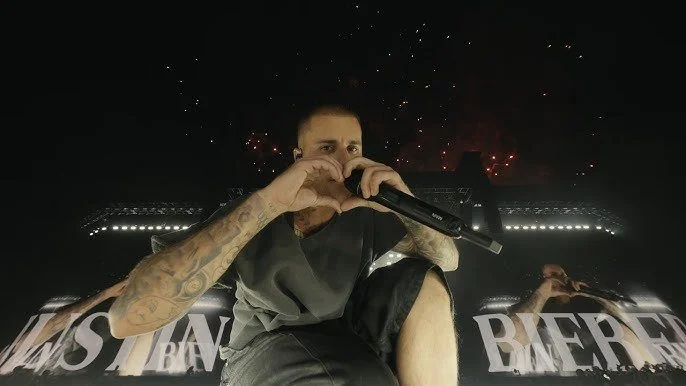
Justin Bieber rewrites the artist playbook with a fully controlled Coachella ecosystem. His Coachella 2026 headline set landed as more than a performance. It functioned as a live case study in how the modern artist operates as infrastructure - spanning rights, product, content and distribution.
Here’s what that looks like in practice:👇
✅ Catalogue sold for a reported $200m - while retaining live performance rights through licensing structures
✅ $5.04m in merch sales driven through his own brand Skylrk during weekend one
✅ Headline set valued at ~$10m - designed as a content engine, not just a live moment
✅ YouTube-native format nodding to his origin story - closing the loop between past and present audience
✅ Integrated capture across the set - engineered for post-festival distribution and cultural replayArtists at the top end are moving from being talent within a system to owning the system itself.Rights are no longer the only asset.Distribution is no longer outsourced.Merch is no longer ancillary.Everything connects.
💡 Bieber’s model signals a move toward the artist as platform - where ownership, narrative, product and audience are orchestrated into a single, self-reinforcing ecosystem.
And the implication for the industry is clear:
- Labels become partners, not gatekeepers
- Touring becomes a content and commerce layer
- Merch evolves into brand-building, not just revenue
- Platforms like YouTube sit at the centre of distribution strategy
💬 The question now shifts from whether this model works at scale to how many artists - and teams - are set up to execute it.