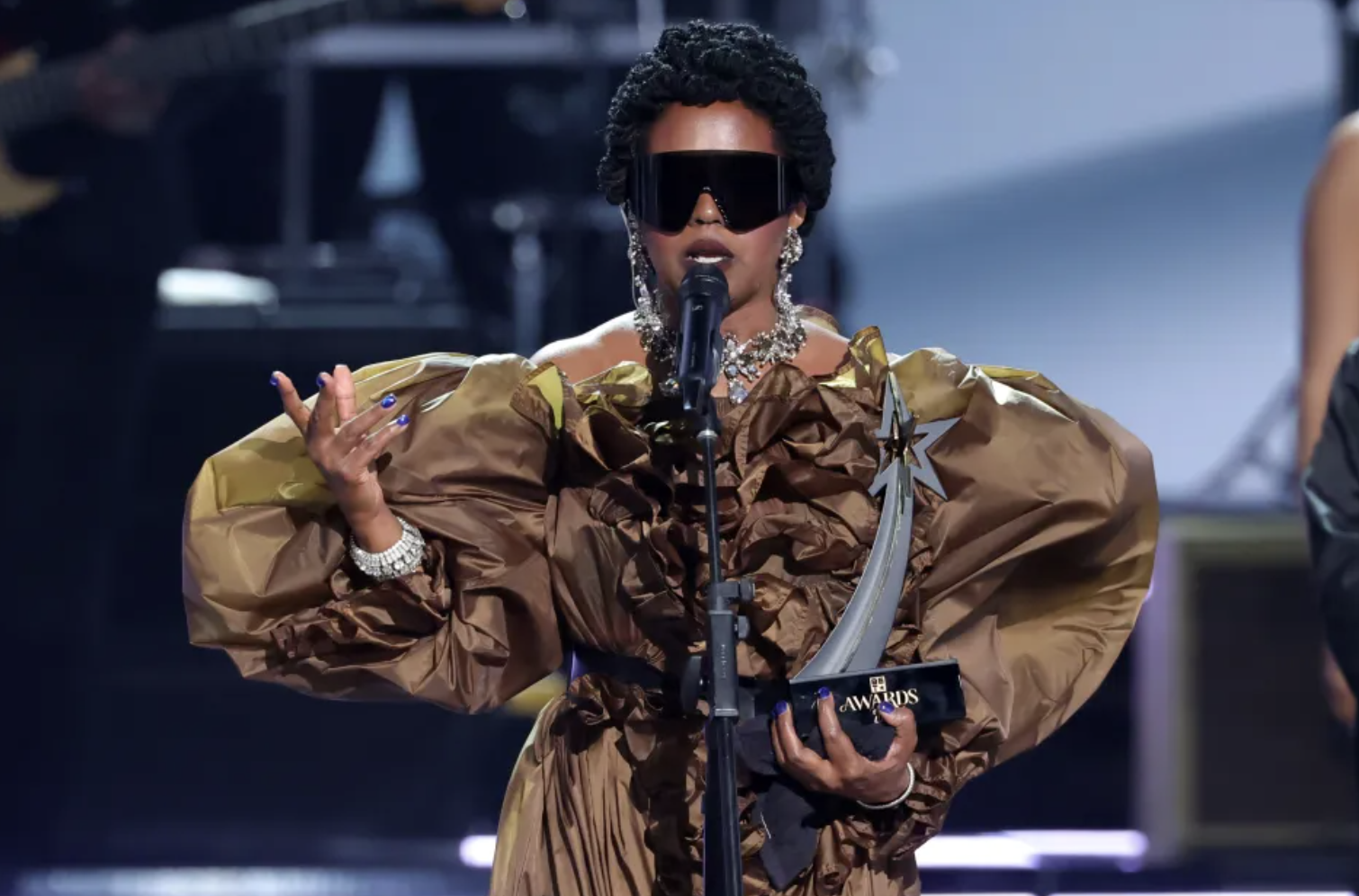
Last night, Ms. Lauryn Hill received the inaugural Living Legend Icon Award at the BET Awards. A room full of the most-streamed artists on the planet performed her songs back to her. SZA and Doechii took on "Ready or Not." Tierra Whack and Tems did "Fu-Gee-La." Doja Cat and Nas duetted "If I Ruled the World" live on stage.
Then Tanya Trotter stepped up to sing "His Eye Is on the Sparrow" with Hill. The two had done it together in Sister Act 2, decades ago. Seeing them do it again, in that room, in that context, was something else entirely. A lineage moment, not a tribute moment.
And then Hill, who wasn't supposed to perform at all, heard someone wasn't doing one of her songs right. She stepped in to sing "Ex-Factor" with a full band. Unscripted. Unrehearsed. Unbothered.
That's exactly who she is.
Hill walked away from the machine at its peak. After The Miseducation of Lauryn Hill dropped in 1998 and sold five million copies in its first year, won five Grammys, and produced some of the most studied vocal performances in modern music, she stepped back. Not into semi-retirement or a lower-profile lane. Away. On her own terms, for her own reasons, in the way that made sense to her rather than to anyone with a release schedule or a streaming target.
The culture never stopped referencing her. The lyricism. The jazz-rooted phrasing. The way she could move between registers, from the intimacy of "Ex-Factor" to the full congregation energy of "Joyful, Joyful," without it ever feeling like a gear change. The gospel warmth fused with hip-hop precision into something that still doesn't have a clean comparison point, nearly three decades on.
The Miseducation is now 28 years old. It still sits at No. 2 in Pitchfork's 150 Best Albums of the 1990s. It gets taught in music programmes. It gets cited in production credits. It gets covered by artists who weren't born when it came out. That's not nostalgia doing the work. That's a record that was built to last because the person who made it wasn't willing to make it smaller than it could be.
What last night showed, more than anything, is how rare that is. The artists who showed up to pay tribute, some of the biggest names in music right now, weren't doing Hill a favour. They were accounting for a debt. Her influence sits inside their music whether they name it or not.
There's something worth sitting with in that. The industry tends to reward compliance. Consistent output, strategic visibility, the kind of presence that keeps algorithms fed and press cycles moving. Hill chose none of that. And the culture rewarded her anyway, not in spite of her absence, but partly because of it. She made the work on her terms, and the work held.
Last night was a reminder of what it looks like when legacy is the real thing.