
Welcome to the next edition of On The Record, thoughtful analysis on culture, entertainment, tech, fashion, music, sport, and brands. Here’s a round-up of key conversations and campaigns that caught my attention this week.
A single thread runs underneath this week's stories, even where the subject matter looks unrelated: the signals brands and platforms have relied on to prove trust are becoming trivially fakeable, and the smart capital is responding by buying things that cannot be faked. Kantar found only 6% of creator content actually builds a brand despite strong engagement, while Cornell researchers showed a single 13-word Reddit comment can manipulate AI search results at scale, the exact platform selling itself to advertisers as the antidote to sanitised AI answers. Suno's Spark incubator responded to that same trust deficit by buying artist goodwill outright, attaching a permanent gag clause to its grants. Meta, LinkedIn and YouTube all shipped near-identical creator-to-paid-ad infrastructure within the same fortnight, racing to formalise what used to be informal, trust-based arrangements before the market moves elsewhere. Set against that, a different kind of capital spent the week building things that can't be faked or rented for a campaign cycle: L Catterton's billion-euro bet on Hyrox, Bedford Media's magazine acquisitions, Wimbledon's grass shipped to Central Park, and Ralph Lauren's two-decade outfitter renewal all sit on the owning side of the ledger, durable, expensive, and slow to build precisely because they can't be gamed. The gap between what's cheap to fake and what isn't is quietly becoming the real measure of brand value this year.

Cannes Lions Stops Treating Creators as Media Buys as $44bn Shift Reframes Who Holds the Leverage 🏖️
📌 Cannes Lions 2026 marked the moment creators stopped being booked like ad inventory and started being negotiated with like strategic partners. LIONS Creators, the festival's dedicated creator track, moved into the main Palais Beach footprint this year rather than running as a side programme, and the shift wasn't cosmetic. It reflects a market that has quietly repriced what creators are actually worth to a brand's system, not just its media plan.
● US ad spend on creator content forecast to hit $43.9bn in 2026, an 18% increase on last year (Interactive Advertising Bureau)
● Global creator economy valued at $310bn this year (McKinsey)
● Vaseline Originals, built by turning fan-created product hacks into officially credited, royalty-paying releases, outsold standard Vaseline Jelly by 466% and won Gold at this year's festival (Cannes Lions Festival of Creativity)
💡 🏖️ The Vaseline case is the tell. Most of what got announced at Cannes this year was brands renting creators for a campaign cycle, a recognisable, well-worn play that lends short-term relevance and expires the day the contract does. Vaseline did something rarer: it built cultural capital by giving named creators permanent credit and ongoing royalties inside the product line itself, meaning the relationship compounds long after the campaign ends rather than resetting to zero. That's the real signal underneath the “creators are strategic partners now” headline, most brands are still renting, and the ones who work out how to build instead are the ones who'll own something in three years that everyone else is still paying for on a one-off basis
Sponsors Run Out of Stadium Real Estate, So Rexona Buys the Fourth Official's Armpit 🦵
📌 The World Cup's most contested advertising space is no longer the perimeter board or the shirt front, it's wherever the broadcast camera is guaranteed to look. Unilever's Rexona has placed its branding directly under the fourth official's arm for all 104 matches, visible only in the instant the substitution board goes up, timed to land precisely when the game's tension peaks.
● Rexona is Official Personal Care Sponsor for all 104 matches of the FIFA World Cup 2026 (Famous Campaigns, LBBOnline)
● The substitution board branding rotates dynamically between Rexona, Sure and Degree depending on the competing teams and broadcast market (LBBOnline)
● The placement builds on Rexona's wider tournament programme, including creator-led activations under Unilever's House of Fresh platform (LBBOnline)
💡 🦵 This is a rent, not an own, and a smart one. Rexona hasn't bought reach, it's bought a single recurring second of contextual relevance that no static logo board can replicate, deodorant showing up exactly where sweat does, on the person under the most sustained pressure on the pitch. The cleverness is real and the earned media is doing more work than the media buy itself. But strip away the wit and it's still a fixed-window placement that resets the moment the final whistle blows in July, nothing here compounds into ground Rexona owns going into 2030. Filed alongside this year's wider World Cup theme, sponsors and organisers alike treating every previously unmonetised inch of the tournament, seats, parking, now armpits, as inventory still up for sale
Karlie Kloss Trades the Runway for the Masthead as Bedford Media Bets on Print's Scarcity Value 📰
📌 A supermodel building a magazine holding company sounds like a vanity project until you look at what's actually been assembled. Karlie Kloss's Bedford Media has spent under two years acquiring i-D from a collapsing Vice Media Group, taking a stake in W back in 2020, and licensing the LIFE brand from Dotdash Meredith to bring it back into regular print and digital circulation, a portfolio that reads less like a celebrity side hustle and more like a deliberate consolidation of legacy media IP while it's cheap.
● Bedford Media acquired i-D from Vice Media Group in November 2023, during Vice's bankruptcy proceedings (Deadline, Hollywood Reporter)
● Kloss led an investor group that acquired W magazine in 2020
● Bedford's 2024 licensing deal with Dotdash Meredith returns LIFE to regular print and digital publication, with Dotdash retaining the archive and photography rights (Variety, Deadline)
💡 📰 This is the building case on the Capital Test, not renting. Kloss isn't lending her face to someone else's publication for a season, she's using capital earned over a fifteen-year modelling career to own the infrastructure outright, betting that in a feed flooded with AI-generated content, a title with real editorial history and physical scarcity becomes worth more, not less. The harder question is whether Bedford can run these titles as functioning businesses rather than well-funded nostalgia projects, i-D's rocky post-acquisition period with senior editorial exits is the cautionary case sitting right inside her own portfolio. Owning the brand is the easy part, owning the trust that made it a brand in the first place is the part still to be proven
Nike Turns Bryant Park Into a Talent Pipeline as Toma Finals Hand Out Ambassador Deals to Teen Street Ballers ⚽
📌 A youth street soccer platform launched barely a year ago just closed its first season by turning a Manhattan park into a scouting ground with sponsorship attached. Nike's Toma National Finals brought more than 150 teenage players from across North America to a 16,000-square-foot open-air arena in Bryant Park, the culmination of a global grassroots circuit that started in Los Angeles in mid-2025 and expanded to over 20 cities across six continents within a year.
● Toma el Juego has hosted more than 100 tournaments since its 2025 launch, reaching cities from Los Angeles to Barcelona, Casablanca and Seoul (Nike)
● Northside FC (Toronto) and Street Phantom (Surf Nation) were named Toma National Finals champions, with select winning athletes earning Nike brand ambassador opportunities (Nike)
● The event featured recurring Nike ambassador Travis Scott, who has fronted Toma activations in Los Angeles, Atlanta and Miami throughout the platform's first season (Goal, NSS Sports)
💡 ⚽ This is Nike building, not renting, and the distinction matters against the backdrop of a World Cup summer where most brands are buying proximity to the tournament rather than constructing anything that outlasts it. Toma gives Nike a pipeline it fully controls, from neighbourhood tournament to global finals to ambassador contract, all under its own branding, timed precisely to peak just as football attention in the US hits its highest point in a generation. The tension worth watching is the platform's own positioning as “community-led” sitting against the reality that Nike decides which kids get discovered, which crews get merch, and who gets the ambassador deal. Built by Nike but sold as belonging to the street is a familiar move, the real test is whether the kids who don't get picked still feel like it was theirs
LVMH's Private Equity Arm Circles Hyrox as Institutional Capital Chases a Format It Didn't Build 🏋️
📌 A fitness brand with no flagship product, no proprietary technology and almost no marketing spend is about to be valued like a mid-cap company. L Catterton, the private equity firm backed by Bernard Arnault's family office, entered exclusive talks on 13 June to acquire a majority stake in Hyrox, the standardised eight-station fitness race that has gone from 650 participants at its 2017 Hamburg debut to a business industry estimates now value at €700 million to €1 billion.
● Hyrox revenue reached an estimated €130-140 million in 2025, up roughly 87% on 2023, with a 2025 EBITDA margin of around 20% (Sky News, Bloomberg, SGB Media)
● The 2024-25 season drew 425,000 to 550,000 athletes across more than 80 events in 30 countries, with 2026 participation projected at 1.3 million (Sky News, Private Equity Wire)
● L Catterton's existing portfolio spans Peloton, Equinox, Solidcore and Birkenstock, all consumer brands built on repeat, identity-driven customer behaviour rather than product novelty (SGB Media, Fitgearsource)
💡 🏋️ This sits on the owning side of the Capital Test, but it's Hyrox's capital, not L Catterton's, and that's the tension worth watching. The brand's entire value was built by participants and affiliated gyms marketing it for free, a community that returns to a fixed, unchanging format because the sameness is the point, you can train for it anywhere and compete in it anywhere. Institutional capital didn't create that behaviour, it's arriving to price it and then professionalise it, faster event expansion, sponsorship, broadcast rights, the Ironman playbook. The risk sitting underneath every headline number is whether a billion-euro valuation and the commercial infrastructure that comes with it can scale without diluting the exact low-friction, gym-community authenticity that made the format worth a billion euros in the first place
Wimbledon Ships Its Grass to Central Park as Ralph Lauren Marks Two Decades as Official Outfitter 🎾
📌 Wimbledon has spent four years running watch parties in Brooklyn to keep New York engaged between tournaments. This year it decided a screen wasn't enough. From 26-29 June, the All England Club's own groundstaff transformed Central Park's Wollman Rink into a fully playable grass court using proprietary technology the club has spent nearly a decade developing, cutting the build time for a bedded-in grass court from roughly two years down to 48 hours.
● The activation opened with The Wimbledon Court Invitational, an exhibition doubles match pairing Andre Agassi and Genie Bouchard against James Blake and Caroline Wozniacki (Campaign US, Tennis Majors)
● Wimbledon has staged an annual New York event since 2022, previously branded The Hill in New York, before this year's shift to a playable court format (Wikipedia, Campaign US)
● Ralph Lauren, marking its third decade as Wimbledon's Official Outfitter since 2006, opened its Madison Avenue flagship for a cocktail reception with the same four tennis icons ahead of the tournament, alongside a debut Purple Label Wimbledon capsule and a month-long Sloane Square activation in London (The Impression, Wimbledon.com)
💡 🎾 Two different plays on the same Capital Test, in the same week. Wimbledon is moving from renting attention, a watch party is borrowed relevance for an evening, to building it, a physical, technically difficult recreation of the one asset that actually differentiates the tournament from every other Grand Slam. That's a far more expensive bet, and a far more durable one. Ralph Lauren's move is the owning case in its purest form, two decades of exclusive outfitter status isn't being defended with a new campaign, it's being re-earned with a Purple Label debut that raises what the partnership is allowed to look like. Neither brand needed New York to notice Wimbledon this month. Both spent real money making sure it noticed anyway
Dua Lipa Turns Service95 Into Physical Infrastructure With a Permanent Library of Banned Books in Porto 📚
📌 A celebrity book club is usually a content play, a monthly pick, a newsletter, an algorithm-friendly reason to post. Dua Lipa's Service95 Book Club has taken a different route, opening The Manifesto Library on 27 June, a permanent, physical collection of 100 banned and censored books housed inside Livraria Lello, the 120-year-old Porto bookshop marking its own anniversary with the launch.
● The collection is organised across four themes, Power, Control, Voice and Memory, and includes titles such as The Handmaid's Tale, 1984, The Second Sex and The Satanic Verses (Deccan Chronicle)
● The library launched as part of BABELL, a new international book festival in Porto, and will remain a permanent fixture at Livraria Lello rather than a temporary activation (Euronews, NME)
● Dua Lipa has run the Service95 Book Club since the early 2020s and is set to curate the Southbank Centre's 2026 London Literature Festival in October (Euronews)
💡 📚 This is a building move, not a rent, and the distinction is the whole story. Most artist-led cultural initiatives borrow credibility from an existing institution for a campaign cycle and move on. Dua Lipa did the opposite, she attached her platform permanently to a 120-year-old bookshop's own legacy, creating infrastructure that outlives the press cycle and doesn't require her ongoing presence to keep functioning. It also does something most celebrity-adjacent activism doesn't: it takes an actual structural position, censorship and book banning, rather than a safely broad cause, and gives it a physical address people can walk into. Whether that converts into anything beyond goodwill for Service95 as a media property remains the open question, but as a piece of brand-building it understands something most artist ventures miss, permanence is the asset, not attention
Fred Again Turns Dior's Runway Into a DJ Set as Jonathan Anderson Builds His Third Menswear Collection Around Remix Culture 🎧
📌 A runway soundtrack is usually background, curated to set a mood and forgotten by the after-party. Jonathan Anderson had other plans for his SS27 Dior menswear show on 24 June, opening with a model simply plugging an iPhone into a speaker before handing the full 17-minute score over to Fred Again, whose sampling-and-remixing aesthetic became the literal design brief for the collection itself.
● The custom mix featured unreleased material alongside new versions of KETTAMA and THE KTNA's “Summer Never Dies,” Latin Mafia's “y como te digo que,” and an instrumental of Fred Again and Headie One's 2020 track “Told” (DJ Mag)
● Dior published the full tracklist via Instagram, crediting collaborators including Christine and the Queens, Jamie T, Jhéné Aiko, Young Thug and Mabe Fratti (We Rave You)
● The show took place at Paris's Musée Nissim de Camondo, with Anderson explicitly framing the collection's construction, mixing 19th-century embroidery with distressed denim, around Fred Again's own “sampling and remixing” method (Wallpaper)
💡 🎧 This sits on the building side of the Capital Test, and it's a more interesting case than a typical fashion-meets-music booking. Dior didn't just hire Fred Again for name recognition, it structured the entire collection's design logic around his creative process, using remix culture as the connective tissue between an 18th-century Parisian museum and 2026 menswear. That's a genuine transfer of ideas, not just attention, which is rarer than it sounds in luxury collaborations. The risk is the same one facing every designer who borrows a musician's methodology as a season's concept, the idea reads as fresh exactly once. Anderson's real test at Dior isn't this show, it's whether the house can keep finding new external logics to remix once the novelty of borrowing them wears off
DoorDash Turns Its Billboard Into a Scoreboard, Skipping the Ad Entirely 🏟️
📌 Every World Cup sponsor is fighting for the same three seconds of attention, and most are losing that fight before it starts. DoorDash's “Deliver Us to Fútbol” out-of-home push, built with GUT LA, took the opposite approach, converting premium digital billboards in New York, Los Angeles and Miami into live scoreboards updating in real time across all 104 matches, giving fans a reason to look twice rather than tune out.
● The billboards ran across all 104 FIFA World Cup 2026 matches over the tournament's 39-day span (Ads of the World)
● DoorDash is an Official Tournament Supporter of the World Cup, alongside sister brands Deliveroo and Wolt, in the companies' first-ever joint international campaign (DoorDash, Wolt Newsroom)
● The scoreboard OOH sits within a wider push that includes TV, paid digital and Summer of DashPass activations, developed alongside fellow tournament sponsors Michelob Ultra, McDonald's and Frito-Lay (DoorDash)
💡 🏟️ This is a clean building move inside a category where almost everyone defaults to renting. Most World Cup sponsors buy proximity, a logo near the action, hoping association alone earns attention. DoorDash instead converted its most expensive media asset into something fans would voluntarily seek out mid-match, effectively trading brand message for utility. That's a harder trade to make internally, it requires a marketing team willing to run billboards that barely say “DoorDash” at all, but it's the one that actually works with how attention behaves during a live tournament rather than against it. The test now is whether utility-first OOH becomes the new baseline for tentpole sponsorship, or whether DoorDash just found the one execution smart enough that everyone else will simply imitate the logo-as-scoreboard trick next cycle without doing the harder work of finding their own version of useful
HBO Max Flies an Eight-Metre Dragon Over London Instead of Buying Another Billboard 🐉
📌 A streaming launch usually means a poster wave and a trailer drop. HBO Max marked the return of House of the Dragon with something harder to scroll past, an eight-metre replica of Syrax, built from actual production scan data, flying three choreographed passes over the Tower of London on 22 June to launch Season 3.
● The model was built by German aeronautics firm Airstage with Electric Sheep Events, using vacuum-formed foam, carbon fibre and aluminium, and weighed just 13kg despite its scale (Famous Campaigns, Yahoo News UK)
● Construction took a 14-person team nearly 3,000 hours over three months, with more than seven test flights and hidden leg-mounted impellers used to replicate the dragon's on-screen movement (Newsletter.co.uk)
● The stunt was followed by a reception attended by Season 3 cast members including Kieran Bew, Tom Bennett and Abubakar Salim, ahead of the eight-episode season's weekly rollout through its 9 August finale (Wiki of Thrones)
💡 🐉 This is a building play dressed up as a stunt. Anyone can rent a billboard near a landmark, HBO Max instead spent three months and 3,000 engineering hours manufacturing a physical asset accurate enough to survive close-up phone footage, then let the internet do the distribution for free. That's the real return on this kind of spend, not the flight itself but the volume of organic, unpaid coverage a genuinely well-executed physical spectacle generates in a feed otherwise full of static key art. The risk with this playbook is diminishing returns, the first flying dragon over a historic London landmark is a moment, the fifth flying creature stunt from a different streamer next quarter is just weather
Sky Closes In On ITV's Broadcast Arm, Ending 70 Years of Vertical Integration for £1.6bn 📺
📌 A public service broadcaster is about to split itself in two to survive. Comcast-owned Sky has agreed terms to acquire ITV's broadcast and streaming division, including the ITVX platform and ITV's linear channels, in a deal reportedly worth £1.6 billion, ending ITV's 70-year run as a broadcaster that owns both its channels and its production business under one roof.
● ITV Studios, the production arm behind Love Island and Squid Game: The Challenge, is excluded from the deal and will continue as a standalone company, while separately acquiring Sky's Love Productions, maker of The Great British Bake Off, for an estimated £80-120 million (Variety, Yahoo News UK)
● The deal includes an earn-out of roughly £200 million tied to the future performance of ITV's Media & Entertainment division, and still requires sign-off from the Competition and Markets Authority, Ofcom and the Culture Secretary (Yahoo News UK, Variety)
● ITV shares rose 2.9% on the news, valuing the group at approximately £3.1 billion, with the combined Sky-ITV entity positioned to challenge Netflix, YouTube, Amazon Prime Video and Disney+ for UK streaming share (Variety, IBC)
💡 📺 This is a straight ownership transfer, but the more interesting question is what ITV is choosing to keep versus sell. It's giving up the broadcast infrastructure and audience relationship it built its entire identity on for seven decades, while holding onto ITV Studios, the part of the business that actually creates IP and sells it globally regardless of who owns the UK channels. That's ITV betting its future is in building formats it can license anywhere, not in owning the pipe that delivers them to British living rooms. For Sky, the calculation is the opposite, it's buying scale and reach precisely because streaming economics increasingly reward whoever controls distribution and advertising inventory at size, not whoever made the show. Two very different theories of where value sits in television, settling the question in the same transaction
A Handbag Made From T-Rex Collagen Wins Cannes Gold While the Auction It Was Built Around Quietly Flops 🦖
📌 The luxury industry's rejection of lab-grown materials has never been about performance, it's about scarcity, and Lab-Grown Leather's Cannes Gold-winning campaign understood that better than any sustainability pitch could. Rather than arguing biofabricated leather deserves luxury status, VML Paris engineered a handbag from reconstructed Tyrannosaurus rex collagen, framed it as a scientific artifact, and staged a public auction to force the industry to treat it as one.
● The campaign drove a reported 4.63 billion media impressions and a claimed 10x increase in inbound interest from luxury brands and designers (PRovoke Media, VML)
● The handbag itself failed to meet its estimated reserve of €300,000-€500,000 at Hôtel Drouot on 11 June, with bidding stalling around €150,000 (Boing Boing, Complex)
● Parent company BSF Enterprise credits the campaign with strengthening its licensing pipeline into sportswear and premium automotive, alongside four Cannes Lions across PR, B2B, innovation and environmental categories (The Globe and Mail, VML)
💡 🦖 This is a clean building play, Lab-Grown Leather didn't rent legitimacy by getting a luxury house to co-sign the material, it manufactured its own scarcity narrative from scratch and made the industry come to it. But the auction result is the story the campaign's own press materials leave out, and it's the more interesting one. A failed sale at half the estimate isn't a footnote, it's proof that media attention and category perception can be engineered independently of whether anyone actually wants to buy the thing, which is either a permanent feature of how PR-driven luxury narratives now work, or a warning that the industry has gotten very good at applauding stunts it has no intention of paying for
Off-White's New Bluestar Owners Revive Virgil Abloh's Democratisation Playbook With L/AB 🧪
📌 A brand's founding thesis doesn't always survive an ownership change, but Off-White's new owner is betting its next growth phase on doubling down on exactly that thesis. L/AB c/o Off-White, launched this week, isn't a new idea, it's an explicit successor to Off-White For All, the accessible sub-line Virgil Abloh introduced in 2018 to make his brand reachable beyond its luxury price point, revived under Bluestar Alliance, the brand management firm that bought Off-White from LVMH in late 2024.
● L/AB pieces range from $45 to $220, against $175 to $4,000 for core Off-White, and span fleece, T-shirts, hoodies, tracksuits, sneakers and outerwear (TheIndustry.fashion, WWD)
● The line launches with two seasonal collections a year plus market-specific drops, sold online, through streetwear specialty stores and mainstream wholesale accounts, primarily in North America (TheIndustry.fashion)
● Off-White CEO Cristiano Fagnani described the target “sweet spot” as a 16-year-old “or everyone who wants to feel that age,” positioning L/AB as a toolkit rather than a full collection (WWD)
💡 🧪 This is an owning move built on inherited, not earned, capital, and that's the tension worth watching. Bluestar Alliance didn't build Off-White's cultural authority, Abloh did, and the brand's ability to credibly launch a youth-facing diffusion line depends entirely on whether Gen Z still associates Off-White with disruption or now sees it as a legacy label being managed by a firm best known for Hurley and Scotch & Soda. The nss magazine framing is the sharper read here, the real question isn't whether L/AB executes Abloh's democratisation thesis correctly, it's whether streetwear still holds the cultural centre it occupied when that thesis worked the first time. Reviving a founder's playbook is easy. Reviving the cultural moment that made the playbook work is the part no new owner can manufacture
UK Signals It May Block Paramount's $110bn Warner Bros. Discovery Deal on Plurality Grounds 📺
📌 A deal that's already cleared the US, China, Australia, Germany, France and Saudi Arabia just hit its most serious obstacle yet, and it's coming from a market where neither company has much scale. UK Culture Secretary Lisa Nandy said she is “minded to intervene” in Paramount Skydance's $110 billion acquisition of Warner Bros. Discovery, giving both companies until 6 July to respond before deciding whether to trigger formal reviews.
● If Nandy proceeds, Ofcom would assess the deal's impact on UK media plurality while the Competition and Markets Authority separately evaluates competition concerns, with regulators given up to 40 days to report back (Deadline, Reuters)
● UK businesses potentially affected include Channel 5, CNN International, TNT Sports, Cartoon Network, Nickelodeon, Paramount+ and HBO Max (Deadline)
● Nandy noted the Enterprise Act 2002 doesn't explicitly cover streaming, and said she may introduce secondary legislation to close that gap (PYMNTS, LA Mag)
💡 📺 What makes this notable isn't the deal size, it's the mismatch between the concern and the market reality. Paramount+ and Discovery+ together held roughly 6% of UK streaming share in Ofcom's 2025 report, against Netflix's 59%, making a straightforward competition argument hard to sustain. The plurality argument is doing the real work here, and it's a structurally different objection, not “does this reduce choice” but “does this concentrate control of news and on-demand programming in fewer hands,” a standard that doesn't require market dominance to trigger, just ownership concentration. That distinction is what gives Nandy room to act even where a pure antitrust case would struggle, and it's the same public-interest lever the UK used against 21st Century Fox's Sky bid in 2017, the last time these powers meaningfully slowed a global media merger
Starbucks Turns Baristas Into TikTok's First Official Employee Ad Network 📱
📌 Employee-generated content has been an informal marketing gift for years, someone posts a genuinely good video about their job, it goes viral, the brand quietly amplifies it. Starbucks just formalised that arrangement into infrastructure, becoming the first brand to pilot TikTok's new Creator Network product, announced at Cannes Lions, which lets the company issue content briefs to employee creators and share ad revenue with them directly.
● The pilot builds on Green Apron Creators, launched in 2024, which found Starbucks employees post at three times the rate of staff at comparably sized retail chains (Marketing Dive, Restaurant Dive)
● Selected employee creators will receive compensation through TikTok ad revenue sharing rather than flat payment, tying pay to actual content performance (NRN, HR Grapevine)
● Sprout Social data cited in coverage found 61% of Gen Z say they frequently learn about new products through employee-generated content, against 40% of the general population, and that 61% of consumers believe brands should compensate employees who promote them (Netinfluencer)
💡 📱 This is a genuine building move, and it's a smarter one than most brand-employee content plays because Starbucks isn't just permitting employee content, it's constructing the infrastructure to direct and monetise it at scale before a competitor claims the same territory. Being TikTok's first Creator Network pilot partner means Starbucks gets to shape how the product works before anyone else, a meaningful first-mover position in a tactic every retail and QSR brand is about to chase given the Staples Baddie precedent. The harder question sits underneath the revenue-sharing model: paying employees based on ad performance, rather than a flat stipend, quietly shifts content strategy risk onto the barista rather than the brand, turning “authentic storytelling” into unpaid-adjacent piecework the moment a video underperforms
Nexstar-Tegna's $6.2bn Merger Stays Frozen as Broadcasting's Biggest Consolidation Bet Heads to Appeal 📺
📌 A federal judge decided in April that the largest local TV merger in US history looked presumptively illegal, and the case has been grinding through appeal ever since. Nexstar's proposed $6.2 billion acquisition of Tegna would create a broadcaster spanning more than 259 stations and reaching roughly 80% of American households, more than double the FCC's 39% national ownership cap, a threshold Congress set in 2004 specifically to prevent this kind of concentration.
● Chief Judge Troy Nunley found the merger presumed likely to violate antitrust law, citing market shares exceeding 30% in 31 local markets and over 50% in 16 of them (Kavout, Paul Weiss)
● The FCC approved the deal by granting Nexstar a waiver from its own 39% ownership cap, a move eight state attorneys general and DirecTV are challenging as unlawful (Deadline, Axios)
● Nexstar has asked the Ninth Circuit to expedite its appeal, with oral arguments potentially starting as early as August and a ruling expected months after that (Deadline)
💡 📺 What makes this worth tracking isn't the merger itself, it's who's opposing it. This case sits on a rare bipartisan fault line, attorneys general across party lines argue the deal would consolidate too much local news under one owner, raise retransmission fees, and accelerate newsroom layoffs, while an administration-aligned FCC waived its own rule to clear the path. Nexstar's own defence, that it needs the scale to compete with Big Tech, is the same justification used across every media consolidation story this year. The structural question the courts are actually deciding is whether “we need scale to survive platforms” is a legitimate reason to override a cap Congress set specifically to prevent this outcome, or just the newest version of an old argument
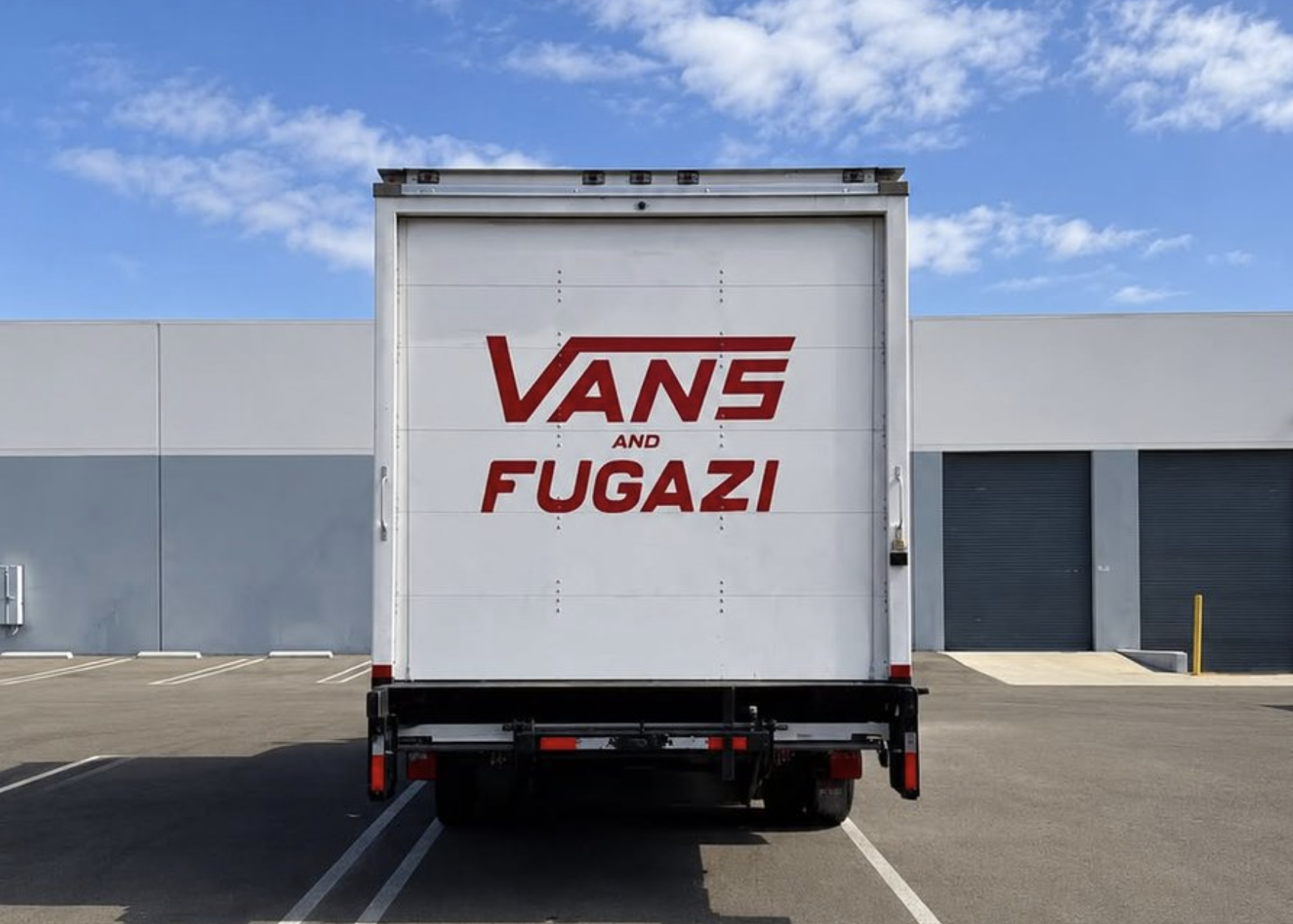
Vans x “Fugazi” Confuses the Internet Into Thinking an Anti-Merch Punk Band Sold Out 👟
📌 A band that has refused to sell a single T-shirt in over three decades just found itself in the middle of a sneaker drop it has nothing to do with. Vans launched a Fugazi collection, eight Authentics and a Slip-On referencing the 2005 Raf Simons x Colette x CDG collab, giving pairs away free at its Paris Le Marais store on 25 June, and the internet immediately assumed Ian MacKaye's hardcore band had finally caved.
● The Fugazi in question is a Los Angeles streetwear label founded in 2018 by entrepreneur Trevor Gorji, unrelated to the Washington DC band beyond sharing a name (Louder)
● Dischord Records, the label Fugazi's Ian MacKaye co-founded, publicly disavowed the collaboration on Instagram, stating “we have nothing to do with this” (Louder)
● The actual band has never sold official merchandise and has been on hiatus since 2002, a stance MacKaye has defended for decades, including once tracking down a bootlegger and asking him to redirect profits to a women's shelter instead of paying royalties (Louder)
💡 👟 The three questions this raises aren't really about Vans, they're about what a name is worth once it's disconnected from the thing that made it valuable. Nobody involved in this deal is renting Fugazi's actual cultural capital, the streetwear brand and the band have no relationship, no licensing, no shared history, just a coincidental name collision that Vans' marketing either didn't catch or didn't mind. The unintentional irony writes itself, “fugazi” is slang for something fake, and Dischord's blunt refusal to be associated is the most on-brand thing the actual band could have done. The real signal here isn't about capital changing hands, it's about how thin the line has gotten between a legitimate collaboration and a brand simply borrowing the reputational residue of a name it doesn't own, whether or not that was the intent
Nike's Earnings Beat Runs on a Tariff Refund While China Keeps Sliding 📉
📌 A headline earnings beat and a genuine turnaround are not the same thing, and Nike's fiscal Q4 results make the gap unusually visible. The company reported $10.97 billion in revenue, ahead of Wall Street's $10.86 billion estimate, but a $986 million anticipated tariff refund did the heavy lifting, lifting gross margin by 890 basis points to 49.2% and turning a modest underlying beat into a headline swing to $0.72 diluted EPS from $0.14 a year earlier.
● Excluding the tariff benefit, adjusted EPS was $0.20 against a $0.13 consensus estimate, a real but far smaller beat than the headline number suggests (CNBC)
● Greater China revenue fell 12% on a reported basis and 17% currency-neutral, while North America grew 3%, driven by wholesale revenue up 10% (Nike, Investing.com)
● Converse revenue dropped 32% in the quarter, its second consecutive quarter of 30%+ declines, and full-year net income fell 3% to $3.1 billion despite flat full-year revenue (WWD, TheStreet)
💡 📉 The three questions here point to the same place: this result serves the narrative of a stabilising turnaround more than it serves the underlying numbers. A one-time tariff recovery isn't operational improvement, it's a court ruling, and stripping it out leaves a company still losing significant ground in its second-largest market while its most culturally relevant heritage brand, Converse, continues to bleed double digits. Where the industry wants you to read “beat expectations” as evidence Elliott Hill's turnaround is working, the more accurate read is that North America's wholesale-led growth is masking weakness everywhere else, and the real test isn't this quarter's number, it's whether Nike can grow in China again without a tailwind doing the work for it
SpaceX Tells IPO Investors It Wants to Compete With Verizon, Not Just Sell Them Satellite Capacity 🛰️
📌 A company that just completed the largest IPO in history used its own roadshow to signal an even bigger ambition. SpaceX President Gwynne Shotwell told investors on 26 June that the company is considering a Starlink-branded mobile service sold directly to US consumers, a structural shift from Starlink's current role as a satellite connectivity partner to carriers like T-Mobile, toward SpaceX owning the customer relationship itself.
● SpaceX holds 65 megahertz of exclusive-use nationwide spectrum via a $17 billion EchoStar acquisition, against roughly 1,020 megahertz combined held by Verizon, AT&T and T-Mobile, according to New Street Research data (TechRepublic)
● Starlink's satellite broadband business generated $11.39 billion of SpaceX's $18.67 billion total 2025 revenue and serves more than 10 million subscribers globally, a fraction of the hundreds of millions the US mobile market represents (Yahoo Finance)
● Oppenheimer projects SpaceX could reach 15 million US mobile subscribers by 2030, while analysts including New Street Research's David Barden suggest the disclosure may function as much as negotiating leverage against carrier partners as a genuine standalone launch plan (TechTimes)
💡 🛰️ The timing is the real signal here, not the technology. Disclosing this ambition during an IPO roadshow rather than a product announcement tells you SpaceX wanted the market to price in wireless disruption before committing to build it, a lower-cost way to pressure-test investor appetite and squeeze better terms out of T-Mobile simultaneously. The spectrum gap is the honest constraint underneath the ambition: 65 megahertz against the incumbents' combined 1,020 doesn't support a dense urban network, which is exactly why Starlink's own mobile push, if it happens at all, is more likely to arrive as a rural and gap-filling complement to existing carriers than a genuine head-to-head replacement for them in the cities where the real subscriber money sits
Every Major Ad Platform Just Built the Same Tool, Turning Creator Posts Into Paid Ads on Command 🎯
📌 Three platforms that compete for the same ad budgets just converged on the same problem within two weeks of each other. Meta, LinkedIn and YouTube each shipped infrastructure that collapses creator discovery, content review and paid activation into a single workflow, a task that previously required a patchwork of separate tools and manual outreach.
● Meta announced Creator Marketing Hub at Cannes Lions on 23 June, unifying Creator Marketplace and Partnership Ads Hub and expanding creator discovery from Instagram's 5 million-plus creators to include Facebook creators for the first time (Campaign US, Netinfluencer)
● LinkedIn launched Creator Marketplace inside Campaign Manager on 10 June, its first B2B creator discovery tool, letting brands surface existing posts mentioning their brand and amplify them as Thought Leader Ads (PPC Land, thekeyword)
● YouTube introduced a Content and Creator Insights API at Cannes on 23 June, built on Gemini, giving agencies natural-language creator search and audience data across the platform's creator base (ALM Corp, AffiverseMedia)
💡 🎯 This is three platforms building the same infrastructure independently because they're all defending the same asset, ad spend that's shifting from platform-produced formats toward creator-originated content. None of these tools were built to serve creators, they were built so platforms can capture and formalise a transaction that was already happening informally, brands DMing creators, agencies scraping follower counts, informal rate negotiations. By building the discovery-to-activation pipeline natively, each platform ensures that when creator budgets grow, the tooling tax gets paid to them rather than to a third-party marketplace like Whalar or Grin. The real gap between platforms is what each is optimising for, Meta and YouTube are building for reach and volume, LinkedIn is explicitly building for credibility and buyer trust, a distinction that will matter more as brands start allocating budget by outcome rather than platform prestige
Meta and Reddit Both Bet on Turning Conversation Into Commerce, From Opposite Directions 🛍️
📌 Two platforms just made the same wager on where shopping decisions actually happen, community discussion, but built it in mirror-image ways. Meta pushed live video ads and virtual card checkout deeper into Instagram and Facebook while quietly launching Forum, a standalone Reddit-style app for its existing Groups. Reddit, meanwhile, moved the other direction, opening its first multi-advertiser shopping format directly inside the conversations where people already compare products.
● Meta's Live Video Ads roll out on Instagram and expand globally on Facebook, paired with virtual card checkout via Mastercard and Visa launching this summer, and affiliate partnerships expanding to Flipkart, Mercado Libre and Lazada across new markets (Netinfluencer, thekeyword)
● Meta's Forum app, quietly released without a launch event, turns existing Facebook Groups into a standalone Reddit-style space with an AI “Ask” tab that compiles answers from group discussions (TechCrunch, The Next Web)
● Reddit's Shopping Listing Ads, in alpha, let competing brands' products appear side by side inside relevant conversation threads, built on Reddit's Community Intelligence engine, which draws on more than 25 billion posts and comments (Axios, PPC Land)
💡 🛍️ This is a genuine race for the same territory, community validation, but the two platforms are building from opposite starting points. Meta already owns billions of users and is trying to manufacture the trust and discussion-based discovery that made Reddit valuable, hence a quiet Reddit clone bolted onto Groups. Reddit already owns that trust and is trying to build the commerce infrastructure Meta has spent a decade perfecting, hence a shopping format inserted directly into threads. Whoever gets there first captures a genuinely valuable moment, the instant someone moves from “what should I buy” to “this is validated, I'll buy it now.” The risk for both is the same: community trust is exactly the kind of asset that erodes the moment users notice it's being monetised, and Reddit is walking that line more carefully than Meta, since inserting ads into existing threads risks feeling like the exact algorithmic intrusion its whole platform reputation was built against
Suno's Artist Grants Come With a Permanent Gag Clause Buried in the Fine Print 🎙️
📌 An AI company facing lawsuits from every major label needs artists to like it, and Suno's new incubator reads like exactly that kind of overture, until you get to the terms. Spark, launched 25 June, offers unsigned musicians grants ranging from thousands to tens of thousands of dollars, marketing support and access to Suno's writing camps, positioned as a genuine investment in independent artist careers.
● Participants must be 18 or older, unsigned, and release music under their own name, with Suno stating artists retain creative control and commercial rights to their work (Billboard, Variety)
● The programme's separate terms include a “Good Vibes Only” clause requiring participants never make negative statements about Suno, its personnel or products, “during the Term and thereafter,” a violation of which constitutes material breach and grounds for termination (Music Business Worldwide)
● The launch lands as Suno remains in active litigation with Universal Music Group and Sony Music Entertainment, having already settled and partnered with Warner Music Group, and follows a $400 million Series D that valued the company at $5.4 billion (Hollywood Reporter, Techloy)
💡 🎙️ This is a rent dressed as a build, and the non-disparagement clause is the tell. Suno isn't investing in independent artists as a genuine talent pipeline the way a label or incubator traditionally would, it's buying goodwill and testimonials at a moment when it desperately needs both, timed precisely against SZA and Doja Cat's public criticism and ongoing major-label litigation. Grant recipients get real money and real support, but in exchange they become permanently unable to criticise the company whose AI training practices are simultaneously being challenged in court by the industry those same artists hope to break into. The gap between what's being said, “we're investing in the next generation of independent artists,” and what's actually happening, “we're purchasing silence from people financially dependent on us,” is exactly the kind of thing worth naming plainly rather than taking at face value
The PGA Tour Produces Its Own Parody as Netflix's The Hawk Drops Its Trailer 🏌️
📌 A golf comedy getting the sport's own governing body to co-produce it is a stranger arrangement than it first appears. The Hawk, Netflix's 10-episode series starring Will Ferrell as fading pro Lonnie “The Hawk” Hawkins, dropped its official trailer this week ahead of a 16 July premiere, and PGA Tour is credited as a producer on a show that spends its entire runtime affectionately mocking the tour's culture, etiquette and stars.
● The cast includes Molly Shannon as Lonnie's ex-wife, Jimmy Tatro as his golf-star son, Fortune Feimster as his caddie, and Luke Wilson reuniting with Ferrell for the first time since Old School (Deadline, ScreenRant)
● Ferrell created and executive produces through Gloria Sanchez Productions alongside Rian Johnson and Ram Bergman's T-Street, marking Ferrell's first series where he stars in every episode (GoldDerby, Nerdist)
● Promotion has extended into real PGA Tour events, with Ferrell appearing in character at the Travelers Championship Pro-Am on 24 June alongside real players including Rickie Fowler (JoBlo)
💡 🏌️ This is the PGA Tour making a calculated bet on the building side of the Capital Test, lending its actual infrastructure and real events to a fictional parody of itself rather than just licensing its name. That's a bigger risk than a standard sponsorship, a bad season of jokes reflects on the sport itself, but the payoff is bigger too, a hit comedy does more to make golf feel culturally alive to a non-golf audience than any tournament broadcast could. It's the same logic Formula 1 used with Drive to Survive, letting entertainment build cultural relevance the sport couldn't manufacture on its own, except this time the tour isn't the subject of a documentary, it's actively co-producing a joke at its own expense
Reddit's Ad Business Is Booming Because AI Search Broke Trust, But That Same Trust Is Trivially Easy to Fake 🕳️
📌 Reddit's ad revenue has grown more than 60% year-on-year for seven straight quarters, and its own EVP of global ad sales credits the boom to a backlash against AI search itself, people getting a “sanitised” chatbot answer and then going to Reddit to validate it with real humans. The irony, confirmed by new Cornell Tech research, is that the human validation people are chasing is far easier to fabricate than anyone realised.
● Reddit's Q1 2026 revenue hit $663m, with $625m from advertising, while daily active users grew 17% year-on-year to 127m (The Media Leader)
● Cornell researchers found that AI deep-research tools like ChatGPT and Gemini cite user-generated content, mostly Reddit, in roughly half of all queries, and that a text snippet as short as 13 words posted as a Reddit comment can reliably manipulate what those tools recommend across an entire cluster of related searches (404 Media, Tom's Guide)
● The researchers found these AI systems treat a random Reddit comment and a government website as “roughly equally credible,” with Reddit's own moderators, who are unpaid volunteers, left as the primary line of defence against brands seeding the platform specifically to be scraped by AI (404 Media, The Media Leader)
💡 🕳️ This is the gap between what's being said and what's actually happening, and it's a significant one. Reddit is selling itself to advertisers as the antidote to AI's sanitised summaries, the place where real human opinion still lives, precisely at the moment academic research confirms that “real human opinion” on the platform is now a manipulable input that brands can fabricate for a few sentences of effort. Reddit's ads EVP frames this confidently as a solved problem, “we've been at this 20 years,” but the Cornell paper isn't describing spam Reddit already catches, it's describing content specifically engineered to look organic enough to pass. The structural risk isn't to Reddit's ad revenue in the short term, it's to the exact asset the revenue is built on: the harder AI-engine optimisation and traditional advertising become indistinguishable inside the same comment section, the less “human validation” actually means
News Outlets Stop Fighting Creators and Start Hiring Them, But Trust Doesn't Transfer Automatically 📰
📌 The gap between “journalist” and “creator” is dissolving from both directions at once. At Cannes this week, The Washington Post, Daily Mail and BBC all described the same shift, correspondents adopting creator techniques and creators being brought inside newsroom structures, as the Reuters Institute's 2026 Digital News Report confirms the trend at scale: 27% of people globally now encounter news content from creators weekly, rising to 46% once entertainment-adjacent commentators are included.
● The Washington Post's Opinion section has partnered with a creator who built a following studying urban design, producing Op-Eds and video that meet editorial standards while reaching audiences the paper couldn't access alone (The Media Leader)
● Daily Mail owner DMG now runs a 30-person Creator Media team producing original content across its social and video channels, with some social-first stories later making the print front page (The Media Leader)
● Reuters Institute research found that among the roughly quarter of people who actually use news creators regularly, creators score higher than mainstream media on trust and impartiality, even though the general population rates them as less trustworthy overall (Reuters Institute)
💡 📰 This is the gap between what's said and what's actually happening, and it cuts against the industry's own comfortable narrative. Publishers are framing this as expansion, reaching new audiences without compromising standards, but the Reuters data suggests something more structural: people don't trust creators despite the lack of institutional guardrails, they trust them because of it. The Wall Street Journal's Aja Whitaker-Moore raised the real risk at Cannes, pointing to the misinformation that spread after this year's White House Correspondents' Dinner incident, where creators without journalistic training operated alongside trained reporters in the same real-time environment. The BBC's Adam Fleming makes the sharper point: what's now called “being a creator” is what correspondents did for years under a different name, personal voice within institutional guardrails, and the actual disruption isn't creators joining newsrooms, it's newsrooms discovering that impartiality was never a straitjacket, audiences valued it
Kantar Finds Only 6% of Creator Content Actually Works, and Most Brands Can't Tell Which 6% 📊
📌 The creator economy has spent years selling itself on engagement numbers, and Kantar's new research suggests those numbers have been measuring the wrong thing almost entirely. The Creator Game Plan, presented at Cannes Lions and based on an analysis of more than 15,000 branded creator assets across TikTok, YouTube Shorts and Instagram, found that only 6% of creator content delivers both strong platform engagement and genuine brand-building potential.
● A further 27% of content achieves medium-to-high engagement alongside medium-to-high brand impact, meaning the large majority of creator content that performs well on-platform is doing little to build the brand behind it (Kantar)
● Verbal brand mentions increased brand linkage by an average of 22 percentage points, yet only half of the creator content Kantar analysed included the brand's name spoken aloud (LBBOnline)
● 61% of marketers say they plan to increase creator content investment this year, spending that's accelerating even as the measurement gap between engagement and effectiveness widens (Kantar)
💡 📊 The gap between what's said and what's actually happening here is stark. The industry narrative is that creator content works because it feels authentic and builds connection, and Kantar's data partly confirms that, creator content does outperform digital ads on enjoyment and involvement. But the same editorial style that makes creator content feel native is precisely what's suppressing the brand signals needed to convert that connection into actual brand equity. Engagement was never a proxy for effectiveness, it was a proxy for algorithmic reward, and treating the two as interchangeable is how billions in creator spend have been allocated against the wrong outcome for years. The uncomfortable implication for brands chasing “authentic” creator partnerships is that the more a piece of content feels like organic content rather than an ad, the less brand-building work it may actually be doing, unless someone is deliberately engineering the brand mention back in
The Audio Industry Commissions Its Own Study, Finds Audio Works Brilliantly 🎧
📌 A trade body proving its own product delivers value isn't news, it's the format. Four national audio advertising bodies, Radiocentre UK, Radiocentre Ireland, Australia's Commercial Radio & Audio, and the US Radio Advertising Bureau, jointly commissioned marketing consultant Mark Ritson to present the first-ever combined global case for audio effectiveness at Cannes Lions this week, built on a database of 1,262 campaigns.
● The study found campaigns including audio delivered a 75% uplift in profit, 81% in trust, 81% in price insensitivity and 19% in customer acquisition compared to campaigns without audio (Radiocentre, InsideRadio)
● The research draws on the Effie x System1 databank spanning 2007 to 2023, a dataset built from Effie Award-entered campaigns rather than a general sample of advertising activity (Mi3, CRA)
● The project originated from an Australian study CRA commissioned with Ritson and consultant Rob Brittain, later expanded into this four-nation collaboration to present a unified international argument (Content + Technology)
💡 🎧 Applying the who-does-this-serve test here is straightforward, and it's not a criticism so much as necessary context, four organisations that exist specifically to sell audio advertising commissioned research proving audio advertising works, then hired one of marketing's most quotable consultants to deliver it at the industry's biggest stage. That doesn't make the underlying data wrong, but it does mean the framing deserves scrutiny most coverage isn't giving it. The Effie databank itself is a further complication, it's built from campaigns entered for creative effectiveness awards, which skews toward work that was already well-resourced and strategically ambitious enough to enter, not average advertising. None of that means audio doesn't work, the broader effectiveness literature genuinely supports multi-sensory campaigns. But “the audio industry's own commissioned study proves audio works” is a different, much weaker claim than “audio works,” and the gap between the two is exactly the kind of thing worth naming before repeating the headline number uncritically
ITV Shelves Its Own Rugby Ad Format Because the World Cup Ate All the Budget 🏉
📌 A broadcaster's newest advertising format is being quietly shelved after just one season, not because it failed, but because the World Cup made it irrelevant. ITV will drop the split-screen in-game adverts it introduced during this year's Six Nations from its Nations Championship rugby coverage next month, unable to sell the slots because advertisers have redirected spend to World Cup inventory instead.
● ITV's World Cup advertising revenue is running 30% higher than what it sold during Euro 2024, even without selling ads during FIFA's mandated hydration breaks (The Guardian)
● ITV's decision to leave hydration breaks ad-free stemmed largely from FIFA restricting those slots to official tournament partners only, a pool too narrow to be commercially worthwhile, alongside genuine concern about fan backlash after the breaks were booed in stadiums (VideoWeek, Guardian)
● ITV holds live UK rights to every Nations Championship match through 2029, and plans to bring the split-screen ad format back for the tournament's November leg once World Cup advertisers have cycled through their budgets (Guardian)
💡 🏉 This is a clean demonstration of how a single tentpole event reorders an entire ad market's spending priorities, not through direct competition but through sheer gravitational pull. The rugby in-game ad format wasn't rejected by advertisers, it was simply outcompeted for the same finite pool of brand budget by a bigger, more culturally dominant moment happening at the same time. ITV's hydration-break restraint gets framed as audience-first thinking, and the fan backlash genuinely mattered, but the FIFA partner-exclusivity restriction is the harder commercial fact underneath it: even a broadcaster eager to monetise disruptive ad formats will pass when the available buyer pool is too small to justify the reputational risk. The real structural story is inventory scarcity working exactly as intended, when everyone wants into the same room, the room that isn't the World Cup goes quiet for a month
YouTube Kills the Dislike Button on Shorts, Trading Blunt Feedback for Better Ad Data 💔
📌 A platform retiring its own dislike button after two decades isn't really about viewer experience, it's about signal quality. YouTube announced this week it's removing the dislike button from Shorts entirely, replacing the thumbs-up with a TikTok- and Reels-style heart icon, while adding Clear Screen mode, 2x playback speed and easier muting to the player.
● Negative feedback moves entirely into the three-dot menu via “Not Interested” and “Don't recommend this channel,” with YouTube citing the ambiguity of a dislike, which “could mean anything from 'poor audio quality' to simply 'not my cup of tea'” (YouTube, Netinfluencer)
● Creators retain historical dislike data in YouTube Studio, but dislike counts stopped updating for Shorts at the end of June 2026 (ALM Corp)
● The change follows Shorts reaching revenue parity with long-form content on a per-watch-hour basis in the US during Q3 2025, giving YouTube a clear commercial incentive to deepen engagement and improve the granularity of its recommendation signals (PPC Land)
💡 💔 The stated rationale, that binary feedback is too blunt, is true but incomplete. What YouTube is actually doing is trading a crude public signal for a far more granular private one: instead of one ambiguous negative click, it now gets a specific reason category every time someone opts out of content, feeding a recommendation engine that increasingly determines which creators get discovered and where ad dollars concentrate. The heart-icon switch is the more interesting tell, it's not a feedback improvement at all, it's YouTube matching TikTok and Instagram's exact interaction model so viewers don't have to relearn a gesture when they switch platforms, reducing the friction that might otherwise send Shorts-adjacent attention elsewhere. Neither change costs YouTube anything and both quietly serve the same goal, keeping people on Shorts longer and feeding the algorithm better data, dressed up as a UX favour to the community
SKIMS Casts a Fictional Golfer as Its Newest Menswear Face, Blurring the Line Between Ad and IP 🏌️
📌 Most brand-show tie-ins keep the fiction contained to a trailer and a press junket. SKIMS did the opposite, casting Will Ferrell not as himself but fully in character as Lonnie “The Hawk” Hawkins, his washed-up pro golfer from the upcoming Netflix comedy The Hawk, treating a fictional athlete's in-story comeback as if it were a real endorsement deal.
● The campaign, shot by Nadia Lee Cohen and narrated by SKIMS co-founder Kim Kardashian, launched with Times Square digital billboards and the line “his body says retire, his SKIMS say one more round,” ahead of the show's 16 July Netflix premiere (Hollywood Reporter)
● SKIMS built out a standalone Instagram account for the fictional character, @LonnieTheHawk, which had gathered more than 70,000 followers before the show has even aired (Entertainment Now)
● The pairing follows SKIMS' established menswear playbook of celebrity and athlete endorsements, including previous campaigns with Usher and Post Malone, and comes as Ferrell and Kardashian are separately linked on the upcoming Netflix film The Fifth Wheel (Entertainment Now, Parade)
💡 🏌️ This is a rent dressed up cleverly, and the cleverness is the actual innovation. SKIMS isn't borrowing Will Ferrell's fame in the usual sense, it's borrowing a fictional character's in-universe credibility, treating Lonnie Hawkins as a real athlete with a real comeback story worth sponsoring. That trick works precisely because it collapses the distance between content marketing and the content itself, the campaign doesn't feel like an ad for a show, it feels like an extension of the show's own fictional world into real commerce. The risk with any character-as-endorser strategy is durability, Lonnie Hawkins has cultural capital for exactly as long as The Hawk stays relevant, and once the show cycles out of conversation, SKIMS owns underwear photos of a bit that expired with the press cycle
Walmart Pays $1.4bn for the “Google Ads of Streaming” to Take On Amazon's Ad Machine 📺
📌 Walmart's ad business has spent two years quietly assembling the pieces of a streaming ecosystem, and Vibe.co is the piece that ties it together. Walmart announced on 23 June it will acquire the French self-serve CTV advertising platform, its largest acquisition since the $2.3 billion Vizio smart TV deal in 2024, in a move aimed squarely at closing the gap with Amazon's advertising business.
● The deal is reported at $1.4 billion, a significant markup on Vibe.co's $410 million valuation from a $50 million funding round as recently as September 2025 (Startup Fortune, Digiday)
● Vibe.co works with more than 10,000 advertisers and is designed to make streaming TV buying as self-serve and measurable as search or social ads, primarily for small and mid-sized businesses (Walmart, AdExchanger)
● The acquisition connects to Walmart Connect, the retailer's commerce media arm, and is expected to combine with Vizio's smart TV data to give advertisers closed-loop measurement tying streaming ad exposure directly to Walmart sales (TV Tech, invidis)
💡 📺 This is a clean building move, and the price tag confirms it. Walmart isn't paying a 3x-plus markup for Vibe.co's current advertiser base, it's paying for the missing link between two assets it already owns: Vizio's screen-level data and Walmart Connect's purchase data. Once combined, Walmart can tell an advertiser exactly what a streaming ad impression converted into at the register, a closed-loop measurement story that took Amazon years to build credibly. The real signal isn't Walmart entering streaming ads, it's Walmart specifically targeting the small-and-mid-market advertisers Amazon's ad stack has historically underserved, going after share in the segment where the incumbent is weakest rather than trying to out-scale it head-on

🎧 Cannes-Lions 2026 | Days 1 & 2: Agentic Media, AI-Native Agencies, Self-Service TV, and the Reinvention of Creativity
Signal & Noise, hosted by Rio Longacre, Krish Raja & Brett House
Why It Matters: Recorded live at Hearst House during Cannes, this compilation cuts across nearly every thread running through this week's edition, agentic media buying, the shift from platform reach to owned trust, and where creators actually sit inside modern brand building. It's the closest thing to a debrief on the exact tension this newsletter has been tracking all week.
✅ Worth Your Time Because: Skip to the conversation with Shadow's Brian Vaughan on why culture-first campaigns still cut through when PR, creators and celebrity partnerships work together, it's the sharpest articulation this week of the building-versus-renting distinction that showed up everywhere from Hyrox to Karlie Kloss's magazine bets. Comcast's Daniel Druger on Universal Ads is worth a listen too if you want the infrastructure-owner's view of what “self-service TV” actually threatens.

👀 Things to Be Aware Of This Week
(Monday 6 July – Sunday 12 July 2026)
⚽ FIFA World Cup 2026 knockout football continues through the week, Round of 16 wraps up Tuesday 7 July, quarterfinals run Thursday 9 to Saturday 11 July across Boston, LA, Miami and Kansas City, the moment the tournament narrows from spectacle to genuine stakes.
🎾 Wimbledon finals weekend closes out The Championships, women's singles final Saturday 11 July, men's singles final Sunday 12 July, both on Centre Court.
🎤 BST Hyde Park's final weekend brings Pitbull on Friday 10 July and two sold-out Lewis Capaldi nights on Saturday 11 and Sunday 12 July, capping off this year's line-up.
About the Author
Vicky Elmer (Beercock) is a brand communications and marketing leader with 20+ years’ experience building culturally relevant, commercially effective brands across drinks, music, fashion, sport and entertainment.