
Welcome to the next edition of On The Record, thoughtful analysis on culture, entertainment, tech, fashion, music, sport, and brands. Here’s a round-up of key conversations and campaigns that caught my attention this week.
This week’s stories trace a quiet repricing of trust, not as sentiment, but as infrastructure. McCann’s research puts a number on what’s been building for a while: consumers are walking away from brands that obscure how AI is used, and a German court has now ruled that AI-generated claims carry the same liability as anything a company says directly, closing the gap between “the algorithm said it” and “we said it.” That repricing is visible in real time across the World Cup: FIFA’s ticketing failures have left Airbnb, an official partner, quietly absorbing unsold inventory and looking more reliable than the body that issued the tickets, while ESPN’s AI-animated archive footage was pulled within a single broadcast after audiences rejected a synthetic substitute for something real that already existed. Spotify, Pinterest and Netflix are each moving to capture more of the fan and creator journey, live video, automated affiliate links, a free tournament game, not from a position of earned authority in those spaces, but because the incumbents holding that ground, broadcasters, ticketing bodies, open publishing platforms, are exposed in ways that make ceding it the easier option. Antonelli’s Monaco win and TIME’s inaugural Sports list point to the same underlying shift from a different angle: the audiences and institutions conferring authority are increasingly willing to recognise it before the commercial apparatus has caught up. The throughline is this: trust is no longer a brand attribute to be communicated, it’s becoming a balance sheet item, and the platforms and institutions slow to recognise that are finding others quietly inheriting the position they vacated.

Apple to Blur Nudity on Children’s Devices by Default After UK Government Pressure 📱
📌 Apple has announced it will scan children’s devices and blur nude images by default, alongside giving parents new oversight of who their children can contact and which websites they can access. The move follows direct pressure from the UK government, with Keir Starmer giving tech firms three months to act voluntarily before legislation would be introduced. It signals a shift in how child safety obligations are being negotiated, not through new law, but through the credible threat of it, with platforms moving first to retain control over how compliance is implemented.
- Apple to blur nude images on children’s devices by default
- New parental controls cover approved contacts and website access
- Follows a three-month deadline set by the UK Government before legislative action
💡 The real story isn’t the feature, it’s the sequencing - Apple moved before legislation landed, which means it gets to design the mechanism rather than have one designed for it. Governments increasingly don’t need to pass laws to reshape platform behaviour; the threat alone is now a regulatory tool, and the platforms that respond fastest are the ones writing the rules everyone else will be measured against 🧠
Two-Thirds of Consumers Will Ditch Brands They Don’t Trust as AI Deepens Authenticity Crisis 🔍
📌 A new McCann study reveals trust has become the defining currency for brands, and most are running a deficit. Surveying over 20,000 people across 20 markets, the research found that while the vast majority of consumers say prioritising truth matters more than ever, more than half believe brands were more honest two decades ago. AI is accelerating the erosion, with three-quarters of respondents fearing they’ll soon be unable to distinguish human content from machine-generated output. The findings land as brands increasingly lean on AI-generated avatars, copy and campaigns without clear disclosure norms in place.
- 69% of consumers have abandoned a brand they no longer trust, while 80% actively choose brands they do (McCann)
- 76% fear they’ll soon be unable to tell humans from AI-generated content (McCann)
- 53% say the most effective trust-builder is brands being upfront about AI use in advertising (McCann)
💡 This isn’t a comms problem, it’s a structural one: trust used to be built slowly through consistency, and brands could coast on accumulated goodwill for years before anyone checked the working. AI breaks that model, because the thing consumers are now most suspicious of, whether what they’re seeing is real, is precisely the thing brands have the least incentive to flag voluntarily. The brands that disclose AI use early aren’t just complying with a future regulation, they’re banking trust capital while it’s still cheap, before disclosure becomes mandatory and looks like damage control rather than choice 🔍
BRIT Awards Returns to Manchester for 2027 as Show Marks 50th Anniversary at Co-op Live 🏆
📌 The BRIT Awards has confirmed Manchester as its host city for a second consecutive year, with the 2027 ceremony set for 27 February at Co-op Live, marking 50 years since the awards were first televised. The decision follows a 2026 show that delivered the BRITs’ largest global audience and social reach to date, alongside a city-wide cultural programme, a first-ever Fringe event and a BRITs Week for War Child that raised over £1m. What began as a one-off relocation is now reading as a multi-year commitment, with the show embedding itself into Manchester’s cultural calendar rather than simply borrowing the venue for a night.
- 2026 BRITs delivered the show’s biggest global audience and record-breaking social reach
- BRITs Week for War Child raised £1.16 million across UK venue performances
- 2027 ceremony confirmed for 27 February 2027, marking 50 years of broadcast history
💡 This is a renting-versus-building moment for both sides. The BRITs initially rented Manchester’s civic goodwill and regional novelty for a single edition, but a second consecutive year, with Fringe programming and local economic framing already in place, signals the show is now building something more durable: a genuine alternative identity away from London that it can own going forward. For Manchester, the calculus runs the other way, it’s renting global music-industry attention to build long-term positioning as a UK cultural capital beyond its existing sport and nightlife reputation. The real signal will be year three: if the BRITs stay, Manchester has successfully converted a one-off relocation into a fixture, and the council’s “biggest year yet” framing becomes retrospectively true rather than just aspirational 🏆
ESPN Pulls AI-Generated “Moving Portraits” from NBA Finals Coverage After Backlash 🤖
📌 ESPN has quietly shelved an AI animation experiment after its debut during the NBA Finals drew immediate ridicule online. The network used AI tools to animate archive photographs of Tony Parker, Bill Russell and Kobe Bryant during Game 1 broadcast breaks, with viewers describing the results as uncanny and distorted. The graphics disappeared for Game 2 and won’t return for the rest of the series, with executives now reviewing whether to use the technology again. The episode lands at a moment when audiences are primed to spot and call out AI substitution, particularly when it touches figures with real cultural weight.
- AI-animated portraits of Tony Parker, Bill Russell and Kobe Bryant debuted during NBA Finals Game 1
- Graphics pulled after Game 1 and confirmed absent for the remainder of the series
- ESPN has decades of NBA archive footage and photography it chose not to use instead
💡 The telling detail here is what ESPN had access to and bypassed: an enormous archive of real footage of three of basketball’s most recognisable figures, replaced with a synthetic version that nobody asked for and everybody noticed. This sits inside the same trust dynamic brands are now being measured against, audiences aren’t anti-AI on principle, they’re anti-AI when it’s used to replace something better that already existed, especially where legacy and reverence are the point. For broadcasters experimenting with AI tooling, the lesson isn’t “don’t use AI”, it’s that AI applied to heritage content reads as cost-cutting dressed as innovation, and the backlash speed suggests that gap is closing fast 🤖
UFC’s White House Octagon Turns Federal Property into Branded Sponsorship Vehicle 🦅
📌 This weekend’s UFC fight on the White House South Lawn has become a sponsorship event, with Bud Light, Polymarket and Paramount Plus among the brands attached to the octagon despite none of them having an obvious sporting rationale for being there. Washington insiders describe the sponsorships less as marketing and more as access, a way for corporate donors to secure proximity and favour with the president, while the Trump family is separately profiting through branded “Trump Coins” sold alongside the event. A federal lawsuit has already been filed alleging the event misuses a taxpayer-funded landmark for private commercial gain.
- Sponsors include Bud Light, Polymarket (whose advisors include the president’s son) and Paramount Plus
- Public Integrity Project has filed a federal lawsuit alleging the event is “deeply corrupt”
- The Trump Organization is separately marketing “Trump Coins” tied to the event
💡 The Capital Test here is unusually stark because the asset changing hands isn’t cultural capital in the conventional sense, it’s proximity to executive power, repackaged as a sponsorship product. For brands like Bud Light, still recovering from 2023, this isn’t building or owning anything that compounds, it’s renting access in its purest form, and the trade-off is reputational exposure to a lawsuit alleging the entire event is corrupt. The structural signal worth watching is what happens when “sponsorship” becomes indistinguishable from “access purchasing”, because once that line blurs at the level of the White House, every brand’s sponsorship decision starts carrying a political read whether they intend it or not 🦅
Spotify Eyes Live Concert Video as Reserved Tickets Programme Expands 🎟️
📌 Spotify is reportedly in talks with festival promoters to license live concert video rights, a move that would extend a strategy already visible in its Reserved by Spotify ticketing partnership with Live Nation and its recent Olivia Rodrigo concert film. Individually, these moves look like feature additions, but together they describe a platform working to capture the entire arc of fandom, from streaming data to ticket access to live footage, inside a single app. The timing is notable: YouTube, Hulu and Amazon already operate at scale in live festival video, meaning Spotify isn’t creating a category, it’s trying to insert itself into one where audience habits are already formed elsewhere.
- Over two-thirds of Spotify Premium subscribers have watched music videos on the platform (Spotify Investor Day, 2026)
- Reserved by Spotify holds tour tickets for an artist’s most engaged Premium fans ahead of general sale
- Billions Club Live concert film featured 1,500 of Olivia Rodrigo’s top fans at a Barcelona show
💡 This is Spotify attempting to convert something it already owns, listening data, into something it doesn’t yet have, a foothold in live experience and video. The Capital Test cuts against Spotify here: YouTube has built a decade of festival livestream equity, Hulu and Amazon already have live infrastructure, so Spotify isn’t building cultural capital from genuine participation, it’s renting a category that’s already been claimed by platforms with stronger live credentials. What Spotify does have, uniquely, is the ability to identify a superfan before anyone else does and convert that signal into ticket priority, which is a real structural advantage. The open question is whether Spotify can make that data advantage matter enough to compete on video and live access, or whether it ends up as a feature that deepens engagement without ever displacing the platforms that already own the category 🎟️
US Requires Foreign Influencers to Hold Work Visas for 2026 World Cup Content 🛂
📌 US immigration authorities have confirmed that foreign influencers creating monetised content during the World Cup will need a work visa, a ruling that lands awkwardly alongside FIFA’s own influencer programmes with TikTok and YouTube. Customs and Border Protection and the Department of Homeland Security have stated that earning income from content created in the US while not holding the appropriate visa status, even for creators on tourist visas, could breach immigration conditions. FIFA’s deals already involve dozens of international creators with what YouTube has described as unprecedented access, but it remains unclear whether any of those participants hold the documentation now required. The ruling adds a layer of regulatory risk to platform-led tournament coverage that didn’t exist when the partnerships were announced.
- US hosts 78 of 104 World Cup matches across 11 cities, with roughly 3.7 million attendees expected
- TikTok’s FIFA partnership includes 30 creators from 11 countries across four continents
- O-1 visas, for individuals of “extraordinary ability”, are cited as a possible route for paid content creation
💡 The gap here is structural, not just bureaucratic: FIFA, TikTok and YouTube built their World Cup content strategy around global creator mobility, while immigration enforcement operates on a completely different logic that treats monetised content as labour regardless of platform framing. Who does this serve? In the short term, nobody, FIFA’s reach strategy now carries compliance risk it didn’t price in, and individual creators are exposed to immigration consequences for doing exactly what they were invited to do. The longer trajectory is more interesting: as platforms increasingly position creators as official tournament talent rather than independent observers, they’re inheriting employer-like obligations without the employer-like infrastructure to manage them, and this is unlikely to be the last mega-event where that mismatch surfaces 🛂
ITV Brands World Cup a “Six-Week Super Bowl” as Ad Revenues Surge 30% Above Euro 2024 📺
📌 ITV says this summer’s expanded World Cup will be its most commercially successful tournament ever, with advertising revenues running roughly 30% above Euro 2024 and 220 advertisers booked, 70 of them new to football coverage entirely. The broadcaster’s framing, six weeks of Super Bowl-scale audiences rather than a single marquee night, reflects how live, shared, free-to-air viewing has become a scarcer and therefore more valuable commodity as audiences fragment elsewhere. Nike’s six-minute World Cup ad, the longest ever aired on UK television, lands inside this inventory, alongside a notable wave of AI and tech advertisers including Google, Amazon Web Services, Apple, Microsoft and Meta.
- ITV advertising revenue running approximately 30% higher than Euro 2024
- 220 advertisers booked, including 70 running football ads for the first time and around 8 entirely new to TV advertising
- England matches at the last World Cup peaked at 20-25 million viewers, versus 6 million for a typical group game
💡 The structural story here isn’t the World Cup, it’s what advertisers are choosing to spend against it. A cluster of AI and cloud companies, Google, AWS, Apple, Microsoft, Meta, booking premium live-sport inventory signals these firms now see mass simultaneous attention as a category they’re competing for on the same terms as Nike or a lager brand, not as a tech-press audience but as a consumer one. For ITV, the trajectory is clear: as streaming and social fragment everything else, live sport becomes one of the last assets that can credibly promise an undivided audience, and that scarcity is what’s pricing in the premium, not the football itself. The risk sits in the framing too, “six-week Super Bowl” only holds if England keep winning; the unsociable Scotland kick-off times are a quiet reminder that this model is still hostage to which teams are actually playing 📺
Senate Investigation Finds Spotify Slow to Remove Tens of Thousands of Fake Drug-Selling Podcasts 💊
📌 A Senate investigation into Spotify’s handling of phony podcasts promoting illegal online pharmacies has found the platform removed 3,500 podcast accounts and 57,000 episodes between May and November last year, up from fewer than 100 the year before, but only after CNN reporting forced the issue into public view. Senator Maggie Hassan’s report concludes Spotify should have acted faster and flagged content to law enforcement sooner, including one podcast linking to a pharmacy site later seized by federal agencies. Spotify maintains the content was spam designed to game search rankings rather than reach its own users, and that none of it was monetised. The findings also flag similar content on iHeart, Amazon Music and Podchaser, suggesting the problem is platform-wide rather than Spotify-specific.
- 3,500 podcast accounts and 57,000 episodes removed by Spotify between May and November (Senate investigation)
- 94% of the flagged podcasts had never been streamed, and 99% had fewer than 10 streams (Spotify, via investigators)
- Investigators found a public playlist advertising “oxycodone online” in December, months after Spotify began engaging with them
💡 The defence Spotify is reaching for, low stream counts, no monetisation, spam rather than targeting, treats this as a moderation-volume problem when the more useful question is about platform permission structures. Open publishing tools that let anyone create and distribute a podcast are the same tools that make this kind of abuse cheap and scalable, and “we acted quickly once we knew” is a weaker position than it sounds when the discovery came from journalists rather than the platform’s own systems. For Spotify, this lands at an awkward moment: a company actively pitching itself as the owner of the full fan-to-artist relationship, live video, ticketing, discovery, is simultaneously being shown to have a detection gap on its existing core product. Trust, as the McCann data this week makes clear, is now the thing platforms compete on as much as features, and a regulator’s report landing publicly does more reputational damage than the underlying numbers alone would suggest 💊
TIME’s Inaugural TIME100 Sports List Names 44 Women Among Sport’s Most Influential Figures ⭐
📌 TIME has launched its first-ever TIME100 Sports list, recognising 100 figures shaping the global sports landscape, with 44 women across athletics, ownership, media and business. The list spans LeBron James on the worldwide cover through to figures like Michele Kang, Dawn Staley, A’ja Wilson and Lindsey Vonn, alongside owners, investors and dealmakers including Michael Jordan and Stephen M. Ross. TIME’s framing leans heavily on influence beyond competition, naming people shaping culture, ownership structures and commercial reach rather than purely athletic achievement.
- 44 of 100 honourees are women, in TIME’s inaugural sports list
- List spans athletes, owners, executives, broadcasters and digital creators including Shams Charania and IShowSpeed
- Issue publishes 22 June 2026, cover-fronted by LeBron James
💡 A list built around influence rather than performance is itself a signal: TIME is acknowledging that the people who move sport now include owners like Michele Kang and Clara Wu Tsai, agents, and even streamers, not just athletes. The 44% female representation matters less as a diversity statistic than as evidence of where actual commercial and structural power has shifted this year, women’s sport ownership, media rights and athlete-as-brand models have moved from emerging to undeniable. Whether this list ages as a genuine marker of a power shift or as TIME getting ahead of a trend it wants credit for spotting depends entirely on what the 2027 list looks like, particularly whether the ownership and dealmaker categories keep expanding or this was a one-off framing for an inaugural issue ⭐
Airbnb Bundles Free FIFA World Cup Tickets Into Select Stays as Opening Matches Fail to Sell Out 🏠
📌 Airbnb has partnered directly with FIFA to bundle free World Cup match tickets into select stays across all 16 host cities, covering everything from group stage to the final, with eligible listings averaging $385 a night. The timing is notable: opening day matches failed to sell out, with FIFA’s dynamic pricing model, system glitches and a booming secondary market already under formal investigation in New York and New Jersey. Airbnb says the partnership was agreed a year ago and isn’t a reaction to the ticketing troubles, but the optics land regardless, a hospitality brand quietly filling seats that FIFA’s own system couldn’t shift.
- More than 1,300 free tickets distributed across stay bundles and surprise giveaways
- Eligible listings average $385 per night across all 16 World Cup host cities
- Opening day matches did not sell out amid ongoing investigations into FIFA’s dynamic pricing
💡 The Capital Test reframes this once you know it’s an official FIFA partnership rather than independent opportunism. Airbnb isn’t renting World Cup attention, it’s been handed a structural role inside FIFA’s own distribution problem, effectively becoming an alternative sales channel for a tournament that’s struggling to move inventory through its primary one. That’s a different kind of asset changing hands: not cultural capital, but distribution capital, and it puts Airbnb in the unusual position of looking like the trustworthy actor purely by comparison. For FIFA, the longer trajectory is uncomfortable, when your official partners are quietly absorbing the demand failures of your own ticketing system, the story stops being about Airbnb’s generosity and starts being about why those seats were empty in the first place 🏠
German Court Rules Google Directly Liable for False Claims in AI Overviews 🤖
📌 A Munich regional court has handed down a ruling that could reshape how AI-generated search content is treated under law, finding Google directly liable for false and defamatory claims its AI Overviews made about two publishers. The court rejected the legal shield that has long protected search engines as neutral indexers, ruling that AI Overviews generate independent, substantive statements that Google itself authors, not merely surfaces. Google’s defence, that users can verify claims themselves, was dismissed outright, with the court noting that users almost never click through to sources. The decision lands as separate research finds Google’s Gemini-powered overviews are correct roughly 91% of the time, a rate that still produces millions of wrong answers daily at Google’s scale.
- Google ordered to cover 80% of legal costs, with the ruling banning specific false claims about the plaintiffs
- AI Overviews found correct approximately 91% of the time, per Oumi analysis for the New York Times
- 56% of correct answers couldn’t be traced back to the sources Google linked
💡 This is the legal system catching up to a distinction the industry has been quietly papering over: there’s a real difference between pointing at information and authoring a summary of it, and AI search products have been operating as if that difference doesn’t exist. Who does this serve? In the short term, the publishers who were wrongly defamed, but the longer trajectory matters more, this ruling draws a line that, if it holds on appeal and travels beyond Germany, applies to every AI system that paraphrases and synthesises web content as a confident, source-detached answer. For brands and platforms building AI-powered discovery, search or recommendation tools, the era of “the AI said it, not us” is closing, and the gap between accuracy rates that look fine in aggregate and liability exposure at scale is about to become a board-level conversation rather than a product one 🤖
Pinterest Deepens Amazon Ties as Platform Looks to Reclaim Shopping Territory 🛒
📌 Pinterest has launched Amazon Storefront linking, letting creators connect their Amazon affiliate storefronts directly to their Pinterest profile, with affiliate attribution applied automatically whenever they tag an eligible product. The move extends a partnership that began in 2023, when Amazon became Pinterest’s first third-party advertiser, and arrives as Pinterest works to reposition itself as a shopping destination at a moment when users have been vocal about rising AI-generated content on the platform. For creators, many of whom built affiliate businesses on TikTok, Instagram and YouTube, this removes a manual friction point and gives Pinterest a more direct pitch for their attention.
- Pinterest reports over 50% of users visit the platform to shop, with more than 80 billion searches monthly (Pinterest)
- Affiliate attribution now applied automatically on eligible Amazon product tags, removing manual link insertion
- Builds on Pinterest and Amazon’s multi-year advertising partnership, established 2023
💡 This is Pinterest renting Amazon’s commerce infrastructure to solve a problem it can’t fix alone, namely that high purchase intent doesn’t automatically convert to platform revenue unless the transaction layer is frictionless. For creators, the calculus is different: Amazon Storefronts are portable, the affiliate relationship belongs to the creator and Amazon, not Pinterest, so what Pinterest is really offering is distribution, not ownership of anything new. The more interesting structural question is timing, this lands as Pinterest is fending off complaints about AI-generated content diluting trust in recommendations, and an automated affiliate layer makes “is this a genuine creator recommendation or an optimised commission play” even harder for users to parse. Removing friction for creators may come at the cost of removing the very signal, a person choosing to recommend something, that made Pinterest’s shopping intent valuable in the first place 🛒
Kimi Antonelli Becomes Youngest-Ever Monaco GP Winner as Mercedes’ Generational Bet Pays Off 🏎️
📌 Kimi Antonelli’s victory at Monaco, his fifth consecutive race win, made him the youngest driver in history to win at the Principality at 19 years, 9 months and 13 days, extending his championship lead to 66 points over Lewis Hamilton. The result is notable not just for the record but for what it represents: Antonelli replaced Hamilton at Mercedes last season and has now beaten him twice in successive races, with Hamilton himself acknowledging he’s “catching me up.” For a sport that has spent years marketing itself around its established stars, a teenager dominating its most prestigious race is a live demonstration of generational turnover happening in real time rather than as a planned narrative.
- Antonelli won at 19 years, 9 months, 13 days, the youngest Monaco GP winner in history
- Fifth consecutive race win, with a 66-point championship lead over Hamilton after six rounds
- Mercedes’ first Monaco victory since 2019, Hamilton’s emotional win following Niki Lauda’s death
💡 This is the kind of moment sports brands spend years trying to engineer and almost never can: a genuinely unscripted handover, with the outgoing legend present on the podium acknowledging it happen in real time. For Mercedes, F1 and any brand attached to Antonelli, the value isn’t just the wins, it’s the authenticity of the storyline, a teenager who replaced a 105-time race winner and is now out-driving him cements a narrative no marketing campaign could fabricate. The trajectory worth watching is how quickly the sport’s commercial apparatus, broadcasters, sponsors, F1’s own Drive to Survive machine, moves to build around Antonelli as the new face, because the audience has already made that call, and being early or late to that repositioning will define which brands look prescient versus which look like they’re still selling yesterday’s story 🏎️
Netflix Launches Free FIFA World Cup Game as Non-Rights-Holders Find New Ways In ⚽
📌 Netflix has released FIFA World Cup: Launch Edition, a free, ad-free mobile game letting users play as any of the 48 tournament teams across virtual versions of all 16 host stadiums, with gameplay updated in real time to reflect actual tournament events. The move is notable because Netflix holds no English-language broadcast rights to the men’s tournament, those sit with Fox, yet has found a way to attach itself to the moment anyway. It also reads as a quiet test run: Netflix does hold rights to the 2027 Women’s World Cup, and the company has already signalled to advertisers that it wants to build out brand partnerships around that tournament.
- Game features all 48 teams, 1,248 real players and 16 real-world stadiums, with no ads, sponsors or in-game purchases
- Limited launch 4 June in Brazil and Germany, full launch 11 June across the US, UK and 16 other markets
- Netflix holds broadcast rights to the 2027 Women’s World Cup but not the 2026 men’s tournament
💡 The Capital Test here is unusually clean: Netflix is building, not renting, but building toward something it doesn’t yet own. A free, ad-free game attached to a tournament Netflix has no rights to looks like generosity, but it’s better read as audience and product R&D ahead of 2027, when Netflix will hold the rights and presumably won’t keep the ad-free promise. The structural signal for brands is the precedent itself: a streamer with zero broadcast stake in an event can still insert itself meaningfully into the cultural moment through an adjacent product, which means “World Cup activation” is no longer gated by who holds the rights. For Fox and FIFA, that’s a quiet erosion of what exclusivity actually buys, the broadcast rights control the live feed, but they don’t control who else gets to build something fans want to engage with during the same six weeks ⚽
European Publishers Seek £552m From Google Over Adtech Monopoly Abuse 📰
📌 More than 20 European news publishers are pursuing £552m in damages from Google, building on the European Commission’s €2.95bn fine last year for anti-competitive practices across the adtech stack. The case targets the mechanics rather than just the outcome, the Commission found Google’s ad server favoured its own exchange by feeding it competitors’ bid information and steering its buy-side tools toward that exchange, structurally rigging the auction in its own favour. This is now the third major European publisher action against Google’s adtech business, following a 2024 claim from 32 media groups and separate US litigation, with a litigation funder making the case viable for smaller publishers who couldn’t otherwise afford to challenge Google directly.
- Publishers seeking over €640m (£552m) in damages, following the Commission’s €2.95bn fine
- Case includes publishers from eight countries, funded by litigation firm LitFin on a no-win-no-fee basis
- Follows a 2024 claim from 32 European media groups including Axel Springer and Schibsted seeking €2.3bn
💡 What’s notable here isn’t the size of the claim, it’s the mechanism: a litigation funder making it commercially viable for small, individually powerless publishers to pursue damages against the dominant platform in their own revenue chain. That’s a structural shift in who can hold platforms accountable, previously only the largest publishers had the resources to litigate against Google at this scale. The longer trajectory connects directly to this week’s other stories, X facing slow-moving regulatory consequences in the UK, the FTC settlement with ad holding groups, Google’s AI Overviews ruling in Germany, all point toward platforms increasingly being treated as accountable actors rather than neutral infrastructure. For publishers, the win here isn’t really the money, it’s the precedent that aggregated legal action against platform dominance is now a viable lever, one that smaller players in any industry built on platform dependency might start reaching for 📰
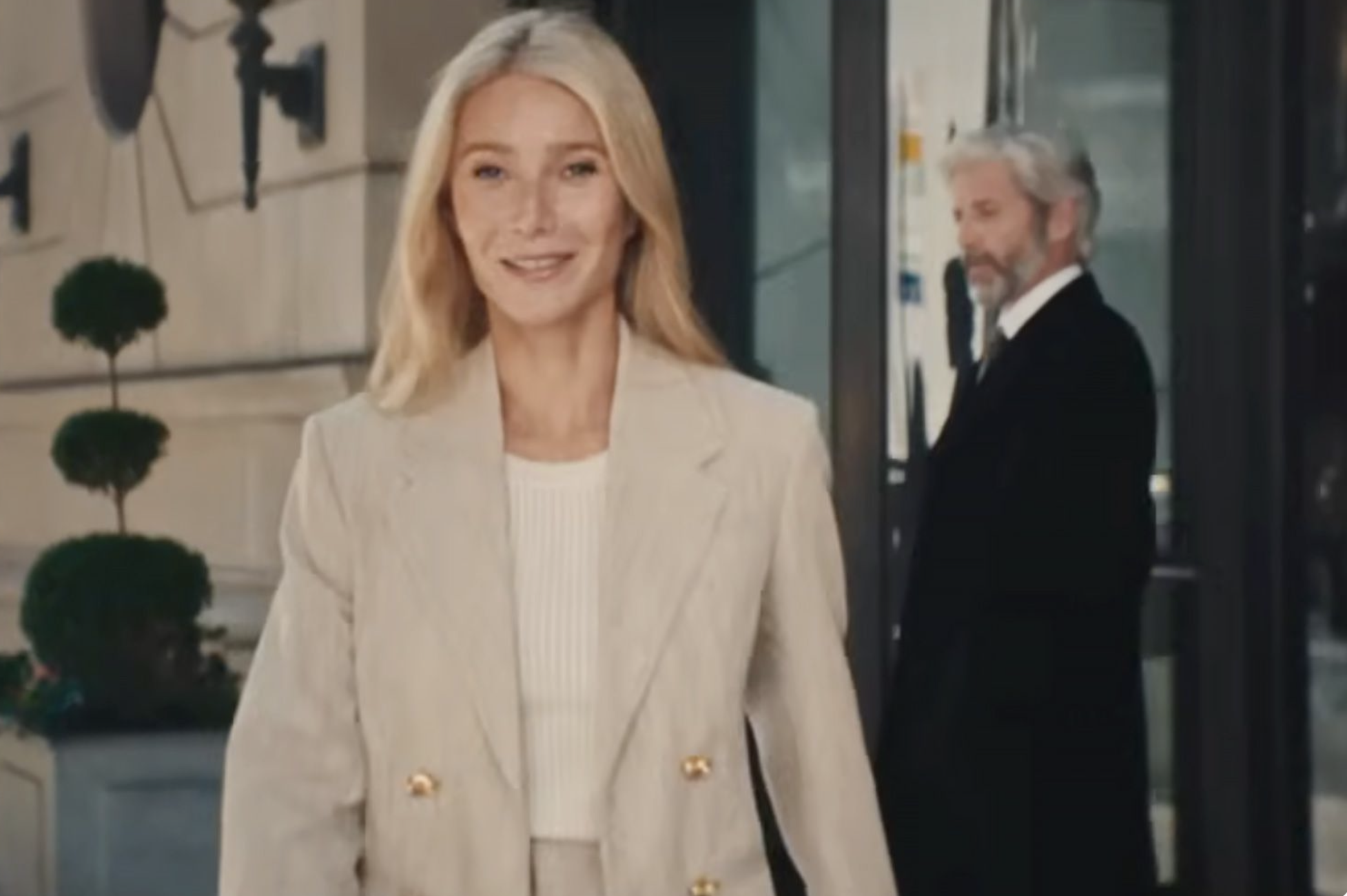
Gwyneth Paltrow’s Israeli Real Estate Ad Triggers Instant Backlash, Exposing the Limits of Celebrity-as-Brand 🏙️
📌 A glossy commercial starring Gwyneth Paltrow for 51 Park, a $10m-per-unit luxury development in Herzliya, Israel, has generated immediate and widespread condemnation, with figures including Alana Hadid, Huda Kattan and journalist Carole Cadwalladr publicly criticising both the ad and Paltrow’s judgment in fronting it. The backlash arrives against the backdrop of the ongoing humanitarian crisis in Gaza and the West Bank, and critics have drawn direct comparisons to Holocaust-era complicity narratives. What makes this notable beyond the immediate furore is what it reveals about the risk profile of celebrities who have built personal brands as founder-operators rather than simple endorsers, the backlash attaches not just to Paltrow’s image but to Goop itself.
- 51 Park units reportedly carry a $10 million price tag, developed by Aviv Melisron in Herzliya
- Backlash spread across X, Instagram and Reddit within days, with high-profile figures including Hadid sisters’ circle and Huda Kattan publicly condemning the campaign
- The campaign’s creative agency founder defended the casting publicly on LinkedIn
💡 The structural lesson here isn’t really about Paltrow’s politics, it’s about what happens when the celebrity-as-brand model collides with a live geopolitical fault line. When a star is simply a paid face, backlash is containable, the brand drops them and moves on. But when the star is a brand with its own commercial ecosystem, as Paltrow is with Goop, reputational damage doesn’t stay contained to one campaign, it bleeds into everything else carrying her name. For brands and talent agencies, the longer trajectory is that geopolitical due diligence can no longer be treated as a one-off creative-brief checkbox; it has to be assessed against the entire portfolio a celebrity now represents, because in 2026 there’s increasingly no daylight between the ambassador and the ecosystem 🏙️

Elon Musk’s Trillion-Dollar Gamble and the Extended Reality (XR) of It All 🎧
Crashed, Alex Hudson & Chris Stokel-Walker
Why It Matters: As SXSW London becomes a fixture on the UK cultural-tech calendar, this episode pulls apart the gap between the festival’s ambitions and the lived reality on the ground, while setting that against a tech sector preparing to take its biggest valuations yet to public markets.
Worth Your Time Because: Hudson and Stokel-Walker bring a refreshingly sceptical lens to SXSW London, the kind of on-the-ground critique that’s largely absent from the breathless coverage elsewhere, and use it to ask harder questions about whether XR has actually found its audience or is still being propped up by industry conviction alone. That scepticism extends into the back half, where the prospect of SpaceX, OpenAI and Anthropic IPOs at near-trillion-dollar valuations gets treated not as inevitability but as a gamble with real concentration risk attached. For anyone weighing up whether London’s tech-culture events are delivering proportionate value, or trying to read the signals behind the AI sector’s next big capital moves, this is a useful corrective.

👀 Things to Be Aware Of This Week
(Monday 15 June – Sunday 21 June 2026)
⚽ England v Croatia and Scotland v Morocco - England open their World Cup campaign against Croatia (Wednesday 17 June, 9pm BST, ITV1, Arlington), while Scotland face Morocco the same week (Friday 19 June, 11pm BST, Foxborough), giving UK broadcasters back-to-back home nation moments despite the late Scotland kick-off.