Welcome to the next edition of On The Record, thoughtful analysis on culture, entertainment, tech, fashion, music, sport, and brands. Here’s a round-up of key conversations and campaigns that caught my attention this week.

This week is about how visibility is being priced, protected and redistributed. From newsrooms losing confidence in scale-led models, to platforms formalising discovery as paid inventory, access is no longer neutral. Brands are absorbing new forms of risk, from data exposure to cultural gatekeeping, while sport and music reveal where redistribution, safeguards and long-term system design are starting to replace growth-at-all-costs thinking. Across media, platforms and culture, the signal is clear: power is concentrating upstream, and the costs are becoming harder to ignore.

📰 Journalism’s Confidence Hits a Record Low
📌 Confidence in the future of journalism has fallen to its lowest point on record, with just 38 percent of news leaders optimistic about the year ahead, according to a Reuters Institute study of 280 executives across 51 countries. AI disruption, political pressure, and intensifying competition from creators are seen as the biggest threats, even as many leaders feel more confident about their own organisations than the industry overall. The data points to a sector that sees survival as possible, but only through deep structural reinvention driven by technology, platforms, and changing audience behaviour.
Only 38 percent of news executives feel optimistic about the year ahead
280 news leaders surveyed across 51 countries
Search traffic from Google is reported to be falling sharply
💡 Journalism is shifting from scale-led distribution to value-led differentiation, with human judgement becoming its strongest moat 🧠
Source: Reuters Institute Digital News Report 2026
🎮 Roblox Sells the Front Page
📌 Roblox has unveiled a new paid ad format called the Homepage Feature, offering brands and top creators premium placement on the platform’s central landing page to drive discovery in an increasingly crowded ecosystem. The move formalises visibility as a paid advantage at a time when competition among creators is intensifying and brand partnerships are becoming more commercially significant. While questions remain around measurement and transparency, the format signals Roblox’s intent to monetise attention more directly as creator and brand demand continues to grow.
Creator payouts on Roblox surpassed $1 billion in 2025
More than 200 brands launched sponsored Roblox experiences last year
Over 40 million experiences now compete for attention on the platform
💡 Platform homepages are becoming media inventory, not community space, turning discovery into a transaction 💰
Source: Tubefilter
👀 adidas brings football culture to Paris Fashion Week
📌 adidas used Paris Fashion Week as a cultural platform, unveiling a World Cup aligned collection with Willy Chavarria that merged football heritage, Mexican identity, and luxury fashion codes. The range spanned jerseys, knitwear, shirts, shorts, and reworked silhouettes, including a statement reinterpretation of the Copa Mundial. With Marcelo appearing as part of the moment, the collection positioned football not as inspiration, but as cultural authority.
By the numbers (context):
Paris Fashion Week generates over 1 billion social impressions per season, making it one of fashion’s most influential global stages (Launchmetrics)
Football remains the world’s biggest sport, with an estimated 5 billion global fans (FIFA)
adidas is one of FIFA’s longest-standing partners, with football consistently ranking as one of its most commercially and culturally significant categories
💡 This wasn’t about selling shirts. It was about relocating football’s cultural capital into fashion’s most powerful room, and letting identity, not hype, do the work ⚽️
🛡️ Nike Investigates Major Cybersecurity Incident After 1.4TB Data Leak Claim
📌 Nike is investigating a potential cybersecurity breach after a hacking group known as WorldLeaks claimed it stole and published about 1.4 terabytes of internal data from the company’s systems. The leaked dataset reportedly includes approximately 188,347 files, with early analysis suggesting the content relates to corporate design, manufacturing, supply chain and product planning information rather than customer personal data. Nike has confirmed the situation is under active review and says it takes data privacy and security “very seriously” while assessing the scope and impact.
By the numbers:
1.4TB of data allegedly exfiltrated and published by WorldLeaks - roughly equivalent to 1,400 gigabytes of files.
~188,347 files claimed to be part of the leak, including design schematics, materials, audits and product timelines.
Zero evidence so far of exposed customer or employee personally identifiable information (PII) based on samples reviewed by cybersecurity analysts.
Nike’s response so far has been cautious, acknowledging the claim and investigating internally while emphasising its commitment to consumer privacy and data security. The company has not confirmed how the alleged breach occurred, whether a ransom demand was made, or if third-party systems may have been involved.
💡 This case reflects a broader trend in cybercrime where threat actors increasingly prioritise data theft and public exposure over encryption-based extortion, raising risks not just to privacy but to intellectual property, supply chain security and competitive advantage for global brands.
👀 England introduces academy contracts in women’s football
📌 A significant structural change is coming to the women’s game in England. From the 2026–27 season, clubs in the Women’s Super League and WSL2 will be able to offer academy contracts to young players, marking a shift toward a more formalised, protected development pathway. The move is designed to bring greater consistency, fairness and safeguarding at youth level, while keeping education central to player development.
Key details:
Contracts can be offered to players aged 15 or 16
Contracts only commence once a player turns 16
Standardised pay by age group across WSL and WSL2
Education safeguarded alongside football commitments
Contracts are optional, with scholarships still available
💡 This signals women’s football moving from rapid growth to long-term system building, prioritising player welfare and sustainable talent development over short-term competitiveness ⚽️
👀 Women’s Football, Equality Starts Young
📌 Women’s football progress is often measured in broadcast deals and attendances, but this moment shows how early signals matter just as much. A girls team from South Morningside Primary School in Scotland won a major schools tournament, only to be handed a small plastic trophy while the boys received a large silver cup. The message was immediate and unintentional, but clear.
Instead of accepting it, the players aged 10 to 12 wrote to the organisers explaining how the disparity made them feel undervalued. The Edinburgh Primary Schools Sports Association acknowledged the inequality and replaced the trophy with one matching the boys’, publicly recognising the mistake.
Why it matters:
Girls aged 10–12 challenged unequal treatment at grassroots level
Organisers admitted the difference was unfair and acted quickly
The team received a new, equal-sized trophy in January 2026
💡 Women’s football doesn’t just grow through elite investment. It grows when young players are shown, early on, that their success carries the same weight, status and respect. Equality isn’t abstract, it’s learned through moments like this ⚽️🏆
👀 Music unites again as War Child announces HELP(2)
📌 War Child UK has announced HELP(2), a new all-star benefit compilation inspired by the charity’s landmark 1995 HELP album, which helped define music-led humanitarian fundraising. The new record brings together original tracks and covers from a cross-generational line-up including Arctic Monkeys, Olivia Rodrigo, Depeche Mode, Fontaines D.C., and dozens more, with proceeds supporting children affected by conflict.
True to the spirit of the original album, which was recorded in just 24 hours, HELP(2) was created over only a few days at Abbey Road Studios, produced by James Ford. The first single, Opening Night, marks Arctic Monkeys’ first new music in four years, signalling the scale of commitment behind the project. The album is released on 6 March 2026, with all profits funding War Child’s work in countries including Sudan, Gaza, Ukraine, and Syria.
Key facts:
The original HELP album (1995) featured artists including Radiohead, Oasis, Blur, and Pulp
HELP(2) was recorded across a single week in November 2025
Features contributions from 40+ artists spanning multiple generations and genres
Proceeds support children impacted by war across multiple conflict zones
💡 At a time when attention is fragmented, HELP(2) shows the enduring power of collective cultural action. When artists move quickly and donate relevance, not just royalties, music becomes infrastructure for compassion, not just commentary 🎶🌍
👀 HOKA lights up women’s running culture after dark
📌 HOKA has unveiled a glow-in-the-dark running mural in Shoreditch, using public art to reframe night running as a collective, supported experience rather than a solitary one. Part of the brand’s ongoing TOGETHER WE FLY HIGHER campaign, the installation centres visibility, safety and shared momentum during the darker winter months.
Created in collaboration with Global Street Art, the large-scale mural translates HOKA’s Night Run visual language into the city through UV paint, reflective detailing and illuminated elements designed to activate after dark. Led by street artist Nelly, the piece was produced over five days in winter conditions, using more than 60 spray paint colours and around 36 hours of labour to heighten contrast, movement and nighttime presence.
Key facts:
Installed in Shoreditch, one of London’s most visible street-art districts
Created over 5 days in winter conditions
Used 60+ spray paint colours and 36 hours of active production
Designed to visually activate after dark using UV and reflective materials
💡 This is performance marketing without performance pressure. By embedding itself into the lived realities of night running, HOKA shifts from product visibility to community reassurance, using public space to signal care, not just brand presence 🏃♀️🌙
👀 Naomi Osaka pushes back on ‘tradition’ policing in tennis
📌 Naomi Osaka addressed criticism around her custom Robert Wun x Nike look worn for her opening match at the Australian Open, where she secured a win against Antonia Ruzic. Taking to Threads, Osaka directly called out commentary framing her outfit as “classless” and not aligned with so-called traditional tennis attire, positioning the backlash as cultural rather than sporting.
In her post, Osaka made clear the look wasn’t designed to appease traditionalists, but to reflect identity, self-expression and representation. The moment reinforced her long-standing stance on using fashion as a form of agency within a sport that has historically enforced narrow norms around appearance, behaviour and belonging.
Why it matters:
Osaka continues to challenge legacy expectations in elite tennis
Fashion is used deliberately as cultural expression, not provocation
Athlete self-definition is prioritised over institutional approval
💡 This isn’t about outfits. It’s about who gets to define legitimacy in sport. As athletes assert cultural identity on the biggest stages, tradition is increasingly exposed as a gatekeeping tool, not a neutral standard 🎾👗
👀 Trinity Rodman resets the ceiling for women’s football pay
📌 Trinity Rodman has become the highest-paid women’s footballer in history after signing a landmark contract renewal with Washington Spirit, keeping her in the U.S. until 2028. The deal follows months of negotiation and coincides with a pivotal shift in how the NWSL approaches wages and talent retention.
Rodman’s agreement comes amid growing pressure on the league’s salary structures. Until now, teams operated under a salary cap of roughly $3.5m, limiting their ability to compete with European offers and contributing to high-profile moves abroad by U.S. talent. In response, the league proposed a new ‘High Impact Player’ mechanism, allowing clubs to exceed the cap by up to $1m for star players, a move that sparked debate with the players’ union, who instead pushed for broader cap increases and long-term revenue sharing.
By the numbers:
Rodman’s deal is worth up to $2m per year, including bonuses
Previous NWSL team salary cap sat at around $3.5m
New ‘High Impact Player’ rule allows an additional $1m spend on elite talent
Rodman overtakes Aitana Bonmatí, previously the world’s highest-paid women’s footballer
💡 This isn’t just a record-breaking contract, it’s a signal of intent. As women’s football globalises, leagues that want to lead will need to match ambition with structural reform. Rodman’s deal shows the NWSL choosing investment over export, and setting a new benchmark for what elite talent is worth ⚽️💰
👀 Harry Styles turns global touring into local impact
📌 Harry Styles has announced his return to the stage with a residency-led world tour spanning seven cities from May to December 2026, alongside a commitment to donate £1 from every ticket sold at his UK stadium shows to support grassroots music venues. The tour, titled Together, Together, supports his forthcoming album Kiss All The Time. Disco, Occasionally and signals a model where scale, economics and responsibility are deliberately intertwined.
The tour follows the extraordinary success of Love On Tour (2021–2023), which grossed over $617m globally, making it one of the highest-grossing tours of all time. In London alone, Styles’ previous Wembley Stadium residency attracted around 320,000 fans, contributing to increased hotel occupancy, hospitality spend and transport use across the city, a pattern consistently seen with multi-night stadium runs.
That impact sits within a broader live music context:
£6.68bn in live music–driven consumer spending in the UK in 2024, up 9.5% year on year
The wider UK music industry contributed a record £8bn to the economy in 2024
Multi-night residencies keep fans in-market longer, spreading spend across accommodation, food, nightlife and local retail
Alongside this economic uplift, Styles’ UK dates will include a £1 per ticket levy directed to the LIVE Trust, which supports small and mid-sized venues across the country. The levy is expected to raise around £780,000, at a time when the grassroots sector is under severe strain.
Why the levy matters:
Since 2023, 150+ UK grassroots venues have closed, around 16% of the sector
More than half of remaining venues are operating at a loss
In 2025, only 8.8% of arena and stadium tickets included a grassroots levy
The initiative has been welcomed by the Music Venue Trust, and aligns with growing government support for the model, with calls for 50% of arena and stadium tickets in 2026 to adopt the levy.
The 2026 tour includes extended residencies in London, New York, Amsterdam, Mexico City, São Paulo, Melbourne and Sydney, with support from Robyn, Shania Twain, Jamie xx, Fousheé and Skye Newman.
💡 Insight: Residency tours are becoming cultural infrastructure. When artists concentrate demand over weeks, not hours, they generate sustained economic uplift for cities. When they attach redistribution to that scale, they help stabilise the ecosystem beneath them. This is touring not just as spectacle, but as system 🎤🏟️
👀 The UK music industry is shrinking where it matters most
📌 Everyone’s watching ticket prices, sell-outs and stadium numbers. What’s happening underneath is quieter, and far more dangerous. The UK music industry is expanding at the top while contracting at the base. New 2025 data from the Music Venue Trust shows that grassroots venues remain culturally active and heavily used, but are now structurally loss-making. Despite hosting millions of fans and shows each year, venues are absorbing losses, cutting jobs and falling out of touring routes. The result is an industry sustaining headline growth by quietly borrowing against its own foundations.
The numbers:
6,123 jobs lost in one year, almost 20% of the grassroots workforce
21.6m audience visits and 174,000+ shows hosted
£76.6m lost at venue level, venues are effectively subsidising live music
59% of grassroots venues now skipped by major tours
35 million people live outside a reliable touring circuit
More than half of UK grassroots music venues failed to make a profit in 2025
💡This isn’t a venue crisis, it’s an infrastructure failure. When the system extracts value faster than it reinvests it, risk doesn’t vanish, it accumulates. Touring narrows, artist development slows, regional culture thins out. If the base keeps shrinking, the top doesn’t stay big forever.
👀 Class bias is driving working-class talent out of the creative industries
📌 New research published today by Class Ceiling shows that working-class creatives are being pushed out of the UK cultural sector at scale, not because of talent gaps, but because of structural bias. Based on a survey of 300 creatives, the review argues class inequality should be treated as an employment issue, not an access problem. The data points to an industry that continues to reward networks, unpaid labour and financial resilience, steadily narrowing who gets to stay.
Key facts:
51% experienced bullying, harassment or bias because of class
Only 44% earn enough to make a living from creative work
Just 18% see their working-class experiences reflected in their output
Only 22% knew someone in the arts growing up
Fewer than 1% of creative apprenticeship starts currently exist
💡 This isn’t a pipeline issue, it’s a retention crisis. When early careers depend on unpaid work, cultural signalling and risk tolerance, talent drains long before senior levels. Industries that lose working-class voices don’t just become unfair, they become narrower, safer and less representative of the audiences they claim to serve.
👀 SZA and Vans bring artist-led energy to Paris Fashion Week
📌 During Paris Fashion Week, Grammy-winning artist SZA took over the streets of Le Marais to unveil the first look at her debut collaboration with Vans. The ‘VanSZA’ preview blended Vans’ classic silhouettes with playful, diaristic design cues, including fish-tank inspired prints and handcrafted embellishments, positioning self-expression over hype. Thirty pairs were gifted to early arrivals, with the wider collection set to release later this year.
Key facts:
SZA is acting as artistic director on the collaboration
30 pairs were distributed during the Paris Fashion Week preview
Custom designs appeared across Authentic and Old Skool silhouettes
Luxury detailing included handmade enamel lace locks set with semi-precious stones
The full ‘VanSZA’ collection is expected to drop later in 2026
💡 This isn’t a celebrity sneaker plug, it’s a shift in authorship. By giving SZA creative control rather than a logo swap, Vans is leaning into artist-as-designer credibility, using Paris Fashion Week as a cultural amplifier rather than a retail launchpad 👟✨
👀 Kendrick Lamar becomes the subject of a Paris Fashion Week exhibition
📌 During Paris Fashion Week, Kendrick Lamar is the focus of a new exhibition at the Centre Pompidou titled On Violence in America. The exhibition examines violence in the United States through music and film, using Lamar’s body of work as a central cultural lens rather than a biographical subject. Positioned within an academic and artistic context, the show invites scholars, critics and artists to interrogate how popular music documents, critiques and reframes American power, trauma and identity.
Key facts:
Staged during Paris Fashion Week, linking music, art and cultural discourse
Hosted at the Centre Pompidou, one of Europe’s leading contemporary art institutions
Explores US violence through music and film, not fashion spectacle
Uses Lamar’s work as a framework for analysis, not a brand collaboration
💡 This marks a shift in how hip-hop is institutionalised. Kendrick Lamar isn’t being styled or sponsored, he’s being studied. When rap moves from runway soundtracks to museum discourse, it signals its role as cultural record, not just cultural influence 🎧🏛️
👀 Warner’s cutbacks reveal a deeper shift in the music industry
📌 Analysis from Music Business Worldwide highlights how Warner Music Group has been quietly reshaping its business through a multi-year restructuring programme that is now visibly altering its global footprint. Since Robert Kyncl became CEO in 2023, Warner has cut deeply into headcount, particularly within Recorded Music, while redirecting savings into margins and A&R investment. The result is a leaner organisation, but one whose scale, influence and competitive position are increasingly under scrutiny.
Key facts:
Around 2,000 roles cut across three restructuring phases between 2023 and 2025
Estimated 25% reduction in total workforce, from ~6,200 employees to ~4,700
91% of redundancy costs landed in Recorded Music
Annual cost savings exceed $600m, with $170m tied directly to layoffs in 2025
Warner now has no in-country recorded music head in the UK, Germany or Canada
A&R spend reached $2.34bn in FY2025, up $382m vs FY2022
Adjusted OIBDA margin rose from 19% (FY2022) to 22% (FY2025)
Why it matters:
Warner is prioritising efficiency, margin and reinvestment over territorial depth
Senior leadership and decision-making are becoming more centralised
Asset sales and operational consolidation are reshaping how majors function on the ground
💡 This isn’t just cost-cutting, it’s a redefinition of what a major label looks like. Warner is betting that fewer people, higher margins and heavier A&R spend will outperform scale-heavy legacy structures. The risk is visibility, local expertise and long-term industry capacity. The question now isn’t whether this strategy improves profitability, but whether it reshapes the definition of power in the global music business.
Source: MBW – Tim Ingham, “On… Warner’s cutbacks, and the bigger story” (January 2026)
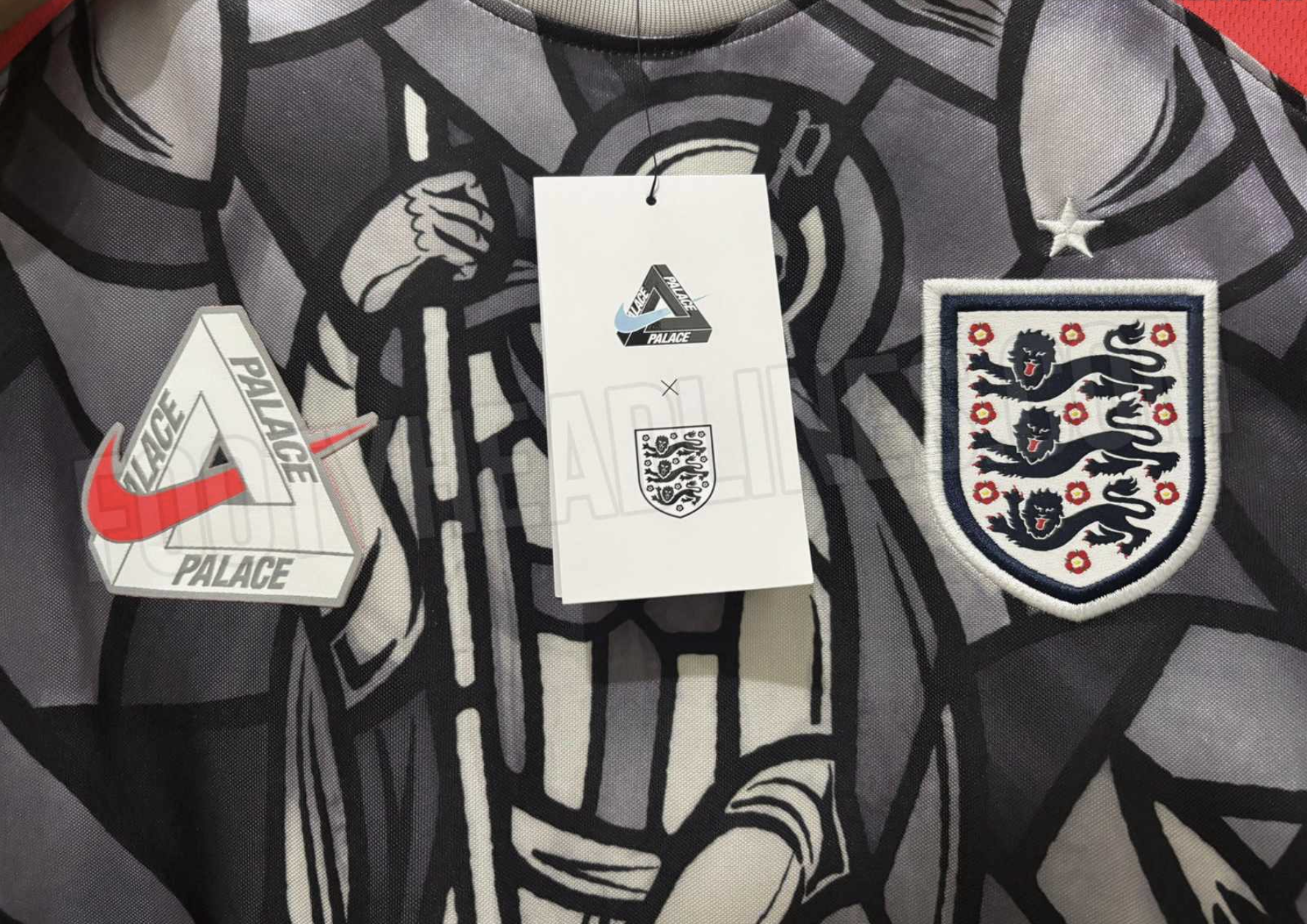
👀 Nike x Palace x England World Cup collab leaks ahead of 2026
📌 A leaked design suggests Nike has teamed up with Palace and the England national football team on a pre-match shirt for the 2026 FIFA World Cup.*
The shirt departs sharply from traditional England aesthetics, featuring an all-over, stained-glass-inspired graphic in monochrome tones on a dark grey to black base.
While not yet officially confirmed, the design is expected to be used as a pre-match shirt rather than a match kit, aligning with Nike’s recent approach to expressive warm-up and culture-led drops.
Key details:
All-over stained-glass-inspired graphic, a visual language closely associated with Palace
Dark grey to black base with lighter monochrome illustrations
Full-colour England crest with a single star on the chest
Nike x Palace co-branded logo opposite the crest
Subtle Palace label near the hem
Likely positioned as a pre-match or training shirt, not an on-pitch kit
💡 This is England kits entering streetwear logic. By keeping experimentation to pre-match apparel, Nike protects tradition on the pitch while letting cultural capital do the work off it. Palace’s involvement signals how football federations are increasingly borrowing credibility from subculture, not just performancewear, ahead of global tournaments ⚽️👕
👀 Luxury fashion is becoming an entertainment producer, not just a sponsor
📌 Luxury fashion brands are increasingly launching in-house entertainment studios and stepping into film and television production, shifting from product placement and brand partnerships to full creative ownership. Rather than renting attention through advertising, brands are producing original narratives, documentaries and scripted content that position them as cultural authors, not just commercial backers. The move reflects a wider recalibration as fashion seeks longer-lasting cultural relevance in an era of fragmented attention and declining impact from traditional campaigns.
What’s driving the shift:
Brands want owned IP, not borrowed relevance
Streaming and global platforms have made film and TV cultural infrastructure, not niche channels
Fashion’s audiences increasingly engage through story, character and world-building, not seasonal drops
Who’s leading the move:
Gucci has backed feature films and documentaries, positioning cinema as a long-term brand language
Saint Laurent launched Saint Laurent Productions, premiering films at Cannes and Venice
Prada has invested in cinema-backed cultural projects and long-form storytelling
Louis Vuitton continues to blend fashion, film and celebrity-driven narrative worlds
Why it matters:
Entertainment offers longevity, outliving campaigns and collections
Film and TV allow brands to engage emotionally, not transactionally
Creative control reduces reliance on platforms and algorithms
💡 This is fashion hedging against volatility. As attention fragments and retail cycles compress, luxury is moving upstream into storytelling infrastructure. Brands aren’t just dressing culture anymore, they’re producing it. The ones that succeed won’t feel like advertisers, they’ll feel like studios 🎬👗
👀 American fashion houses are moving deeper into international football
📌 As the World Cup approaches this summer, American fashion brands are increasingly aligning themselves with elite international football clubs, signalling a strategic push beyond domestic sport and into global football culture. Recent partnerships suggest a mix of audience priming, international expansion and category diversification, with fashion houses using football’s global reach as a cultural bridge. The pattern points to football becoming a key platform for US brands looking to scale relevance, not just visibility.
Recent moves to watch:
Amiri partnering with FC Barcelona, blending luxury fashion with one of football’s most global brands
424 collaborating with Arsenal as early as 2021, an early signal of US streetwear entering elite European football
Liverpool FC unveiling a new partnership with Tommy Hilfiger, complete with what the brand described as its largest flag ever produced, leaning heavily into Americana symbolism
Why it matters:
The World Cup offers a rare moment of global, non-league attention, ideal for brands with US roots and international ambitions
Fashion houses are increasingly using football to reposition themselves culturally, not just commercially
These partnerships suggest a shift away from single-sport focus, with football acting as a new gateway into lifestyle, identity and heritage storytelling
💡 This feels less like sponsorship and more like strategic alignment. American fashion brands are using international football to globalise their identity ahead of a World Cup hosted on home soil. The subtext is clear: football is no longer a European cultural export, it’s a shared global language.
👀 Jeff Bezos says the future of gaming won’t need gaming PCs
📌 Jeff Bezos has outlined a long-term vision for gaming where players stop buying high-end PCs altogether and instead rent computing power on demand via the cloud. In this model, performance is streamed rather than owned, with games running on remote servers and delivered instantly to phones, TVs, tablets or low-end laptops. Bezos argues advances in cloud infrastructure, AI optimisation and global internet speeds will make local hardware upgrades increasingly irrelevant.
What’s being proposed:
No more $2,000–$4,000 gaming rigs or GPU upgrade cycles
Games streamed at maximum settings from remote servers
Instant access with no downloads, patches or hardware compatibility issues
Gaming becomes subscription-based infrastructure, similar to film or music streaming
Why it’s contentious:
Critics cite latency and input lag, especially for competitive play
Concerns around ownership, permanence and reliance on subscriptions
Dependence on always-on internet access and platform stability
Local hardware still offers control, reliability and modding freedom
💡 This isn’t just a gaming prediction, it’s a platform power shift. If performance moves fully to the cloud, hardware companies lose leverage and infrastructure providers gain it. The real question isn’t whether cloud gaming can work, but whether players are willing to trade ownership and control for convenience and scale. Gaming PCs may not disappear overnight, but the centre of gravity is clearly moving ☁️🎮
👀 The Melania documentary is struggling on both sides of the Atlantic
📌 The authorised documentary centred on Melania Trump is facing weak cinema demand in both the UK and the US, despite an estimated $75m (£60m+) combined spend on rights and global promotion. Advance ticket sales appear minimal across major territories, with empty screenings reported even in politically favourable and high-traffic markets. The rollout has prompted industry scrutiny around launch strategy, four-walling tactics and the limits of reputation-driven distribution.
What the data shows:
In the UK, just one ticket sold for the opening screening at Vue’s flagship London site
Entire days of screenings showing zero advance sales at multiple regional cinemas
Suspected four-walling strategy, where the distributor pays cinemas upfront to secure screens
In the US, screenings across New York, Los Angeles, Florida and Georgia reported single-digit or zero ticket sales ahead of opening
Social media users widely sharing screenshots of empty booking pages
Estimated $5m US opening weekend, far below historic documentary benchmarks
The commercial context:
Amazon MGM Studios reportedly paid $40m for the film’s rights
A further $35m has been allocated to global marketing
The film opens in 1,500–2,000 US theatres, an unusually large footprint for a documentary
UK rollout exceeds 100 cinemas, compared with 20–30 for most non-fiction releases
Why it matters:
Scale and spend have not translated into audience pull
Political visibility and elite access have failed to drive curiosity
Even sympathetic regions have shown limited engagement
💡 This is a case study in the limits of power-led culture. Distribution, budget and institutional backing can secure screens, but they can’t manufacture demand. When public trust and relevance are absent, audiences don’t protest, they disengage. In today’s attention economy, indifference is often the most decisive verdict.
👀 Why Minnesota’s CEOs finally broke their silence
📌 After weeks of public quiet, some of Minnesota’s most powerful companies have cautiously spoken out following mounting unrest linked to federal immigration operations in Minneapolis.
Executives from major firms had been lobbying privately, fearing political retaliation and customer backlash if they went public.
The killing of Alex Pretti, and growing national scrutiny of immigration enforcement, became the catalyst that shifted corporate silence into a limited collective statement.
What happened:
CEOs at companies including Target, UnitedHealth Group, Best Buy and Cargill coordinated a joint response
The statement, issued via the Minnesota Chamber of Commerce, called for “immediate de-escalation of tensions”
It stopped short of naming immigration enforcement, condemning federal agents, or referencing specific deaths
Business leaders had previously opted for behind-the-scenes pressure, citing fear of retaliation from the Trump administration and backlash from conservative customers
Why it took so long:
Companies judged that local anger had not yet spread nationally
Many firms remain wary after facing backlash for public stances on social issues in recent years
Internal calculations prioritised political risk management over moral clarity
Why it matters:
The Twin Cities host 17 Fortune 500 headquarters, making corporate silence itself economically and culturally significant
Immigration is a core workforce issue in a region long described as a “headquarters economy”
The response contrasts sharply with the rapid, vocal corporate reaction following the murder of George Floyd in 2020
💡This wasn’t a values-led intervention, it was a risk recalibration. Minnesota’s CEOs spoke only when silence became costlier than caution. The episode exposes how corporate “voice” now moves less on principle and more on threat thresholds, public sentiment curves and political exposure. When companies delay speaking until disruption turns tragic, it raises a harder question: who corporate responsibility is really designed to protect.
👀 Pharrell Williams turns a fashion show into a vision of future living
📌 At Paris Fashion Week, Pharrell Williams reframed the Louis Vuitton menswear runway as architecture, unveiling a full-scale prefabricated home as the centrepiece of the brand’s Autumn Winter 2026 show. Designed in collaboration with Japanese studio Not A Hotel, the structure positioned fashion, design and future living as part of the same cultural conversation. The move extends Williams’ creative remit beyond clothes, reinforcing Louis Vuitton’s ambition to operate as a lifestyle and cultural system, not just a luxury label.
Key details:
The house, named Drophaus, was fully prefabricated for the show
Installed inside a purpose-built venue at the Jardin d’Acclimatation, beside the Fondation Louis Vuitton
Defined by a pyramidal roof and curved glass wall, inspired by the form of a water droplet
Interior included a bedroom, living-dining space, bathroom and listening room with Louis Vuitton-branded vinyl
Furnished with bespoke pieces from Williams’ Homework furniture collection
Models moved through the house and surrounding lawn, integrating architecture directly into the runway
Why it matters:
Fashion shows are becoming spatial narratives, not just backdrops
Luxury brands are increasingly testing ideas of future living, not only future wardrobes
Pharrell’s role continues to blur the lines between designer, architect, curator and cultural director
💡 This wasn’t a set, it was a prototype. By placing a livable structure at the heart of the show, Louis Vuitton positions fashion as a lens on how people might live, move and consume in the near future. When luxury brands start building homes, they’re no longer just styling aspiration, they’re designing environments 🏠✨
👀 Oxfam warns billionaire power is accelerating democratic erosion
📌 A new report from Oxfam International argues that the world has crossed a dangerous threshold where extreme wealth concentration is no longer just an economic imbalance, but a direct driver of authoritarianism, repression and democratic decline. Released as global elites met in Davos, the report frames today’s inequality crisis as a binary political choice: democracy or oligarchy. Oxfam’s conclusion is stark: governments are increasingly choosing to protect wealth over people, with rapid consequences for rights, freedoms and social stability
Key facts from the report:
Global billionaire wealth hit a record $18.3 trillion in 2025
The number of billionaires surpassed 3,000 for the first time in history
Billionaire fortunes grew three times faster than the average rate of the previous five years
Highly unequal countries are up to seven times more likely to experience democratic erosion
Billionaires are 4,000 times more likely to hold political office than ordinary people
Over half of the world’s largest media companies and nearly all major social media platforms are billionaire-owned
What Oxfam says is happening:
Economic inequality is translating directly into political inequality
Governments are responding to public anger over affordability with repression rather than redistribution
Democratic norms are being weakened through attacks on courts, elections, civil liberties and media independence
Why it matters:
Nearly half the world’s population now lives in poverty or near-poverty while wealth concentrates at the top
Rising inequality creates fertile ground for authoritarian politics and scapegoating
Once democratic erosion begins, the report warns, it can accelerate “frighteningly fast”
💡 Oxfam’s warning reframes inequality as a structural threat to freedom itself. This is not about resentment toward wealth, but about what happens when money buys media, politics and impunity. When governments defend billionaires while everyday life becomes unaffordable, democracy doesn’t collapse loudly. It thins out, quietly, until power no longer answers to the public at all.
👀 Pro athletes are far more politically independent than the US public
📌 A new analysis from VoteHub found that professional athletes in the US are significantly more likely to register as political independents than as Democrats or Republicans. Across the five biggest leagues, independence outweighs party affiliation by a wide margin, challenging assumptions that athlete activism maps cleanly onto partisan politics. The findings suggest distance from party politics, not disengagement, may define how elite athletes relate to power and public life.
Key findings:
41% of athletes across the NFL, NBA, MLB, NHL and WNBA are registered independents
National average for independents sits at 27%
In the NFL, 44.3% of players are independents, compared with 34.3% Democrats and 20.2% Republicans
The NBA is nearly evenly split between Democrats and independents, despite high-profile social justice activism
The WNBA is the most liberal league by affiliation
MLB and NHL are the most conservative, with a combined total of just 40 registered Democrats across both leagues
Context to note:
Data drawn from 1,506 athletes across roughly two dozen states plus Washington, D.C.
Covers around 40% of eligible athletes, due to voter file access and registration gaps
Leagues with high proportions of foreign-born players, particularly the NHL, skew totals
VoteHub says the pattern is still “sufficiently strong” to hold directionally
💡Athletes are not apolitical, they’re non-aligned. Independence at this scale suggests caution, autonomy and reputational awareness in a hyper-polarised environment. Public advocacy may centre on issues rather than parties, reflecting how visibility, career risk and platform power reshape political identity at the elite level 🏈🏀📊
👀 2026 is shaping up to be the year branded entertainment goes mainstream
📌 Branded entertainment isn’t new. It dates back to the 1930s, when Procter & Gamble literally invented the soap opera.
What’s changed is the pressure on brands to earn attention rather than buy it. As traditional paid media becomes less effective, brands are increasingly investing in long-form content, original storytelling and entertainment-led experiences that audiences actively choose to watch. The result is brand content that looks less like advertising and more like film, TV and social-native entertainment.
What’s driving the shift:
Audiences are more ad-avoidant and platform algorithms reward watch time, not interruption
Streaming and social platforms have normalised brand-funded content
Hollywood faces rising production costs, making brand partnerships more attractive
Who’s doing it well:
WhatsApp partnering with Modern Arts on a Netflix documentary tied to the Mercedes F1 team
Dick’s Sporting Goods launching an in-house entertainment studio, winning Sports Emmys for We Could Be King and The Turnaround
AB InBev striking an unprecedented deal with Netflix, embedding beer brands across live sports and scripted content
On social, the format is shifting too:
Brands like UPS, Bud Light and Sephora are building audiences through Reels and Stories
Others are experimenting with micro-dramas, serialised, vertical, soap-style storytelling built for mobile-first viewing
Brand content is getting longer, more ambitious and more episodic, aligning with TV consumption habits
💡 This isn’t brands pretending to be entertainers. It’s brands becoming financiers, studios and distributors in their own right. As attention fragments and trust in advertising declines, the brands that win won’t interrupt culture, they’ll fund it. In 2026, branded entertainment won’t be a tactic. It’ll be infrastructure.
👀 The Night Time Economy is already a major economic system
📌 The inaugural Night Time Economy Report (NTER) from Night Time Foundation quantifies the scale of nightlife as an economic engine and argues it is being structurally undervalued by cities and investors. Launched at the World Economic Forum in Davos, the report brings together international data, case studies and investor perspectives to reposition the night-time economy as long-term urban infrastructure.
Key stats from the report:
In large global cities, the night-time economy typically supports 5–10% of total employment, spanning hospitality, culture, transport, logistics and services
Night-time sectors disproportionately employ young people, migrants and creatives, making them critical entry points into urban labour markets
Cities with dedicated night-time governance show higher venue survival rates and stronger coordination across safety, transport and licensing
Cultural venues generate significant secondary economic spillover, driving demand for hotels, late-night transport, food delivery and retail
Despite this footprint, nightlife remains under-capitalised, with investment focused on extractive real estate rather than culture-bearing operators
What the data exposes:
Nightlife is producing value without corresponding policy protection or capital access
Fragmented regulation across licensing, policing and transport continues to suppress growth
Lack of standardised, longitudinal data keeps the sector invisible to institutional investors
💡 The NTER doesn’t argue that nightlife could matter. It shows that it already does, economically, socially and spatially. The risk isn’t over-investment, it’s neglect. Cities that fail to treat the night-time economy as infrastructure will keep losing jobs, culture and value after dark, while those that invest deliberately will unlock a quieter but durable growth engine 🌙🏙️
📌 👀 The music industry’s 2026 fault lines are already visible
From AI-generated artists and platform overload to shifting touring economics and tightening control over rights, the music business is entering a defining year. Streaming supply is exploding faster than demand, AI is forcing new questions around authorship and compensation, and the gap between superstar scale and the long tail is widening.
This isn’t just about technology - it’s about power, provenance, and who gets paid in an increasingly automated ecosystem.
Key signals:
• Millions of new tracks flooding platforms daily
• AI artists, AI detection, and tiered royalties moving from theory to policy
• Labels adopting AI operationally while questioning its creative impact
• Stadium touring consolidating at the top as regional strategies grow below
• Ticketing, pricing, and platform accountability becoming legislative issues
📊 Breakdown and research via @shesaid.so, drawing on reporting from MIDiA Research, Billboard, and Forbes.
Follow @shesaid.so for ongoing music industry analysis and 2026 trend tracking.
👀 Threads has quietly passed X on daily users — and that changes the playbook
📌 After years of skepticism, Meta’s “Twitter alternative” has crossed a real threshold. Threads now sees more daily mobile users than X (141.5M vs. 125M). Not a spike. Not a moment. Sustained daily behavior.
For brands, this matters less as a headline and more as a signal.
Threads has been treated as a sandbox - somewhere to test tone, post lightly, or mirror Instagram captions without consequence. But platforms with DAU at this scale aren’t experimental. They’re infrastructure.
What’s emerging isn’t “Twitter 2.0” - it’s a reset to what early Twitter actually rewarded:
• voice over visuals
• point of view over polish
• cultural fluency over campaigns
• consistency over virality
Crucially, Threads isn’t built on outrage mechanics in the same way X has become. That opens space for brands to speak with culture again, not shout into it or dodge it.
The opportunity isn’t just presence - it’s bringing back strategy. The kind brands once applied to Twitter when it was a core communications channel, not a risk surface.
Threads isn’t a side platform anymore.
It’s where text, tone, and timing are becoming competitive advantages again.
And the brands that remember how to do that will move first.
👀 UK women athletes are starting to follow the US shift from earners to owners
📌 As women’s sport continues its rapid commercial growth, a growing gap is emerging between value creation and wealth capture. For the third consecutive year, no female athlete appears in the world’s 100 highest-paid athletes list, despite rising broadcast deals, sponsorship and investment across women’s sport. In the US, athletes have responded by moving into ownership and equity. The UK is now beginning to follow that path.
The gap by the numbers:
The women’s sports market grew from $1.88bn in 2024 to a projected $2.35bn in 2025
The threshold for the top 100 highest-paid athletes rose to $53.6m in 2025
Coco Gauff, the world’s highest-earning female athlete, made $34.4m, nearly $20m short of the cut
What the US model shows:
Serena Williams built a venture portfolio spanning 80+ companies
Naomi Osaka raised institutional capital through her media company Hana Kuma
Allyson Felix founded Saysh, a venture-backed women-first footwear brand
Athlete-led ownership is extending into leagues, with player equity baked into new structures
The UK shift now underway:
Millie Bright has taken equity in sustainable boot brand Sokito
Lucy Bronze holds an ownership stake in Soccer Supplement
Jessica Ennis-Hill co-founded Jennis, a venture-backed women’s health platform
Why it matters:
Women athletes have historically been paid to perform and endorse, not to own
Ownership is where long-term security and generational wealth are built
Women’s sport is still forming its governance and ownership structures, creating a rare opportunity to shape them early
💡 This isn’t about matching salaries overnight. It’s about changing where value accumulates. As women’s sport grows, the athletes who secure equity, governance roles and ownership stakes now will define who benefits from that growth later. The US has shown the model. The UK is now deciding whether to follow it deliberately, or retrofit inclusion after the upside has already consolidated.
👀 Gavin Newsom accuses TikTok of suppressing Trump-critical content
📌 California governor Gavin Newsom has accused TikTok of suppressing content critical of Donald Trump, triggering a formal review of the platform’s content moderation practices by California authorities. The move comes just days after TikTok finalised a major ownership restructuring to avoid a US ban, heightening scrutiny over political influence, trust and platform governance. TikTok denies intentional suppression, attributing the issue to a systems failure caused by a data centre outage.
What’s happening:
Newsom has called on the California Department of Justice to assess whether TikTok’s actions violate state law
His office claims it has confirmed instances of suppressed Trump-critical content following TikTok’s US ownership deal
TikTok says the issues stem from a power outage and cascading systems failure, not political interference
Users and academics reported videos on immigration enforcement and government power being placed “under review” or failing to upload
Why timing matters:
TikTok’s parent ByteDance recently completed a deal creating a majority US-owned joint venture to sidestep a national ban
The new entity is backed by Oracle, Silver Lake, and MGX
The deal was praised by Trump, who has credited TikTok with helping him win the 2024 election
Trump has 16m+ followers on the platform
Why it matters:
Trust in platform neutrality is already fragile amid ownership changes
Allegations of political content suppression raise questions about platform power, transparency and accountability
Even technical failures now carry political consequences in highly polarised environments
💡 This isn’t just a moderation dispute, it’s a legitimacy test. As platforms restructure to survive regulatory pressure, every glitch risks being read as governance. In today’s climate, the line between technical failure and political interference is thin, and public trust is thinner. For platforms, transparency is no longer a comms issue. It’s existential.
👀 Pinterest’s CEO says the “Napster phase” of AI needs to end
📌 In a new commentary, Bill Ready, CEO of Pinterest, argues that AI is at a crossroads. While AI is already delivering real-world benefits, Ready warns that its current extractive approach to content mirrors the early days of music piracy. To unlock AI’s long-term value, he says the industry must move toward fair compensation, open-source innovation, and stronger regulation.
Key arguments:
AI should promote wellbeing, not outrage-driven engagement
Innovation shouldn’t be limited to expensive proprietary models
Creators must be paid when their work trains AI systems
Regulation should be seen as an incentive for better products, not a brake on progress
On open source:
Pinterest achieved near-proprietary AI performance at 90% lower cost using open-source models
Open-source AI could enable the next generation of startups, just as open software once did
Over-reliance on proprietary models risks concentrating value and stalling innovation
On creators and ownership:
Ready compares today’s AI data practices to Napster-era piracy
Without ownership protections, creators will stop sharing
Emerging solutions like Cloudflare’s pay-per-crawl model offer ways to compensate publishers while preserving access
On regulation:
Baseline standards are needed to prevent a “race to the bottom”
Areas like child safety, image misuse and age verification require industry-wide rules
Regulation can push companies to compete on safety and trust, not just scale
💡 Ready’s intervention reframes AI’s trust crisis as an economic one. If creators aren’t compensated and access remains extractive, AI risks hollowing out the very ecosystem it depends on. Ending the “Napster phase” isn’t about slowing AI down, it’s about building a sustainable model where innovation, ownership and public trust can scale together.
Source: Fortune
👀 AI is already reshaping football - and it’s moving faster than most fans realise
📌 Artificial intelligence has moved from the margins of football into its operating core. From tactical planning and recruitment to performance analysis and fan engagement, AI is now embedded across the modern game - not as a future concept, but as a competitive necessity. As clubs chase marginal gains, AI is increasingly where those gains are found.
Where AI is already at work:
Tactics & match strategy
Elite clubs are using AI to analyse thousands of historical scenarios and opponent behaviours
Liverpool FC uses TacticAI, developed by DeepMind, to design set-piece routines
Coaches reportedly favour AI-generated corner suggestions in 90% of scenarios
Liverpool scored 7 goals from 230 corners this season, outperforming league averages
Recruitment & scouting
AI-powered platforms analyse global video and data to identify talent faster and more efficiently
Clubs including Arsenal FC, Chelsea FC and Bayern Munich are reported users
Algorithms assess technical skill, tactical awareness and long-term potential across leagues
Player performance & injury risk
AI processes GPS and biometric data to monitor load, movement and fatigue
Data firms like PLAIER simulate entire seasons tens of thousands of times to model player impact
This level of prediction would be impossible without AI-scale computation
Broadcast & grassroots tech
AI-powered cameras automatically track matches, widely adopted from amateur to pro level
Enables lower-league clubs and youth teams to access broadcast-quality analysis
Fan experience
Clubs like Manchester City use AI to personalise content and insights
Fantasy football, predictive stats and immersive experiences are increasingly AI-driven
Why it matters:
Football’s edge is no longer just physical or tactical - it’s computational
AI accelerates decision-making, reduces uncertainty and reshapes how clubs spend money
The gap between AI-enabled clubs and the rest is likely to widen
💡 AI won’t replace football’s chaos, instinct or spontaneity - but it will increasingly shape the conditions around them. As data, simulation and prediction become table stakes, competitive advantage will come from how clubs integrate AI into culture, coaching and creativity. The future of football won’t be automated - but it will be augmented.
Source: Jobs In Football
🎬 BAFTA nominations land as the Oscars race shifts from inevitable to volatile
📌 The 2026 BAFTA nominations have landed just as the Oscars race enters its most unstable phase. One Battle After Another leads BAFTA nominations and remains a dominant Oscar contender, but its assumed frontrunner status has been disrupted by the rapid ascent of Sinners, which has surged across both BAFTA categories and Academy predictions. Films such as Hamnet and Marty Supreme continue to attract critical acclaim, yet their nomination profiles suggest prestige recognition without the full cross-branch support that typically converts into top awards. Taken together, BAFTA and Oscar nominations point to a highly concentrated field, where a small number of films are capturing the majority of institutional attention.
One Battle After Another leads BAFTA nominations with 14, and remains a top Oscar contender
Sinners secured 13 BAFTA nominations and is currently projected to lead Oscar wins
Only 50 films received nominations across BAFTAs, reflecting a highly top-heavy awards year
💡 Across BAFTAs and the Oscars, awards power is consolidating around films that combine cultural urgency, authorship and technical excellence, not just critical approval 🏆

🎙️ TikTok users say they are being censored after change to U.S. ownership
PBS News Hour – Segments (daily political/audio newsletter feed, released 27 January 2026)
📌 This 6-minute podcast segment from PBS NewsHour digs into the latest uproar around TikTok: after a new U.S. ownership structure was just approved - backed by President Trump - creators and users are alleging censorship of politically sensitive content, including Trump criticism and mentions of Jeffrey Epstein. It also explains how California Governor Gavin Newsom has launched a review into whether this moderation violates state law, following widespread reports of suppressed or glitch-ridden posts.

🔥 Top 5 Things to Do This Week 2–8 Feb 2026
🎬 55th International Film Festival Rotterdam (29 Jan – 8 Feb) – International cinema buzz closes this week with world premieres and artistic retrospectives, a must for serious film lovers.
🏉 Six Nations Rugby Kick-Off (from 5 Feb) – The 2026 Championship begins with England, France, Ireland and others clashing for early momentum in rugby’s most storied northern hemisphere tournament.
🏈 Super Bowl LX (8 Feb) – The NFL’s season culminates with Seahawks vs Patriots and a globally watched halftime show — the biggest annual sports broadcast spectacle.
🎤 Mumford & Sons Exclusive Scotland Shows (4 & 5 Feb) – Special gigs in Dundee and Glasgow delivering an intimate taste of new music ahead of the album release.
🎨 Art After Dark (London) (3–10 Feb) – After-hours gallery openings and late art experiences across the capital spotlight London’s nightlife & visual culture.
👀 Things to Be Aware Of This Week
🎥 Photo Portrait Prize at National Portrait Gallery ends 8 Feb – Last chance to see this celebrated contemporary portrait exhibition.
🎭 Hitchhiker’s Guide to the Galaxy Stage Show until 15 Feb – Catch this inventive live adaptation before it departs London.
🏆 BRIT Awards 2026 Nominations Announced – Olivia Dean and Lola Young lead nods, signalling the names to watch ahead of the late-Feb ceremony.
🪩 Championship League Snooker Invitational continues until 11 Feb (Leicester) – A key non-ranking pro snooker event for fans of the green baize.
🚨 Six Nations narratives begin – With England chasing a first title in six years, this week’s opening fixtures will shape Feb’s rugby storylines.