Willo Perron designed Beyoncé's flying car. For Jay-Z's Yankee Stadium residency, he built almost nothing. The gap between those two briefs is where experiential strategy is heading.
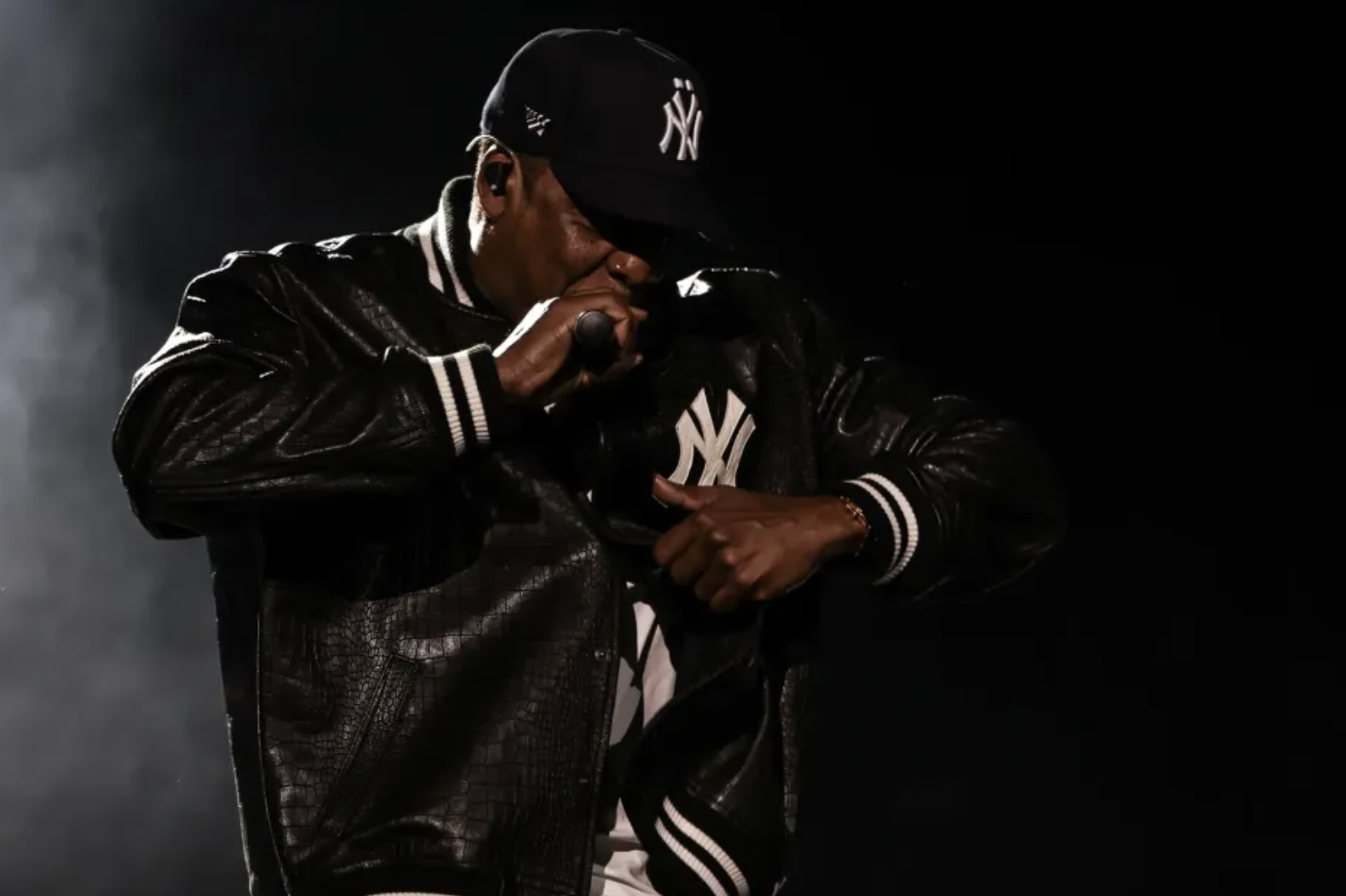
On Friday night, Jay-Z opened a three-night residency at Yankee Stadium marking 30 years of Reasonable Doubt, playing to 45,000 people on a near-bare stage. No throne, no pyrotechnics, no set piece engineered for the feed. The designer responsible, Willo Perron, gave WIRED his rationale in a single line: the statement piece in a Jay-Z show is Jay-Z.
Coming from most designers, that would read as a budget constraint dressed up as a philosophy. Coming from Perron, it reads as a verdict. This is the man who built the flying car and floating horseshoe for Beyoncé's Cowboy Carter tour, two of the most filmed set pieces in modern touring. He knows precisely how to design a moment that travels on Instagram, and he has now gone on record saying that designing for the feed has made live shows worse.
Where the money went instead
Strip out the spectacle and the production was still enormous, just pointed in a different direction. A 2,952 square foot screen spanned the outfield, running archival footage of Jay-Z's early New York years. A 10-piece band and an 18-piece string section carried the arrangements. Bleachers were built on either side of the stage so fans could watch from close range, a nod to the club shows at venues like The Tunnel where Jay-Z built his early reputation (WIRED, 11 July 2026).
The real spend, though, went into moments that can only happen once. Beyoncé opened the night on Can't Knock the Hustle. Nas, once the other half of hip-hop's most famous rivalry, joined for Dead Presidents. Blue Ivy Carter played keys on Feelin' It. Alicia Keys closed the show on Empire State of Mind. Memphis Bleek and Jaz-O, the mentor who gave Jay-Z his first break, filled the gaps in between.
Here is the strategic distinction. A flying car appears in every city on the routing. It is designed to repeat, and repetition is what makes it a production asset. Those guests appeared once, in one building, on one night, and every phone in the stadium understood the difference. The footage fans posted was worth more precisely because nobody at the Saturday show would get the same thing.
The market agreed before a note was played
The residency was originally announced as two nights, one for Reasonable Doubt and one for The Blueprint. A third, dubbed Extra Innings, was added after the first two sold out. Scott Krug, the Yankees' chief financial officer, told WIRED that tickets moved faster than any event he has seen at the stadium, a venue that hosts one or two concerts a year and reserves them for artists at the level of Paul McCartney and Madonna.
That sell-through happened against a crowded New York summer. The World Cup, the Knicks' championship run and Taylor Swift's Madison Square Garden wedding all competed for the same cultural attention in the same city within weeks of each other. Jay-Z's residency still cleared three stadium nights without a single set piece to sell it. The scarcity did the marketing, and the guest list did the amplification.
What this means for experiential briefs
Most experiential planning now opens with the shareability question: what will this look like on TikTok? Perron's show suggests that question, asked first, is exactly what kills the answer. Audiences have become fluent in content designed to be filmed, and fluency breeds discount. A moment engineered to travel reads as engineered, and the feed treats it accordingly.
What travelled from Yankee Stadium was unrepeatable by design. That is a harder brief than building a set piece, because it demands assets most brands do not hold: relationships, catalogue, history, a hometown. Jay-Z owns all four, which is why the show worked and why most attempts to copy it will not.
But the principle transfers even where the assets do not. If your activation would work just as well in the next city, it is scenery. The budget question worth asking first is what you can put in front of an audience that will never exist again after the night ends.
On The Record covers the intersection of music, culture and brand strategy. New edition every Monday.