
Welcome to the next edition of On The Record, thoughtful analysis on culture, entertainment, tech, fashion, music, sport, and brands. Here's a round-up of key conversations and campaigns that caught my attention this week.
This week is about trust as a balance sheet item, and the difference between institutions spending it down and brands patiently accumulating it. FIFA's reversal of Folarin Balogun's suspension after a Trump phone call, and Cannes Lions shrinking its own entry pool by a quarter in the name of integrity, are two sides of the same coin: institutions whose commercial value depends on being trusted to referee themselves, one making that neutrality look negotiable, the other paying real short-term revenue to protect it. The contrast with the week's strongest brand work is stark. Nike casting unsponsored teenagers from its year-old Toma programme into its flagship World Cup campaign, Jay-Z staging a multi-borough rollout around an anniversary he controls outright, Lacoste's three-year run of artist collaborations, TOGETHXR converting a slogan with $10m of proven demand into a media format, all of it is credibility earned slowly and spent precisely. Even the AI music story splits along this line, with Bandcamp banning AI to make human provenance the product while Suno and Udio license their way into legitimacy. The lesson for anyone reading this as a strategist: trust behaves like capital, it compounds quietly and it collapses publicly, and this was a week where you could watch both happen at once.

Madison Square Garden's Leaked VIP Files Expose the Gap Between Public Loyalty and Private Risk Scoring 🎟️
📌 A hacker collective's leak of internal Madison Square Garden files has surfaced a talent database of nearly 40,000 names spanning entertainment, politics, business and sport, with hundreds of performers assigned a risk rating that, per Wired's analysis, frequently tracked whether they had criticised the arena's ownership rather than any conduct at the venue itself.
• Nearly 40,000 names appear in the leaked "talent" database, with hundreds carrying an assigned risk rating (Wired)
• ShinyHunters published roughly 45GB of data, claiming more than 26 million customer and corporate records, after MSG missed a ransom deadline
• The leak was first reported by 404 Media; MSG now faces multiple federal class actions
💡 Venues have always managed access as a form of brand control, but this shows that control extending into private, opaque risk-scoring of the very people whose visible presence the venue relies on for cultural cachet. The gap here isn't between fans and management, it's between the loyalty a brand publicly courts and the suspicion it privately maintains, and that gap becomes a liability the moment it's forced into daylight 🔓
HBO Max Leads Emmy Nominations Again, But the Real Story Is Who's Closing the Gap 🏆
📌 This year's Emmy nominations tell a more complicated story than a simple leaderboard. HBO Max topped the field again, but its total actually fell from last year's record haul, and Netflix's nominations dropped too, suggesting the two incumbent streamers are past peak Emmy dominance rather than extending it. Meanwhile Apple TV+ posted its best-ever showing, propelled by two freshman series rather than an established prestige slate.
• HBO Max led with 122 nominations, down from 142 last year, driven largely by The Pitt and Hacks
• Netflix followed with 111, down from 120 in 2025, with Beef and The Beast in Me as top performers
• Apple TV+ hit a record 87 nominations, its best-ever showing, led by freshman series Widow's Bay and Pluribus
💡 The leaderboard order hasn't changed, but the momentum has. When the two platforms that have owned Emmy season for years both decline while a challenger posts a record year on the back of new IP rather than franchise deepening, that's the industry quietly telling you where creative risk is actually paying off, even if the trophy count still favours the incumbents 📺
Six Ads, Five Brands: Nike, Adidas and Apple Lead the Race for Emmy's Outstanding Commercial 🏆
📌 The Television Academy's Outstanding Commercial shortlist for the 2026 Primetime Emmys reveals which campaigns the industry itself considers the year's creative benchmark, and it's dominated by brands treating advertising as genuine storytelling rather than a media buy. Nike, Adidas and Apple each earned a nomination, alongside Levi's first Super Bowl spot in 20 years and a Cannes Lions Grand Prix winner from Coinbase.
• Levi's "Backstory" marked the brand's first Super Bowl ad in two decades, while Adidas's five-minute "Backyard Legends" starring Timothée Chalamet was built around the FIFA World Cup
• Apple earned two nominations: "A Critter Carol" and "I'm Not Remarkable," the latter following disabled students transitioning to campus life while showcasing accessibility features
• Coinbase's "Your Way Out," built as a video game world, already won the Film Craft Grand Prix at Cannes Lions last month, giving it a rare double credential heading into the Emmys
💡 This shortlist is a useful check against this edition's Cannes Lions story, Coinbase's Grand Prix winner appearing again here suggests the stricter Cannes integrity standards are producing work that also holds up under a completely different jury months later. For brand strategists, the more interesting signal is format: five-minute World Cup epics, musical accessibility showcases and video-game narratives are all competing in the same category as a straightforward Super Bowl spot, proof that "commercial" as a category is stretching to accommodate genuinely different storytelling forms rather than converging on one 📺
Jay-Z Turns a Stadium Residency Into a Multi-Borough Brand Rollout ⚾
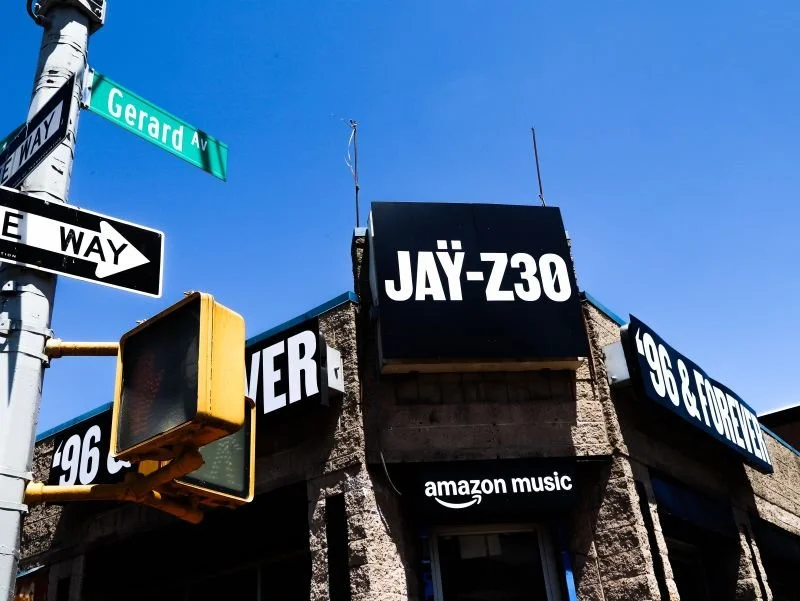
📌 Jay-Z's 30th anniversary campaign for Reasonable Doubt went well beyond a single concert date, building a staged, multi-borough experiential rollout across Brooklyn, Manhattan and the Bronx before culminating in his three-night Yankee Stadium residency this weekend. Each pop-up functioned as a distinct chapter of the same story, using archival footage, merchandise and location-specific staging to turn a nostalgia moment into a sustained cultural event.
• Pop-ups ran in DUMBO, Manhattan and the Bronx between 25 June and 12 July, all free to the public
• The Bronx activation sat at 75 East 161st Street, adjacent to Yankee Stadium, running 8-12 July
• The residency marks 30 years since Reasonable Doubt and 25 since The Blueprint: one night per album, closed by a career-spanning "Extra Innings" finale, with Paris and Los Angeles stadium dates to follow
💡 The rollout treats the stadium residency as the final chapter of a campaign that started in June, and because Jay-Z holds the catalogue, the story and the anniversary itself, Apple Music and D'USSÉ slot in as chapters of his narrative rather than logos on top of it. For partners that's the rare deal where the borrowed equity keeps working after the invoice is paid 🎤
Charli XCX Turns an Album Rollout Into a 25-City Cinema Tour Before the Record Even Drops 🎬
📌 Following the near-mythic status Brat earned as a marketing case study in 2024, Charli XCX's next rollout is choosing intimacy and format over virality and scale. Ahead of the release of her seventh album Music, Fashion, Film, she is previewing the record inside independent cinemas across 25 cities worldwide, turning early access itself into a curated, location-specific event.
• Listening events run 9-11 July across 25 cities including New York, London, Tokyo, São Paulo and Sydney, ahead of the album's 24 July release
• UK venues are confirmed as the Castle Cinema in London and the Savoy Cinema Heaton Moor in Stockport
• The album cycle continues into a North American arena tour from September, including a headline slot at Reading and Leeds in August
💡 Brat bought Charli the standing to let format do all the branding work. Previewing an album called Music, Fashion, Film inside independent cinemas collapses the marketing and the art into one decision, the same instinct that made Brat a case study. When the concept and the physical experience match that precisely, the campaign layer becomes unnecessary, and most brands never get close 🎥
As Panels Die Out, the Formats Replacing Them Reveal Who's Actually Designing for Attention 🎙️
📌 With the multi-speaker panel losing its grip as the events industry's default format, what's replacing it says more about brand strategy than stagecraft. The shift is toward formats built around fewer voices and deeper exchange: two-person fireside conversations, one-leader hot-seat sessions, small curated dinners, and working sessions where the room does the thinking rather than watching it happen.
• Catersource's 2026 trend coverage names decentralised, small-group and roundtable formats as the defining shift of the year
• More than 92% of events in 2025 had fewer than 100 participants, confirming intimate formats are now the norm rather than the exception
• Fireside conversations, hot-seat interviews and facilitated working sessions are displacing the panel as the preferred headline format
💡 This is exactly the opportunity SXSW London was positioned to seize and didn't take. It launched with genuine scale and ambition to be Europe's answer to Austin, but its programming still leans on the same multi-speaker panel format the wider industry is now retiring, and its inaugural years have been defined more by speaker controversy than by any real innovation in format. Scale without format innovation isn't leadership, it's just a bigger version of what everyone else is already retiring 🎤
Wimbledon's "Overheard" Format Proves Spectator Content Outperforms Match Highlights 🎾
📌 Wimbledon's third run of "Overheard at Wimbledon" is back, and its durability says more about modern sports content strategy than any single episode does. Rather than compete with broadcasters on match highlights, Wimbledon built a format around mic'd-up, unscripted spectator reactions, betting that the texture of the crowd is more compelling content than the tennis itself. This year's edition landed its biggest moment yet: a Royal Special episode capturing Princess Kate in unguarded conversation with Tim Henman and AELTC chair Debbie Jevans.
• The series has run for three consecutive years, expanding this year to include celebrities and athletes like David Beckham and Stanley Tucci alongside everyday fans
• Participants are mic'd with consent, and editing prioritises authenticity over polish, a structure Wimbledon has stuck with rather than scripting for virality
• The Kate Middleton episode, posted 8 July, marked the first time the format has captured a member of the Royal Family
💡 Three years of the same format is the asset here. Wimbledon chose the one content lane broadcasters can't own, the crowd, and stuck with it long enough that a future Queen was willing to be mic'd up inside it. Consistency built the trust; the royal moment is the dividend 👑
DoorDash's "Mistake" With T-Pain Was Staged, and May Not Have Been Properly Disclosed 🎯
📌 What looked like a brand's social media team confusing a rapper with a New Zealand footballer turned out to be a scripted campaign wearing the costume of an accident. DoorDash tagged musician T-Pain repeatedly during a World Cup match, crediting him with throw-ins and assists meant for defender Tim Payne. DoorDash's head of social later confirmed to The Verge the exchange was a planned partnership, and the original posts carried no disclosure language identifying them as advertising, a requirement under FTC endorsement guidelines.
• The stunt piggybacked on Tim Payne's own organic virality, after an Argentine influencer's campaign grew his Instagram following from under 5,000 to 5.9 million
• DoorDash head of social Zaria Parvez confirmed the tags were executed "in partnership with T-Pain" to "connect fans from around the world"
• Only the final post, after the reveal, carried a #DoorDashPartner tag; social media users added a Community Note flagging the earlier posts as sponsored content presented as spontaneous
💡 This is DoorDash renting someone else's cultural capital twice over, first Tim Payne's organic viral moment, then the audience's trust that brand social media mistakes are real. A brand can rent someone else's cultural moment and still owe the audience the baseline honesty of knowing they're looking at an ad, skipping the disclosure doesn't make the creative sharper, it just shifts the risk from a slightly less viral moment to a regulatory one 📋
Nike's Toma Pipeline Shows How to Build Cultural Capital, Not Just Borrow It ⚽
📌 Nike's youth street football program isn't a grassroots side project bolted onto its World Cup campaign, it's the origin point the whole marketing universe was built around. Toma el Juego started in Los Angeles a year ago with no connection to a specific tournament moment, and by the time "Rip the Script" launched this summer, several of its unsponsored teenage participants had been cast directly into Nike's flagship global campaign alongside Ronaldo, Mbappé and Haaland.
• Toma has run more than 100 tournaments across six continents and 25-plus cities in its first year, reaching over 10,000 young players
• Five Toma athletes, including Mateo Alcantar and Aiden Colocho, were featured in Rip the Script itself, appearing alongside the sport's biggest global stars
• The programme deliberately breaks from the pay-to-play club model, positioning itself as a genuine alternative pathway to elite recognition
💡 This is Nike building cultural capital rather than renting it, giving a kid a full year of real infrastructure before the campaign ever needed him is the difference between casting for authenticity points and the actual grassroots. Because Toma existed independently of this World Cup cycle, it doesn't read as manufactured credibility, it reads as the real thing, which is precisely why "Nike sees me as the future" lands as sincere rather than scripted 🏆
Live Music's Post-Pandemic Boom Hits Its First Correction, and the Smartest Artists Saw It Coming 🎤
📌 The live music industry has posted its first genuine down year since the post-pandemic surge began, but the correction is happening at the top line only. Global top-100 tour gross fell 6.1% in 2025 while per-show averages hit all-time records, meaning fewer shows are doing far bigger business. The artists who restructured how they tour, not just where, are the ones setting those records.
Global top-100 tour gross fell from a record $9.5bn in 2024 to $8.9bn in 2025, still 60.8% above 2019 levels, while average ticket prices dipped 2.4% to $132.62 (Pollstar)
Per-show averages hit all-time highs: $2.5m gross and 19,104 tickets per night, both records
Beyoncé's Cowboy Carter Tour topped Pollstar's 2025 rankings with $407.6m from just nine venues, using a multi-night "mini-residency" model instead of a traditional national circuit, while venues under 750 capacity saw average attendance fall for a second consecutive year
💡 The correction is real, but it's concentrating value rather than destroying it. Beyoncé's model asks fans to travel to the show instead of the show travelling to fans, which flips who pays for logistics and turns each stop into a mini-tentpole a sponsor can build around. The squeeze is landing at the bottom: small venues are losing attendance while the top 100 set per-night records, and that widening gap is the number that should worry anyone who cares about where the next headliners come from 📊
Jamie Oliver's Pivot to Microdrama Reveals Who Actually Owns a Legacy Brand's Next Chapter 📱
📌 Jamie Oliver Group's move into vertical microdrama looks like a format experiment, but the real story is what's financing it and what happens to decades of accumulated trust once a third party's money sits underneath it. The company is developing the series with UK creative studio Baby Teeth and a global consumer tech brand, months after cutting 25 of its 126 staff following an internal review.
• The microdrama is in pre-production, shooting in the UK this month, developed alongside Baby Teeth and an as-yet-unnamed global consumer technology brand
• The pivot follows December's headcount reduction and installs Alison Corfield, previously Head of Social Impact & Sustainability, as the group's new Brand Director focused on formats and IP
• The move places Jamie Oliver Group inside a wider wave of non-entertainment brands entering microdrama this year, alongside Versant Media Group's stake in GammaTime
💡 The critical question isn't whether microdrama works as a format, it's who ends up owning the thing once the campaign period ends. Oliver's actual asset is twenty years of public trust built around food, family and access, and a tech brand's money only builds capital for him if he holds a genuine ownership stake in what gets made, not just a fee for lending his name 🍝
Australia's Music Industry Draws a Hard Line on AI Training Before the Law Gets Written ✍️
📌 Following an Atlantic investigation that found millions of Australian and New Zealand musical works embedded in AI training datasets without consent or payment, the country's creative industry has moved fast and united. A coalition spanning APRA AMCOS, ARIA and more than a dozen other bodies has taken an open letter directly to Federal Parliament, timed to shape a National Cultural Policy review before it locks in the rules.
• More than 12,000 signatures have been collected from artists including Midnight Oil, Sia, Lorde, Crowded House and Nick Cave, whose work was reportedly found in the AI datasets
• The coalition met directly with Arts Minister Tony Burke, pressing the government to hold the line it drew in October against a proposed copyright exception for AI training
• The National Aboriginal and Torres Strait Islander Music Office flagged that some recordings carry cultural knowledge and protocols that predate copyright law entirely
💡 This is a rare case of an entire creative sector moving to shape the rules before the precedent is set, rather than litigating after the fact the way the US music industry has done with Suno and Udio. Getting in front of a live policy review is a fundamentally different strategic position than fighting a settled law in court 🎙️
Bandcamp's AI Ban Draws a Line the Rest of the Industry Is Still Negotiating Around 🎶
📌 While major labels spent 2025 and early 2026 signing licensing deals with AI music generators, Bandcamp took the opposite route. It banned all AI-generated music outright in January 2026, becoming the first major music platform to draw an absolute line rather than build a monetisation framework around it, betting that human-made provenance is itself the product.
• Bandcamp's "Keeping Bandcamp Human" policy, announced 13 January 2026, prohibits any music "generated wholly or in substantial part by AI"
• The platform paid out roughly $218 million to musicians in the past year alone, on a model that returns around 82% of each sale directly to artists
• Meanwhile Suno and Udio, both previously sued for copyright infringement, have since settled with major labels and signed licensing deals including Warner, Universal and Merlin, while YouTube's Dream Track has operated since 2023 with artists including Charli XCX and John Legend licensing their voices
💡 The industry has split into two bets on where listener trust will sit in three years: license AI and control the terms, or refuse it and sell human authorship as the product. Bandcamp can only make the second bet because its economics already depend on fans paying artists directly, so the ban protects the business model rather than constraining it. Platforms built on volume can't copy this, which is exactly why it works 🎧
Retailers Are Quietly Rebuilding Affiliate Marketing Into Owned Creator Infrastructure 🛍️
📌 A wave of retailers has moved past one-off affiliate links and into structured, gamified creator communities that function more like owned platforms than marketing campaigns. Urban Outfitters became the latest to join American Eagle, Express, Home Depot, Lowe's and Sephora in converting transactional affiliate relationships into always-on programs designed to reward smaller creators for consistent participation rather than single posts.
• American Eagle's AE Creator Community, launched in February, explicitly moved away from a "traditional affiliate, transactional program" toward a challenge-based structure
• Urban Outfitters' new ME@UO program plans to use creator feedback to shape future seasons and product releases, not just distribute discount codes
• Sephora runs one of the most developed in-house creator ecosystems, combining shoppable content, affiliate commissions and year-round engagement in a single system
💡 Affiliate marketing paid creators per post and kept nothing when the post died. These programmes flip the ownership: the retailer ends up holding the roster, the feedback loop and the conversion data, assets that compound with every season. Brands still buying one-off posts are paying full price for attention that expires on delivery 🎯
Cannes Lions Entries Drop 25%, But the Festival Insists That's the Point 🦁
📌 Cannes Lions received 20,050 entries this year, down 25.5% from 26,900 in 2025, but the festival is framing the drop as evidence its integrity crackdown is working rather than a sign of declining creative output. New Awards Integrity Standards, introduced after last year's scandal over manipulated and AI-doctored entries, now require every submission to be personally endorsed by both an agency's chief executive and chief marketing officer.
• AI use in entries doubled year-on-year, from 20% in 2025 to 40% in 2026, with disclosure now mandatory rather than optiona
• India's decline was sharper than the global drop, down 31.2% to 676 entries from 982 in 2025
• Independent agencies now account for nearly a third of all entries, and brands submitted directly for 10%, up from 8% in 2025, alongside the launch of the new closed-door LIONS Global CMO Forum
💡 A 25% entry drop driven by mandatory C-suite sign-off and proof-of-impact requirements is a very different signal than a drop driven by declining creative confidence. Cannes is betting that a smaller, harder-to-fake pool of entries protects the credibility of the whole institution 🏆
London Bets on Scarcity as Ironworks Opens With Just Six Nights, Not a Season 🏭
📌 London's newest warehouse venue is launching with a structural choice that runs against the logic of most new club openings: rather than programming a full season, Ironworks is opening with exactly six nights, then stopping. The 7,000-capacity Thames-side venue, developed by the team behind Printworks and Tobacco Dock, is treating scarcity itself as the product.
Ironworks spans a 78,000 sq ft warehouse plus an 80,000 sq ft open-air riverside terrace in Royal Docks, opening in October with a confirmed slate of Jamie Jones, Eric Prydz, CamelPhat, an Appetite Halloween takeover and Charlotte de Witte closing
Eric Prydz's booking marks a rare London return, a deliberate departure from his usual festival main-stage scale
The venue has built in local commitments including dedicated ticket access for Newham residents, independent trader partnerships and local employment links
💡 This is the same logic that made Printworks a cultural landmark rather than just another club, treat the venue itself as a limited-run cultural event rather than a permanent fixture. A six-night debut season signals Ironworks understands that the fastest way to create demand in London's nightlife market is to make the offer finite from day one 🎧
Lacoste's Three-Year Bet on Outside Creatives Shows What Building Cultural Capital Actually Looks Like 🐊
📌 Since appointing Pelagia Kolotouros as creative director in 2023 to build a collaborative studio model, Lacoste has quietly assembled a run of artist-led projects that go well beyond a conventional ambassador roster. The brand rebuilt its visual identity via London's Commission Studio, handed its crocodile logo to artist Max Siedentopf for a Novak Djokovic tribute campaign, and backed an entire tennis tournament designed and played by artists.
• Kolotouros joined Lacoste in 2023 specifically to oversee collaboration between in-house teams and outside creative communities
• The Djokovic "GOAT" campaign, directed by Max Siedentopf, has now run for two consecutive years, first in New York in 2025 and again in London in June 2026
• The Casa Axis International Open, an artist-only tennis tournament held at Felipe Pantone's Valencia residency, gives its winner the right to redesign the court for the following year
💡 Kolotouros was hired to build a system, and three years in the compounding is visible. None of these projects hangs on one celebrity face or a fixed-term deal, so each one adds to the last instead of expiring on schedule. Handing the tournament winner the right to redesign next year's court is the tell: Lacoste has built a machine that generates its own relevance, and it keeps running whether or not any single artist stays 🎾
MLB Turns Art-World Collabs Into a Repeatable Rivalry-Series Playbook 🎨
📌 MLB's KAWS collaboration isn't a standalone novelty, it's the second consecutive year the league has paired a marquee fine artist with the Dodgers around a high-profile series, following last year's Takashi Murakami x Dodgers drop. Timed to the Yankees-Dodgers rivalry series, the collection reimagines both teams' logos through KAWS' signature "XX" motif and Companion character.
• The collection launches in-person at Fanatics Fest NYC from 16-19 July, with a full global release on 20 July across Fanatics, MLB Shop, Nike and Complex's own retail channels
• The Topps set includes rare, randomly inserted cards signed by KAWS himself, extending the collaboration into one of the oldest formats in sports memorabilia
• Topps has run this same model before with Steve Aoki, Takashi Murakami, Travis Scott and the Bob Ross Estate, positioning this as an established collector strategy rather than a one-off
💡 One artist drop is a novelty. Two consecutive years against the same rivalry series is a format, and formats train fans and collectors to anticipate the next one. Anticipation is the real asset here: the artist rotates, the moment repeats, and the secondary market starts pricing in the pattern 🃏
TOGETHXR Turns a Trademarked Slogan Into a Media Format 🎙️
📌 TOGETHXR's new podcast isn't launching a brand identity, it's monetising one that already exists. "Everyone Watches Women's Sports" started as a slogan and product line that has generated more than $10 million in revenue on its own, and the company is now converting that proven commercial phrase into a weekly media format, partnering with iHeartMedia.
• The weekly audio and video series debuts 9 July, hosted by Olympic gold medalist Jordan Chiles, journalist Ari Chambers and comedian Sam Jay, with rotating surprise guests
• It joins iHeart Women's Sports, part of iHeartMedia's pledge that 50% of all newly produced sports podcasts will focus on women's sports coverage
• TOGETHXR was co-founded by Alex Morgan, Chloe Kim, Simone Manuel and Sue Bird, and already runs a slate of content on Amazon Prime and FuboTV
💡 The sequencing is the lesson. TOGETHXR let a slogan prove demand as a $10m merch line before spending a dollar building media around it, which reverses how most brands do it: launch the content, hope the identity follows. By the time the podcast arrives it's monetising a phrase the audience already wears, with iHeart's distribution pledge removing the discovery risk on top 🏀
Jay-Z's Scarcity Strategy Goes International, With Just One UK Date All Year 🎤
📌 Jay-Z's approach to his 30th anniversary celebration keeps compounding the same principle: fewer dates, bigger stakes. The London stop at Tottenham Hotspur Stadium on 4 September will be his only UK show of 2026, and his first London date since co-headlining On The Run II with Beyoncé in 2018, with his last solo London tour stop dating back to 2013.
• The London show joins previously announced stadium dates in New York, Paris and Los Angeles, rather than a conventional touring circuit
• The run marks the 30th anniversary of Reasonable Doubt and the 25th of The Blueprint, tying directly into the wider JAY-Z 30 campaign covered elsewhere in this edition
• Tottenham Hotspur Stadium holds over 60,000, with tiered presale access for O2, Virgin Media, Roc Nation and Spotify starting ahead of general sale
💡 The 13-year London gap is doing the work a media budget usually does, but the presale stack is the sharper detail. O2, Virgin Media, Roc Nation and Spotify each get to sell access to scarcity they didn't create, so one date turns four partners into distribution and every presale window becomes a CRM event for someone else's brand. Jay-Z banks the demand data from all of them 🇬🇧
Netflix Turns to Magazine Publishers to Solve Its Between-Binges Problem 📰
📌 Netflix's new publisher deal is a direct response to a structural weakness in its own model: subscribers watch intensely for a season, then go quiet until the next one drops. Starting 3 August, the platform will host short-form video from BuzzFeed, Condé Nast, Hearst Magazines, People Inc., Tastemade and Penske Media's PMX division directly on the homepage.
• Content spans three-minute clips to 20-minute episodes, covering food, travel, fashion, celebrity profiles and home design
• The rollout launches in the US, Canada, UK, Ireland, Australia and New Zealand, mixing existing formats with new commissions
• Netflix VP John Derderian framed the move around retention: members want to "keep exploring the stories and personalities they love long after the final credits roll"
💡 Netflix is buying its way into daily-visit behaviour with other people's formats, which is faster and cheaper than building a YouTube competitor from scratch. Read alongside the Stokes Twins deal, the pattern is consistent: licence, distribute, stay non-exclusive, and let speed to market do the job exclusivity used to. The open question is what Netflix owns at the end of it beyond the audience data 📱
Netflix's Non-Exclusive Deal With the Stokes Twins Shows It's Buying Distribution, Not Ownership 📺
📌 Netflix's latest creator deal reveals a deliberate strategy shift: rather than locking in exclusive rights, the streamer is building parallel distribution for creators who keep their YouTube channels running at full strength. The Stokes Twins, with more than 140 million YouTube subscribers, will bring an archive of their videos to Netflix from 18 July under a non-exclusive licence, while also developing an original series for 2027.
• The deal is non-exclusive, meaning the twins' existing YouTube channel continues operating unchanged alongside the new Netflix archive
• It follows a pattern Netflix has already run with Ms Rachel, Mark Rober and The Sidemen, arriving the same week as Netflix's separate publisher content deal
• The Stokes Twins' original series is still in development for 2027, giving Netflix a longer-term stake beyond simply re-hosting existing content
💡 Netflix has stopped trying to buy creators off YouTube and started paying to sit beside it. The archive licence is the bridge, cheap, non-exclusive and instantly on the homepage, while the 2027 original series is where Netflix banks something it actually owns. Rent the audience now, build the exclusive asset once the relationship is proven 🎬
Nielsen's Expanded Measurement Turns Watch Parties Into the World Cup's Real Growth Story 📺
📌 A methodology change is reshaping how the World Cup's audience gets counted, and brands are moving fast to claim a piece of it. Nielsen's expanded out-of-home measurement means bars, restaurants and public watch parties are being counted as broadcast audience for the first time at this scale, with out-of-home viewership now representing roughly 25% of Fox and Telemundo's total World Cup audience.
• Fox's English-language audience grew 92% over 2022 to average 5.05 million viewers, while Telemundo's grew 122% to 4.6 million, with both networks now actively promoting watch parties
• Stella Artois committed $100,000 to its "Work From Bar" campaign, reimbursing fans who watch weekday matches from a local bar, and opened a dedicated pop-up at Brookfield Place in Manhattan
• Telemundo and Rockefeller Center are running a Fan Village at Rockefeller Plaza from 6-19 July, while the NWSL's Summer of Soccer tour extends the same format into its own Rivalry Week
💡 Fox and Telemundo are actively encouraging behaviour that used to be invisible to their ratings, because for the first time it counts in their favour. Brands like Stella Artois are moving fastest because a bar full of people watching together is now a measurable, monetisable audience rather than an unmeasured side effect 🍻
FIFA Expands AI Abuse-Filtering as the World Cup Turns Player Safety Into Standard Infrastructure 🛡️
📌 FIFA's expansion of AI-powered social media moderation for the World Cup signals a shift in how football institutions treat online abuse: not as a communications problem to react to, but as infrastructure to build in advance. The free moderation service, offered to every football association at the tournament, filters abusive content across 30,000 keywords and hides it within two seconds.
• The technology works across Meta platforms, YouTube, TikTok and Threads, but notably not X, which has continued to allow hidden comments to remain visible
• Respondology, the AI platform used by Tottenham and Arsenal, estimates it has removed 1.5 billion hateful impressions and 15 million racist and homophobic comments from football globally
• With legalised sports betting now active across most US states and 78 World Cup matches played domestically, abuse volumes are expected to rise significantly compared with previous tournaments
💡 Player-safety moderation shipped as standard tournament infrastructure is a first, and offering it free to every federation makes it policy rather than PR. The uncomfortable detail sits in the platform list: the tools work everywhere except X, which has chosen not to close the gap third-party vendors are now being paid to plug 🎙️
Louis Vuitton's Car Rally Revival Is Really About Owning F1's Cultural History 🏎️
📌 Louis Vuitton's return to classic car rallying isn't a standalone nostalgia play, it's a deliberate extension of a genuine automotive lineage the brand can trace back further than motorsport itself. The Dolomites Classic Run, reviving a tradition dormant since 2012, sends 25 pre-1970 cars from Bugatti, Maserati and Ferrari on a 373-mile route from Venice to Monza, timed to open the Formula 1 Italian Grand Prix weekend.
• The rally traces back to Georges Vuitton's 1897 flat-top car trunk, designed specifically for early automobiles, predating the brand's involvement in motorsport by decades
• The event lands alongside LVMH's newly signed 10-year Formula 1 sponsorship deal, with the winner receiving a trophy by artist Sabine Marcelis in a bespoke Louis Vuitton trunk
• CEO Pietro Beccari described the classic-car audience as "a club of initiates" with a following that extends "far beyond the people that can afford the cars"
💡 Reviving a rally rooted in the house's own 1897 trunk-making gives LVMH's ten-year F1 deal something no rival sponsor can buy: precedence. Every other luxury house entering motorsport is a guest. Vuitton was there before motorsport had rules 🏁
FIFA's Balogun Reversal Tests What "Neutral Governing Body" Is Actually Worth to Sponsors 🚩
📌 FIFA's decision to reverse a red-card suspension for USMNT striker Folarin Balogun, after President Trump personally lobbied FIFA president Gianni Infantino, a decision FIFA defended as within its own disciplinary code, and which UEFA called 'unprecedented, incomprehensible and unjustifiable', saying FIFA had crossed a red line. Whatever the politics, the structural story for brands is about institutional credibility: FIFA is the entity whose disciplinary rulings underpin billions of dollars in global sponsorship value, and this decision makes that neutrality visibly negotiable.
• FIFA cited Article 27 of its disciplinary code to suspend the automatic ban for a one-year probationary period, a mechanism FIFA's own statement did not explain in this context
• Belgium's football federation formally objected, stating FIFA acted in direct contravention of its own regulations and guidance previously briefed to competing teams
• The closest World Cup precedent is Garrincha in 1962, who played the final despite a semi-final red card, a comparison now being drawn across football media
💡 A governing body's core commercial asset is the appearance of neutral, rules-based authority, that's what makes its competitions trustworthy enough to sell billions in global rights against. Once that neutrality looks negotiable through political access rather than due process, every future disciplinary decision carries reputational risk for the brands whose logos sit next to FIFA's 🏟️
Nike's "Mind" Shoes Prove There's Still Room to Invent a New Product Category 🧠
📌 Nike's first foray into neuroscience-based footwear has become one of the year's standout launches, built on a genuinely novel premise: shoes engineered to influence mental state rather than athletic performance. The Mind range sold out repeatedly since its January launch, with more than two million people signing up for restock alerts.
• The mule and sneaker retail at $95 and $145, with every drop and restock since January selling out within minutes and pairs trading well above retail on StockX
• CEO Elliott Hill called Mind "the highlight of the quarter" on Nike's Q3 earnings call, revealing more than two million people had signed up for restock alerts
• An independent smart-textiles researcher told CNN the underlying science has real plausibility, comparing it to meditation and traditional foot-based relaxation practices
💡 Most wearable wellness converged on batteries, screens and tracking, and Nike went the other way with a passive, sensory product backed by a decade of research. Two million restock sign-ups say the gap was real: people wanted wellness they could wear without having to manage it. Creating a category at this scale is the hardest move in product marketing, and Nike has just shown it still has the muscle 👟
Airbnb Turns Lollapalooza Into a Travel Booking Funnel, Not Just a Sponsorship 🎪
📌 Airbnb's new Lollapalooza experience treats a festival partnership as a data-backed travel product rather than a branding exercise. Rather than settling for logo placement, the company is selling $75 backstage access, artist areas and its own festival stage directly to consumers, built on evidence that live music is already reshaping how people book travel to Chicago.
• Airbnb reports out-of-state searches for Chicago stays during Lollapalooza weekend are up nearly 20% year-on-year, with Gen Z searches up 15%
• Chicago hosts earned more than $6.4 million during Lollapalooza weekend in 2025, according to Airbnb's own figures
• The backstage experience is fronted by festival producer Tim Sweetwood, founder of Shaky Knees and Sea.Hear.Now, alongside a wider slate of Airbnb-run local experiences
💡 Airbnb is charging for the backstage pass instead of gifting it to influencers, and that one detail carries the whole strategy. A paid product means festival travel becomes a revenue category with its own P&L, backed by search data proving demand already exists. Sponsorships get renewed or cut with marketing budgets; revenue lines get invested in 🎫
FIFA Stages Its First-Ever Halftime Show, Borrowing the Super Bowl Playbook Wholesale 🏆
📌 FIFA is importing a format it has never used before, and doing it with the scale to make the borrowing obvious. The first-ever FIFA World Cup Final Halftime Show, an 11-minute set co-headlined by Madonna, Shakira, BTS and Justin Bieber, is being staged 19 July with Coldplay's Chris Martin as curator, folding football's biggest match into the exact live-entertainment format the Super Bowl has owned for decades.
• The performance combines Madonna, Shakira, BTS, Justin Bieber, Burna Boy, Coldplay, conductor Gustavo Dudamel and the PS22 Chorus into a single 11-minute set
• The show is tied to the FIFA Global Citizen Education Fund, which has raised $50 million toward a $100 million target and will match $1 from every ticket sold
• Football's laws cap the halftime interval at 15 minutes; the 11-minute show plus staging has already raised questions, after FIFA's Club World Cup trial extended the break past 24 minutes
💡 The Super Bowl owns this format so completely that FIFA's only available move is scale, four co-headliners against the Super Bowl's one. A borrowed format can still work when the borrower brings something the original can't, and FIFA's is a genuinely global audience: Madonna, BTS, Shakira and Burna Boy map to four different continents of viewership in a way no Super Bowl booking ever has to 🎤
A Study Claims Nearly 5% of "CTV" Ad Inventory Isn't on a TV at All 📺
📌 A new study is challenging one of programmatic advertising's most valuable labels. Connected TV inventory commands a significantly higher CPM than standard video ads, on the premise that a TV screen commands more attention. But device-detection firm 51 Degrees found that nearly 5% of inventory sold as CTV wasn't running on a television at all.
• The mismatch means advertisers are paying premium CTV rates for lower-value non-CTV inventory, whether through accidental mislabelling or deliberate misrepresentation
• 51 Degrees CEO James Rosewell argues for a stricter definition: "Any device that is not a TV is not CTV," calling for common industry-wide definitions
• The company recommends publishers, SSPs and DSPs adopt device detection to independently verify what device an ad impression actually reached
💡 Worth noting who's making this claim and what they sell: 51 Degrees provides device detection services, the exact fix its own study recommends the industry adopt. That doesn't make the finding wrong, but CTV's premium pricing depends entirely on trust in the label, and that trust is only as strong as the verification standards the industry is willing to enforce 🖥️
Unilever Turns Its FIFA Sponsorship Into a Live Test of Its Social-First Bet 🌍
📌 Unilever's FIFA World Cup 2026 activation is less a sponsorship than a stress test of a strategic pivot the company committed to over a year ago. Having pledged to shift half its marketing budget toward social-first tactics, the World Cup gives Unilever its biggest possible stage to prove that approach works at scale, with 35 brands, 120 markets and a live global audience in the billions all riding on the same creator-led model.
• Unilever is activating more than 35 brands, including Dove, Degree, Rexona and Axe, across 120+ markets, backed by more than 180 limited-edition products
• The company built a 24/7 content operation called The Locker Room and in-person creator hubs, House of Fresh, in Mexico City, New York and Miami, each drawing 200-250 creators and athletes daily
• More than 50,000 creators are involved, with individual activations, such as a paid Roberto Carlos appearance, generating over a billion social views in a single week
💡 The Locker Room and House of Fresh are built to be redeployed for the 2027 Women's World Cup, which tells you Unilever is treating this as permanent operating capacity rather than a tournament campaign. The stakes are unusually public: half the global marketing budget is pledged to social-first, and a billion views in a week is the kind of number that either validates the pivot at board level or gets quietly walked back. Every CPG marketer should watch which one happens 🧴
Netflix Takes the Women's World Cup Off Free-to-Air for the First Time 📺
📌 Netflix's exclusive streaming rights for the 2027 and 2031 FIFA Women's World Cups mark a genuine break from how this tournament has always reached fans. The rights move away from Fox Sports in the US and TSN in Canada, both long-standing free-to-air or cable broadcasters, to a subscription streamer for the first time in the tournament's history.
• Netflix holds exclusive US and Canada rights for both 2027 and 2031, including English and Spanish coverage in the US and English and French in Canada
• The move ends a 10-year run with Fox Sports in the US and TSN's hold on Canadian rights since 2015
• The 2031 edition will be the first 48-team Women's World Cup, up from 32, with host nation still to be confirmed
💡 Netflix now controls the exclusive North American home of the biggest event in women's football through 2031, and alongside the Taylor-Serrano cards and WWE Raw, live sport is clearly a genuine pillar rather than an experiment. The trade-off is real: leaving free-to-air narrows casual reach at the exact moment the sport's growth story depends on new audiences finding it by accident. Whether Netflix's promotional machine can out-recruit free-to-air's accidental viewers is the bet, and every rights holder in women's sport will be watching the answer 🌍
Women's Football Is Set to Outgrow Its Own Sponsorship Infrastructure 🔥
📌 The global growth curve for women's football has outpaced the commercial infrastructure built to support it. Industry projections put the sport's fanbase on course to grow from 500 million to over 800 million by 2030, which would place it among the world's top five most-followed sports, with women making up the clear majority of that audience.
• The global fanbase is projected to grow 38% by 2030, with 60% of that audience expected to be female
• Women are projected to control 75% of household purchasing decisions by 2028, a demographic detail with direct relevance to sponsor targeting
• Despite tripling sponsorship deals between the 2019 and 2023 Women's World Cups, only a small fraction of global sponsorship budgets are currently allocated to the sport
💡 The gap between where the audience is heading and where the money sits is the story. An 800 million fanbase by 2030 would put women's football among the five most-followed sports on earth, yet sponsorship allocation remains a rounding error against men's budgets. The early movers, Barclays with the WSL, Ally in the NWSL, now Netflix with the World Cup itself, are locking in relationships at prices that will look absurd once the market reprices to the audience data 🏟️
Red Bull Turns a World Cup Content Calendar Into a Distribution Machine ⚽
📌 Red Bull's football content strategy has quietly become one of the most replicable playbooks in sports marketing, and the Ultimate Football Challenge is its latest proof point. Rather than producing a single hero campaign, the brand built a structured content franchise designed to bank long-form attention on YouTube, then re-cut into short-form clips built for TikTok, Instagram and YouTube Shorts.
• The challenge, fronted by Red Bull's Head of Global Soccer Jürgen Klopp, features Neymar Jr, Endrick, Richard Ríos and Dominik Szoboszlai across custom-built physical challenges in São Paulo, Bilbao and Salzburg
• The format draws directly on the Red Bull Akademie development pipeline, with Szoboszlai and Nicolas Seiwald both products of the Salzburg academy system
• Content is structured for dual consumption: long-form episodes built for YouTube retention, supported by short-form cutdowns designed to drive reach and discovery
💡 Red Bull has done to football content what it did to extreme sports two decades ago: built the production system first and let the athletes rotate through it. The Klopp-fronted format works with this roster, but it would work with the next one too, which is the point. The durable asset is the machine, and machines don't renegotiate their contracts 🎥

🎙️ How Nike Built the Biggest World Cup Campaign Ever
The Debrief, The Business of Fashion Podcast — hosted by Sheena Butler-Young and Mike Sykes, with guest Helena Thornton, Nike VP of Global Brand Management
Why It Matters: This episode is the direct industry counterpart to this edition's Nike/Toma story, going straight to the source on how Rip the Script was built and why Nike is treating the World Cup as a catalyst rather than the whole campaign.
Worth Your Time Because: Thornton's insight that grassroots investments like Toma "help build deeper consumer relationships than short-lived tournament campaigns" is the exact thesis this week's Nike ICYMI entry was built around, hearing it in her own words adds real texture. It's also a useful corrective to the "brand wins the World Cup" trade press narrative: Thornton is candid that a campaign this size only works if the cultural infrastructure underneath it was already real before the tournament started.

(Monday 13 July – Sunday 19 July 2026)
🏆 FIFA World Cup Semifinals take place Tuesday 14 July in Arlington, Texas and Wednesday 15 July in Atlanta, Georgia, both kicking off at 3pm ET, deciding the two finalists for Sunday's showpiece.
🥉 The third-place playoff is held Saturday 18 July at Hard Rock Stadium in Miami, the last match before the tournament's climax.
🏟️ The FIFA World Cup Final takes place Sunday 19 July at MetLife Stadium (New York New Jersey Stadium), kicking off 3pm ET, with a halftime show co-headlined by Madonna, Shakira, BTS and Justin Bieber.