Welcome to the next edition of On The Record, thoughtful analysis on culture, entertainment, tech, fashion, music, sport, and brands. Here's a round-up of key conversations and campaigns that caught my attention this week.
The distance this week is between institutions that can enforce a commitment and those that can only announce one. Uefa dropped both its boycott threat and its confidence vote against Gianni Infantino and filed instead for court-ordered discovery in three US jurisdictions, having worked out that subpoenas bind where a federation vote does not, its application alleging the $4.2bn stake Infantino offered implied an absurdly low $20bn valuation of Fifa's commercial arm. Meta agreed to the largest state consumer protection settlement outside the Big Tobacco cases, $17.1bn alongside real design mandates including a two-hour daily teen limit and an overnight access block, then left the compliance auditor unnamed and its powers undefined, with $5bn of the total contingent on YouTube and TikTok moving first. Apple Music set its own AI labelling threshold rather than adopt the RIAA and IFPI two-tier framework, on the reasoning that a platform already running the fraud-detection infrastructure can verify a label it issues and can only take an external one on trust. Against that, the Featured Artists Coalition's voluntary £1 ticket levy more than doubled from £125,000 to £300,000 precisely because its first round demonstrably kept 211 shows on the road, and New York's 1,000 discounted US Open tickets arrived with resale blocked rather than left open. What is actually changing is that shared industry standards are losing ground to proprietary ones, not because the shared versions are wrong but because the organisations holding detection and enforcement capability would rather use it than defer to a framework they do not operate, which leaves everyone else holding commitments nobody has yet been appointed to check.

🏆 SPORT, POWER & GOVERNANCE
Uefa Moves From Boardroom Pressure to Criminal Complaint Against Infantino ⚖️
📌 Uefa has escalated its campaign against Fifa president Gianni Infantino from political pressure into a formal legal process, filing for court-ordered discovery in Florida and New York to build a criminal mismanagement complaint in Switzerland. The target is Infantino's now-abandoned plan to sell a stake in World Cup commercial rights to private investors including Jared Kushner's brother Josh, a plan Uefa says was developed in secret for over a year and pushed through Fifa's internal approval with only hours' notice. Scrapping the deal under backlash was meant to end the story. Filing for evidence to build a criminal case is Uefa signalling it wants Infantino gone, not just the plan.
Uefa's application alleges the proposed $4.2bn stake implied an "absurdly low enterprise value" of roughly $20bn for Fifa's commercial arm, a figure it says was never independently valued or competitively tested
Uefa is seeking discovery from Fifa's Florida-based businesses, from Thrive Capital Management in New York, and from former Formula 1 chief Greg Maffei's Bann Ventures in Colorado, described in the filing as the "key commercial adviser" on the deal
💡 A boardroom vote to remove a federation president is survivable, embarrassing but survivable, because it stays inside football's own politics. A criminal complaint moves the dispute into a system Infantino doesn't control, where discovery can surface internal communications regardless of whether Uefa's member federations ever agree on a replacement. That's the more useful read of this move than "Uefa wants Infantino out," which everyone already knew. Filing for evidence in three separate US jurisdictions is a bet that documents will do what a vote of no confidence couldn't, and it raises the cost of Infantino simply riding out the boycott threat and standing for a fourth term in March regardless of how much support he retains. ⚖️
Fever-Sky Draws WNBA's Biggest Audience in 29 Years as NBC's First Season Pays Off 🏀
📌 Indiana's 113-90 win over Chicago pulled in 3.31 million viewers across NBC and Peacock, the most-watched WNBA regular-season game since the league's 1997 opening weekend and the third-largest in its history. Caitlin Clark's 37 points and Kelsey Mitchell's 30 carried the result, but the more durable story is what it confirms about NBC's return to the league after a 24-year absence: a single marquee matchup can still spike an audience, but the network's whole-season number is climbing too, not just its ceiling.
The game peaked at 3.82 million viewers, trailing only two games from the WNBA's 1997 inaugural weekend
NBC Sports is averaging 1.75 million viewers across seven WNBA broadcasts this season, up 35% from comparable coverage last year, in its first season carrying the league since 2002
💡 A viewership spike tied to one rivalry game is easy to write off as a Caitlin Clark effect that won't repeat. A 35% rise in NBC's season-long average is a different signal, because it holds even in weeks without a marquee matchup. That's the number a new rights partner actually needs to justify what it paid, and it's the one that determines whether NBC's next negotiation is from a position of proven growth or one good night. The single record game earns the headline. The seven-game average is what decides the league's next media rights cycle. 🏀
Rule42 Buys Equity and the Media Company Covering It in the Same Softball Deal 🥎
📌 Rule42 Sports Group, founded by tech veteran Renée James, has taken a major equity stake in the Athletes Unlimited Softball League and simultaneously acquired Softball America, the sport's leading news and rankings outlet, in a single announcement. Coming off a second season where ESPN viewership rose 152% and merchandise sales climbed 110%, the AUSL clearly had genuine momentum to invest in. What's structurally distinctive is doing both deals together: buying a stake in the league and buying the platform that covers, ranks and evaluates the players inside it.
The AUSL's six-team second season drew a 152% year-on-year rise in average ESPN viewership across 47 broadcast games, alongside 25 sellout games and a 110% increase in merchandise sales
James, former Intel president and founder of Ampere Computing, joins the AUSL board as one of its largest investors alongside MLB, the Milwaukee Brewers' Mark Attanasio and Ryan Sanders Baseball
💡 Softball America ranks high-school prospects. Rule42 now owns Softball America and sits on the board of the league those prospects graduate into. In a sport this size there is no second ranking outlet to check the first against, which turns editorial independence from a journalistic nicety into a governance question. The capital is welcome and the AUSL's growth is real, but the league should publish an editorial firewall now, while the arrangement still reads as enthusiasm, rather than after the first contested prospect ranking makes it read as something else. 🥎
Nike Puts Product and Facility Investment Behind a Second Year of Epicenter Week 🌹
📌 Nike returned as presenting sponsor of Epicenter Week for a second consecutive year, hosting the invitation-only Global Sports Summit at its own Beaverton headquarters. The more substantive move announced during the week wasn't the summit itself, it was a new partnership with RAJ Sports, owner of the NWSL's Portland Thorns and the WNBA's Portland Fire, committing Nike to design and product integration for a 100,000-square-foot training facility built specifically around women athletes rather than adapted from men's training standards.
The new Kaiser Permanente Performance Center will house both the Thorns and the Fire under Portland's single ownership group, the only city with both leagues owned by the same group
The partnership also commits Nike to youth-focused programming through Nike Social & Community Impact, including clinics and coaching aimed at reducing dropout rates among girls in sport
💡 Most brand money in women's sport still buys visibility around events that already exist. Designing a 100,000-square-foot facility around women athletes' physiology, rather than resizing equipment specified for men, puts Nike's product organisation on the hook for something that outlives every campaign cycle attached to it. The Portland concentration is why it can work: one ownership group, two leagues, one training base, which turns a facility into a specification other markets can copy rather than a showpiece they can only admire. That is the harder version of this commitment and the one worth measuring Nike against. 🌹
Sporty Spice's Name on a Non-League Shirt Signals Where Women's Football Sponsorship Money Still Comes From ⚽
📌 Sheffield FC, recognised by FIFA as the world's oldest football club, has named Melanie C as front-of-shirt sponsor for its Women's First Team ahead of the 2026/27 season, with all shirt revenue going directly to the women's team and grassroots girls' football. The move sits inside a wider rebrand under new chairman Jon McClure, who has also signed Meadowhall as the men's team's shirt sponsor. At a club playing several divisions below the professional pyramid, a celebrity name still carries more commercial weight than a corporate logo would.
Sheffield FC Women play in the FA Women's National League Division One Midlands, several tiers below the Women's Super League
100% of revenue from Women's First Team shirt sales goes directly to the women's team and grassroots girls' football initiatives
💡 Sponsorship budgets are set against audience size, and the fourth tier of women's football sits well below the threshold most of them bother clearing. A famous name closes that gap by donating reputation instead of buying a media plan, which is exactly why it works here and exactly why it cannot scale. Every club below the WSL cannot find its own Spice Girl. Until someone prices grassroots women's football on participation and community reach rather than broadcast audience, the tier stays dependent on individual goodwill, and goodwill is not a line you can budget against. ⚽
Mamdani's US Open Ticket Deal Is the Fourth Time This Year City Hall Has Intervened in Sports Access 🎾
📌 New York City and the USTA released 1,000 Main Draw tickets at $100 each exclusively to residents with certified NYC zip codes, covering seats at Arthur Ashe and Louis Armstrong Stadiums plus grounds access, with resale blocked entirely. It's a small allocation against a tournament running eight days of matches to hundreds of thousands of attendees, but it's the fourth time this year City Hall has negotiated discounted access to a major sporting event happening in the city, following similar moves around the World Cup, FanFests and track and field championships.
The $100 tickets cover Main Draw matches from 30 August through 8 September and cannot be resold through the tournament's secondary market platform
This follows earlier 2026 initiatives securing discounted World Cup tickets, free five-borough FanFests, and reduced-price access to Gotham FC and USA Track & Field events
💡 A single 1,000-ticket allocation does not move a tournament's economics, and resale prices above $300 will hold regardless. What it establishes is a civic mechanism: a city government treating access to events hosted on its own soil as something it negotiates on residents' behalf. Four interventions in one year stops being a series of gestures and becomes a precedent. Any organiser bidding to host in New York should now assume a resident allocation will be asked for and price it into the bid, rather than conceding it later under public pressure on someone else's timetable. 🎾
US Open Puts Michelin Chefs Behind the Concession Counter, Not the Suite Menu 🎾
📌 The US Open's 2026 food lineup brings Masaharu Morimoto, Enrique Olvera and Pat LaFrieda into the tournament's culinary offering, but the significant shift isn't which names are involved, it's the format they're working in. Morimoto has built concession-ready sushi rolls designed for one-handed eating between points, not a seated omakase experience, while LaFrieda's contribution is a 30-day dry-aged burger sold from a stand rather than a steakhouse. Chef-branded stadium food has existed for years; chefs actively redesigning their signature dishes for volume and portability is a different commitment.
The 2026 tournament runs five sit-down restaurants alongside 70 concession stands and 78 portable carts, up from a "one or two well-known chefs" model roughly a decade ago
Morimoto's hand roll and nigiri concept marks his first concession-format sushi, built specifically for grounds-wide sale rather than club-level dining
💡 A chef lending their name to stadium food is a licensing deal. A chef redesigning a signature dish so it survives being eaten one-handed while walking between courts is a product development problem, and solving it well is what actually protects the brand attached to the name. The tournament gets a credible claim to a genuine food festival rather than upscale concessions, but the harder-won asset belongs to the chefs: proof their cooking travels to a format most fine-dining reputations can't survive intact. That's the transferable skill other venues will be buying next, not the celebrity. 🎾
US Open Nearly Doubles Creator Credentials as It Blurs the Line With Traditional Media 🎾
📌 The US Open has approved credentials for close to 100 content creators this year, almost double the 54 it credentialed when the programme launched in 2025, according to the USTA's director of media operations. The expansion goes beyond headcount: the tournament has created a new credential category specifically for social media teams at traditional media outlets, so they can work alongside accredited press while producing social-first content, and has begun credentialing podcasts recording on-site during Fan Week. The distinction between press credential and creator credential is narrowing from both directions at once.
Last year's inaugural creator cohort generated more than 5.5 million engagements across content spanning the tournament's social and retail scenes, not just on-court play
A separate group of roughly 15 to 20 creators will produce content directly on behalf of the US Open itself, a number the USTA says has grown alongside the tournament's own social footprint
💡 Crediting a traditional outlet's social team separately from its press pass is the detail that matters, because it concedes that press coverage and creator coverage are now two outputs the same newsroom must produce simultaneously rather than two audiences reached by different means. Read alongside the concession overhaul and the city-brokered ticket allocation covered above, the pattern is hard to miss: the USTA has rebuilt food, access and now coverage inside twelve months, every layer of the event except the tennis itself. That is a rights holder operating as a media company that happens to own a tournament, and it is the most instructive thing any federation has done this year. 🎾
🎵 MUSIC, LIVE & CULTURE
Grassroots Touring Fund More Than Doubles as Arena Ticket Levy Proves the Model Works 🎤
📌 A voluntary £1 ticket levy on the UK's biggest arena and stadium shows has quietly become a functioning redistribution mechanism for grassroots touring, and the sector is now backing it with real money rather than a one-off pilot. The Featured Artists Coalition's UK Artist Touring fund, seeded by contributions from shows including Harry Styles and Take That, more than doubled its funding pot for its second phase after its first round kept 211 shows on the road. The structural significance isn't the sum, it's that an industry-run levy has now proven itself enough to attract its own reinvestment.
Phase One distributed £125,000 to 26 artists in April 2026, supporting 211 shows at grassroots and mid-sized venues
Phase Two increases funding to £300,000, a 140% rise, with applications open from 26 August to 11 September and individual awards rising to £8,000
💡 The test for any industry-funded intervention is whether it survives past its launch headline, and this is the first real evidence the UKAT model does. A voluntary levy scaling its payout after one distribution round is a different signal to market than a levy simply being announced, because reinvestment only happens when the initial distribution demonstrably worked. The harder question the sector still hasn't answered is what happens if voluntary contributions plateau while demand keeps outstripping the fund, which FAC's own CEO is already flagging even as the pot grows. 🎤
Drumsheds Turns Itself From a Rentable Box Into an Event IP Owner 🏭
📌 Drumsheds has launched DIA/LOG, a new recurring live series co-created with Spotify, opening with Skream and Benga headlining a three-room dubstep and UK bass lineup spanning the genre's originators through to its newest names. For a venue that opened in 2023 inside a converted IKEA warehouse with no scene history of its own, the significant move isn't the lineup, it's that Drumsheds now owns a piece of recurring programming built around it, rather than simply hosting promoters' nights on a rental basis.
DIA/LOG is billed as a recurring series exploring a different musical theme with each edition, launched in partnership with Spotify rather than an existing promoter or label
The opening edition uses three of Drumsheds' rooms to stage a single genre's history in one night, spanning dubstep originators, key collaborators and newer artists including Nitepunk and Skalah
💡 Drumsheds has spent two years as the room other people's brands perform in: Defected, Terminal V, elrow. A warehouse converted from an IKEA has no scene history to draw on, and fabric needed a decade to earn what it has. DIA/LOG is the first billing where Drumsheds sits on the creation side of the credit rather than the hosting side, which changes the venue's position in every future negotiation with a promoter. A single recurring format the venue originated is worth more to that room's valuation than a full calendar of nights it merely hosted. 🏭
Jay-Z Uses HBO Docuseries to Own His Own Catalogue Narrative, Not License It Out 🎙️
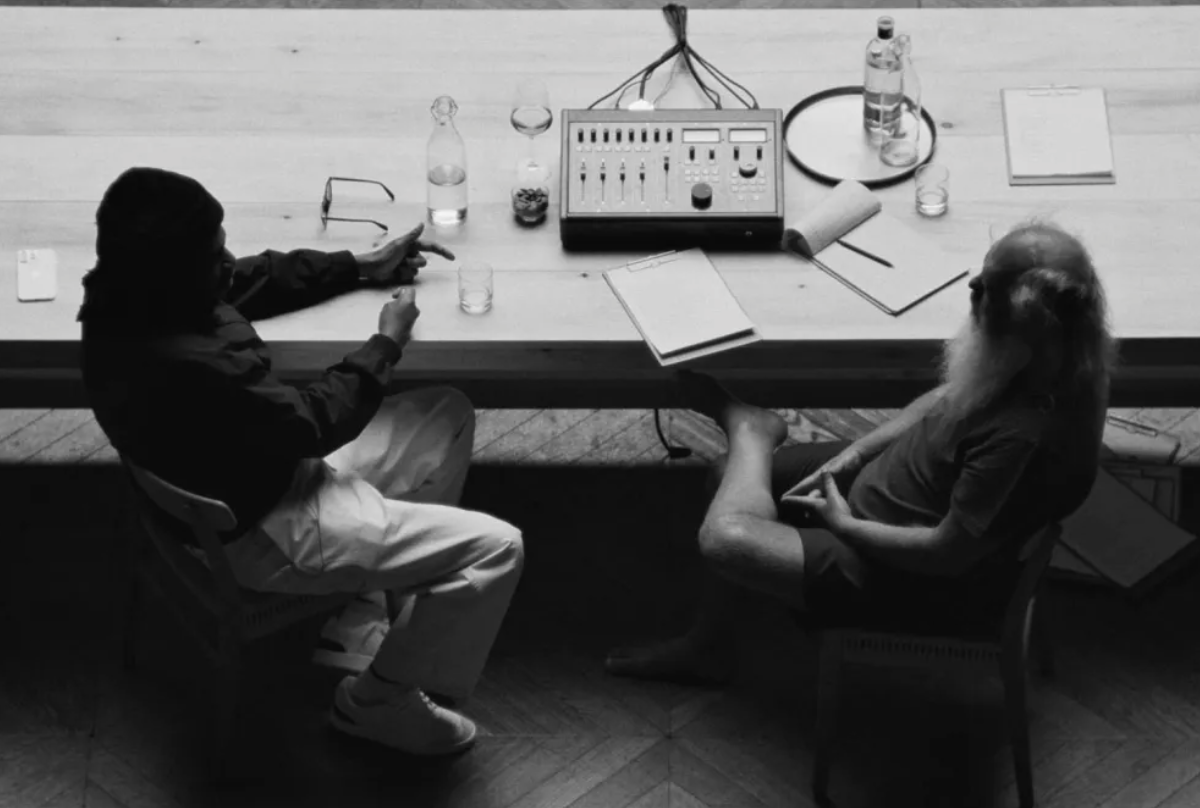
📌 HBO has set a September 18 premiere for Jay-Z in 8, an eight-part series built around an extended conversation between Jay-Z and Rick Rubin, working track by track through songs spanning Reasonable Doubt to 4:44. It lands mid-run: he plays two nights at Tottenham Hotspur Stadium this week, his only UK dates of the year, following a Yankee Stadium residency marking the 30th anniversary of his debut album. Where a standard music documentary hands an artist's story to an outside director, this one puts Jay-Z in direct control of how his own songwriting gets explained, with Rubin, a decades-long collaborator, directing rather than an unaffiliated filmmaker.
The series pairs Jay-Z with Rick Rubin across eight episodes, with two premiering September 18 and further pairs releasing weekly through an October 9 finale
Rubin, credited as director, is a longtime collaborator who produced "99 Problems," and the project is executive produced by Jay-Z, Rubin and Daniel Kaluuya
💡 An artist licensing their catalogue to someone else's documentary is renting out access to their own history. Directing the retelling himself, in conversation with someone who helped build the music rather than someone reporting on it afterward, is Jay-Z defending ownership of the narrative attached to work he already owns outright. That distinction matters more in a year when catalogues are being valued and acquired at unprecedented scale, because the artists most protected from having their story told by whoever bought the rights are the ones who control both the songs and the account of how they were made. The Tottenham shows this week and the HBO series next month are the same strategy in two formats: perform the catalogue, then narrate it, and own the terms of both. 🎙️
Berlin's Clubs Are Full and Still Losing Money, New Report Finds 🪩
📌 Berlin's Clubcommission published its first comprehensive club survey since 2019, and the headline finding cuts against the "Berlin nightlife is dying" narrative that's circulated since Watergate and SchwuZ closed. Since 2020, roughly as many clubs have opened as closed, and most venues report solid attendance. The crisis isn't empty dancefloors, it's a business model where full rooms no longer translate into a viable business, because the money that used to come from the bar increasingly doesn't show up.
24 clubs closed and 25 opened since 2020, while 83% of surveyed clubs reported at least 50% occupancy
61% of clubs broke even in 2025, down from 79% in 2017, with 39% now operating at a loss
💡 A venue that's full and still losing money is a different, harder problem than a venue nobody wants to visit, because there's no obvious lever left to pull. Cultural demand was supposed to be the thing clubs could always count on, and this report shows it holding while the economics underneath it quietly stopped working, likely a mix of falling bar spend, rising costs and a generation drinking less. That decouples footfall from survival entirely and puts the fix beyond anything a door policy or a lineup can reach. This is a cost-structure problem, and it gets solved on rent, licensing and staffing or it does not get solved. 🪩
👜 BRAND, CULTURE & CAMPAIGNS
Skims Splits Its Creative Director Role in Two as Supreme's Erin Magee Joins as Chief Design Officer 👜
📌 Skims restructured its top creative leadership this week rather than simply filling a vacancy, splitting what was previously a single creative director role into two newly created C-suite positions. Erin Magee arrives as Chief Design Officer after 22 years at Supreme, most recently as its Chief Creative Officer, taking charge of product design as the brand expands into new categories and international markets. Longtime creative director Kim Schraub moves up to the equally new Chief Brand Officer role, keeping ownership of brand storytelling, campaigns and retail while product design becomes a distinct function under Magee.
Magee spent 22 years at Supreme, joining in 2004 and rising to Chief Creative Officer before her exit was announced days before the Skims appointment
Schraub has led Skims' creative vision since before its 2019 launch and becomes the brand's first Chief Brand Officer, splitting brand from product for the first time
💡 Splitting the role rather than replacing the person is the actual signal here. A single creative director works when a brand is still finding its identity, but two dedicated functions only get built when a company expects product complexity to outgrow what one person can hold, which fits a brand pushing into new categories and international markets rather than defending its original one. Pulling Magee specifically from Supreme also matters: streetwear built its cultural authority through scarcity and cult community, the opposite of Skims' mass-market shapewear model, so the hire is a bet that discipline transfers across category even when the audience and mechanics don't. 👜
Drake Takes 44% of OVO as Authentic Buys Control and the Debt Gets Cleared 🦉
📌 A streetwear brand founded in 2008 with twelve flagship stores changed hands this week in a structure that reads differently depending on which document you start from. Authentic Brands Group has acquired 51% of OVO's intellectual property, with Drake retaining 44% and Vince Holding Corp taking 5% plus the operating business as global apparel licensee. The announcement frames it as a partnership to scale the brand worldwide. The transaction also requires Drake's side to deliver payoff letters and releases covering all OVO debt, against a backdrop of competing lawsuits with a lender that has been running since June.
Authentic holds 51% of OVO's IP, Drake retains 44% and Vince Holding Corp 5%, with Vince acquiring the operating business including twelve flagship stores
Lender Applied Real Intelligence alleged OVO defaulted on a $3.7m convertible note facility in February 2026; OVO repaid the principal in May under a forbearance agreement, and both parties filed competing suits in June over a disputed make-whole fee of roughly $3.8m
Financial information referenced in A.R.I.'s complaint states OVO generated $72m in revenue while operating at a loss
💡 Drake built OVO from a blog-era imprint into twelve stores and, per figures in the lender's own complaint, $72m of revenue that still did not cover its costs. That is the more instructive number here than the equity split, because it explains why a founder with total creative control accepted 44% of the thing he founded. Cultural reach and unit economics are separate problems, and Authentic sells a solution to the second one at the price of the first. Read against the Jay-Z entry above, where an artist at a comparable career milestone spent the same week tightening his grip on how his catalogue is performed and explained, two of the most commercially sophisticated artists of their generation reached opposite conclusions about control in seven days. The difference between them is which asset was actually losing money. 🦉
Gap Builds a Denim Campaign Around an HBCU Band Instead of Renting a Celebrity Face 🎺
📌 Gap's latest denim campaign centres Southern University's Human Jukebox marching band, one of the most recognisable ensembles in HBCU culture, performing its own arrangement of Robyn's "Dancing on My Own" in custom denim built around the band's own uniform details. The timing lands deliberately ahead of HBCU football and homecoming season, when marching bands become one of the biggest draws on campuses nationwide. Rather than pairing a celebrity face with a product, Gap handed the creative platform to an existing cultural institution and let its own sound and style carry the campaign.
The Human Jukebox's custom looks incorporate Southern University patches and design elements drawn directly from the band's traditional uniform
Band director Kedrick D. Taylor said Gap originally approached the band to back a different artist's commercial before restructuring the campaign around the band itself
💡 The default move with a band this recognisable is to book it as backing for someone else's spotlight, which is the plan Gap started with and then abandoned. Letting Human Jukebox carry the campaign alone treats HBCU band culture as a creative tradition with its own authority rather than texture layered under a bigger name, and the band director saying so publicly is worth more than any earned-media figure this campaign will report. Gap has spent several years trying to buy its way back into relevance through celebrity casting. This is the first recent instance where the institution it partnered with carried more credibility than the brand did, and Gap was willing to let that show. 🎺
Gucci's Debut Campaign for Demna Bets on Breadth Over Belonging 👜
📌 Gucci's first campaign under new creative director Demna assembles a genuinely disparate cast, Tom Brady, K-pop's Jin and Ningning, UK drill artist EsDeeKid, model Alex Consani, veteran actress Lee Young Ae, alongside a Kate Moss-led short film set to Chris Isaak's "Wicked Game." Where Demna's earlier, more provocative work picked a specific cultural argument to make, Primavera picks ten different audiences and asks each to recognise one familiar face. That's a different kind of bet than building standing inside any single subculture.
The campaign photographs ten individually shot portraits by Michal Chelbin, styled to reference Botticelli's Renaissance painting Primavera, alongside a separate Johan Renck-directed short film centred on Kate Moss
The cast spans sport, K-pop, drill, film and modelling with no shared genre or scene connecting the names beyond individual global recognisability
💡 A campaign built around one artist or one scene stakes a claim to real standing inside that world, the harder, slower route, but one that compounds. A campaign built around ten unconnected famous names from ten different audiences is closer to renting attention at scale: each name pulls in their own fanbase for the length of a campaign cycle, but none of those audiences has any reason to associate Gucci with a world it now belongs to. That's not necessarily the wrong call for a creative director's opening statement, maximum visibility matters more than depth in month one, but it does mean the harder work, choosing which single culture Demna's Gucci actually wants to own, is still ahead of him. 👜
What a Job Ad Reveals That a Strategy Deck Never Will 📋
📌 Most organisations still fuse brand strategy and brand communications into a single marketing role, the person who decides what a brand means also owns the campaign budget and gets measured on awareness, and the industry has largely stopped noticing how strange that is. Brand strategist Sandra Peat's newsletter Behaviour as Strategy used JLR's recent hiring round as a way into the pattern: six brand roles posted in a single week, split cleanly between strategists measured on pricing power and financial contribution and communications directors measured on narrative and campaign delivery, one pair for each marque. The interesting part isn't the org chart. It's that a job spec has to be filled by someone who actually shows up and does the thing it describes, which makes it a far more honest document than a press release ever is.
A press release describing a "brand-led transformation" is written to be read and an annual report is written to be defensible, whereas a job specification has to survive a hiring process and an actual person doing the role, making it one of the more reliable signals of what a company is really building
Fusing brand strategy and communications into one role is the default across most marketing organisations, and is the structural condition under which brand tends to get assessed on how it sounds rather than what it is worth
💡 A strategy deck describes what a company wants to be true. A job ad describes what has to be true for someone to get paid to do the work, which is why the gap between the two is where the real diagnosis sits. Splitting brand strategy from brand communications only matters if the strategist has genuine standing to win a capital allocation argument against a commercial or engineering one, and no job description can prove that, only the next eighteen months of who actually gets funded can. The more useful exercise than reading any single company's ads is applying the same method inward: look at your own organisation's last few brand hires, not the strategy language around them, and ask what the actual reporting lines and remits say brand is for. 📋
📺 MEDIA, STREAMING & PLATFORM
Paramount Turns Antisemitism Accusation Into Merger Defence as Ellison Control Deepens 🎬
📌 A merger governance dispute at one of Hollywood's largest studios escalated into a public reckoning over how consolidated ownership responds when criticism gets uncomfortable. Mark Ruffalo cited his own Paramount board member's description of technology Oracle supplied to the Israeli military, and asked what that supplier relationship means once the same family controls a major studio. Paramount answered with an antisemitism accusation rather than a response to the sourced claim, and Hannah Einbinder then broke ranks to defend him, turning a corporate dispute into a wider conversation about who gets to question consolidated ownership without being discredited for it.
Larry Ellison, father of Paramount Skydance CEO David Ellison, is financing both the 2025 Skydance-Paramount merger and the pending Warner Bros. Discovery deal
Safra Catz, Oracle executive vice chair and a Paramount board member, described technology Oracle supplied to the Israeli military as "profoundly scary" at a 2024 summit, the quote Ruffalo's post was built on
💡 Ruffalo's claim was narrow and sourced: a Paramount board member's own words about a supplier relationship, applied to the family now consolidating control of the studio. Paramount had an easy, boring option, correct the record or ignore the post. It chose an antisemitism accusation instead, which is a far harder claim to defend once a Jewish public figure with real standing on the subject calls it out. Einbinder's intervention didn't just defend Ruffalo, it forced the studio's response back onto the ownership question it was trying to avoid answering. Consolidated media power reaching for a conduct argument instead of a rebuttal is usually the signal that the rebuttal doesn't exist. 🎬
Sphere's Growth Story Rests on Two Engines, and Only One Is Being Renewed 🌐
📌 Sphere Entertainment's Q2 2026 results confirm the venue now runs on two distinct and genuinely proven revenue engines, concert residencies and original immersive content, but only one of them is being actively replaced as it ages. Wizard of Oz, the sole entry in Sphere's content category, is getting an enhanced "2.0" version rather than a successor, while the residency calendar keeps adding new marquee acts. Whether that's capital discipline or a widening gap in the content pipeline depends on which engine you think is actually driving the growth story analysts are pricing in.
Sphere segment revenue reached $226.4 million in Q2 2026, up 29% year-on-year, driven almost entirely by higher per-show Wizard of Oz revenue
Sphere generated $379 million in ticket sales across 1.7 million attendees in 2025, making it the world's highest-grossing arena that year on a mix of concert residencies including U2, the Eagles, Backstreet Boys and Metallica
An enhanced "Wizard of Oz 2.0" is scheduled for September, while Sphere's second original production, From The Edge, remains unopened almost 18 months after it was first announced
💡 The bull case is that Sphere doesn't need a content pipeline because residencies already do the heavy lifting, established acts with built-in fanbases are a lower-risk growth engine than commissioning original productions from scratch, and the venue's 2025 numbers back that up. The bear case is that residencies were never the differentiator, any arena can book a legacy act, but original immersive content was the thing only Sphere could do, and that pipeline has produced one title in two years. Both things can be true at once: the venue is financially healthier than its 2024 numbers suggested, and its most distinctive asset is being renovated rather than replaced. Those are different businesses carrying different multiples, and Sphere is currently raising expansion capital against the more valuable of the two while operating the more reliable one. Abu Dhabi and National Harbor partners should be underwriting a concert venue with an unusually good headline attraction, and pricing the content pipeline at zero until a second title actually opens. 🌐
NWSL Turns a Streaming Partner's Collapse Into a Bigger Platform 📺
📌 The NWSL's new Roku deal isn't simply an expansion, it's a replacement built at speed after the league terminated its agreement with Victory+ last month over missed rights payments. Roku picks up the Sunday night package for the rest of 2026 before scaling to 25 matches in 2027, free through the Roku Channel with no subscription required. Losing a rights partner mid-season is normally a story about instability. The NWSL turned it into evidence that demand for its media rights has grown enough to survive a partner failing.
The league said Roku emerged from a competitive process, with commissioner Jessica Berman citing it as a signal of "the growing value of NWSL media rights"
Roku says its reach will bring NWSL matches to more than half of US streaming households, and its Sports Zones saw a 122% year-on-year rise in streaming hours in Q2
💡 A league losing a media partner to a payment failure is normally forced to accept whatever replacement will take the inventory on short notice. That the NWSL instead ran a competitive process and landed a platform with materially larger reach than the one it lost is the actual signal here, not the deal itself. It suggests the value of women's soccer media rights has moved past the point where a single unreliable partner can meaningfully damage the league's negotiating position, which is a different market than the one the NWSL was operating in even two years ago. 📺
Disney+ Sponsors The Overlap Rather Than Owning It, and That's the Smarter Bet 📺
📌 Disney+ has signed a one-year deal as headline sponsor of The Overlap's Stick to Football and a new companion show pairing Wayne Rooney with content creator Mark Goldbridge, but the structure matters more than the sponsorship. The Overlap keeps its IP, its YouTube channel, and its existing audience relationship intact, while Disney+ gets a limited exclusivity window on select episodes before they migrate to YouTube anyway. Netflix has run a similar playbook with Goalhanger's The Rest Is Football. Streamers are increasingly renting access to an established creator's audience rather than trying to build their own version of it from scratch.
Disney+ gains 40 episodes of Stick to Football and 50 of Stick to United, with 20 guest episodes exclusive to the platform for a limited period before release on YouTube
Global acquired a majority stake in The Overlap in January 2026 and followed in April by buying Goldbridge's YouTube channels, consolidating what began as a podcast into a broader creator-led media network
💡 Neville made keeping The Overlap's YouTube channel intact a condition of the deal and Disney+ agreed, which tells you who needed the deal more. A streamer with a global subscriber base could not simply commission its own football podcast and expect the argument to follow, because the asset is an audience's habit of trusting five specific people to have that argument every week. Disney+ has bought a limited window on attention it cannot manufacture, while The Overlap keeps the IP, the channel and the relationship. Football fandom now runs all week rather than for ninety minutes, and the platforms competing for those other six days are finding that commissioning budget is no substitute for trust somebody else spent years accumulating. 📺
🤖 TECH, AI & ACCOUNTABILITY
Meta's $17.1bn Settlement Leaves the Hard Questions to an Auditor Nobody's Named Yet 📱
📌 Meta's settlement with 47 states over child safety claims arrived a day after testimony that undercut the company's own safety record: Instagram head Adam Mosseri confirmed under oath that just 1.8% of teens ever used its "Take a Break" feature, while Meta had publicly touted a 90% retention rate that only counted the small group who'd already turned it on. The settlement itself is substantial on paper, daily time limits, overnight access blocks, mandatory scroll interruptions, but enforcement runs through an independent auditor whose identity, powers and access remain undecided.
Meta will pay $12.1bn to states over ten years, with the remaining $5bn released only if YouTube and TikTok adopt matching restrictions and pay a comparable amount themselves
Required changes include a combined two-hour daily limit for teens across Instagram and Facebook with mandatory pauses, and a midnight to 6am access block, in force for at least five years
Media analysis firm Madison & Wall assessed the design changes as likely to have a "negligible" financial impact, since most Meta ad spend targets adults and recent growth has come from AI-driven ad performance rather than teen engagement
💡 A settlement's real terms live in the compliance mechanism, not the headline figure, and this one leaves the compliance mechanism undefined. An auditor with no confirmed identity, no confirmed powers and no confirmed public reporting requirement is a promise to check homework with no teacher yet appointed. That gap matters more here than usual because Meta's own testimony, a safety feature marketed on a 90% success rate that concealed a 1.8% actual adoption rate, shows the company has already demonstrated it will publicise a favourable framing while withholding the number that contradicts it. The states secured commitments; whether those commitments survive contact with an unnamed auditor and an ad business analysts already expect to absorb the changes without real cost is the part settled by nobody in this agreement. 📱
Apple Prices Its Local AI Bet Above the Cloud Alternative 💻
📌 Apple's refreshed Mac Mini and Mac Studio lean fully into on-device AI, with Apple citing up to 4x faster AI performance on the Mac Mini's new M6 chip and the ability to pool memory across linked M5 Ultra Mac Studio units to run larger models locally. Every configuration costs more than the generation it replaces, with the Mac Mini's entry price up $100 and the Mac Studio's top-end Ultra configuration up $200. The pitch is straightforward: pay a premium for hardware capable of handling AI workloads that would otherwise require a cloud subscription or third-party GPU server.
The Mac Mini's M6 chip is Apple's first built on a 2nm process, delivering what the company says is up to 8.5 times faster large language model processing than the M2 Pro version it replaces, now starting at $899
Mac Studio's M5 Ultra fuses two M5 Max dies into Apple's first quad-die chip, aimed at running larger models locally, with pricing starting at $5,499 for that configuration
💡 Apple is the only company at this scale that can set silicon, operating system and developer tooling as a single decision, and this generation is where that integration starts producing compounding returns rather than incremental ones. Running large models on the desk removes a recurring inference bill, but the more durable argument is procurement: the data never leaves the building. For legal, health and financial teams that have spent two years unable to sign off on cloud inference, that is the constraint that actually blocked deployment, and it is the one Apple has now priced against. Governance is tightening, not loosening, which makes this a structural position rather than a product cycle. 💻
Meta's Pocket Is a Bet That Vibe-Coded Software Can Become a Content Format, Not Just a Dev Shortcut 🎮
📌 Meta has rolled out Pocket nationwide in the US, an app that turns text prompts into small interactive "gizmos" people can play, remix and repost in a scrollable feed. It's built on a non-exclusive license and acqui-hired team from Gizmo, a startup Meta absorbed earlier this year, whose original app shut down the same day Pocket launched. Most vibe-coding tools are being sold as productivity infrastructure, software people build to use. Pocket is testing whether the same technology can instead become disposable social content, judged by whether it's fun to tap rather than whether it's useful.
Meta acqui-hired the team behind Gizmo, founded by former Snapchat engineers at Atma Sciences, earlier in 2026, taking a non-exclusive license to the underlying technology rather than a full acquisition
Pocket tested quietly in Brazil in July before the full US rollout, with Meta disclosing no usage figures, no ad model yet, and no data on gizmos created or users engaged
💡 Lovable and Emergent are valued in the hundreds of millions because they help people build software they will actually use for work. Pocket bets on a second and larger market for vibe-coded output with no purpose beyond being briefly entertaining, closer to a meme than an app, and shutting down the original Gizmo on launch day signals Meta is confident enough to absorb the team's output outright rather than run a parallel experiment. Worth holding next to the settlement above: Meta has launched an infinitely remixable feed in the same month it agreed to interrupt teen scrolling every fifteen minutes. Those two facts belong in the same sentence, and Pocket publishing no usage data at all suggests Meta would prefer they did not. 🎮
Apple Music Builds Its Own AI Labelling Standard Instead of Adopting the Industry's 🎵
📌 Apple Music will make AI transparency tags visible to listeners later this year, requiring labels and distributors to flag any track where AI generated a material portion of the content. The move follows a July push from the RIAA, IFPI and other major trade bodies for a shared two-tier "AI-Generated" versus "AI-Assisted" standard across all platforms. Apple's system uses a single threshold instead, its own design choice rather than the industry's proposed framework, arriving alongside Spotify's separate approach of labelling AI artist profiles rather than individual tracks.
Content providers, not Apple itself, are responsible for applying the tags, with Apple stating labels and distributors "are best positioned to know how their content was created"
Apple has separately doubled its penalty fees for streaming fraud, after Apple Music head Oliver Schusser said in January that AI content was a contributing factor to the proliferation of manipulated streams
💡 Apple already runs the fraud-detection infrastructure this labelling sits on top of, which is precisely why setting its own threshold beats adopting a trade-body framework it would have to take on trust: a label the platform can verify is worth more than one it can only pass through. The same logic runs through Apple's hardware announcements this week, where controlling the full stack is what makes the guarantee credible in the first place. Industry standards converge on whoever can enforce them, not on whoever drafts them first, and enforcement capability is the scarce asset here. 🎵

🎙️ Caitlin Clark and the Women's Sports Gold Rush
In the Game: An eMarketer Sports Marketing Podcast, hosted by Marcus Johnson, with Ethan Cramer-Flood and Paola Flores-Marquez
📌 It maps directly onto this edition's WNBA viewership record, Nike's Epicenter Week investment, NWSL's Roku deal and Rule42's AUSL stake, working through the "Clarkonomics" phenomenon, which women's sport or athlete could break out next, and how marketers should be pricing their entry before it gets more expensive.
✅ Worth Your Time Because: the analysts make the point plainly that media buyers aren't paying for what women's sports currently are, they're paying for the growth curve, and that changes how a sponsorship should be valued and timed. It's a useful corrective to treating this week's Fever-Sky numbers as a one-off rather than a pattern several of this edition's stories are independently confirming.

Tuesday 1 September – Sunday 7 September 2026
🎾 US Open reaches the fourth round and quarterfinal stage in New York, with Round of 16 play on 6-7 September, the tournament where this week's food, ticketing and creator-credential stories are all playing out in real time.
🎬 Venice Film Festival opens on 2 September with Danny Boyle's Rupert Murdoch drama Ink, running through 12 September under jury president Maggie Gyllenhaal, and setting the early tone for this year's awards conversation.
🎤 JAŸ-Z plays Tottenham Hotspur Stadium on 4 and 5 September, his only UK dates of 2026 and his first solo London shows since 2013, closing out a 30th-anniversary run that has doubled as a catalogue-ownership exercise all year.
✊🏾 Black on the Square returns to Trafalgar Square (5 September), London's free annual celebration of Black culture through music, food and community programming.