Start with the fact that tells you everything. In 1974, Elvis Presley wanted to record "I Will Always Love You". For a country songwriter from East Tennessee, this was the phone call of a lifetime. Then Colonel Tom Parker explained the terms: Elvis took half the publishing on everything he cut. Dolly Parton, twenty-eight years old, said no. She cried all night, by her own account, and she still said no. Eighteen years later Whitney Houston's version became one of the biggest-selling singles ever recorded, and every royalty from it flowed to the woman who had refused to give her song away. She would later joke that she bought a lot with that money. What she actually bought, decades earlier, was the principle: the writing is the asset, and the asset is not for sale.
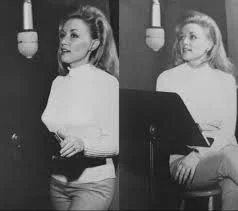
That decision sits at the centre of everything worth saying about her, because Dolly Parton was, before anything else, a writer. Over 3,000 songs, by most counts. She wrote "Jolene" and "I Will Always Love You" in the same burst of work, an afternoon most songwriters would trade their entire catalogue for. She wrote "Coat of Many Colors", still the truest three minutes ever recorded about poverty and pride, about a childhood in a one-room cabin in Locust Ridge as the fourth of twelve children, delivered by a doctor her father paid with a sack of cornmeal. She never dressed that childhood up and never weaponised it for sympathy. She just wrote it plainly, and plainness is why it lasts.
The career that followed was a masterclass in knowing exactly what you are worth before anyone else does. She spent seven years as the girl singer on The Porter Wagoner Show, learning television, learning audiences, learning the business from inside a partnership that increasingly wanted to contain her. When she left in 1974, she didn't issue a statement. She wrote "I Will Always Love You" for him, sang it to his face, and walked. It remains the most graceful exit in the history of the music business, and one of the most ruthless. Both things at once. That was always the trick.
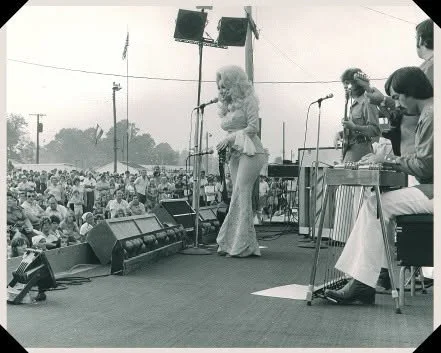
Then she did what almost no country artist of her generation managed: she crossed over without apologising for where she came from. "9 to 5" took her to Hollywood, an Oscar nomination and two Grammys, and smuggled a genuinely radical piece of workplace feminism into the middle of the pop charts while the industry was still congratulating itself for letting women in the room. She played the Vegas rooms and the mountain fairs. She built a persona so heightened, the wigs, the rhinestones, the figure, that lazy observers mistook it for the product. "It costs a lot of money to look this cheap," she said, and in one line took ownership of every joke anyone would ever try to make at her expense. The look was a decoy. Behind it sat one of the sharpest operators the entertainment business has ever produced.
The proof is in what she built when the radio moved on. In 1986 she took over a struggling theme park in Pigeon Forge and turned it into Dollywood, now the engine of an entire regional economy and one of the most visited attractions in America, in her home county, employing her people. Where her peers licensed their names, she built infrastructure. And in 1995 she started the Imagination Library, mailing free books to children from birth to school age, which grew from Sevier County to a programme that has now given away well over 250 million books across five countries. When researchers at Vanderbilt needed early funding for what became the Moderna COVID vaccine, she quietly wrote a million-dollar cheque. She turned down the Presidential Medal of Freedom twice rather than let herself be claimed by one side of a divided country, and asked Tennessee's legislature to withdraw a statue of her from the Capitol grounds because, she said, the timing felt wrong. Almost nobody in public life declines monuments. She understood that the refusal was the legacy.
That instinct, knowing precisely which honours to accept and which to sidestep, is why she achieved something close to impossible in modern culture: universal ownership. Country audiences claimed her as their own. Pop claimed her. The gay community claimed her decades before it was commercially safe to be claimed, and she never once flinched from the embrace. Church congregations and drag queens sing the same songs. In a fractured culture, she was the last remaining figure everyone agreed on, and she got there without ever being bland, without ever hiding what she believed, and without ever telling anyone else what to believe. That balance is the hardest act in public life and she held it for sixty years.
Her sister Stella shared this week that Dolly, knowing her own diagnosis, told her medical team to try experimental treatments anyway, in the hope the results might help patients who came after her. "My sister was always thinking of others," Stella wrote. It is exactly the ending the life predicts. Even her final act was structured like everything else she ever did: generous, practical, and built to keep paying out long after she'd left the room.
I've spent my career around brands and artists trying to manufacture what Dolly Parton simply had, a self so fully authored that the world eventually stopped trying to edit it. She wrote her own songs, kept her own publishing, built her own businesses, funded her own causes and controlled her own image down to the last rhinestone. The lesson for anyone who works in culture is uncomfortable in its simplicity: she never chased a single trend in six decades, and she outlasted every artist who did.
The flags are at half-mast across America, including the White House. Somewhere in that detail is the whole story. A girl from a cabin with no electricity, in her own words a backwoods Barbie, closed the distance between the Smoky Mountains and the centre of national life without ever once pretending to be anything other than exactly what she was.
God rest her. And God help the rest of us trying to write anything half as true.