
Welcome to the next edition of On The Record, thoughtful analysis on culture, entertainment, tech, fashion, music, sport, and brands. Here’s a round-up of key conversations and campaigns that caught my attention this week.
This week reflects a broader reconfiguration of how value is created, controlled and extended across sport, media and culture. From the NFL building a full-stack ecosystem around flag football to Netflix and Formula 1 doubling down on high-impact, attention-rich moments, ownership is shifting from singular assets to entire lifecycles and cultural calendars. At the same time, media and platforms are renegotiating their economic models, whether through creator-led content, distributed newsletters or the introduction of advertising into AI, revealing a move towards lighter, partnership-driven and audience-first systems. Across beauty, sport and music, participation and identity are being reframed as long-term infrastructure, while regulatory pressure on platforms and brands signals a tightening around responsibility, safety and representation. Even in moments of virality, from KitKat to Gymshark, the pattern is consistent: the brands winning are those that can design, capture or amplify culturally fluent moments within increasingly crowded and competitive environments.

NFL Backs Flag Football’s Pro Future with TMRW Sports 🏈
📌 The National Football League has partnered with TMRW Sports to launch a new professional flag football league, targeting both men and women as the sport rapidly scales globally. Backed by a heavyweight investor group spanning athletes like Tom Brady and Serena Williams, alongside major institutional capital, the league is positioned as the final piece in a fully commercialised flag football pathway. While TMRW Sports is co-founded by Tiger Woods, his absence from the NFL’s official announcement is notable, particularly given recent off-course issues, with the league foregrounding the broader ecosystem and investor group instead. The move signals a strategic shift by the NFL to build a parallel, more accessible format of the game aligned with evolving media habits and Olympic momentum heading into Los Angeles 2028 Olympic Games.
20 million people now play flag football globally
4.1 million youth players in the U.S., up over 50% since 2020
Participation among high school girls increased nearly 60% between 2024 and 2025
💡 This is less about launching a league and more about owning the full lifecycle of a sport. By formalising flag football from grassroots to pro and aligning it with Olympic visibility, the NFL is building a parallel product that is more accessible, more inclusive and more compatible with modern media consumption. The decision to centre the system over individual star power also reflects how brands are increasingly managing reputational risk in real time, ensuring the long-term asset remains insulated from short-term volatility.
ITV Rejects In-Play Ads at World Cup Amid Regulatory Trade-Offs 📺
📌 ITV will reportedly avoid running adverts during in-game drinks breaks at the upcoming FIFA World Cup, despite organisers allowing the format due to heat-related stoppages. UK broadcasting rules enforced by Ofcom mean taking advantage of these new ad slots would force ITV to cut inventory elsewhere, reducing overall commercial flexibility. The decision also reflects limited advertiser access, with only official FIFA sponsors permitted to activate during these moments, signalling how regulation and rights structures continue to shape monetisation strategies in live sport.
Two drinks breaks per match are expected due to extreme heat conditions
Ads would need to start 20 seconds into the break and end 30 seconds before play resumes
Only official FIFA sponsors are eligible to advertise during these breaks
💡 This is a clear example of how media monetisation is no longer just about new inventory, but about regulatory and structural constraints. While global broadcasters push further into in-play advertising, ITV’s decision shows that in tightly governed markets, not all innovation translates into commercial upside, especially when rights, regulation and limited sponsor pools restrict who can participate and how value is distributed.
Netflix Eyes Expanded NFL Rights in Push for Live Sports Scale 🏈
📌 Netflix is exploring an expanded rights deal with the National Football League, aiming to grow its current two-game package into a four-game slate. The streamer is reportedly targeting newly created tentpole moments, including a Thanksgiving Eve fixture and an international season opener, as it deepens its move into live sports. The shift reflects Netflix’s broader strategy to layer culturally dominant live events into its platform, using premium sport to drive reach, retention and real-time engagement beyond its traditional on-demand model.
Netflix currently holds rights to two NFL Christmas Day games
The proposed expansion would double its package to four games
Targeted additions include a Thanksgiving Eve game and an international opener
💡 Netflix is no longer experimenting with live sport, it is selectively scaling it around cultural moments that already command mass attention. By focusing on high-impact calendar slots rather than full-season rights, it is building a more efficient model of sports investment, one that maximises audience spikes and advertiser appeal without the cost burden of traditional broadcast deals.
Gymshark Turns “More Than a Patch” Into a Cultural Recovery Moment 🥔
📌 Gymshark reimagined the post-race experience at HYROX London, replacing the standard patch reward with a culturally resonant recovery moment, jacket potatoes. Drawing on references from Kim Kardashian to Grime Gran, the activation shifted the focus from performance to comfort, recovery and community. By extending beyond the finish line, Gymshark positioned itself within a more human, shareable and culturally fluent part of the experience, turning an overlooked moment into a brand asset.
Activation replaced traditional race patches with an experiential food moment
Rooted in culturally recognisable references to drive relevance and shareability
Focused on the post-race window, an often overlooked moment in fitness events
💡The smart play here is designing for the comedown, not just the high. Gymshark identifies the emotional and physical gap after peak performance and fills it with something culturally resonant and instinctively right. It’s a shift from rewarding effort to shaping memory, turning a functional endpoint into a ritual that builds longer-term brand affinity.
Dua Lipa Steps Into Cultural Curation at London Literature Festival 📚
📌 Dua Lipa has been named curator of the 2026 London Literature Festival at the Southbank Centre, marking its 75th anniversary year. Through her Service95 Book Club, she will programme a series of talks and events featuring both established and emerging writers, extending her influence beyond music into literary and cultural spaces. The move signals how artists are increasingly operating as cross-disciplinary curators, using personal platforms to shape cultural agendas and bring new audiences into traditionally niche formats.
Festival runs from 21 October to 1 November 2026
Dua Lipa will curate across the opening weekend and wider programme
The festival forms part of the Southbank Centre’s 75th anniversary and the UK’s National Year of Reading
💡This reflects a broader shift where cultural authority is no longer confined to institutions, but shared with individuals who carry global audiences. By positioning herself as a curator rather than just a performer, Dua Lipa extends her brand into cultural infrastructure, bridging entertainment and literature while helping institutions tap into new, younger and more globally connected audiences.
Sephora and Benefit Probed Over Marketing Skincare to Children 💄
📌 Sephora and Benefit Cosmetics, both owned by LVMH, are under investigation by Italy’s Autorità Garante della Concorrenza e del Mercato over alleged marketing of adult skincare products to children. The probe centres on claims that products such as serums and anti-ageing creams were promoted to minors, potentially without clear warnings, and amplified through young micro-influencers. The case reflects growing concern around “cosmeticorexia”, a trend of compulsive skincare use among young audiences, and signals increasing regulatory scrutiny on how beauty brands engage vulnerable demographics.
Investigation includes concerns around children aged under 10–12 being targeted
Focus on use of young micro-influencers to drive product demand
Authorities also examining whether product warnings and suitability guidance were clearly communicated
💡 This marks a shift from cultural conversation to regulatory enforcement. What began as a social media debate around “Sephora kids” is now being formalised into scrutiny of marketing practices, influencer ecosystems and product positioning. For brands, it signals that youth engagement strategies are no longer just a growth lever, but a compliance risk, where cultural relevance, responsibility and transparency must now operate together.
Female Headliners at The O2 Surge 300% as Live Music Rebalances 🎤
📌 Female headliners at The O2 Arena have increased by more than 300% since 2016, reflecting a significant shift in the live music landscape. According to AEG Presents, the number of women leading shows has grown from just eight acts in 2016 to 38 today, including major multi-night runs from artists like Ariana Grande, Raye and Olivia Dean. The growth signals both rising demand for female-led performances and the increasing commercial power of female fandom, even as structural challenges around perception and representation persist.
Female headliners at The O2 grew from 8 in 2016 to 38 today
Increase of over 300% across a decade
Includes multiple sold-out residencies from leading female artists
💡 This is more than representation, it’s revenue. Female artists are no longer filling gaps in line-ups, they are driving the business model of live music, from multi-night residencies to rapid sell-outs. The shift signals a recalibration of who commands scale, attention and ticket demand, even as the industry continues to work through deeper cultural and structural biases.
Black Music Drives UK Revenue But Leadership Gap Persists 🎧
📌 A report from UK Music reveals that Black music has generated 80% of the UK music industry’s £30bn revenue over the past 30 years, despite continued underrepresentation in executive roles. Industry leaders and organisations including Black Lives in Music are calling for greater investment in both leadership pathways and homegrown genres such as grime and garage. The findings highlight a structural imbalance, where cultural and commercial influence is not reflected in decision-making power or career progression at the top of the industry.
Black music contributed £24.5bn of the UK’s £30bn music revenue over 30 years
Only 22% of senior industry roles are held by Black, Asian and minority ethnic professionals
London’s population is 46% ethnically diverse, highlighting the representation gap
💡 This exposes a long-standing imbalance between cultural output and institutional power. While Black music continues to define global sound and drive industry revenue, leadership structures have not evolved at the same pace. For the industry, this is no longer just a representation issue, it is a structural one, where failing to align decision-making with the source of cultural value risks limiting both innovation and long-term growth.
Angel City FC Builds Player-to-Business Pipeline with “Player Futures” 💼
📌 Angel City FC has launched “ACFC Player Futures,” a programme designed to transition former players into business roles across the club, spanning marketing, partnerships, operations and community impact. The initiative creates a formal internal pathway for athletes post-retirement, with founding captain Ali Riley stepping into a commercial and creative partner role. By embedding player experience into organisational functions, the club is integrating on-field insight directly into its commercial and cultural strategy.
Programme creates structured pathways for retired players into club operations
Roles span marketing, partnerships, operations and community impact
Ali Riley becomes one of the first to transition into a senior commercial-facing role
💡 This is talent retention reframed as competitive advantage. Rather than losing institutional knowledge when players retire, Angel City FC is operationalising it, turning lived experience into strategic input across the business. It signals a broader shift in sport towards building holistic ecosystems, where athletes are not just talent, but long-term contributors to brand, culture and commercial growth.
Snap Faces Activist Pressure to Cut Costs and Go All-In on AI 📉
📌 Shares in Snap Inc. jumped after activist investor Irenic Capital Management outlined a plan to increase the company’s value nearly sevenfold. The proposal calls for major structural changes, including cutting 21% of the workforce, accelerating AI adoption and shutting down its augmented reality glasses unit, Specs. The intervention highlights mounting pressure on Snap to shift from experimental innovation to operational efficiency, as investors push for clearer paths to profitability and long-term value creation.
Snap shares rose 14% following the activist proposal
Plan targets stock growth from $3.93 to over $26 per share
Includes cutting around 1,000 jobs, roughly 21% of the workforce
💡 This is a familiar pivot playing out across tech, where experimentation is being deprioritised in favour of efficiency and AI-led scale. For Snap, the tension sits between its identity as an innovation-driven platform and investor demands for disciplined growth. The outcome will signal whether creativity-led tech companies can sustain long-term value without conforming to the same cost-cutting and automation playbook reshaping the wider industry.
The Spectator Swings to Loss Amid Costly Ownership Transition 📰
📌 The Spectator reported a £6.6m pre-tax loss in 2024 following its £100m acquisition by Paul Marshall, with a prolonged 15-month sale process significantly impacting performance. Total transaction-related costs reached £11.4m, weighing on profitability despite stable circulation growth and rising subscription revenues. The case highlights how ownership transitions and structural change can disrupt core revenue streams like advertising and events, even as publishers double down on direct-to-consumer models.
£11.4m total costs linked to the sale process
£6.6m pre-tax loss in 2024, following a £2.6m profit in 2022
Circulation revenue rose 6.7% to £15m despite overall turnover decline
💡 This reflects a broader tension in media between short-term disruption and long-term repositioning. While ownership change has created immediate financial pressure, investment into subscriptions and owned platforms signals a shift towards more resilient, reader-led revenue models. The challenge for legacy titles is managing that transition without eroding the commercial stability that sustains them in the interim.
Mary Fowler Lands Record adidas Deal as Women’s Football Value Surges 👟
📌 Mary Fowler has signed a reported $10m, five-year deal with adidas, cementing her position as one of the most commercially valuable athletes in women’s football. The agreement follows standout performances for club and country, as well as growing cultural visibility spanning fashion and global brand partnerships. Fowler’s trajectory reflects how elite female athletes are increasingly operating at the intersection of sport, style and media, becoming multi-dimensional assets for brands.
Deal reportedly worth $10m over five years
Comes after major international tournament visibility and club success
adidas continues to build a high-profile women’s roster including Aitana Bonmatí and Trinity Rodman
💡 This signals a shift from endorsement to ecosystem building. Brands like adidas are not just backing performance, they are investing in athletes who can move across culture, from pitch to runway to social. Mary Fowler represents a new archetype, where commercial value is driven as much by cultural relevance and cross-platform visibility as it is by sporting success.
US Public Media Funding Fight Escalates Despite Court Ruling 🎙️
📌 A federal judge has ruled that Donald Trump’s executive order to block federal funding for NPR and PBS is unconstitutional under the First Amendment. However, the practical impact is limited after Congress separately voted to withdraw $500m in annual funding from the Corporation for Public Broadcasting, which supports both outlets. As a result, NPR and PBS are accelerating efforts to diversify revenue streams amid ongoing political and financial pressure.
$500m in annual funding removed by Congress
Court ruled executive order unconstitutional under First Amendment
NPR and PBS are actively seeking alternative revenue models
💡 This highlights a growing decoupling between legal wins and financial reality in media. Even when protections hold at a constitutional level, funding structures can still be reshaped through political and legislative routes. For public media, the challenge is shifting from state-backed stability to hybrid or market-driven models, raising broader questions about independence, accessibility and long-term sustainability.
Chicago Bulls Waive Jaden Ivey Following Anti-LGBTQIA+ Comments 🏀
📌 The Chicago Bulls have waived Jaden Ivey after the 24-year-old made anti-LGBTQIA+ comments on social media. Despite the decision, Ivey will still receive his full $10.1m salary, reflecting contractual obligations. The move underscores how franchises are increasingly taking swift action on conduct issues that conflict with league values and broader cultural expectations.
Ivey waived shortly after being acquired by the Bulls
Will still receive full $10.1m salary despite release
Decision follows anti-LGBTQIA+ comments on social media
💡Teams are operating as cultural institutions as much as sporting ones, where player behaviour directly impacts commercial partnerships, fan communities and organisational values. The speed of the response signals how non-performance issues are now central to risk management, even when financial consequences remain unchanged.
Australia’s Under-16 Social Ban Falters as Kids Stay Online 📱
📌 Australia’s landmark social media ban for under-16s is under pressure, with investigations launched into Meta, TikTok and Google over alleged non-compliance. Despite the law, around 70% of under-16s who previously had accounts on platforms like Instagram, Snapchat and TikTok have reportedly maintained access, exposing gaps in enforcement and age verification systems. The findings highlight the difficulty of regulating platform behaviour at scale, particularly when technical safeguards and compliance incentives remain limited.
Around 70% of under-16s with existing accounts retained access post-ban
Overall usage dropped from 49.7% to 31.3% among surveyed children
Platforms face potential fines of up to A$49.5m for non-compliance
💡This underscores the gap between policy ambition and platform reality. Regulation can set boundaries, but without robust enforcement mechanisms and aligned incentives, platforms retain control over how rules are applied. For governments and brands alike, it signals that digital environments cannot be reshaped through legislation alone, especially when product design, user behaviour and commercial interests remain deeply intertwined.
Ulta Beauty Builds Athlete Collective to Link Performance and Self-Expression 💄
📌 Ulta Beauty has launched the “Ulta Beauty Roster,” a collective of professional female athletes designed to connect beauty, confidence and athletic performance. The initiative positions beauty routines not as superficial, but as part of mental preparation and self-expression, while also introducing a grant programme to support the next generation of female talent. By combining athlete advocacy with funding, Ulta is expanding its role from retailer to cultural enabler within women’s sport.
Launch includes a roster of professional female athletes across sports
Accompanied by a grant programme to support emerging talent
Focuses on confidence, self-expression and retention of women in sport
💡 This reframes beauty as performance infrastructure rather than aesthetics. By aligning with athletes and funding pathways for participation, Ulta Beauty is tapping into a deeper cultural narrative around confidence and belonging in sport. It reflects a broader shift where brands are building ecosystems, not just campaigns, embedding themselves into the long-term development of both identity and participation.
Washington Post Turns to Creator-Led Video to Unlock New Revenue 📹
📌 The Washington Post is expanding into creator-led video series as part of a new revenue strategy following newsroom cuts. The publisher’s model allows creators to retain ownership of their IP while co-producing content that runs across both their own channels and The Post’s platforms, lowering production costs and increasing appeal to talent. Backed by brand sponsorships, including an initial partnership with Samsung, the move reflects a broader shift towards personality-led content and diversified monetisation in response to declining referral traffic and changing audience behaviours.
Creators retain ownership of their IP, reducing costs for the publisher
New video series launched every few weeks across multiple verticals
Revenue model built around brand sponsorships and shared income
💡 This is a structural pivot in how media companies think about content ownership and cost. By giving creators control of IP, The Washington Post trades long-term asset ownership for short-term efficiency and audience access. It signals a shift towards lighter, partnership-driven models where publishers act as platforms and validators, rather than sole producers, in order to compete in an increasingly creator-led attention economy.
The Guardian Experiments with Substack to Reach New Audiences 📩
📌 The Guardian is piloting its first Substack experiment by cross-posting its popular Feast food newsletter to Substack, as part of a broader push to expand distribution and audience reach. With over 100,000 subscribers and open rates nearing 70%, Feast serves as a test case to explore whether Substack can unlock new, incremental readership beyond The Guardian’s existing base. The move sits within a wider industry trend of publishers meeting audiences where they already are, rather than relying solely on owned platforms.
Feast newsletter has 100,000+ subscribers with ~70% open rates
The Guardian has over 5 million newsletter subscribers in total
Experiment may expand to other newsletters if successful
💡This reflects a strategic shift from platform ownership to audience access. By distributing content within ecosystems like Substack, publishers are prioritising discovery and engagement over strict control, even if it means ceding some direct relationship value. The key question is whether these platforms deliver genuinely new audiences, or simply redistribute existing ones across a more fragmented media landscape.
Kimi Antonelli Becomes Youngest Championship Leader After Japan Win 🏎️
📌 At just 19, Kimi Antonelli secured victory at the Japanese Grand Prix, putting the Mercedes-AMG Petronas Formula One Team driver at the top of the World Drivers’ Championship. A well-timed Safety Car period enabled a crucial pit stop, setting up a decisive restart that Antonelli converted into a race win. With upcoming race cancellations, he is set to hold the championship lead for an extended period, marking a significant moment in the emergence of a new generation of Formula 1 talent.
Antonelli becomes the youngest-ever World Drivers’ Championship leader
Victory secured through strategic pit stop during Safety Car period
Lead expected to hold for at least six weeks due to race cancellations
💡 Formula 1 is increasingly rewarding younger drivers not just with opportunities, but with competitive machinery and strategic backing. For the sport and its partners, emerging talent like Antonelli offers a fresh commercial narrative, one that blends performance with long-term storytelling potential across global audiences.
Meta’s Community Notes Model Faces Global Pushback Over Misinformation Risks 🌐
📌 Meta has been warned by its own Meta Oversight Board that its “Community Notes” system is not a viable replacement for professional fact-checking at a global scale. The advisory highlights risks around misinformation, particularly in elections, conflict zones and regions with human rights concerns, where crowdsourced moderation could be manipulated or fail to act quickly enough. The critique comes as Meta continues to phase out traditional fact-checking partnerships in favour of a user-led model, raising questions about accountability, accuracy and platform responsibility.
Only around 900 Community Notes published in first six months in the U.S.
Compared to ~35 million fact-check labels applied in the EU over a similar period
Oversight Board warns of risks in elections, crises and repressive regimes
💡 This exposes the limits of decentralised moderation at scale. While Community Notes reduce operational cost and shift responsibility to users, they lack the speed, authority and safeguards of professional systems, especially in high-risk contexts. For platforms, the trade-off between efficiency and accountability is becoming harder to defend, particularly as regulatory and societal expectations around misinformation continue to rise.
ChatGPT Expands Ads Pilot Internationally as AI Monetisation Scales 🤖
📌 OpenAI is expanding its advertising pilot within ChatGPT to Australia, New Zealand and Canada, following initial testing in the U.S. The rollout will apply to free-tier users, with ads clearly labelled and separated from responses, while paid tiers remain ad-free. The move signals a cautious step into monetisation, balancing commercial opportunity with user trust, as OpenAI emphasises that ads will not influence answers and that privacy and control will remain central to the experience.
Ads limited to free and Go tier users, with paid tiers remaining ad-free
Expansion follows strong usage growth, with usage doubling in Australia over the past year
Ads will be contextually matched to conversations but clearly separated from responses
💡 This marks the formalisation of AI as an ad-supported medium. The challenge is not introducing ads, but integrating them without breaking trust in the core product, where utility and neutrality are the value proposition. For brands, this opens a new frontier of intent-driven discovery, while for platforms, it sets a high bar, monetisation must feel additive, not intrusive, or risk undermining the entire experience.
OpenAI Delays ChatGPT “Adult Mode” to Prioritise Core Experience 🔞
📌 OpenAI has postponed the launch of an “adult mode” for ChatGPT for a second time, shifting focus towards improvements in personalisation, intelligence and overall user experience. The feature, which would allow adult content with age verification safeguards, has been delayed as the company continues to refine its ability to accurately identify and protect younger users. While OpenAI maintains its long-term intent to introduce the feature, the decision reflects a prioritisation of scale, safety and mainstream utility over niche expansion.
Second delay since the feature was first announced in late 2025
Focus redirected to personalisation, intelligence and proactive features
Age verification and safety systems remain a key blocker
💡 While demand exists for more permissive use cases, OpenAI is prioritising features that benefit the widest audience and reinforce safety infrastructure. It signals that in AI, expansion into edge use cases will only follow once core systems, particularly around identity and protection, are robust enough to support them.
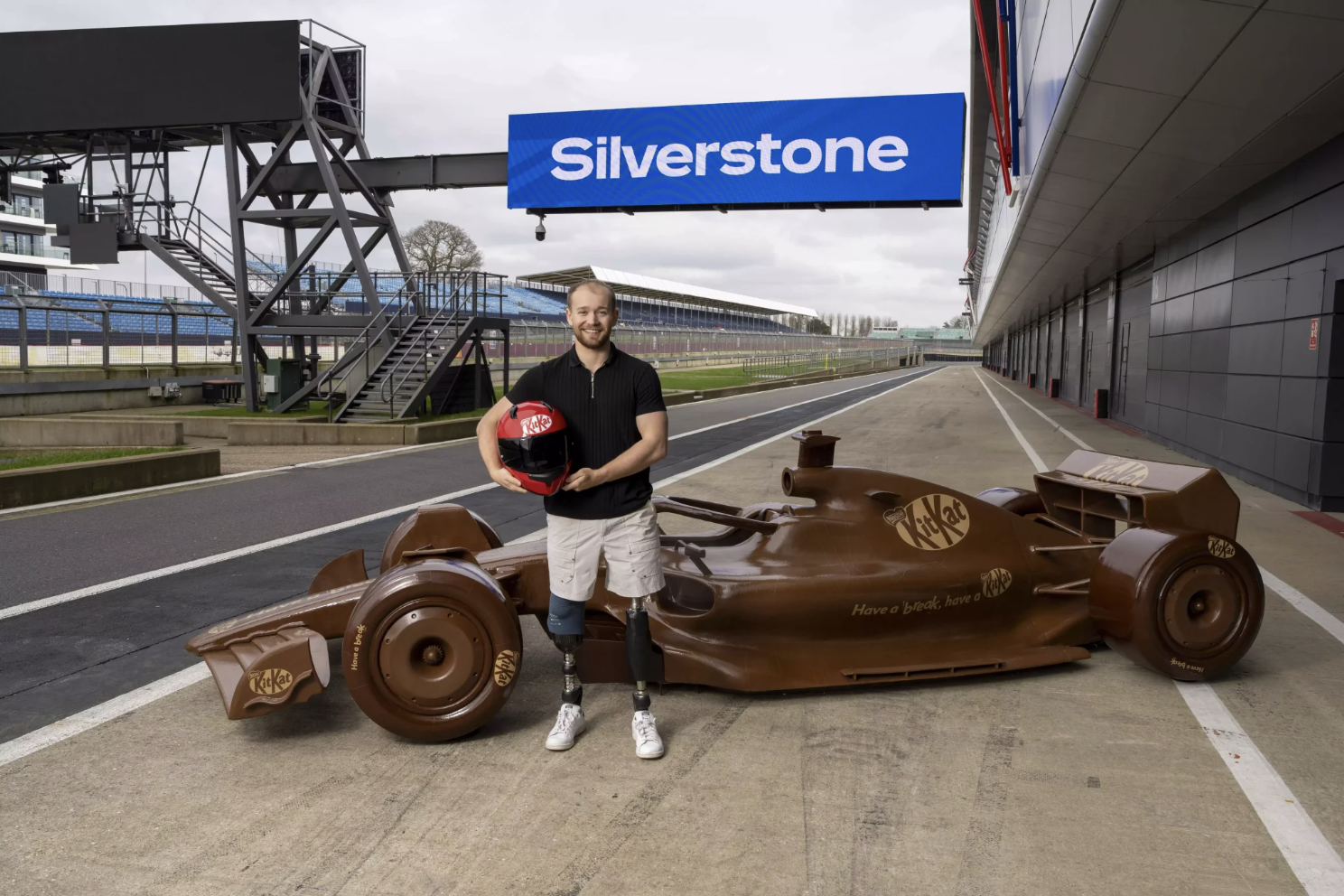
KitKat Heist Sparks Debate Over PR Stunt or Pure Virality 🍫
📌 KitKat, owned by Nestlé, turned a ‘reported’ theft of over 400,000 chocolate bars into a viral moment, but questions are emerging over whether the incident was entirely organic. The timing, just before Easter and close to April Fools’, alongside highly shareable visuals tied to its Formula 1 partnership, has prompted industry speculation about whether the comms strategy amplified, or even anticipated, the narrative. Now in the second year of its F1 deal, KitKat is operating in an increasingly crowded sponsorship ecosystem, where brands must work harder to cut through a saturated field of partners all competing for attention across the same global calendar.
Over 413,000 KitKat bars reportedly stolen in transit across Europe
Story gained global traction through memes, media and brand participation
Occurs during year two of KitKat’s Formula 1 partnership
💡 Formula 1 has become one of the most commercially dense environments in sport, with brands competing not just for visibility, but for cultural relevance within a highly choreographed ecosystem. In that context, moments like this, whether planned or opportunistic, become disproportionately valuable. They offer a way to break out of the sponsorship clutter and create distinct brand memory in a space where traditional activations increasingly blur together.

🎙️ Dove’s ‘Real Beauty’ Wins the Effective 100
WARC Podcast featuring Zoe Hamilton and Amy Rodgers
📌 This episode unpacks why Dove’s Real Beauty platform - now over 20 years old - has been ranked the most effective campaign in the world by WARC, offering a timely counterpoint to today’s obsession with short-term virality.
✅ Worth Your Time Because: It shows how long-term consistency and cultural resonance can drive sustained growth, with Real Beauty evolving alongside conversations around identity and representation while maintaining a clear brand platform. Backed by data from WARC, it reinforces that enduring ideas - not reactive campaigns - are what build lasting cultural capital and competitive advantage today.

👀 Things to Be Aware Of This Week
(Monday 8 April – Sunday 14 April 2026)
⛳ The Masters Tournament tees off at Augusta National (9–12 April) — golf’s most iconic stage resets the global sports conversation and luxury brand ecosystem in one weekend.
🎡 Coachella Weekend 1 lands in California (10–12 April) — the year’s most influential collision of music, fashion and brand activations kicks off, setting the tone for summer culture.
🐎 The Grand National takes place at Aintree (11 April) — still one of the UK’s most culturally embedded sporting events, cutting across sport, betting and mainstream attention.
⚽ UEFA Champions League quarter-final second legs begin (14–15 April) — decisive European nights that dominate global football attention and brand visibility.
🏀 NBA Play-In Tournament begins (from 14 April) — the league’s high-stakes pre-playoff format returns, sharpening narrative arcs ahead of postseason.