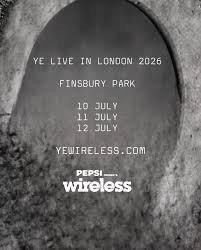
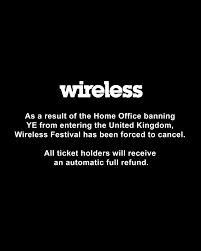
The cancellation of Wireless Festival following the decision to deny Kanye West entry into the UK has dominated conversation. For good reason.
But this is not a failure of booking.
At this level, decisions are made with full visibility of both opportunity and risk.
This sits at the intersection of culture, commerce and governance - and exposes how quickly alignment can break under external pressure.
Headliners Are Long-Lead Cultural Bets
At this level, festival bookings are not reactive decisions. They are 12-18 month strategic plays.
Promoters are aligning:
Global touring cycles
Routing and availability
Stadium-scale production
Exclusivity clauses
Revenue forecasts
By the time a lineup is announced, contracts are signed, deposits are paid, and an entire ecosystem is already in motion.
For Wireless, a platform built on hip hop and contemporary culture, the pool of artists capable of headlining at that level is inherently limited.
There are only a handful of names that can truly move the needle.
This is not a flexible system. It is a committed one.
This Was Always a High-Risk Booking
Let’s be clear.
Ye’s words and actions over recent years have been widely condemned. This was never a neutral booking.
That risk existed at the point of decision-making.
There were early signals of attempted rehabilitation - including a full-page apology referencing his bipolar diagnosis and the long-term effects of a past car accident.
But rehabilitation at this level is not defined by singular gestures. It is measured over time, through consistency and accountability.
That timeline matters.
Because when brands, sponsors and governments are involved, perception is not static. It compounds.
Demand, Scale and the Reality of Replacement
From a pure audience perspective, the signal remains strong.
Recent shows at SoFi Stadium demonstrate continued stadium-scale demand, global attention and cultural cut-through.
Demand has not disappeared. It has consolidated.
And in this case, it was concentrated.
Ye was booked across three nights - three nights that, commercially, would have been expected to sell out.
That level of demand is not easily replaced.
Particularly within hip hop and contemporary music, where the pool of artists capable of delivering at that scale is limited, securing a like-for-like replacement at short notice is not realistic.
The expectation that the festival could absorb that loss and reconfigure without impact underestimates how these systems operate.
This is also where the role of the booker matters.
The best bookers are not risk-averse. They are culturally literate.
Their responsibility is not only to drive demand, but to reflect culture as it exists - and to lead it forward by platforming new talent.
That requires conviction.
And in this case, the booking reflects a track record of doing exactly that.
The Brand Layer: Where Alignment Gets Tested
This is where the situation shifts from booking to system pressure.
At this level, decisions are not made in isolation. They run through:
Sponsorship teams
Brand partners
Legal and CSR functions
Executive leadership
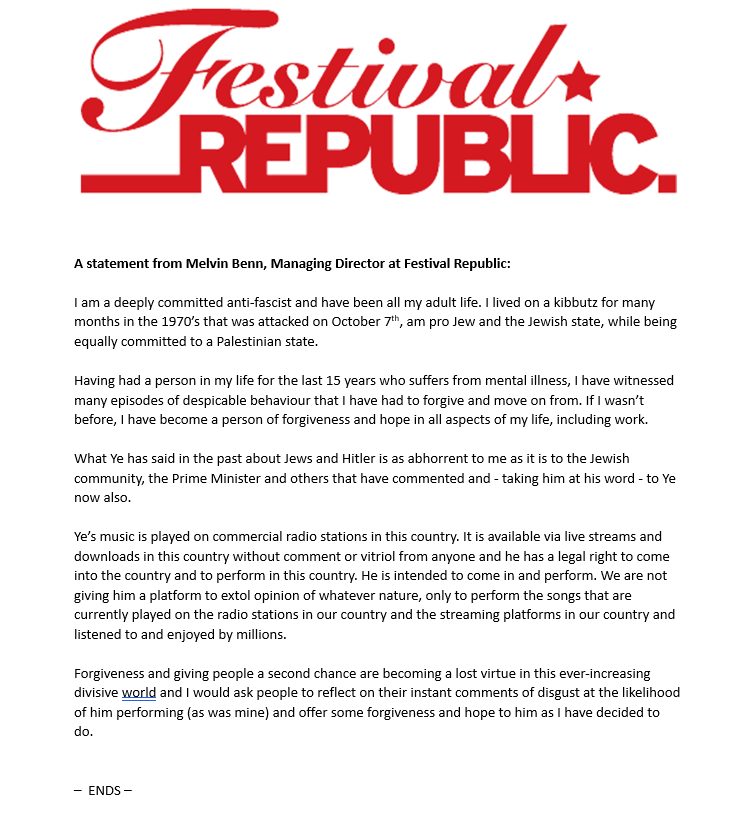
Promoter Melvin Benn has been clear that alignment was in place ahead of announcement.
Which makes the outcome more revealing, not less.
Because it suggests alignment was achieved under one set of assumptions - and then tested against a different level of scrutiny once the lineup became public.
Once that happens, dynamics change quickly.
You are no longer managing a strategy. You are managing perception, pressure and response.
Pulling back post-announcement is rarely about a single decision. It reflects how multiple stakeholders respond when risk moves from theoretical to real.
Government Intervention and Structural Inconsistency
The decision to deny entry adds another layer of complexity.
It raises questions around consistency in enforcement - particularly in an industry where controversial figures have continued to operate at scale.
Artists such as Chris Brown, Marilyn Manson and 6ix9ine have faced legal issues or sustained controversy, yet have continued to tour, perform and remain commercially active across major markets.
As Melvin Benn noted, Ye’s music continues to be sold, streamed and played on UK radio.
This exposes a fundamental disconnect:
Distribution remains open
Live performance is restricted
The inconsistency between what is permitted commercially and what is restricted at a policy level is now a central tension.
At the same time, there has been limited acknowledgement of the downstream impact of that decision.
The Downstream Reality
These moments do not land evenly.
They ripple through an ecosystem that relies on precision, timing and trust:
Crews stood down
Freelancers losing income
Suppliers absorbing costs
Fans caught in the middle
The impact extends far beyond the decision itself. It is carried by the people responsible for bringing the show to life.
An industry already operating on tight margins and long planning cycles absorbs the shock.
A System Under Strain
What this situation ultimately exposes is not a single failure, but a structural one.
When:
Booking teams are incentivised to follow demand and reflect culture as it exists
Brands are sensitive to reputational volatility
Governments intervene inconsistently
And accountability is fragmented
Risk does not disappear.
It compounds.
And when it does, the consequences are rarely absorbed at the top. They are felt across the system.
The Takeaway
This moment reinforces a set of realities:
Cultural demand does not always align with brand or governmental tolerance
High-impact bookings come with pre-existing risk, not unexpected risk
Not all demand is replaceable, especially at scale
Alignment across promoters, brands and stakeholders must happen early
Once a decision goes public, control shifts from strategy to reaction
Policy decisions can reshape commercial outcomes overnight
More broadly, it highlights a growing fragility within the live music ecosystem.
Without stronger alignment from brand partners, clearer regulatory consistency, and reinvestment into infrastructure supporting touring and live production, the system becomes increasingly exposed.
This is what happens when culture moves faster than the systems built to manage it.